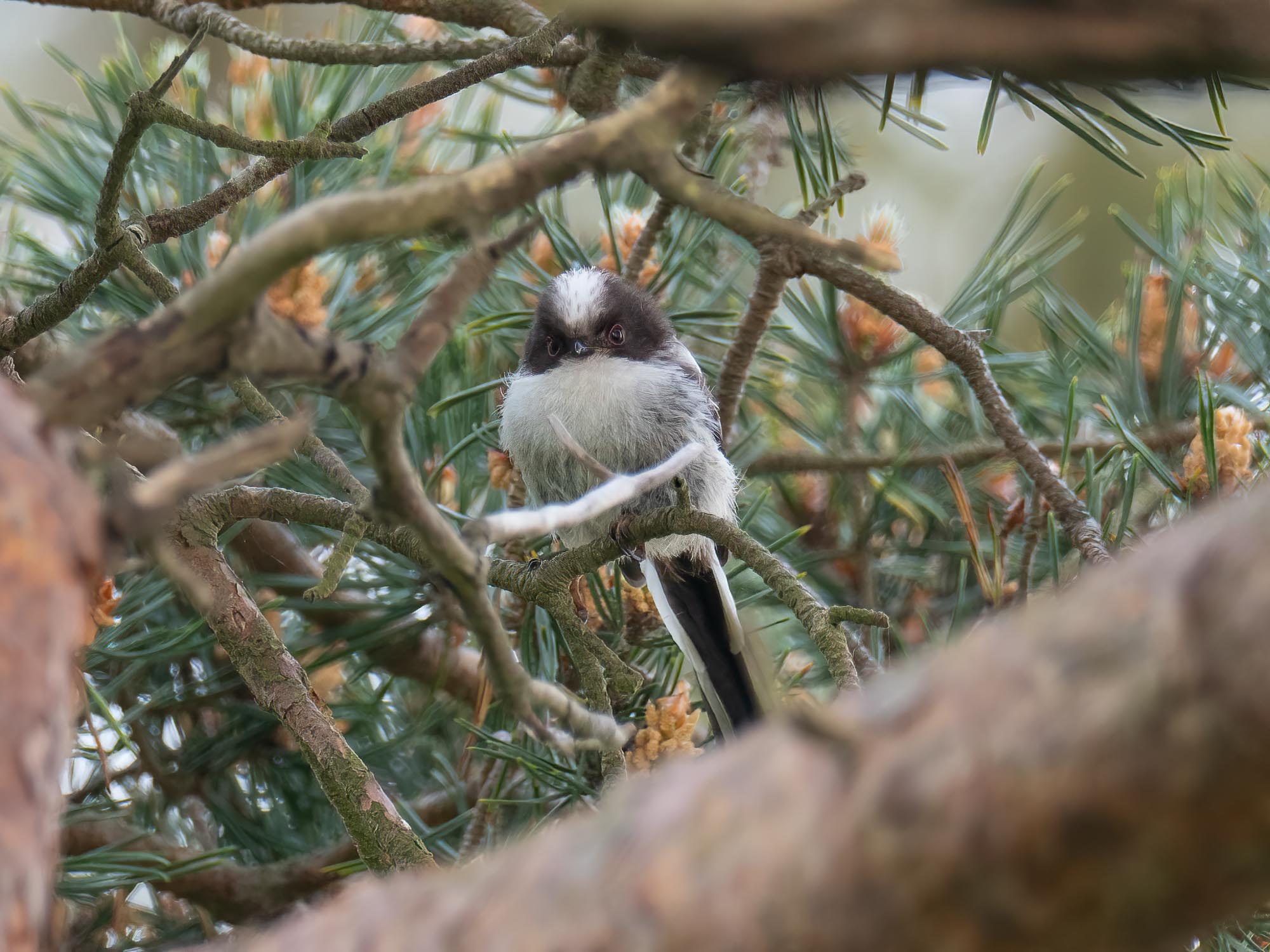
A couple of our winter visiting ducks look set to spend the summer, a drake Teal and two drake Shoveler, all on Black Water. I saw my first Little Grebe chick on the 21st, getting a ride on Mum’s back along the reedy fringe of Black Water. My first juvenile Long-tailed Tits of the year were in a family party which appeared near Venner Hide, perhaps the most reliable location on the reserve for this species.
juvenile Long-tailed Tit
A Lesser Whitethroat was tacking near the Viewing Gate.
Lesser Whitethroat
Blue-tailed Damselflies are the commonest dragonfly on the reserve. If in doubt over the identification they show pale pterostigma and very short wings. This female is showing a pink tail.
female Blue-tailed Damselfly
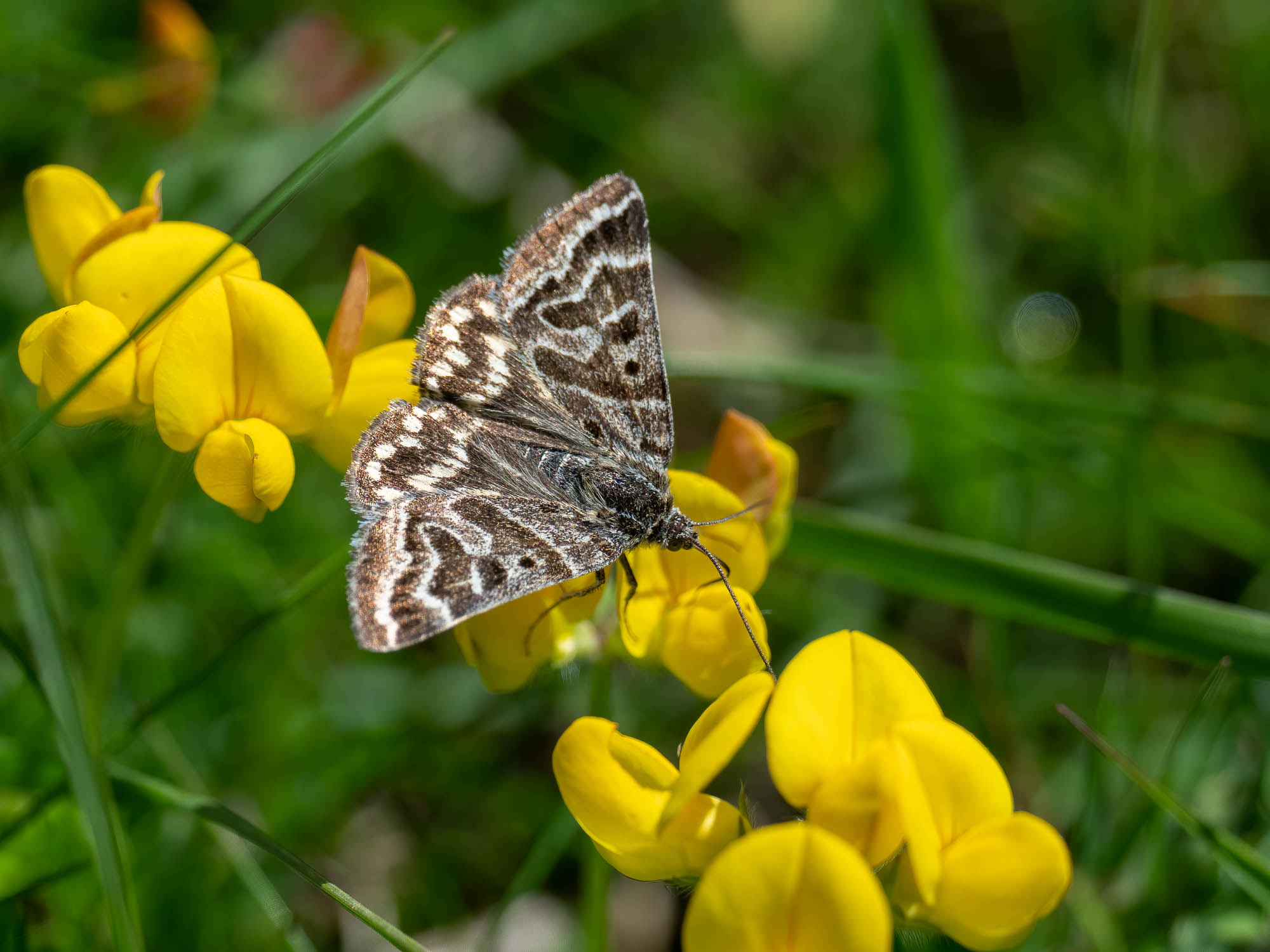
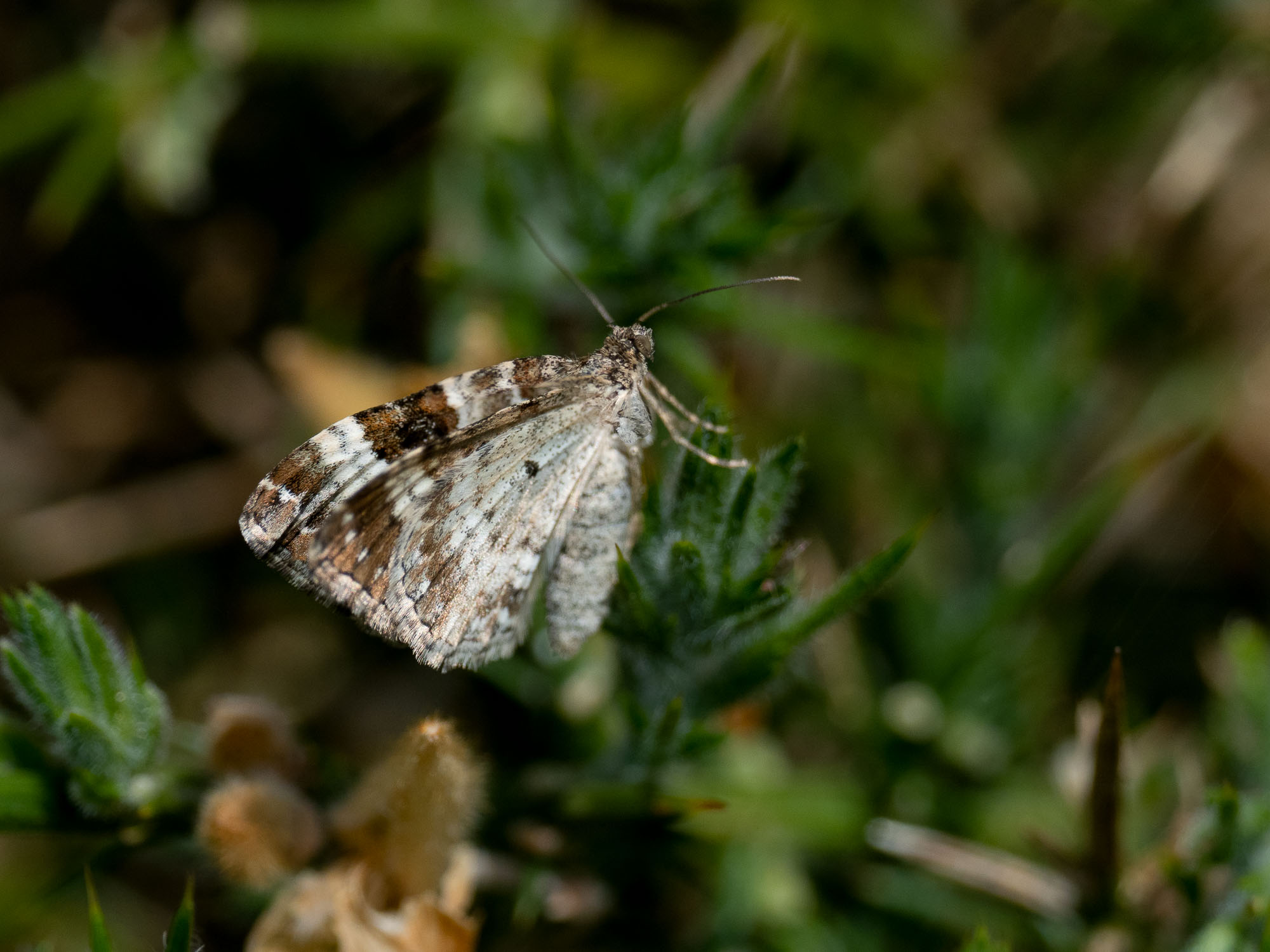
Day flying moths include several Common Heaths on Great Marsh Scrub and the striking Mother Shipton near the Sluice Gate.
Mother Shipton
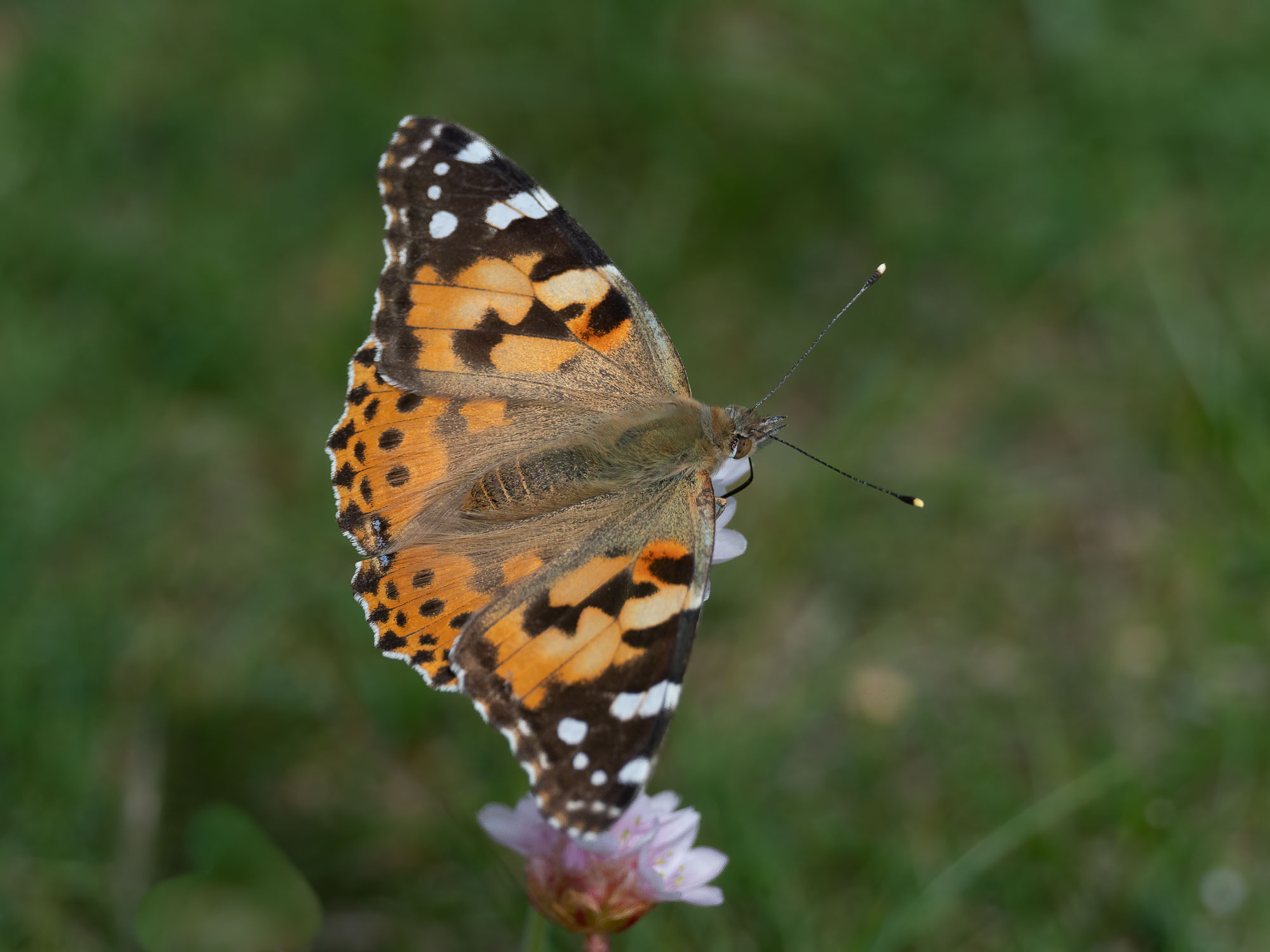
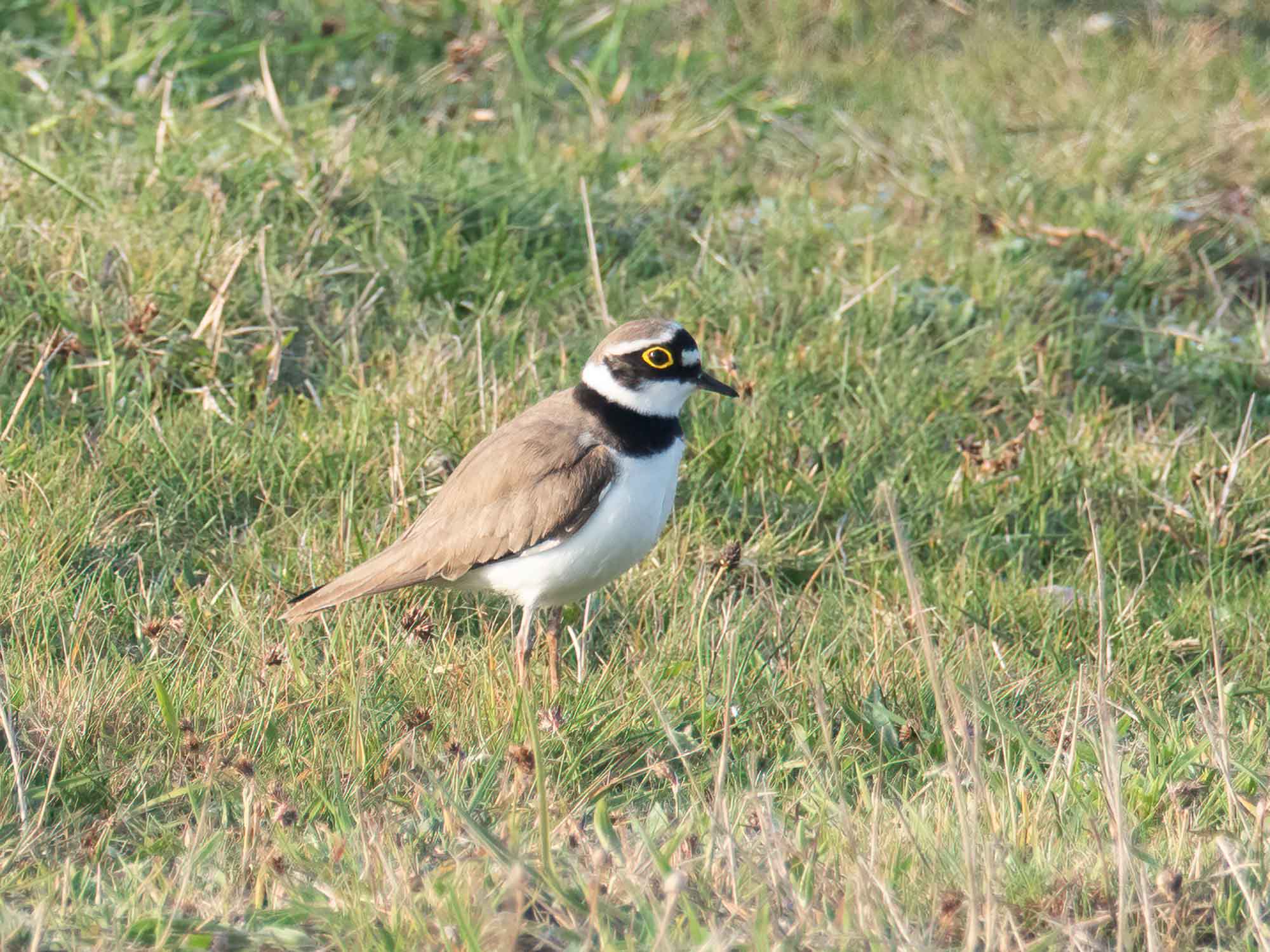
The male Little Ringed Plover remained on his own on the Gins while there has been no further sign of the breeding pair on Gravelly or Great Marsh. In warm weather I again saw several Painted Ladies but this one paused near the Sailing Club to nectar on some Thrift.
Painted Lady
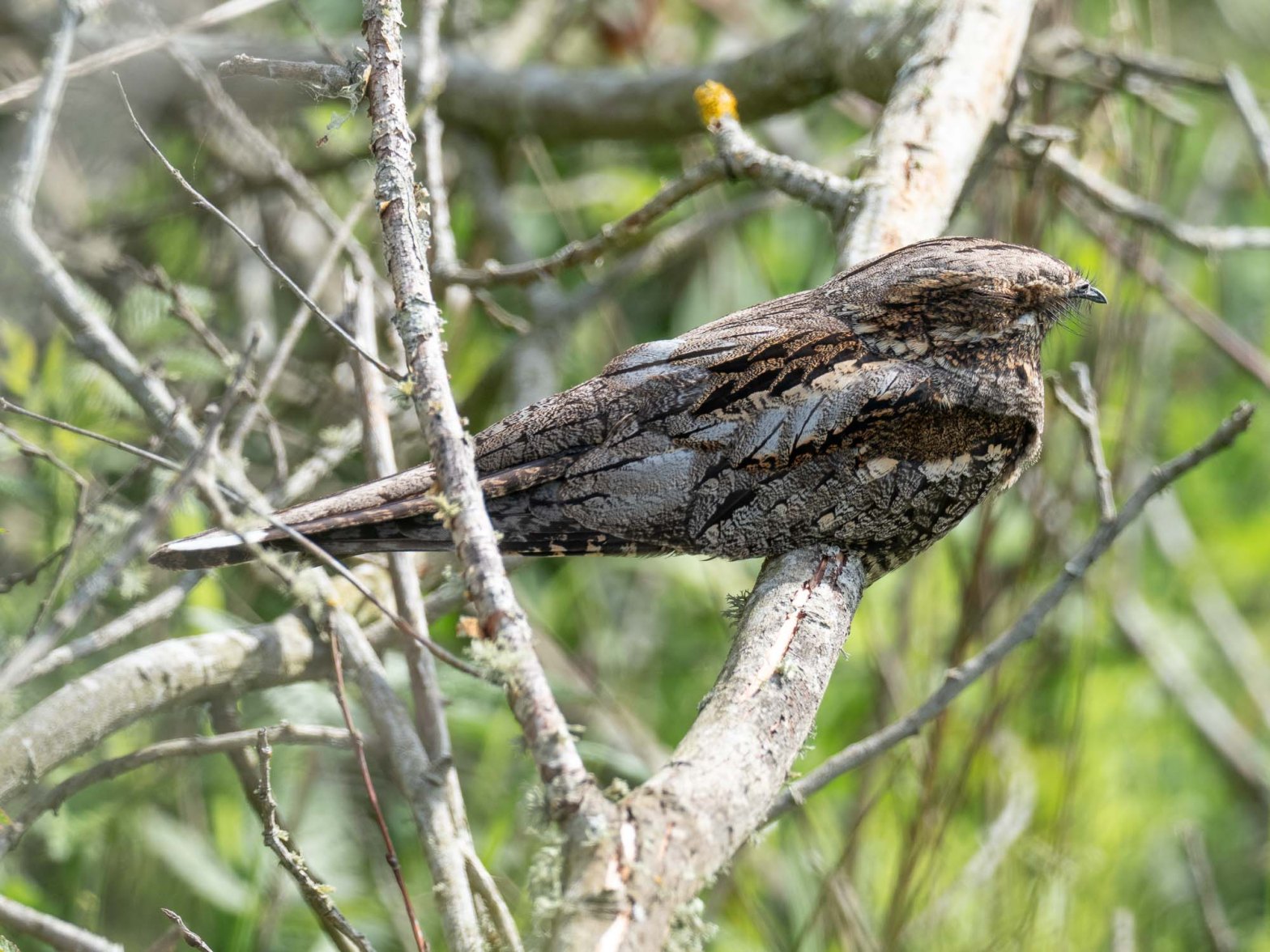
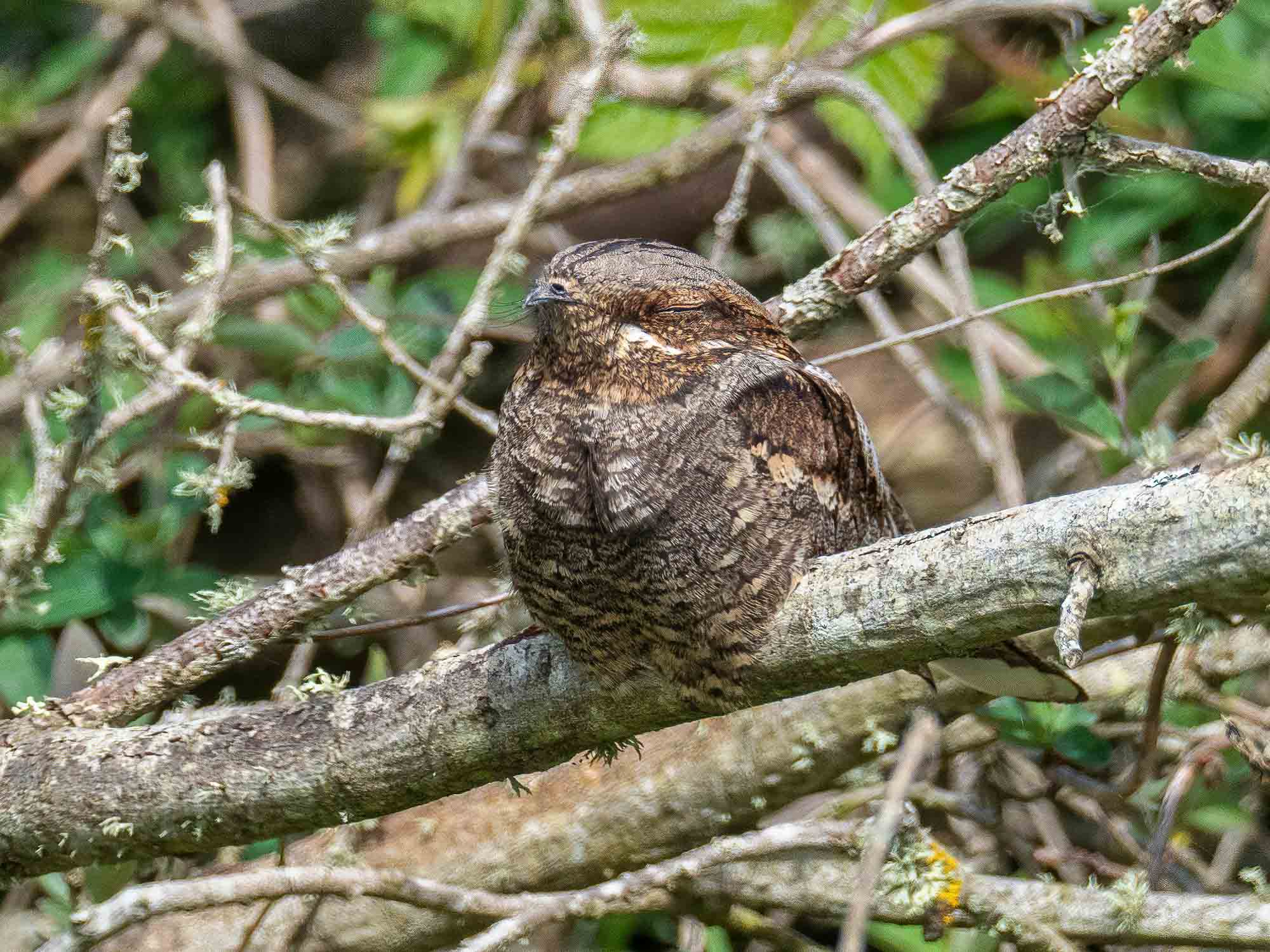
I checked the bare area that we had briefly seen a churring Nightjar a few weeks ago. After scanning a few branches and logs I was amazed to find one. Three days later I noticed that it had returned to the same log. The white tail corners indicate that this is a male and probably the bird I had video’d churring earlier on in the month.
male Nightjarmale Nightjar
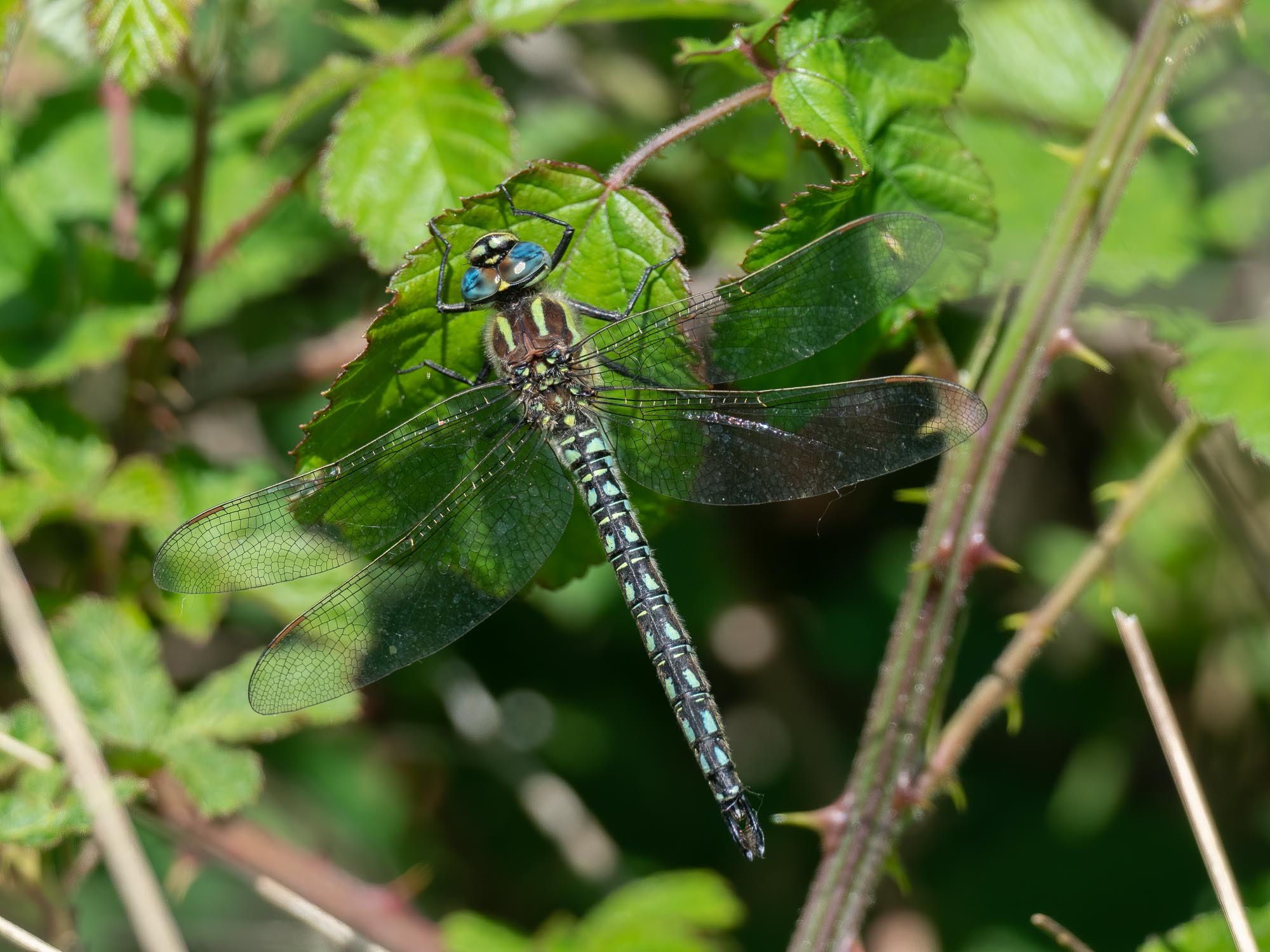
There were Hairy Dragonflies in three different places today. I’m seeing a lot more this year than last year when I only saw Hairy Dragonfly once.
Hairy Dragonfly
The three Lapwing chicks were still on Mary Monts. I think these are the three chicks that hatched on Warren Shore earlier in the week and the parents have walked them down to the water here to feed. The three Lapwing chicks on Gravelly Marsh were also still present.
Lapwing chick
Sadly that’s only six Lapwing chicks noted on the reserve and with little activity suggesting more Lapwing or Redshank chicks were hiding away or that eggs were about to hatch. I did see a flock of eight Lapwing together which is also a sign that some pairs may have given up.
Around 25 Lapwing pairs attempted to breed around the reserve and 0.6 chicks per pair is quoted as the required rate to maintain a population. That would be 15 chicks required to flying age and so we are well below this total currently. Lapwing live for around five years, breeding from age two and so they have some ability to have a bad year or two but not many consecutively. Although the predators are all natural (Foxes, Badgers and Crows) some are in unnatural numbers due to human activity and so Lapwing need help to achieve the required breeding success rates, this could include electric fences. Protective cages for Lapwing wouldn’t work as they flush vertically rather than scuttle away.
I noticed at least three different Pied Wagtail broods being fed by parents around the reserve. A family of Egyptian Geese swam across to Venner Island.
Egyptian Geese
A patch tick bumblebee appeared on Thrift Corner. Bombus jonellus (Heath Bumblebee) is not one of the common six bumblebees in the UK. Compared to the commoner Garden Bumblebee (Bombus hortorum) the thoracic stripe of jonellus is buff coloured rather than lemon yellow and the combs around the pollen basket are pale rather than dark. Also it is smaller than hortorum and the face is heart-shaped rather than the very long face of hortorum. The tongue is also much shorter than hortorum and so it feeds on shorter stemmed flowers like Thrift.
Bombus jonellus (Heath Bumblebee)
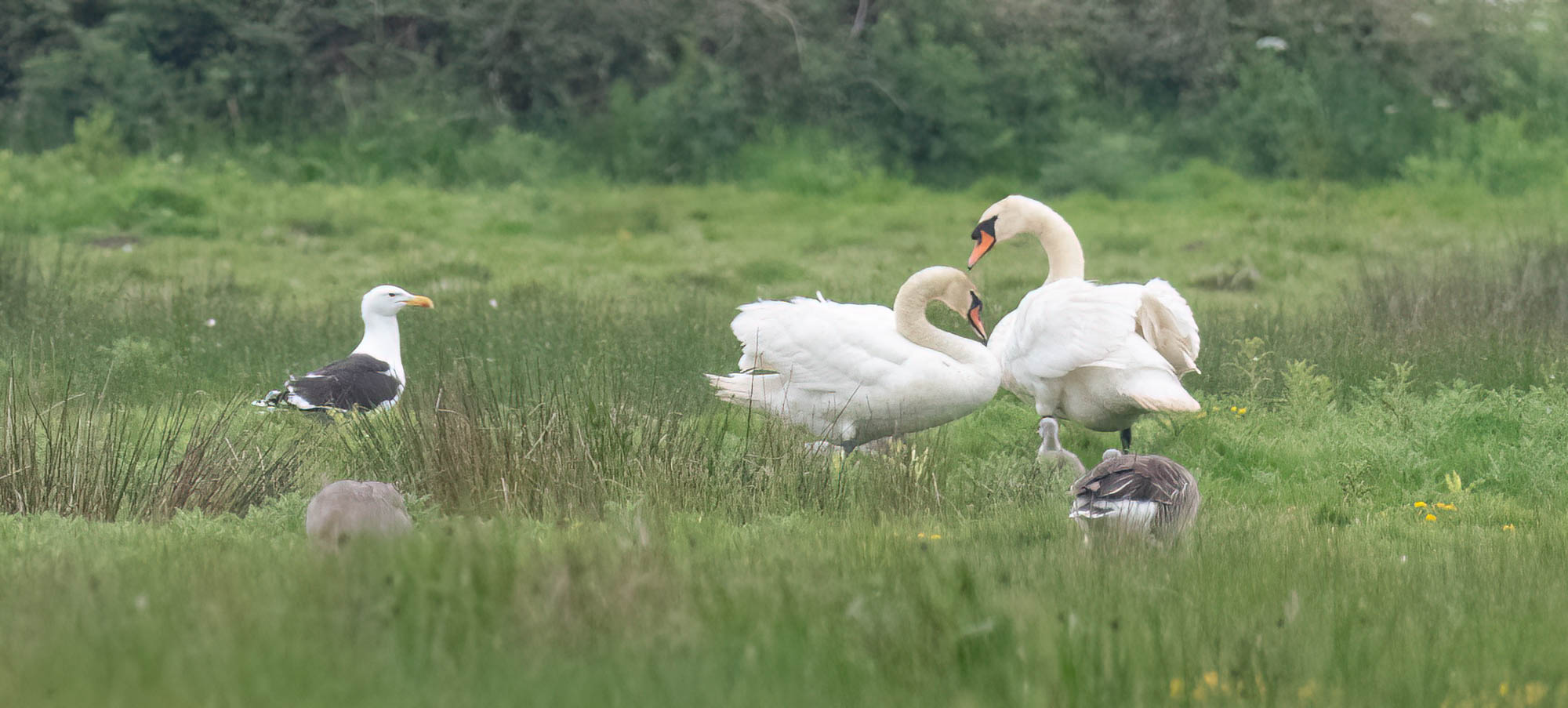
On Venner South a pair of Mute Swans were squaring up to a pair of Great Black-backed Gulls who were interested in the five cygnets.
Mute Swans and five cygnets
There were 30 Sanderling on Warren Shore early in the week with up to 10 on two subsequent visits. There was a mix of winter and summer plumaged birds, although it’s getting late some waders do arrive very late on their breeding grounds.
The Meadow Pipits I had found on Gravelly have seemingly fledged as the nest was empty. Adults were calling nearby with food in their mouth but I didn’t see the fledglings, I’m sure they were hiding close by.
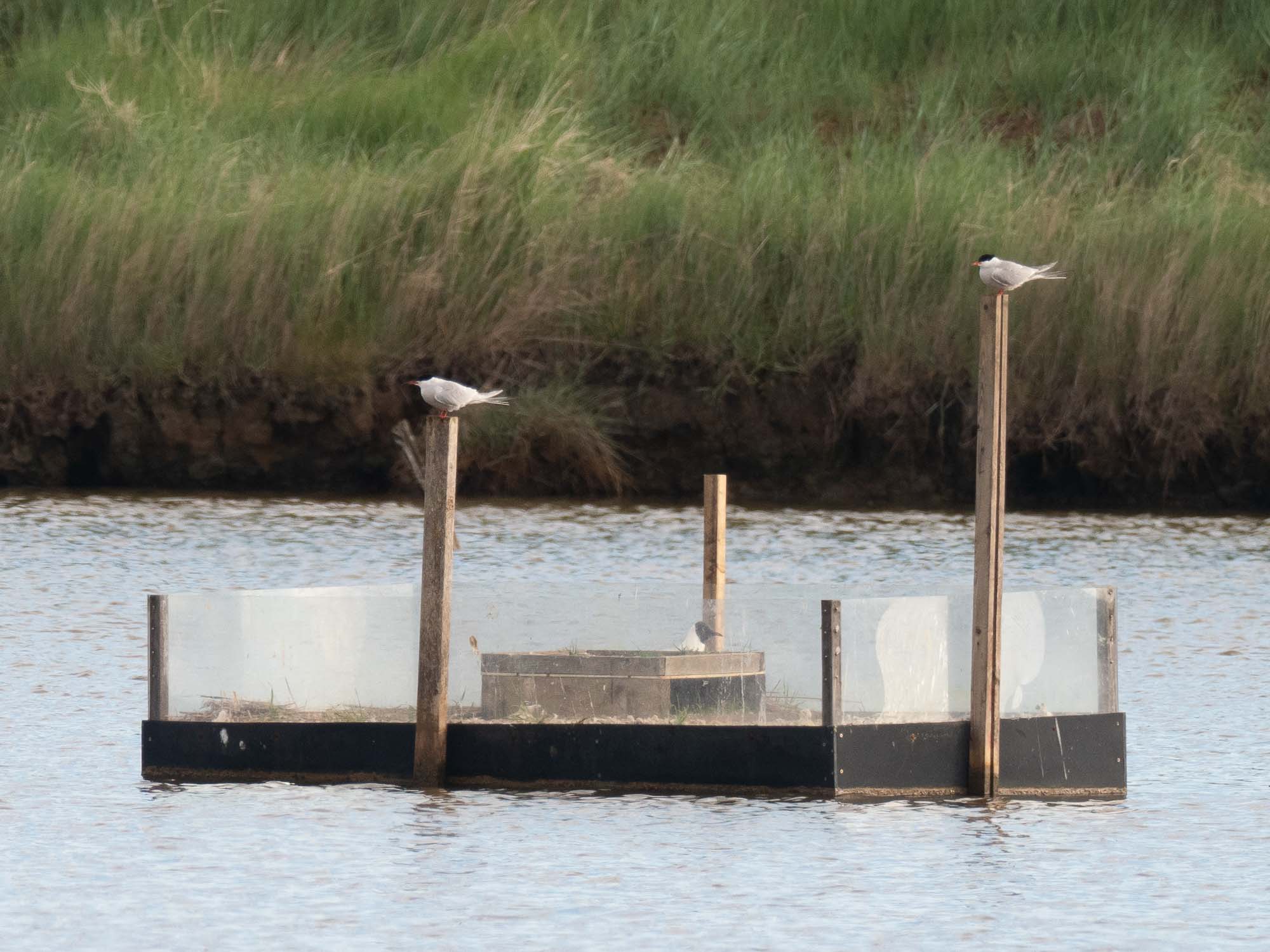
The first Black-headed Gull chicks have appeared with at least six on the platforms on the 24th and the same day a pair of Common Terns were perched on the posts on one of the rafts. At one stage even chasing off a Black-headed Gull before returning to the post.
Common Tern pair
On the 24th there were seven Avocet broods with 16+ chicks on De L’Orne and three broods with 11 chicks at Great Marsh, at least 27 chicks altogether.
Avocets
Now for the bad news.
No sign of the Lapwing chicks that Adam had seen previously on the Gins. A Grey Heron was in the same spot today and wasn’t being driven off. One of the Oystercatcher nests at the Sailing Club has been predated, a Carrion Crow took one egg and a Fox took the rest.
A walk along Warren Shore Spit to put protective cages around the Ringed Plover nests (which we had GPS tagged the previous week) brought particularly bad news. All nests were empty and almost certainly predated. There had been eight nests in total. Foxes, Crows and/or gulls are suspected.
I had seen 16 Avocet chicks on De L’Orne Scrape on the 24th but only two when I checked again on the evening of the 26th. It was 6:30pm and cool and so perhaps they were being brooded by the adults but I think it more likely that they have already been taken by gulls or corvids.
If anyone sees any Lapwing, Redshank, Ringed Plover, Oystercatcher or Avocet chicks then it would be great to hear about it, thank you.
On the 6th May Ian and I attempted to break the day list record for Needs Ore which was previously 101 species. We spent well over 12 hours in the field and managed 104 species.
A real highlight was picking up an Osprey as it flew up the Beaulieu River, we were sea watching at the time from Mary Monts and so we were a mile away. Other interesting birds included Arctic Skua, Nightjar, Barn Owl, Little Owl, Common Sandpiper, Firecrest, Little Ringed Plover, Dartford Warbler and Red-throated Diver. The Nightjar was still churring at 4:45am and I managed a very short bit of video on the thermal camera.
Nightjar
Conspicuous misses included Marsh Tit, Coal Tit, Eider, Common Scoter, Sanderling, Little Tern, Swift, Red-legged Partridge and Hobby.
After a gap in Wheatear sightings I saw a flurry of individuals with ten more birds, four at Wheatear Corner on separate days and further individuals at the Sailing Club on three occasions, Gull Island, Venner Island and Park Shore.
Wheatear
A Common Sandpiper on the groynes at LRP Beach was a surprise and what was probably a different bird was more than a mile away on Gins East a few hours later. This or another Common Sandpiper was then on one of the islands on Black Water on the 12th.
Common Sandpiper
A Red-throated Diver heading west was a bonus early in the week and Gannets lingered off shore on a couple of dates at the end of the week.
Whimbrel
The female Dartford Warbler was seen again, this time carrying what appeared to be either a faecal sac or a piece of egg shell. I couldn’t be sure given the distance but either way this would indicate chicks. I spent some time looking for them the next day but didn’t see or hear any activity which was surprising. At the end of the week, however, I saw the female again dropping into an area of bramble, immediately afterwards the male was seen carrying a caterpillar and I later saw the female carrying a faecal sac away. It’s great to confirm breeding again here, the first time in five years. Would be nice to find the nest but the pair have been almost totally silent since paring up which is unusual.
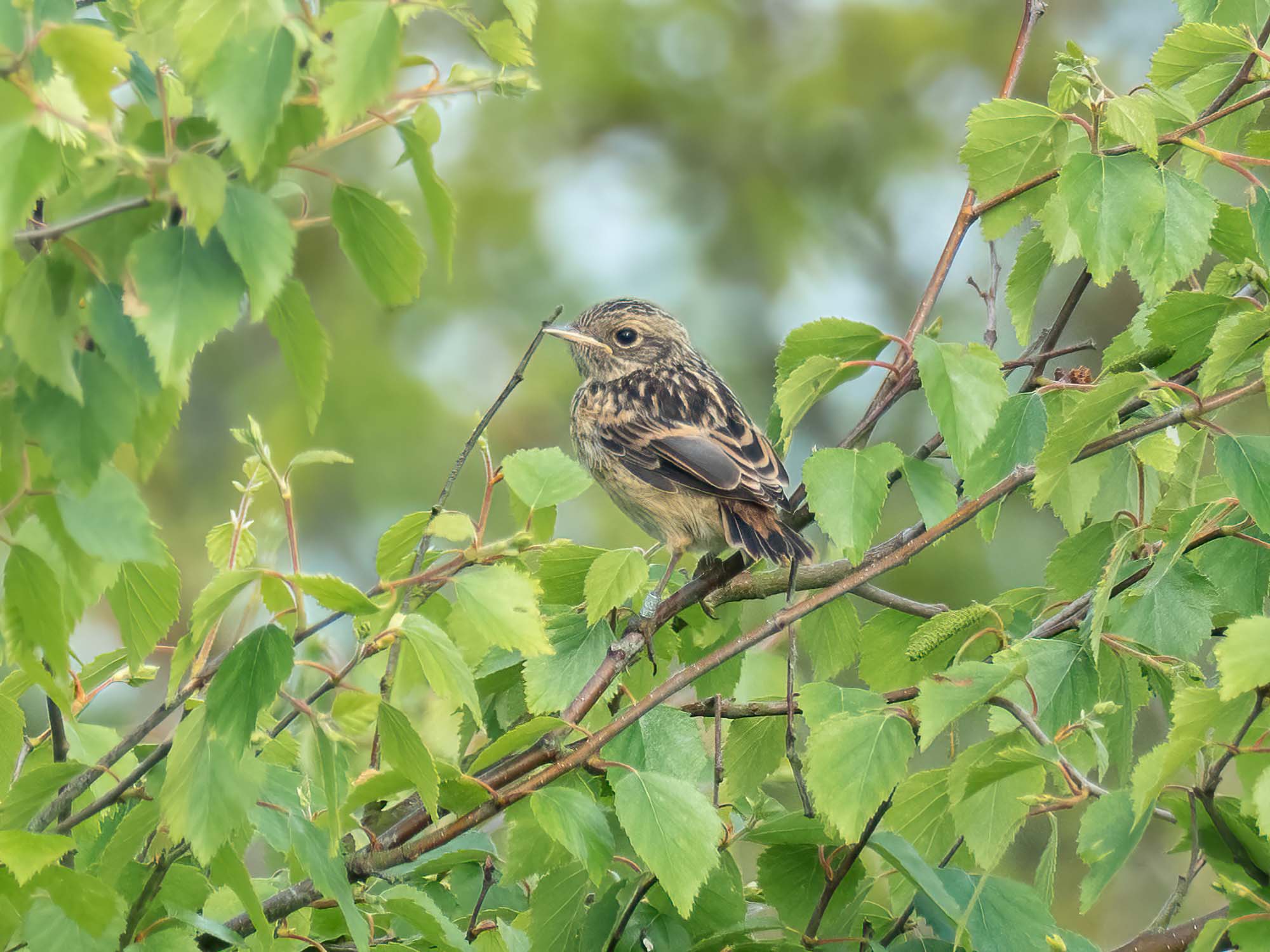
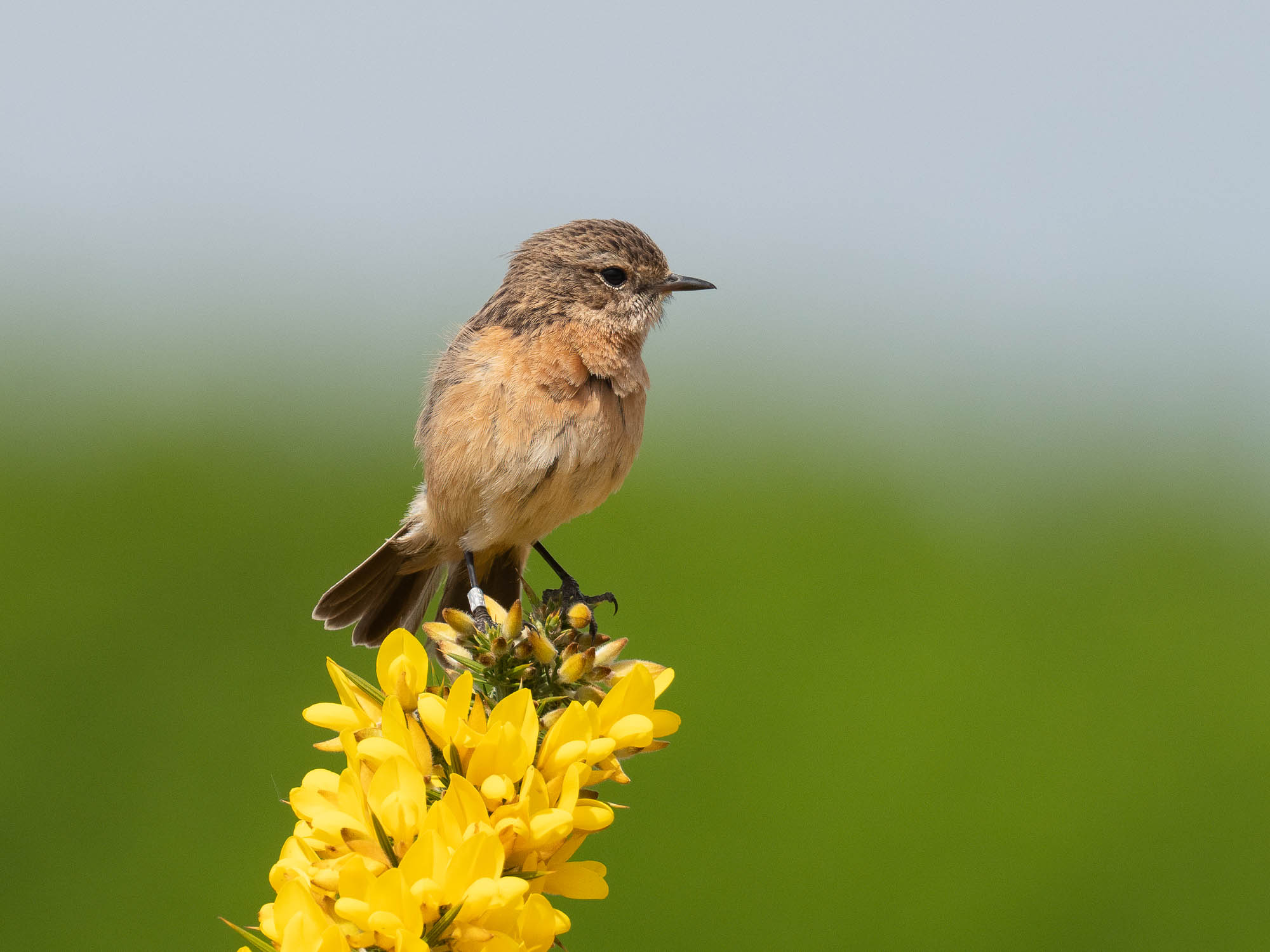
The Stonechat chicks fledged on the 7th May and we watched at least four of the five young birds being fed by the parents. I also watched a female Stonechat feeding chicks in Mary Mont’s garden.
juvenile Stonechat
After quite a few hours of sea watching this spring I finally caught up with a pale phase Arctic Skua heading east chasing a Common Tern. Three Little Terns headed west at the end of the week, these are birds that probably breed at Lymington. There are areas of suitable shingle on Warren Shore but no interest from the Little Terns.
Bar-tailed Godwit photo by Ian Williamson
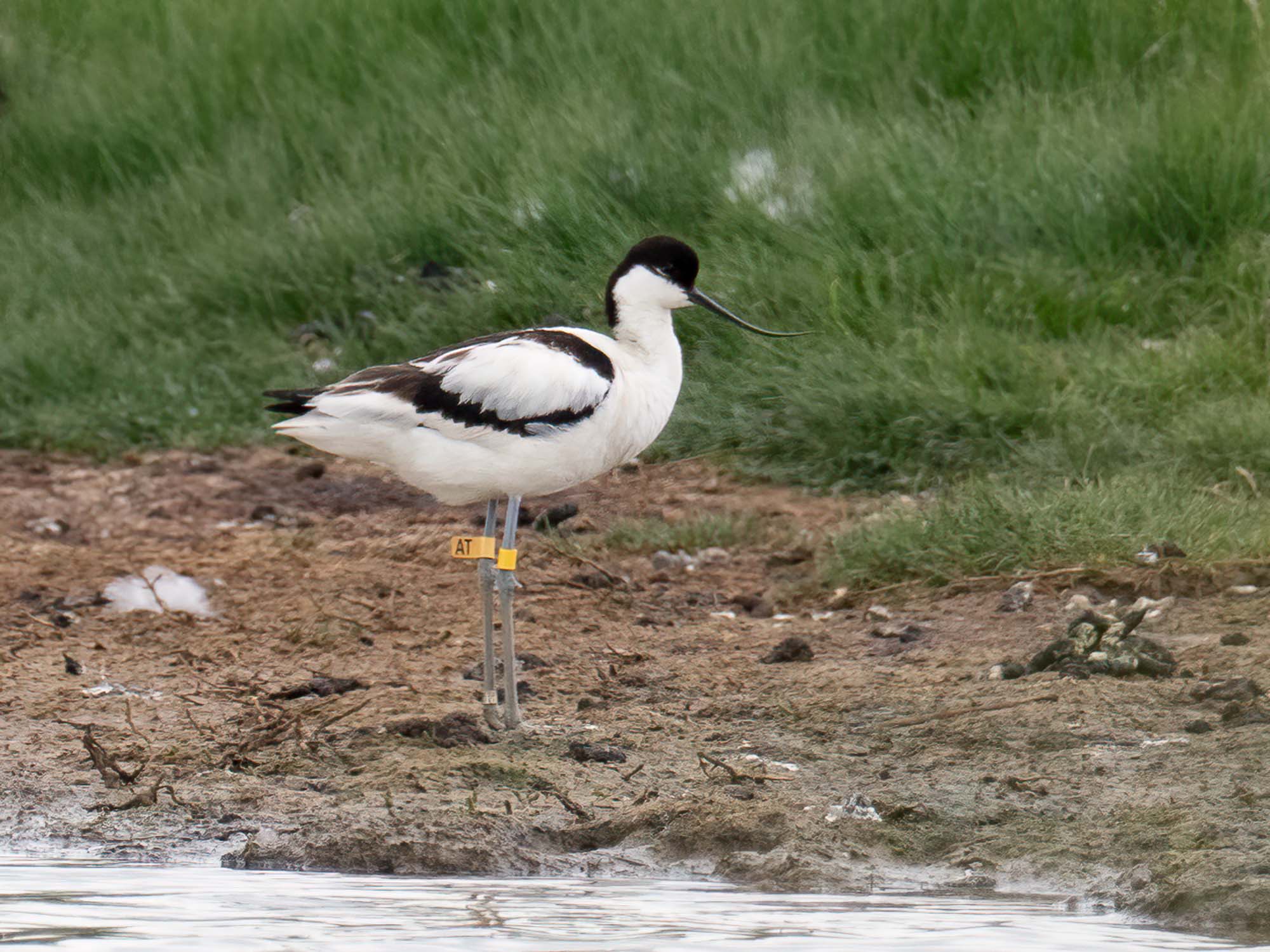
On Great Marsh Avocet ‘AT’ has returned, it’s the first time it has been seen at Needs Ore since it was ringed here in June 2018. In June 2020 it was seen near Cherbourg in France and in July 2021 it was photographed with chicks at Titchfield Haven.
Avocet AT
Avocet ‘VK’ was also present on De L’Orne nest scraping. It was ringed as a chick at Needs Ore in 2019 and so this is the first year that it may breed. It has only been seen once before, at Pennington in autumn 2019.
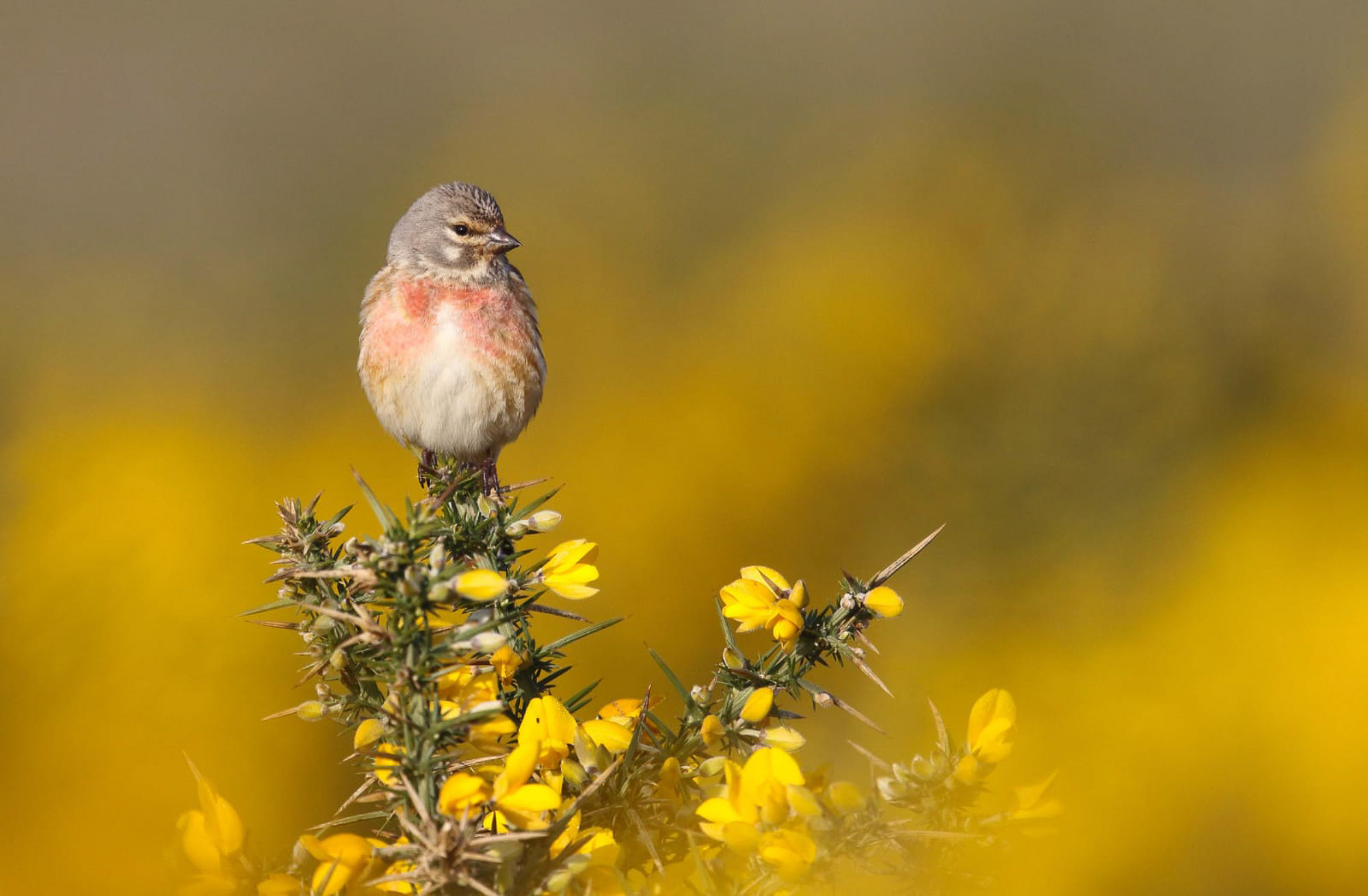
Linnet photo by Ian Williamson
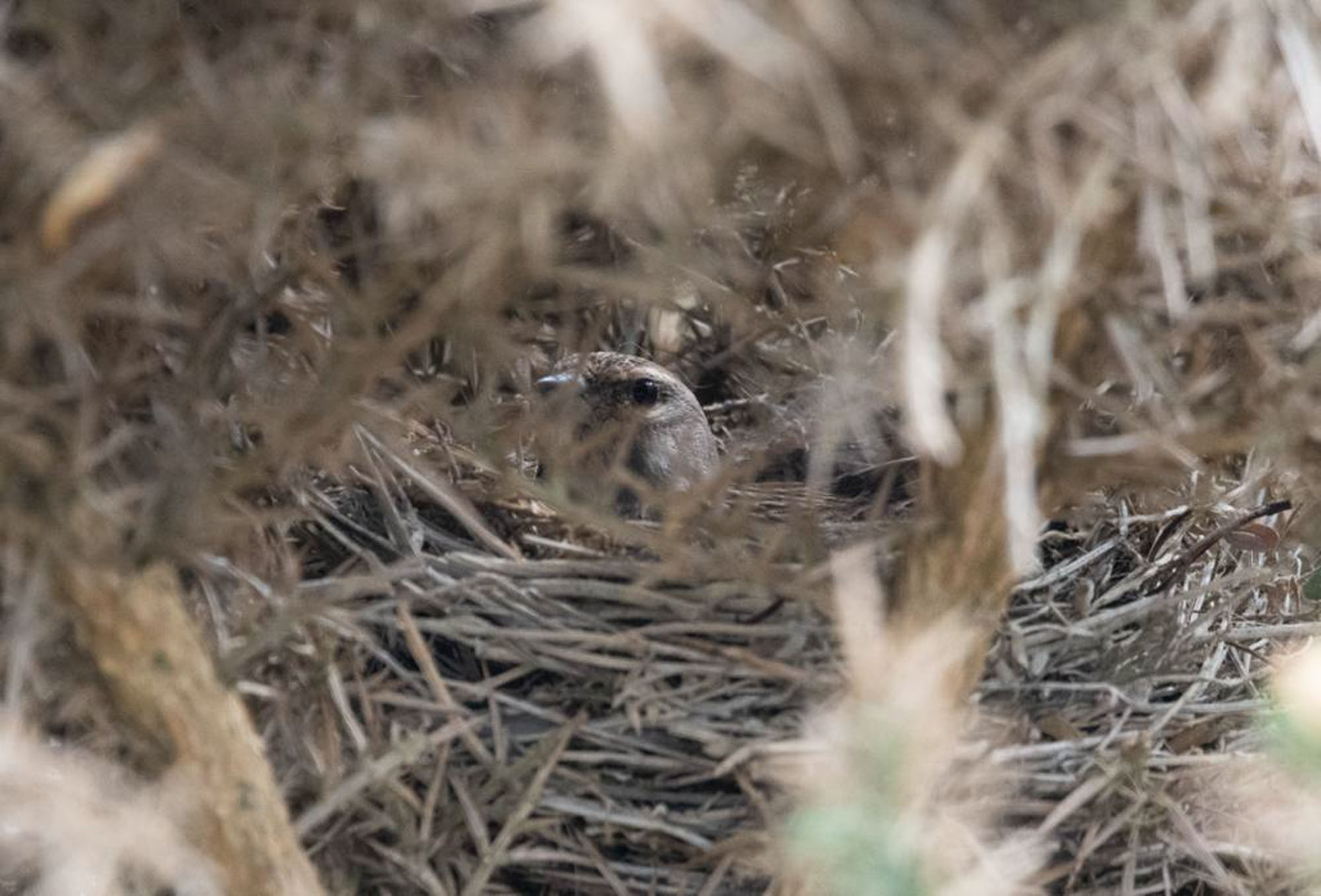
A quick check on the three Linnet nests I’ve found – the first had been predated probably by a small mammal, the second had very young chicks and the third had the female still incubating.
female Linnet incubating photo by Dimitri Moore
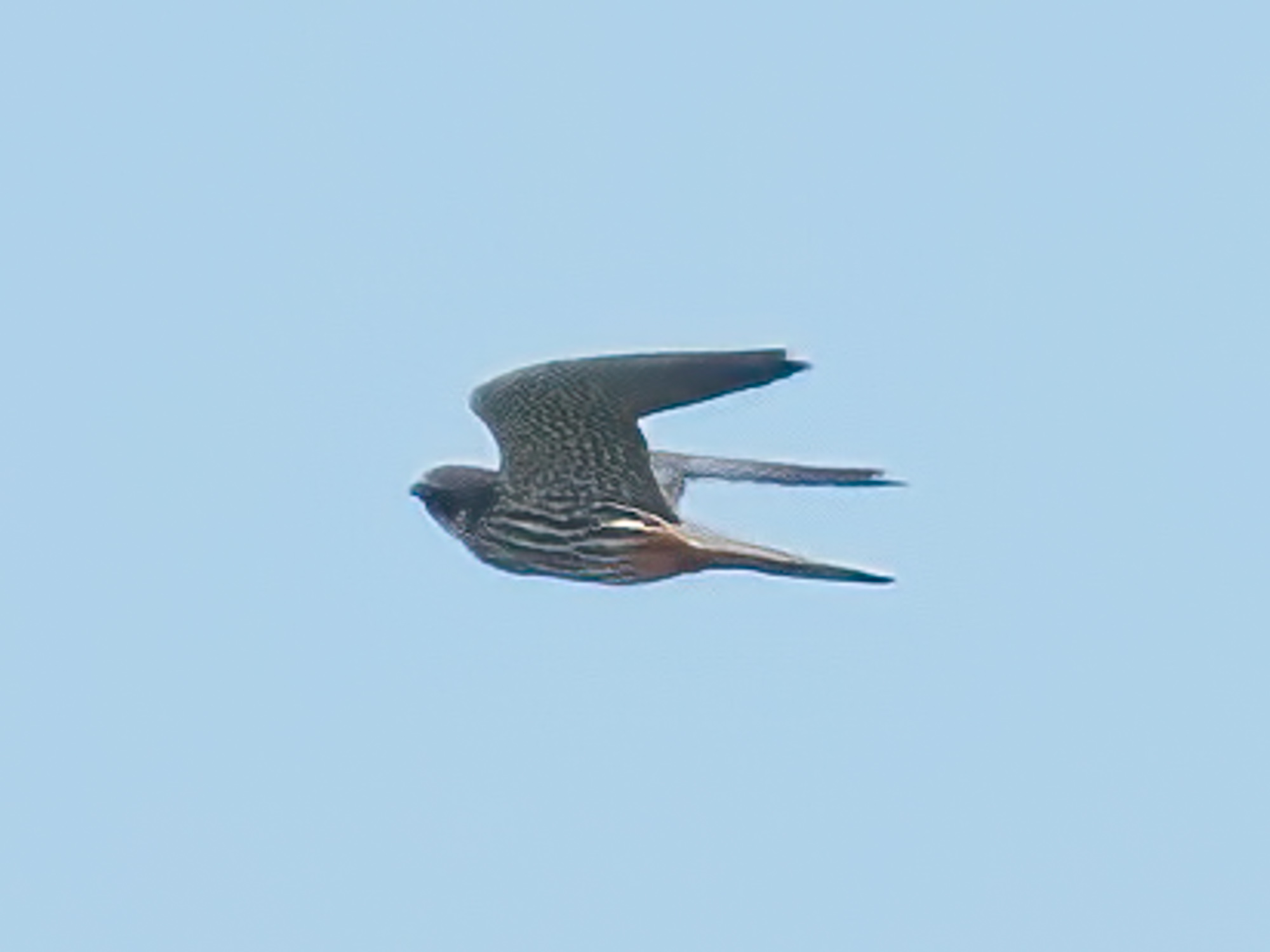
My first Swift of the year was seen coming in off the sea early in the week. As I walked the breeding bird transect over on Great Marsh a Hobby drifted over. My camera failed to focus but Dimitri saw what was probably the same bird later in the day.
Hobby photo by Dimitri Moore
An impressive total of five Sedge Warblers were singing around the reserve during the week.
Sedge Warbler
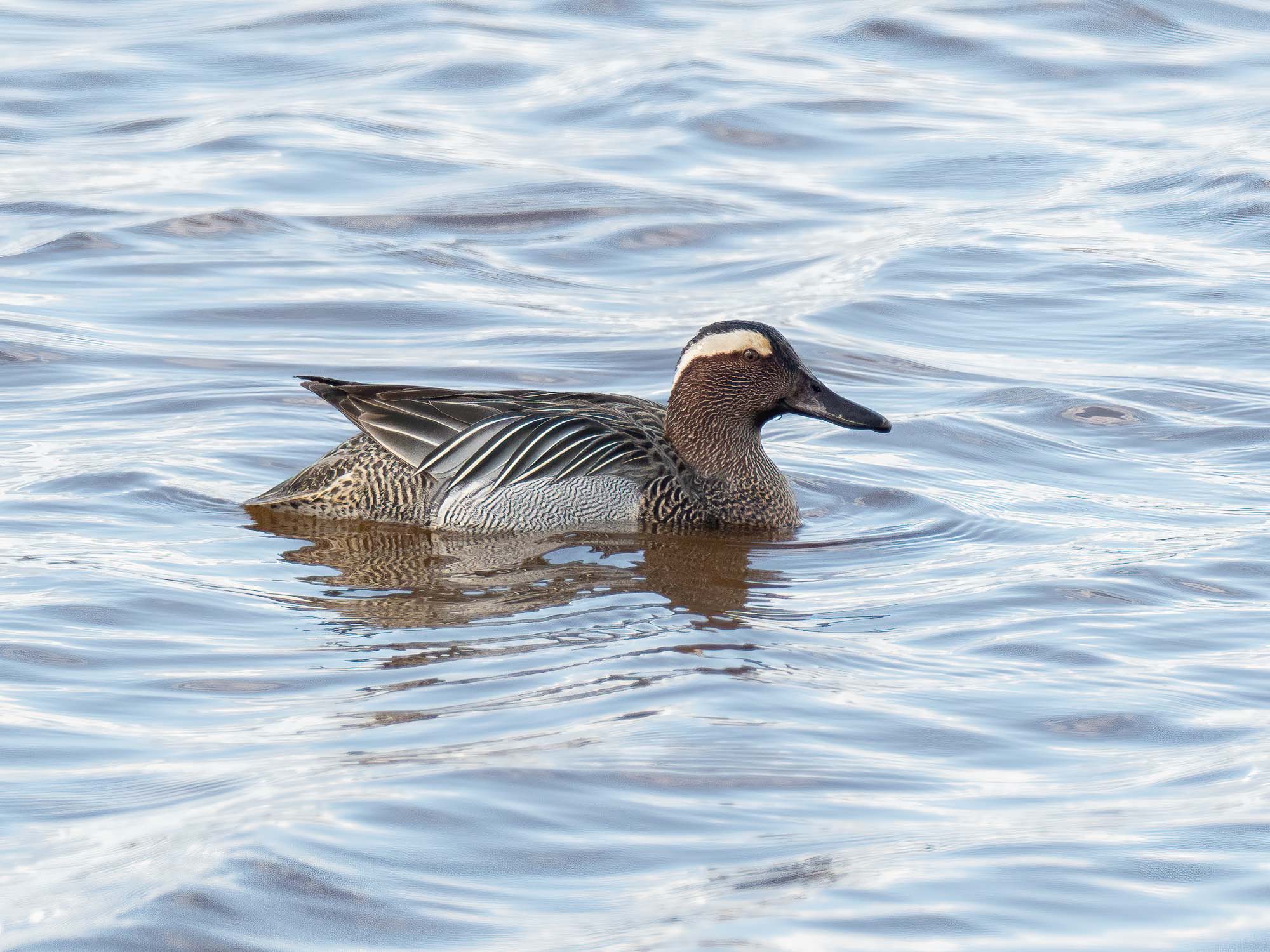
A newly arrived drake Garganey was looking nervous on the 7th on Gins East. It soon flew off high with a female Teal and a female Gadwall. I later saw it again swimming around in the middle of Black Water, still looking skittish. This is the sixth different Garganey I’ve seen this spring. This new male wasn’t seen again.
Small Heath
Disappointing news was that the Little Ringed Plover nest appears to have been predated. The nest scrape was empty of eggs when I checked on the 6th May. We later saw the pair over on Gins East where they were sparring with another newly arrived male. The new male remained on Gins East for at least another 11 days, still looking for a female. The established pair became more elusive until I had great views on the 17th.
The male was very active nest scraping on a sandy section of the marsh near the water’s edge. He undertook four display flights while I was there and was contact calling and singing regularly. At first I couldn’t see the female and wondered if she had left or if this was a new male but she was there all along watching nearby. Will be brilliant if they try again.
male Little Ringed Plover
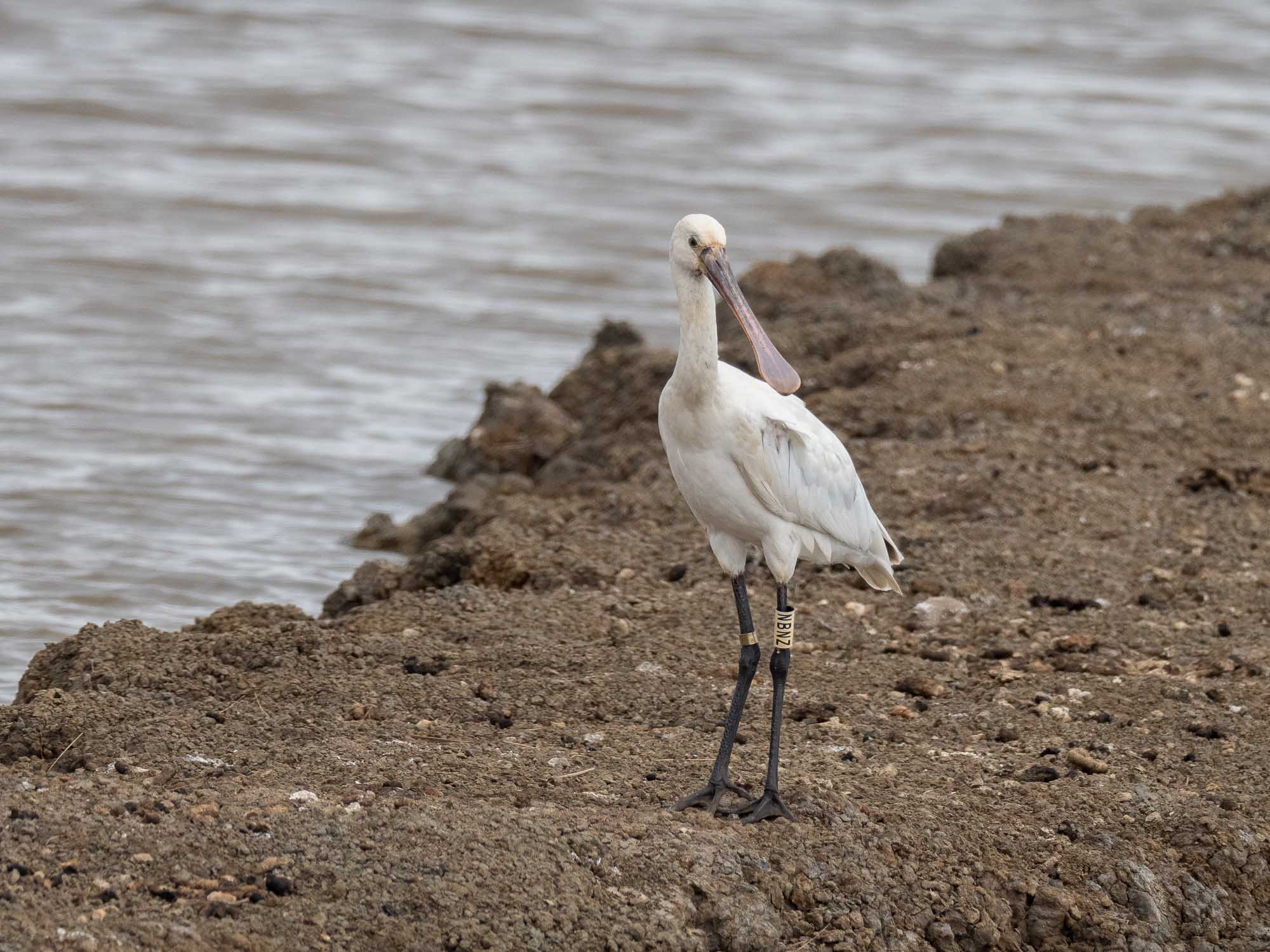
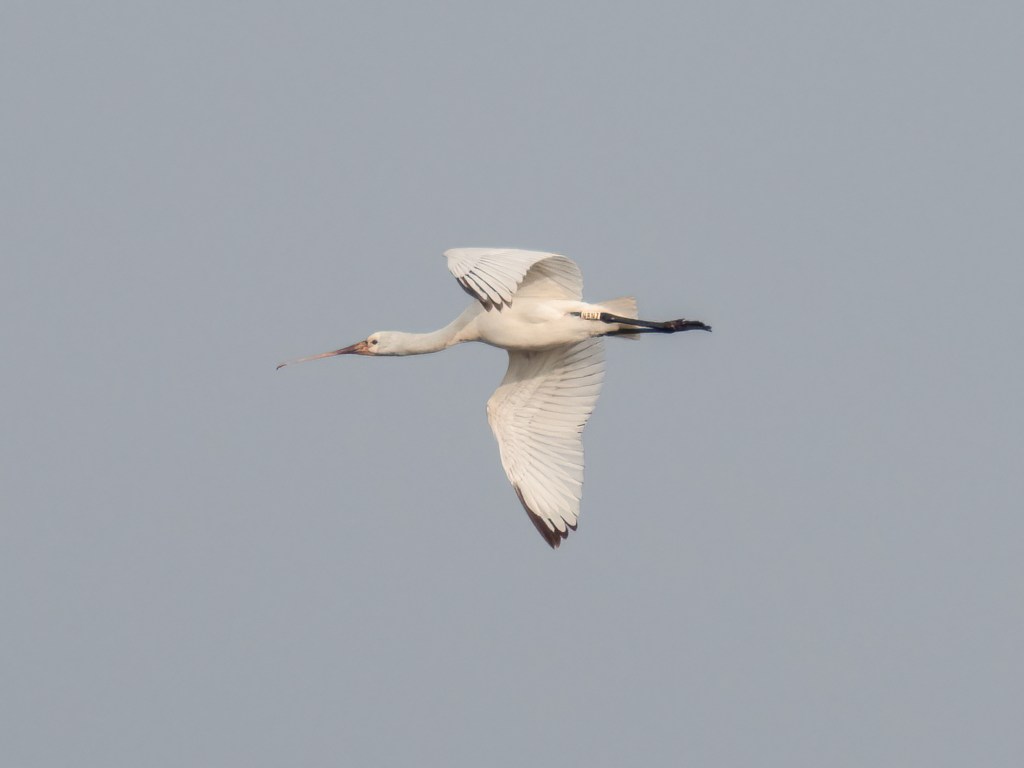
There are now three young Spoonbills. The leg ring on one of these birds reveals that it was ringed as a juvenile in the Netherlands last September. It moved to northern France in late October before relocating to Poole Harbour where it spent the winter. It then moved to Needs Ore in April.
2nd calendar year Spoonbill
I’ve seen quite a few male Reed Buntings singing with no sign of the female, in these cases she is probably on eggs nearby. I will keep an eye on these territories for adults carrying insect food items in the next few days.
Reed Bunting
There were seven 7 Brown Hare on the Crop Strip field, my biggest concentration in one place. Hairy Dragonflies were on the wing most days when the sun was out, I saw at least two or three each day and several of them stopped for photos.
Hairy Dragonfly
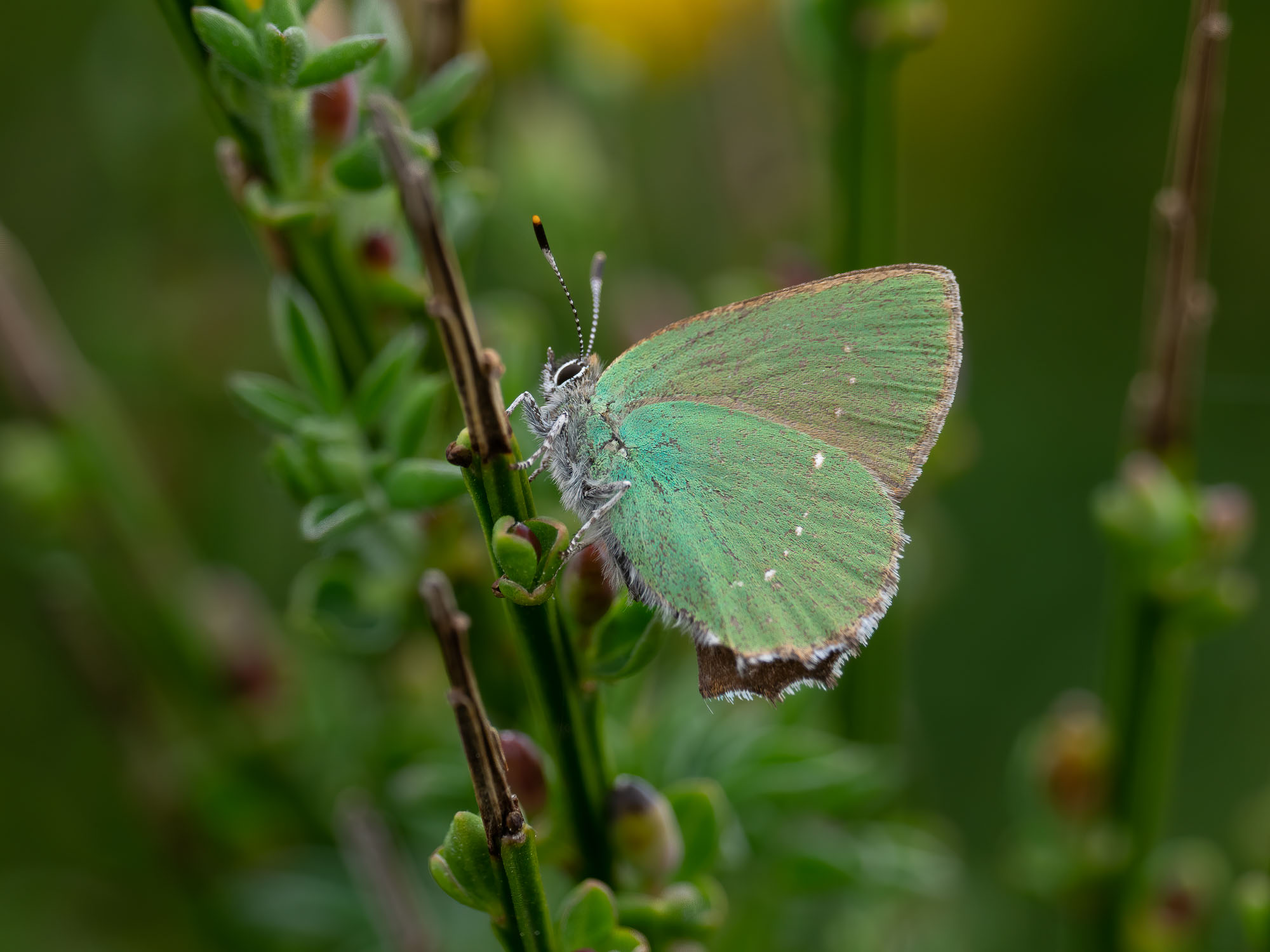
On Gravelly a lovely fresh Green Hairstreak looked great in soft overcast light. I saw at least ten others in sunny spells towards the end of the week all close to gorse bushes.
Green Hairstreak
Another butterfly patch tick at the end of the week, Green-veined White. It is probably under recorded as you need to seem them land and see the underside before you can ID them safely. Painted Ladies were in evidence in good numbers on the 17th on a warm southerly breeze although none stopped for a photo.
Common Terns were calling loudly over Great Marsh on several occasions but I don’t think they’ve plucked up the courage to try the rafts yet. Most of the Swallows I’ve seen so far this spring have been heading north and east in a determined way but I’ve now seen a few pairs who are clearly hanging around even collecting mud for nest building from the pools near Mary Monts.
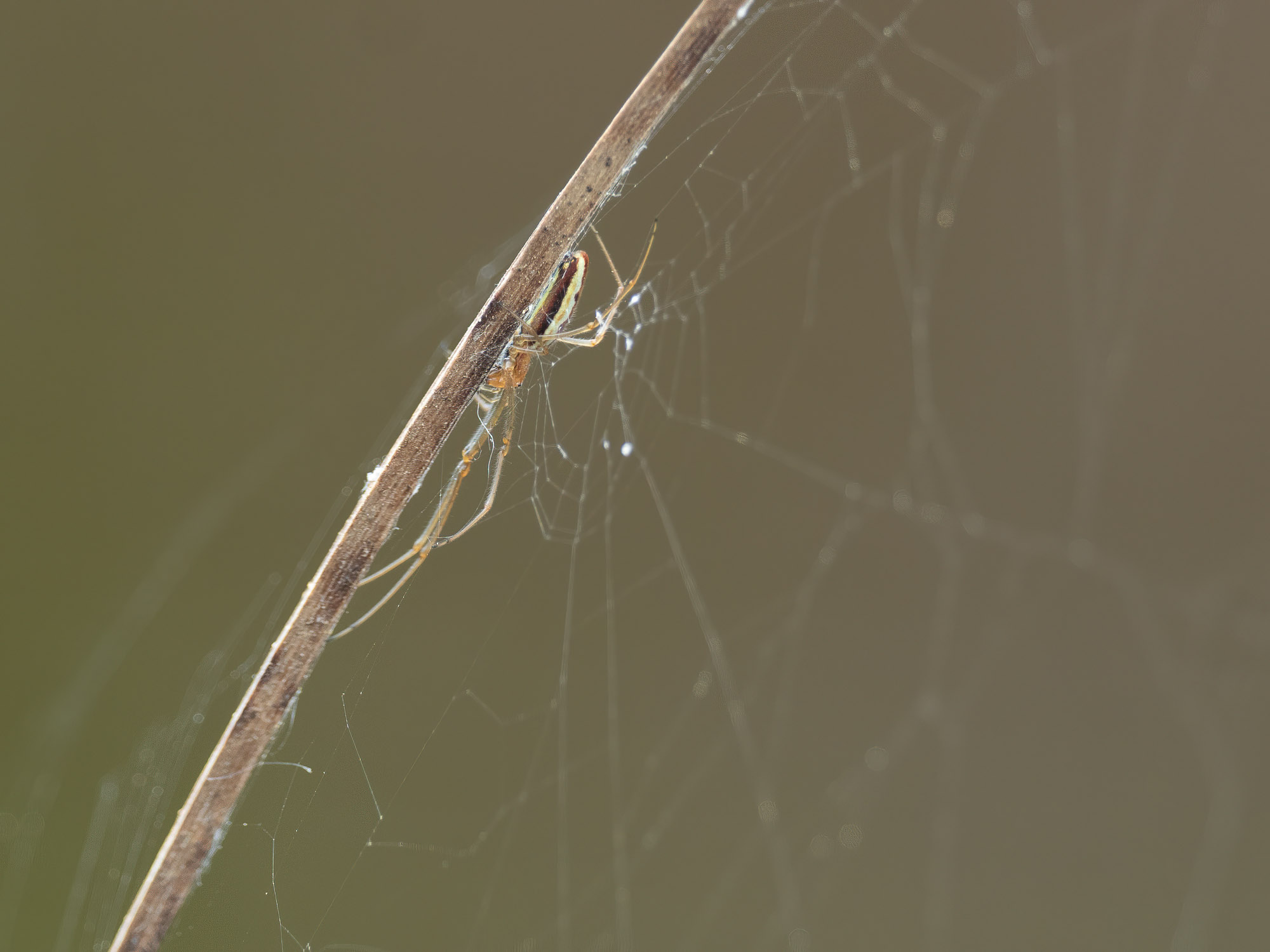
A Large-jawed Orb Weaver hung menacingly over Shore Hide Ditch as Blue-tailed Damselflies flew close by.
Large-jawed Orb Weaver
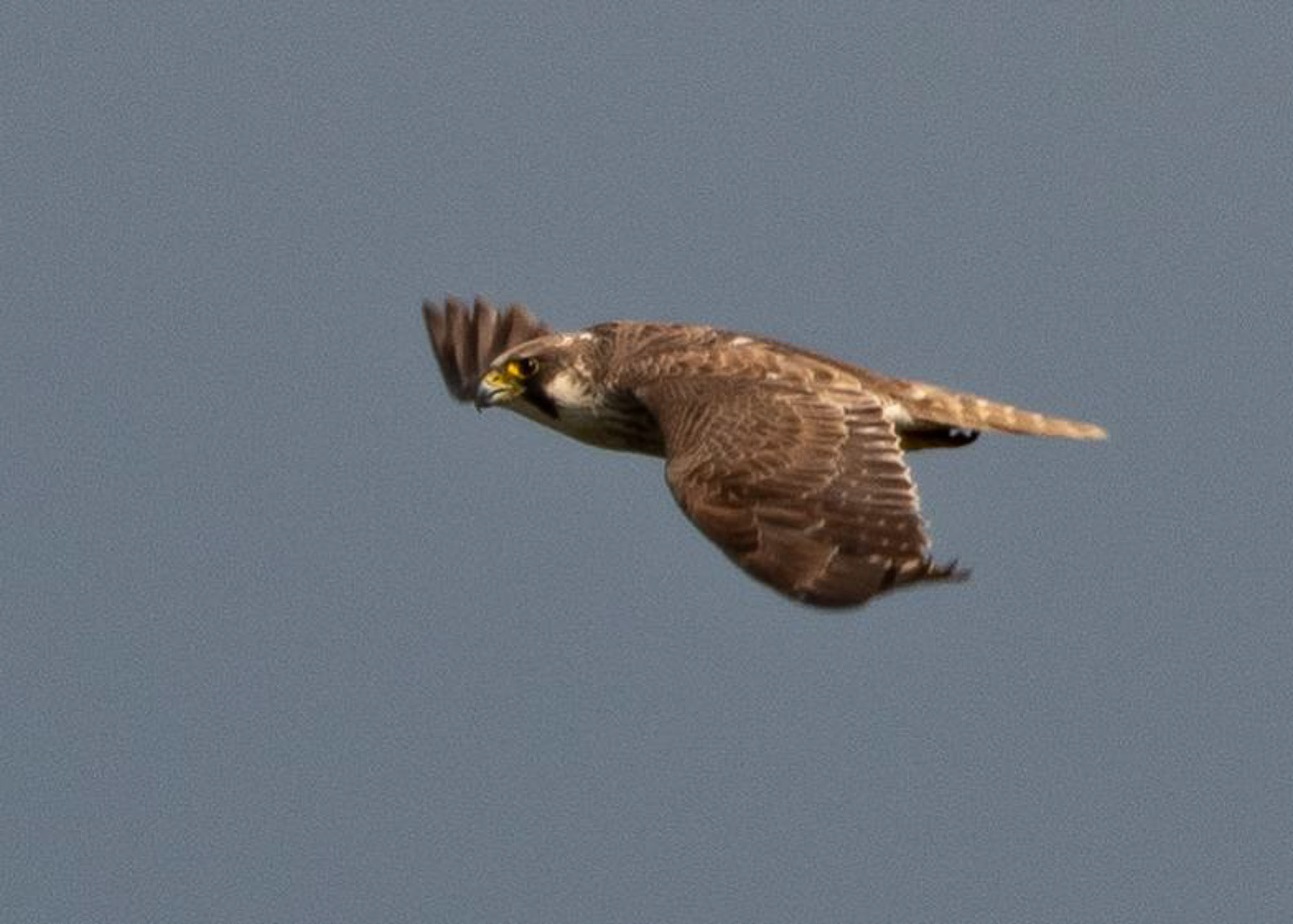
The female Peregrine dashed past while we were monitoring Gull Island and the male was close by. Things look positive for a breeding attempt next year, at 12 months old I think she was too young this year.
juvenile Peregrine photo by Dimitri Moore
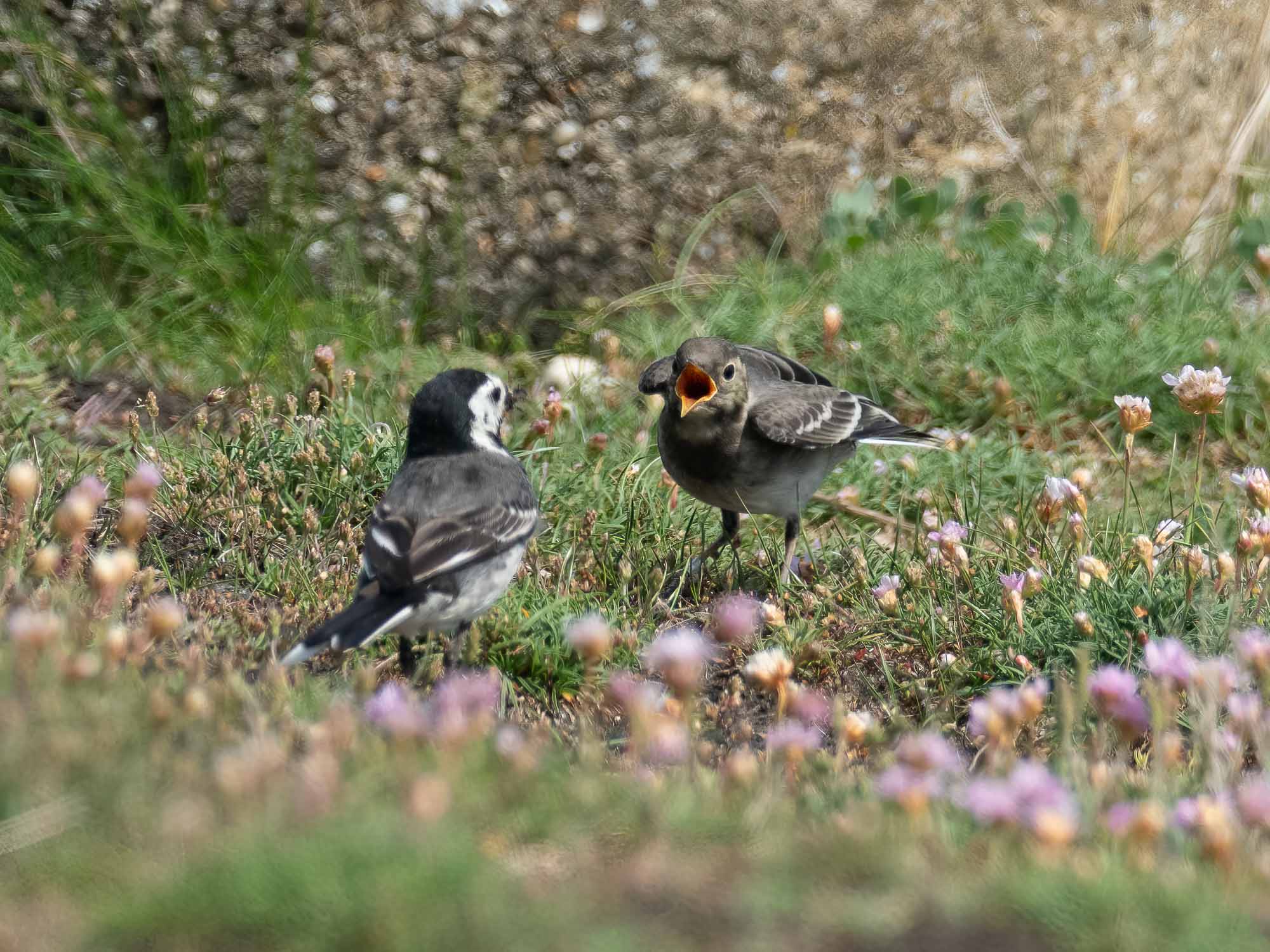
The Pied Wagtails from the Sailing Club Roof have recently fledged and it was great to catch one of the juveniles being fed by the female.
Pied Wagtails
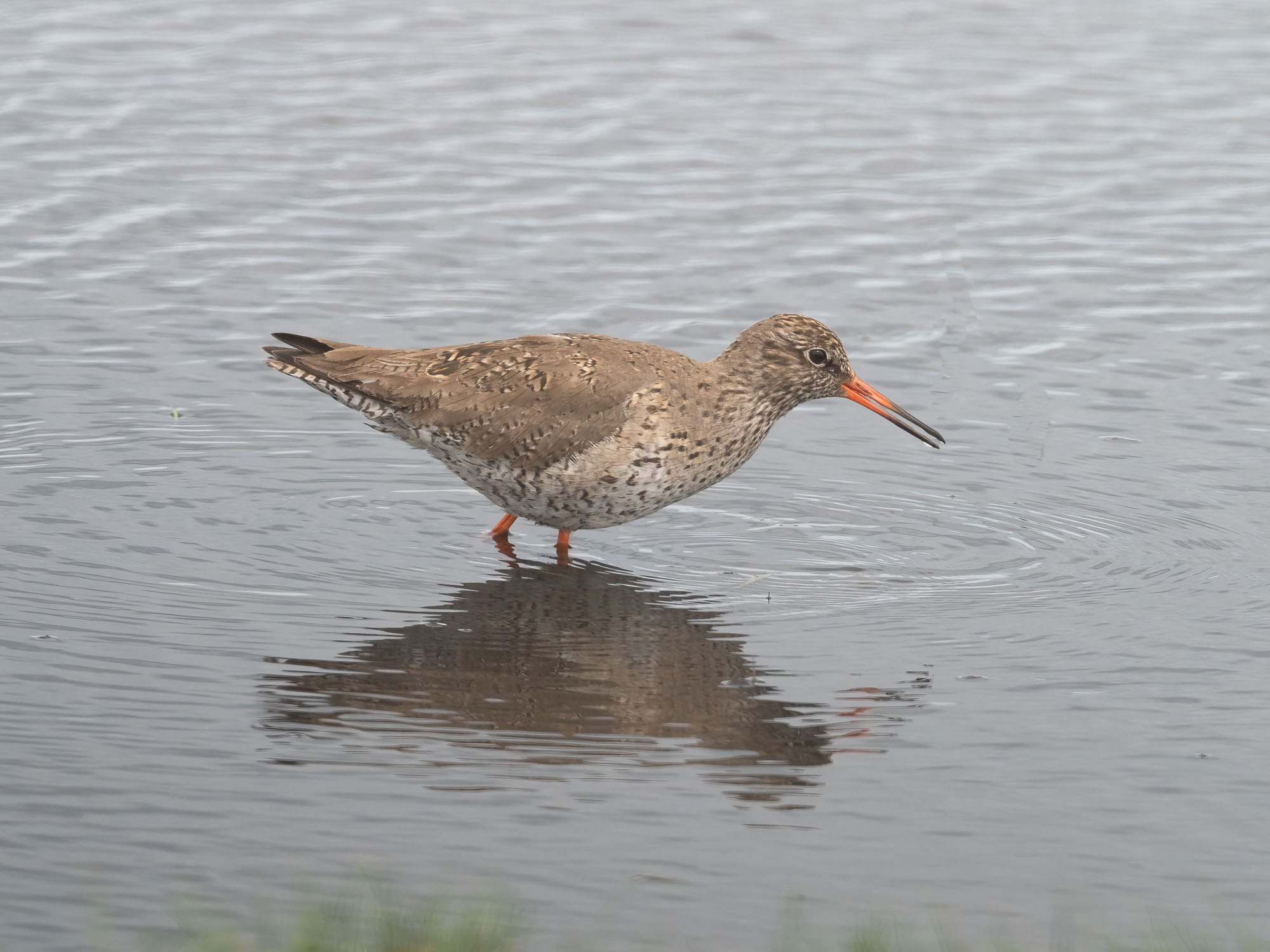
The breeding Redshank on my transect seem a little quiet at the moment. There is little display or agitation or nervousness which suggests that there aren’t any chicks yet or that the eggs aren’t quite ready to hatch. The average date for Redshank egg laying is the 1st May and so most Redshank pairs will be on eggs and they can go a little quiet in this period.
Redshank
In contrast Lapwings lay more than two weeks earlier around the 12th April and worryingly I have seen only one chick this year so far. I had seen 17 different Lapwing chicks by this time last year! Things improved slightly on the 17th when I had my first good Lapwing chick day with seven seen from two broods. The Avocets are also just starting to hatch with five chicks seen on De L’Orne from 14 sitting birds. There are another four sitting birds at Great Marsh.
At the end of the week I completed the breeding bird transect, once again, without seeing any Redshank chicks. There were, however, at least two pairs who appeared to have chicks or at least eggs just about to hatch as the adults were calling in an agitated manned from various fence posts. They tend to do this once the chicks hatch. Redshank chicks are fiendishly difficult to find so fingers crossed I have some success in the second half of May.
Redshank
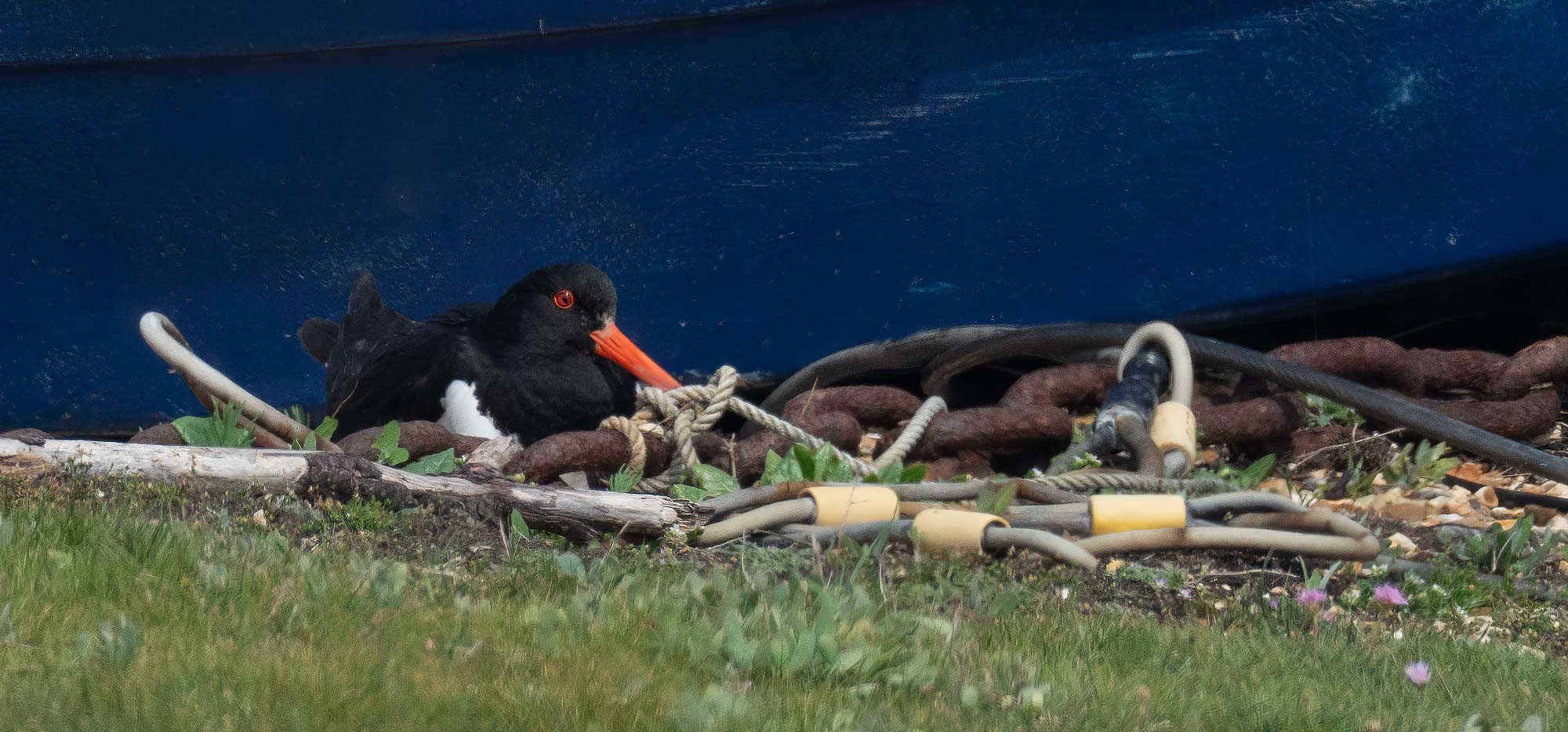
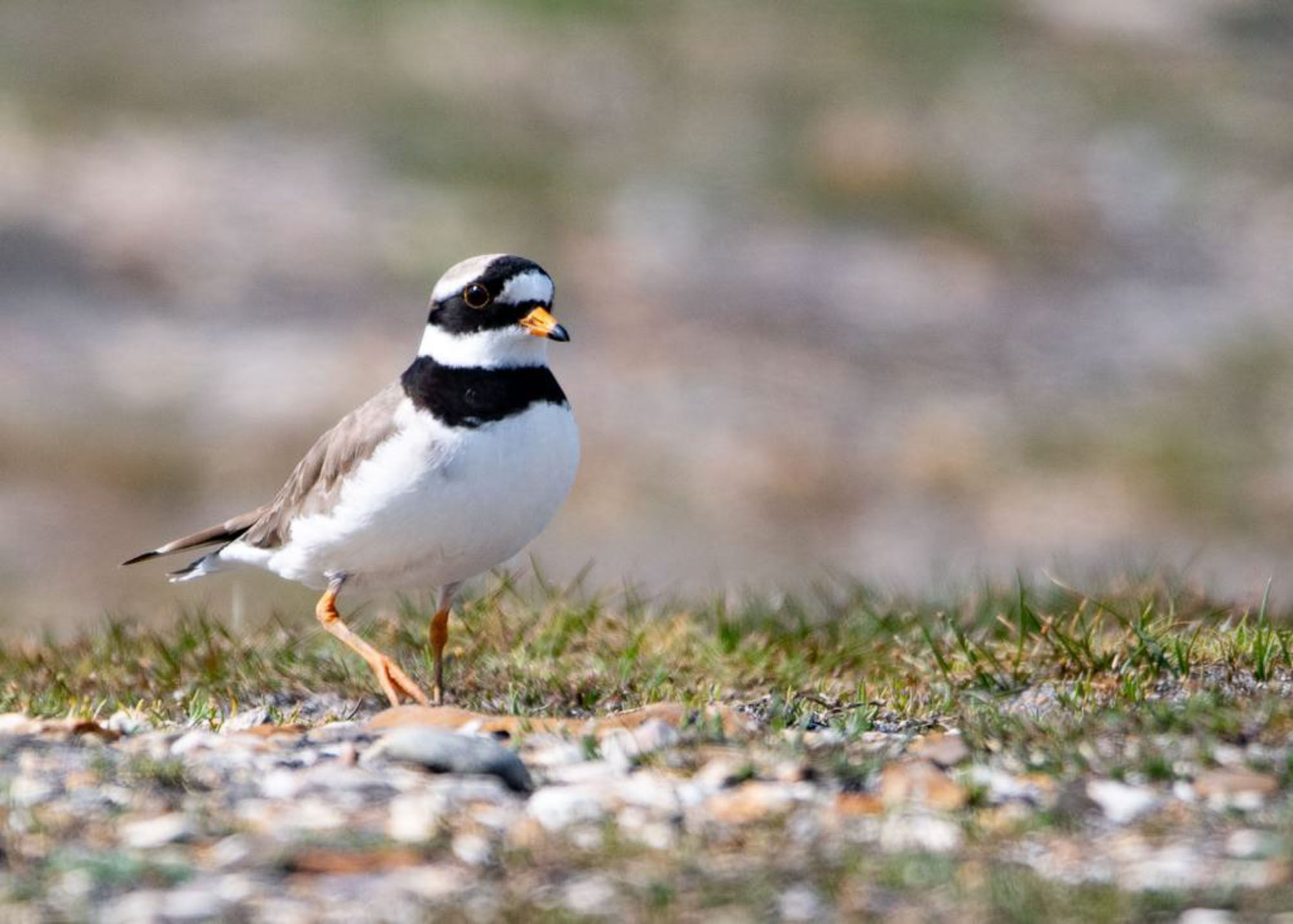
At the Sailing Club one of the two Ringed Plover nests has been predated, probably within a week of hatching. There are also two Oystercatcher nests here. Ground nesting waders are particularly prone to disturbance in this area so it’s worth keeping an eye out.
OystercatcherRinged Plover
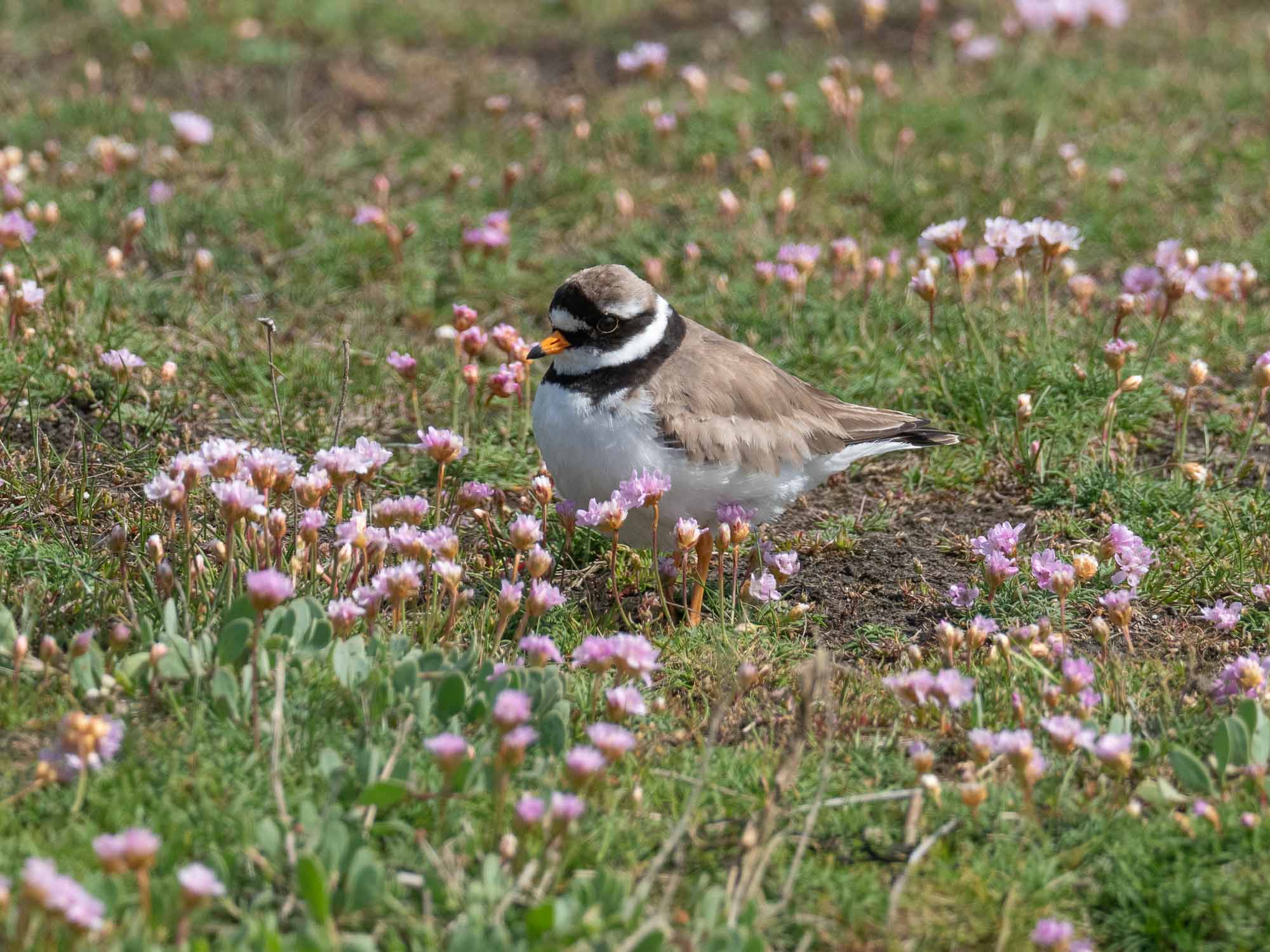
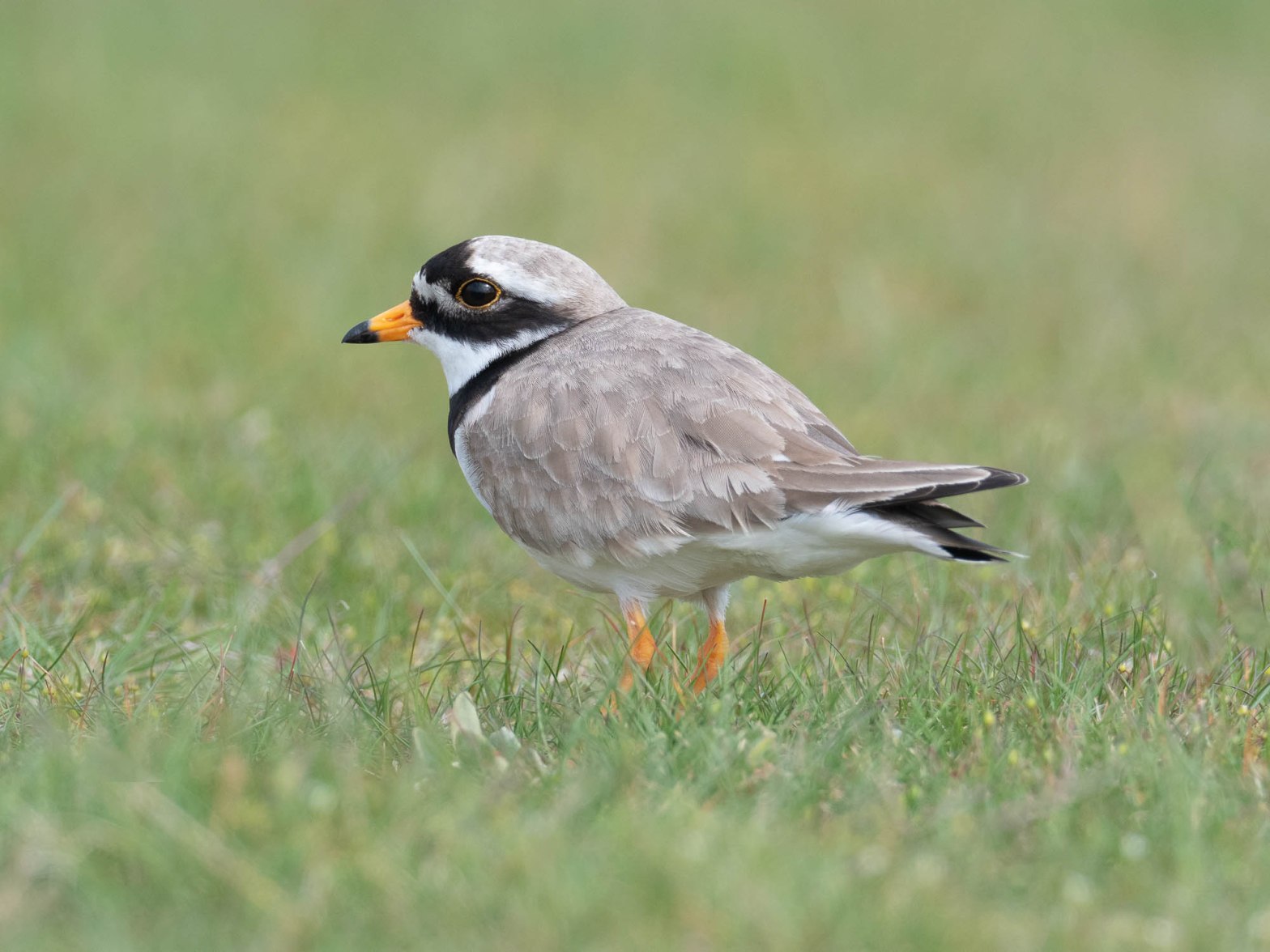
I joined Kate Jackman from RSPB to walk Warren Shore looking for Ringed Plover. We found 5 new nests and a total of 15 territories. Across the reserve there are now at least eight active nests. Kate monitors several other Ringed Plover sites on the Solent and after significant failures elsewhere Needs Ore has gone from being the prime site on the Solent to being virtually the only site on the Solent, very worrying. As usual disturbance and predation are the main pressures.
Ringed Plover photo by Dimitri Moore
Another benefit of the Ringed Plover walk with Kate was that I got to see up to 25 Sanderling using the shore to refuel. May seems to the main chance of seeing these lovely waders at Needs Ore. Some winter on the south coast and some winter in Namibia, both strategies seem to work. Breeding birds head to the High Arctic.
Sanderling
I noticed a Meadow Pipit carrying food. Having watched it for five minutes without daring to look away and just as my elbows were about to give up, it finally dropped to the ground in the gorse. When the adult had left I approached and located the rough area and was lucky to find the nest. I didn’t spend long looking but there appeared to be at least three chicks.
Graham has ringed many hundreds of Meadow Pipits including some very interesting recoveries including birds ringed here on autumn passage re-caught by ringers in the north of the UK the following spring. He hasn’t previously, however, ringed a Meadow Pipit chick. The nest inspection and ringing was done under the appropriate licenses and with consent from Natural England. There had been five eggs but only three had hatched.
Meadow Pipits
I’ve started seeing the first instar nymph grasshoppers now including some which were attracted to the moth light. This one is a Lesser Marsh Grasshopper, one of the rarer species.
There were 40 Black-tailed Godwit on Great Marsh on the 12th. Only one was in summer plumage and given the date they are probably non-breeders including 1st summer birds. It is normal for non-breeding waders to maintain non-breeding plumage even in the summer.
juvenile Dunnock
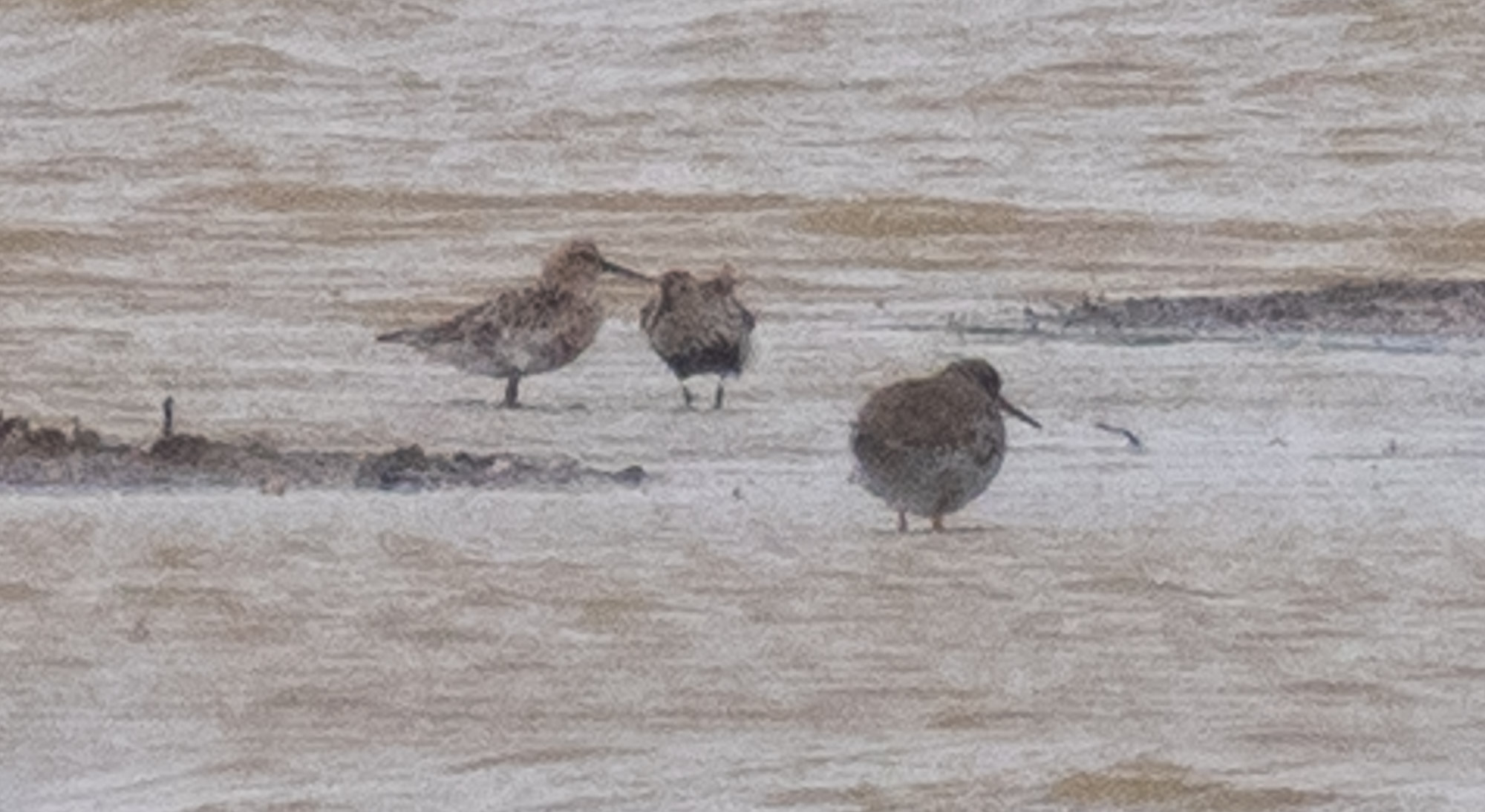
On the WeBS count on the 15th a real highlight was finding a Curlew Sandpiper which had probably dropped in with 10 Dunlin onto De L’Orne Scrape after heavy rain. I got pretty wet even in De L’Orne hide as the easterly wind drove the rain into my scope as I watched it feeding. This is only the fourth time this species has been seen at Needs Ore in the last five years.
Curlew Sandpiper (left bird)
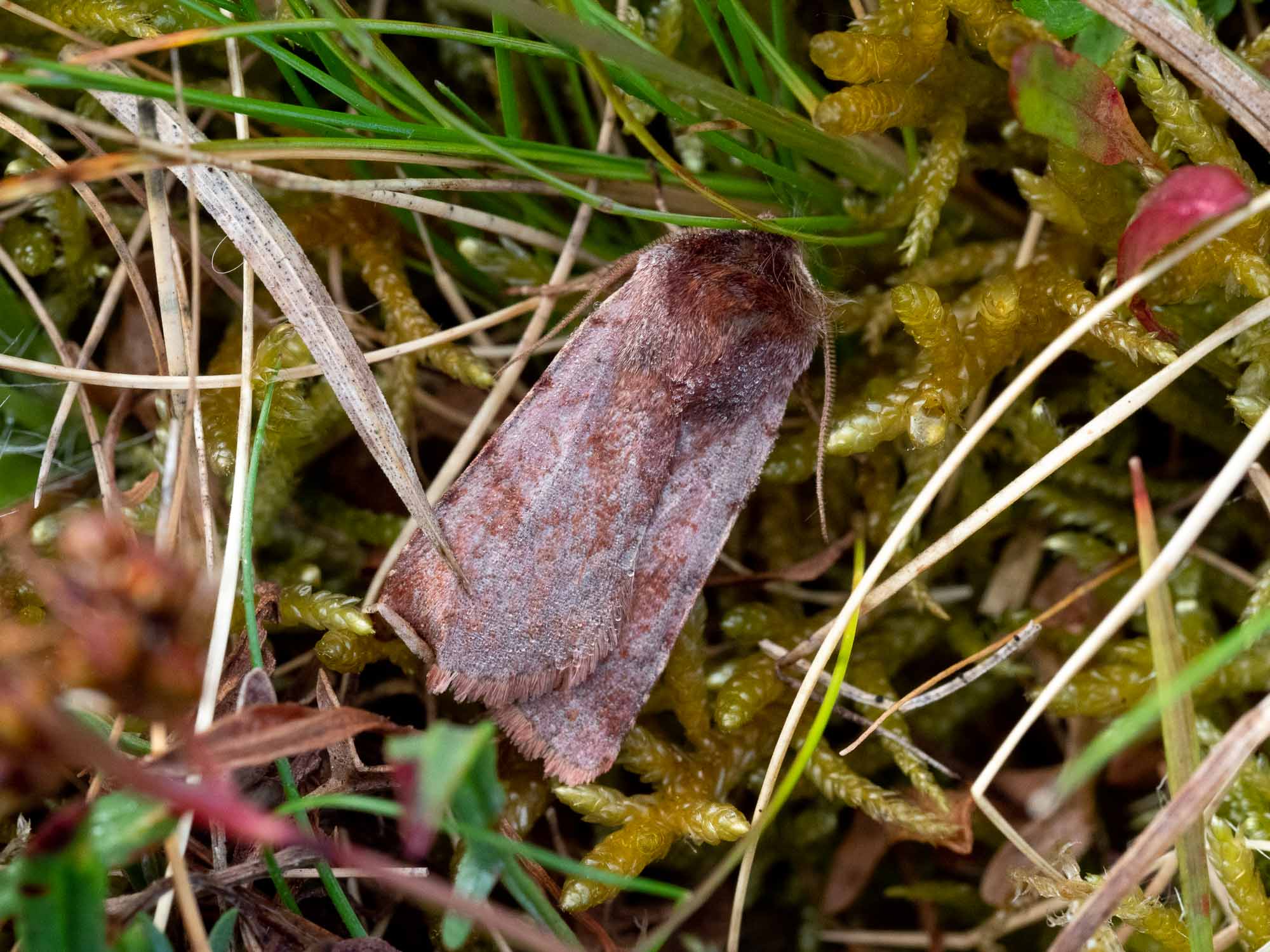
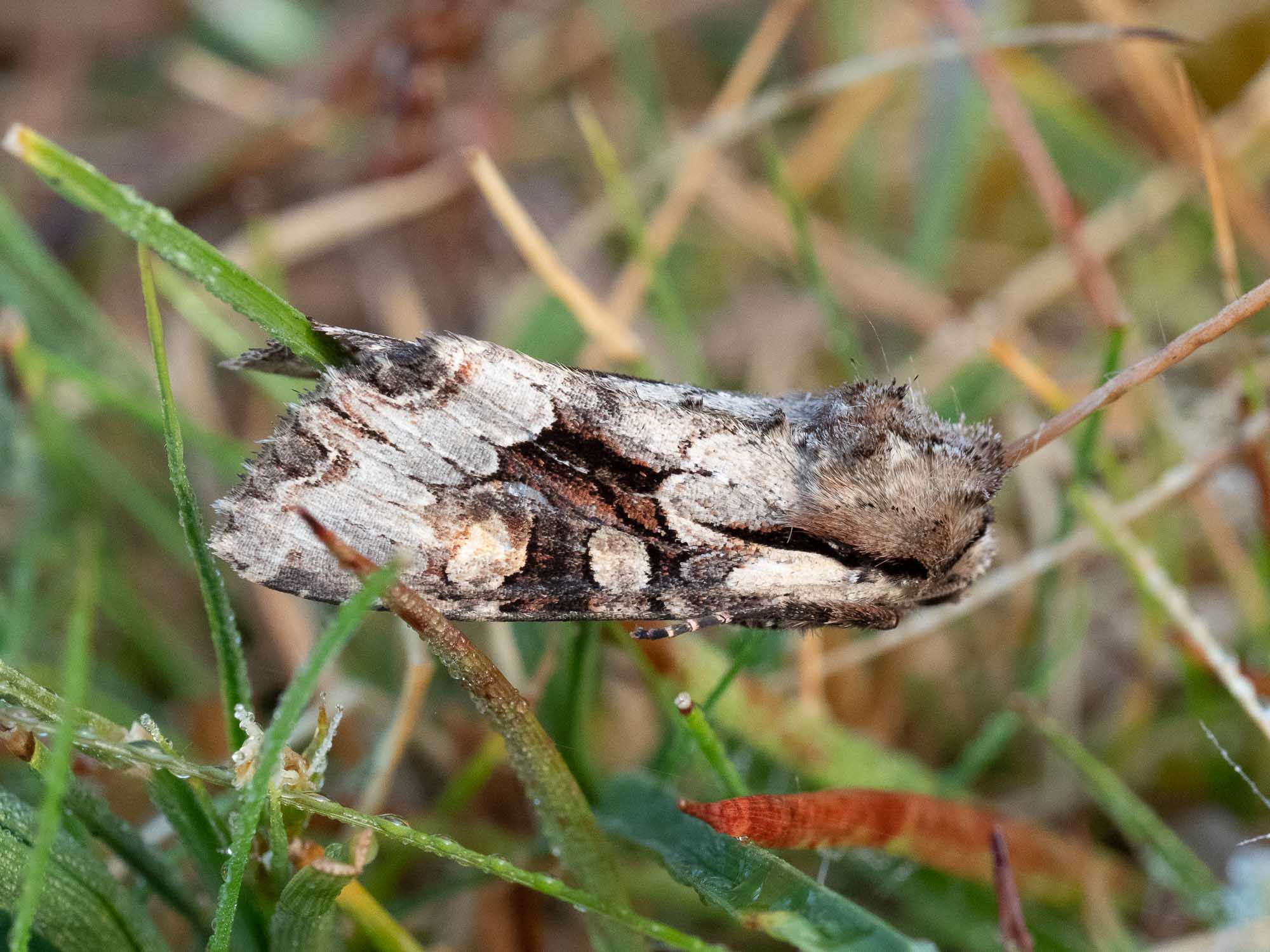
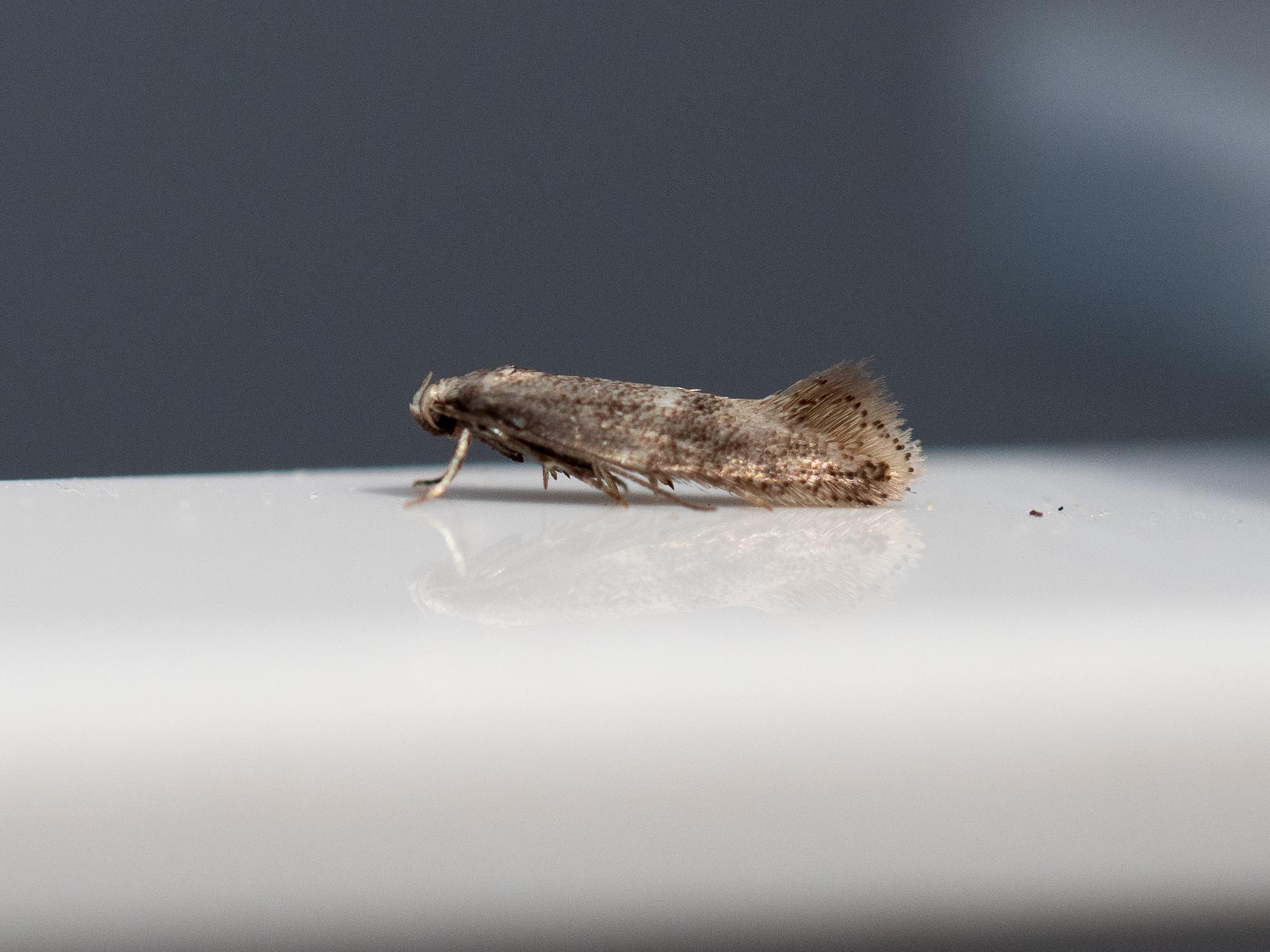
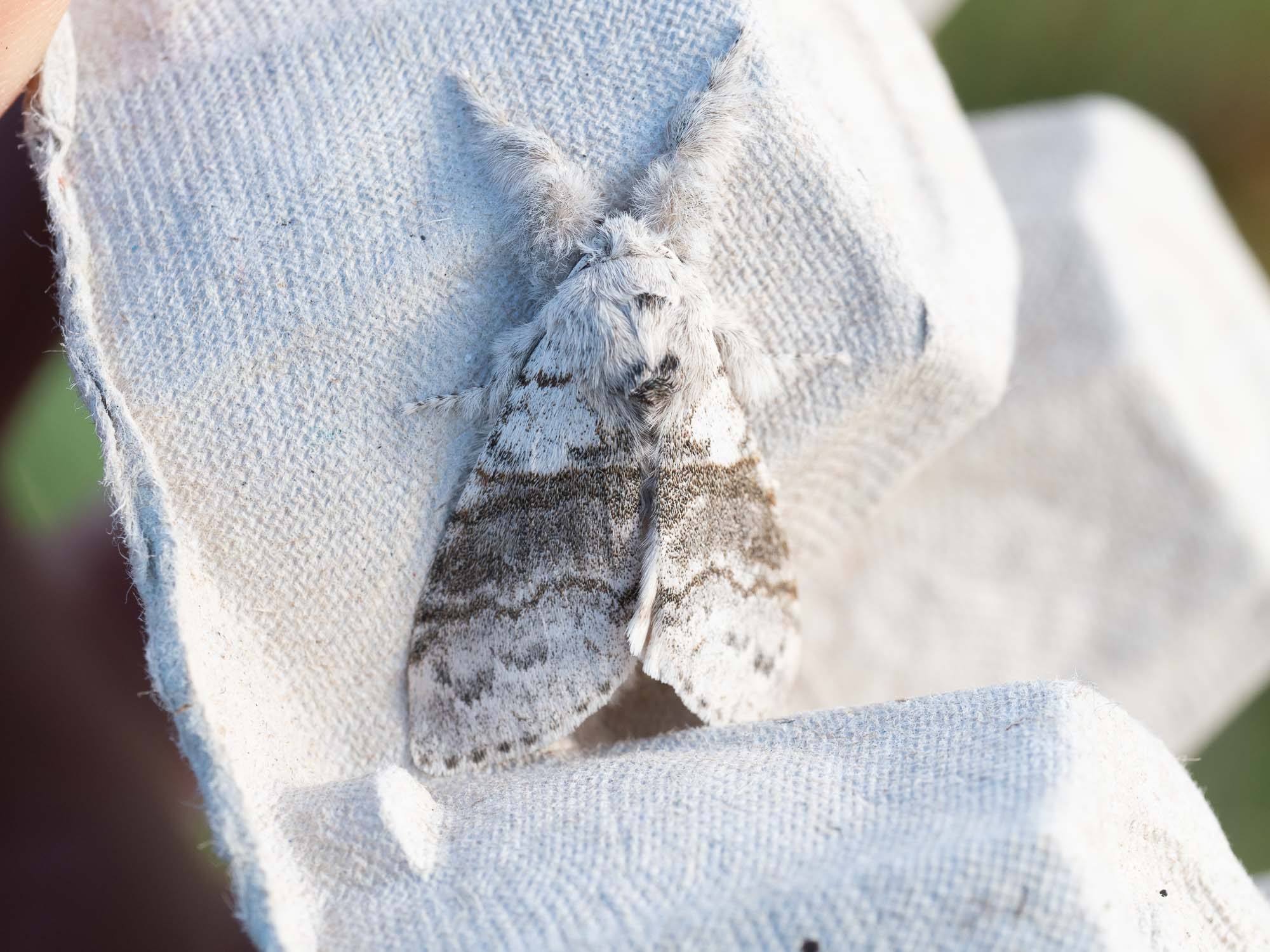
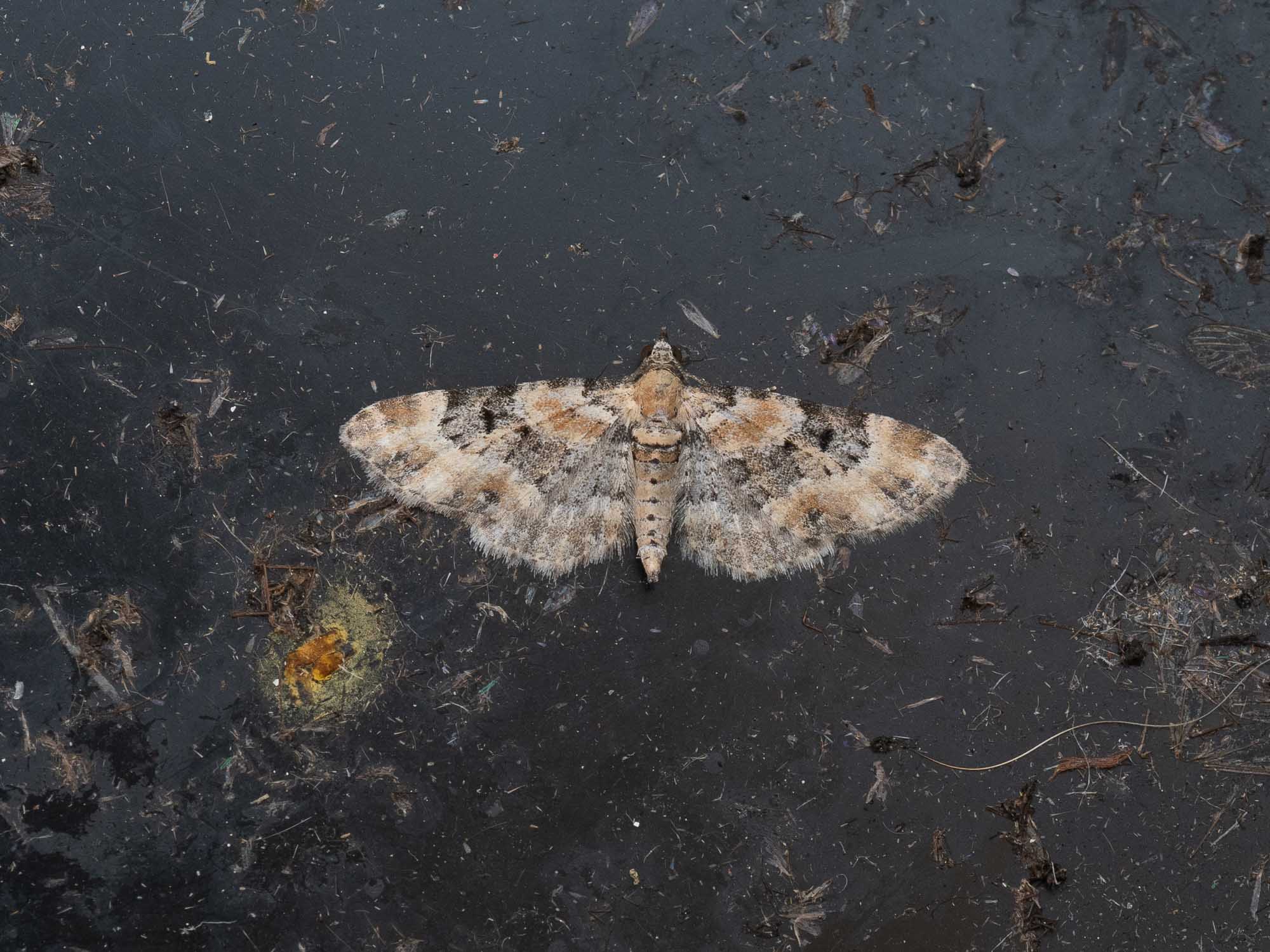
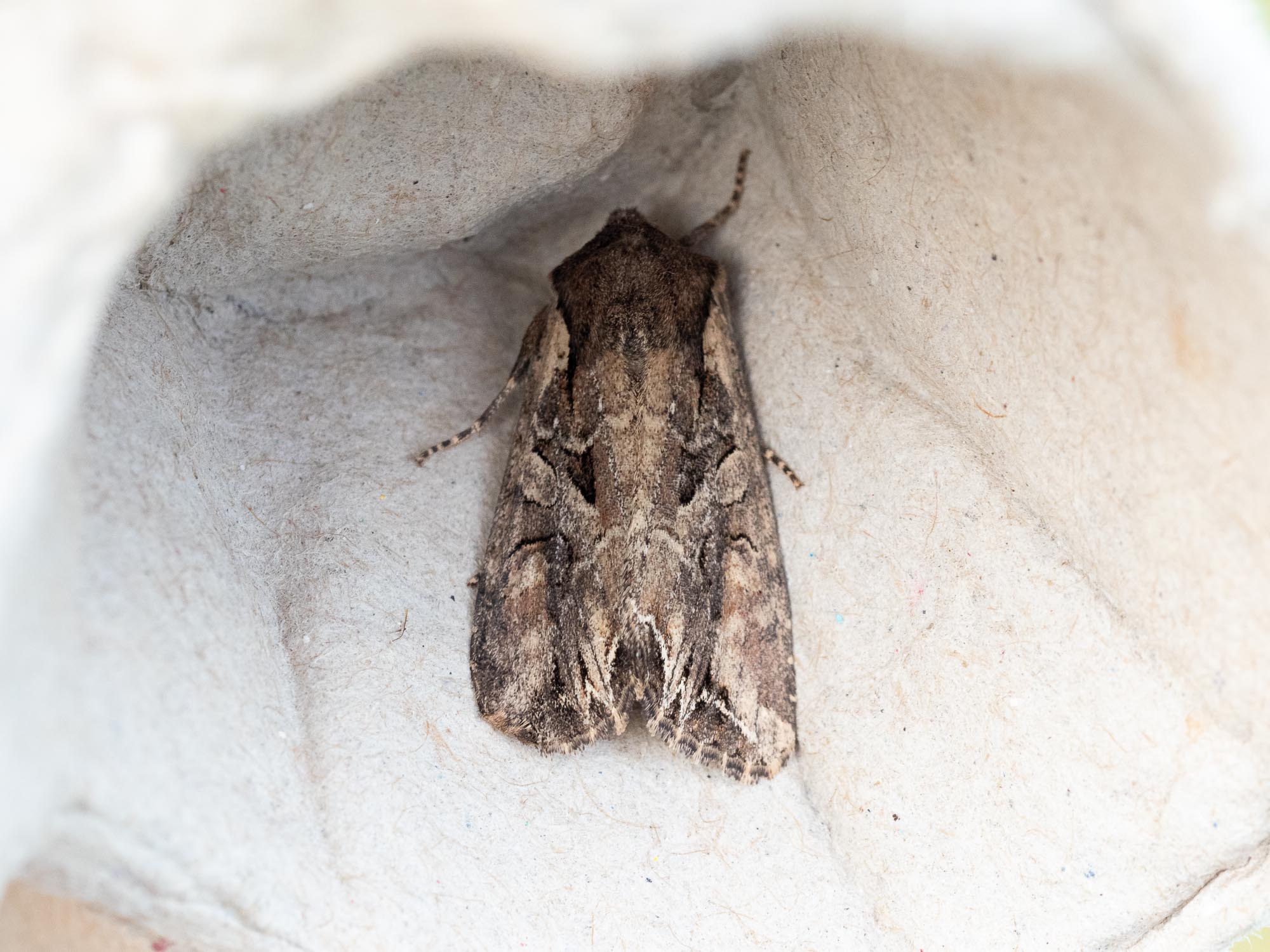
A couple of moth traps in the first half of May produced 11 species which were new for the reserve including Ringed Carpet which was only the fourth record in Hampshire in the last seven years. There were 10 other new records for the reserve, some of them surprisingly common – Light Brocade, Incurvaria oehlmanniella, Red Chestnut, Chocolate-tip, White Ermine, Pale Tussock, Pseudoswammerdia combinella and Elachista canapennella.
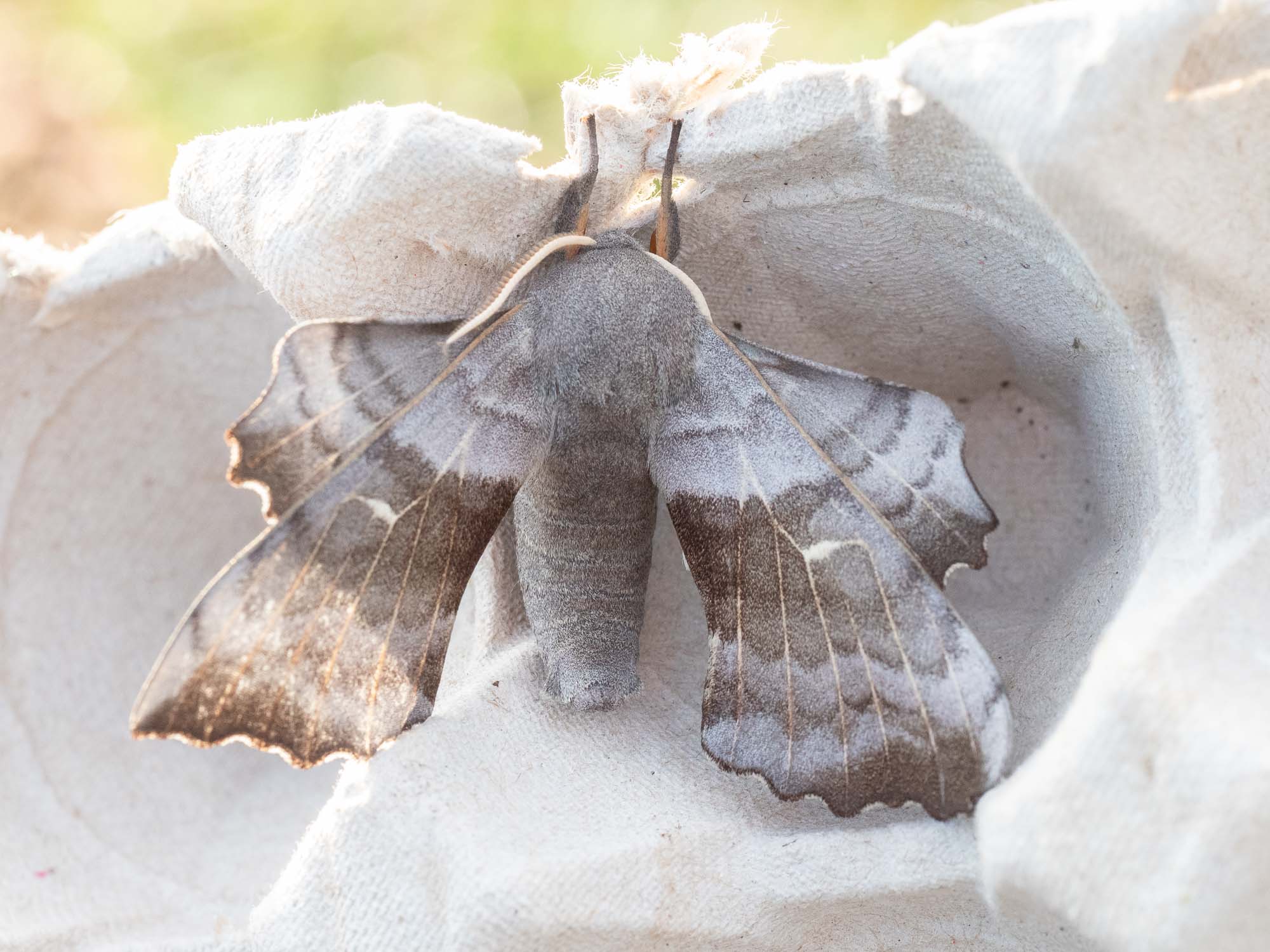
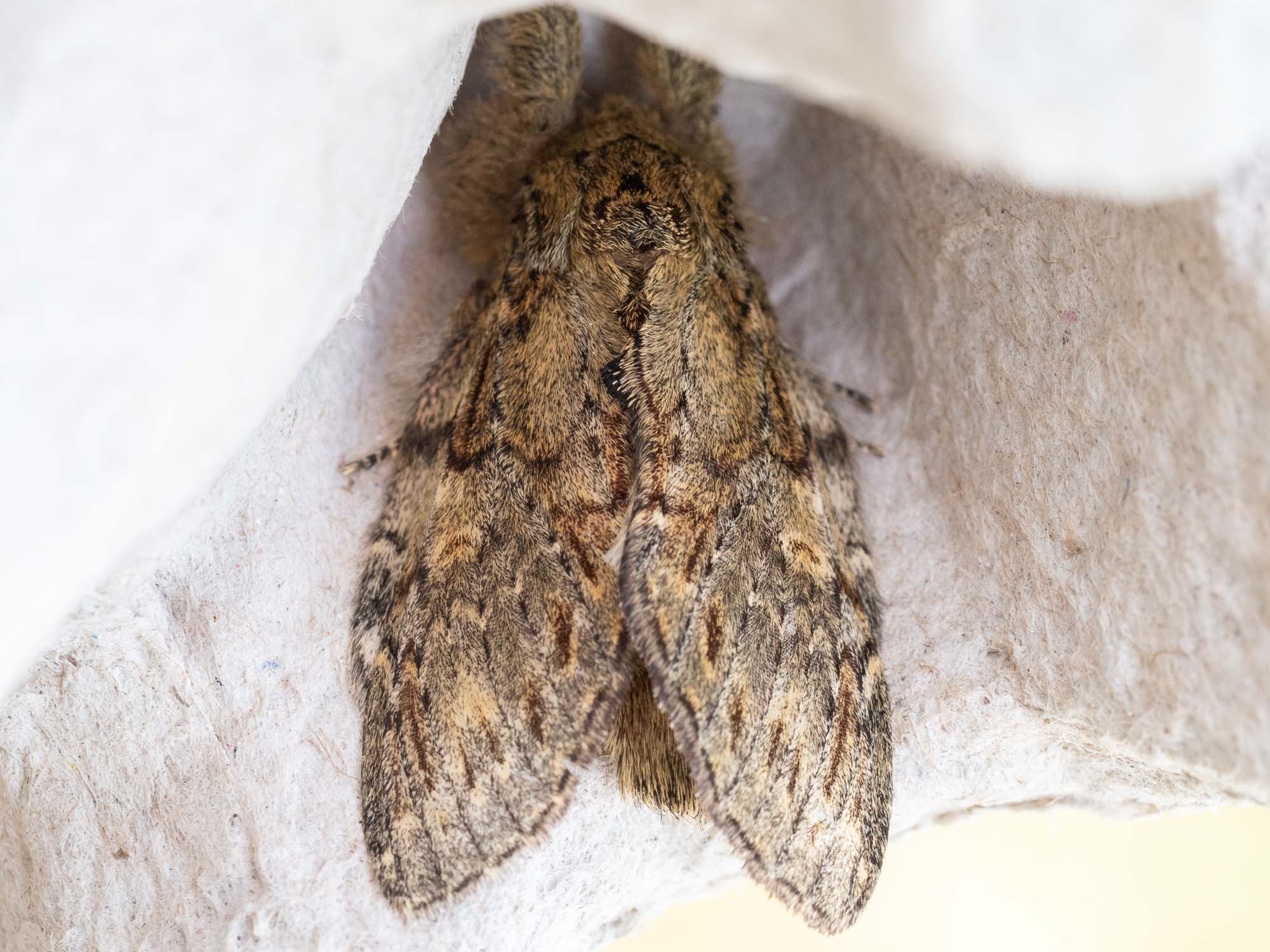
Other interesting moths included Lunar Marbled Brown, Pale-shouldered Brocade, Dark Sword-grass, Iron Prominent, Tawny Shears, Great Prominent, Poplar Hawk-moth, Pine Hawk-moth, Foxglove Pug, Teleiopsis diffinis and Purple Bar.
A frustrating run of cold northerly winds seemed to last all month slowing up the arrival of migrants and making this key sea watching period along the Solent very poor.
Small groups of Eider were moving back and forth on the sea early in the month and a female Red-breastedMerganser was still around on the 3rd. Dunlin and Turnstone were also hanging on at the month end. On the WeBS count early in the month there were impressive numbers of Mediterranean Gulls with 298 almost all adults gathering in their normal spot south east of Inchmery Quay.
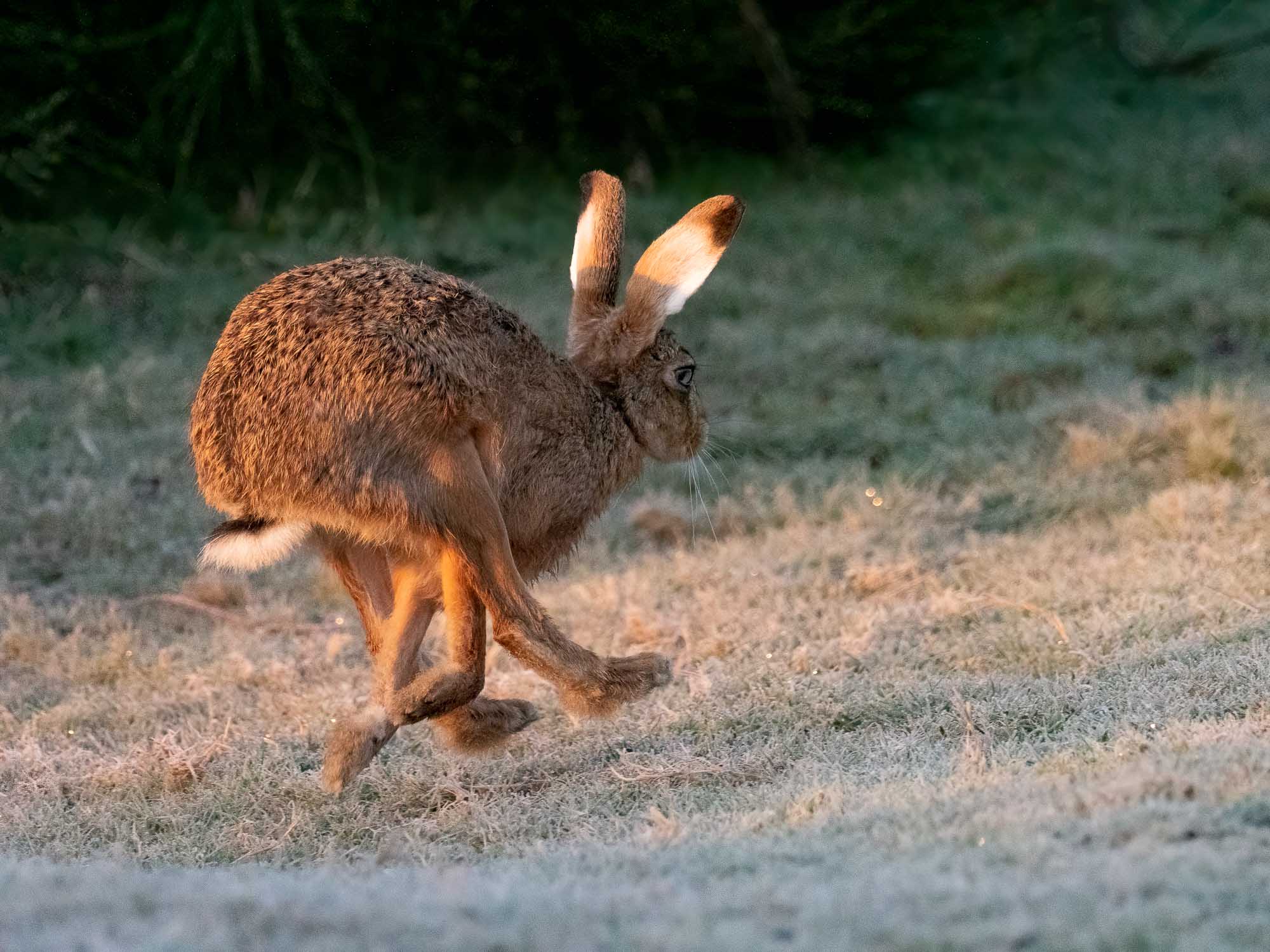
Brown Hares continued to be in evidence including this obliging individual which trotted towards me showing the rufous colour, long legs, dark-tipped ears and also the tail held low unlike the Rabbit which holds it up flashing the white more obviously.
Brown Hare
A small passage of Green Sandpipers moved through early in the month. They are on their way to breed in Finland and Russia having spent the winter in southern Europe or possibly Africa.
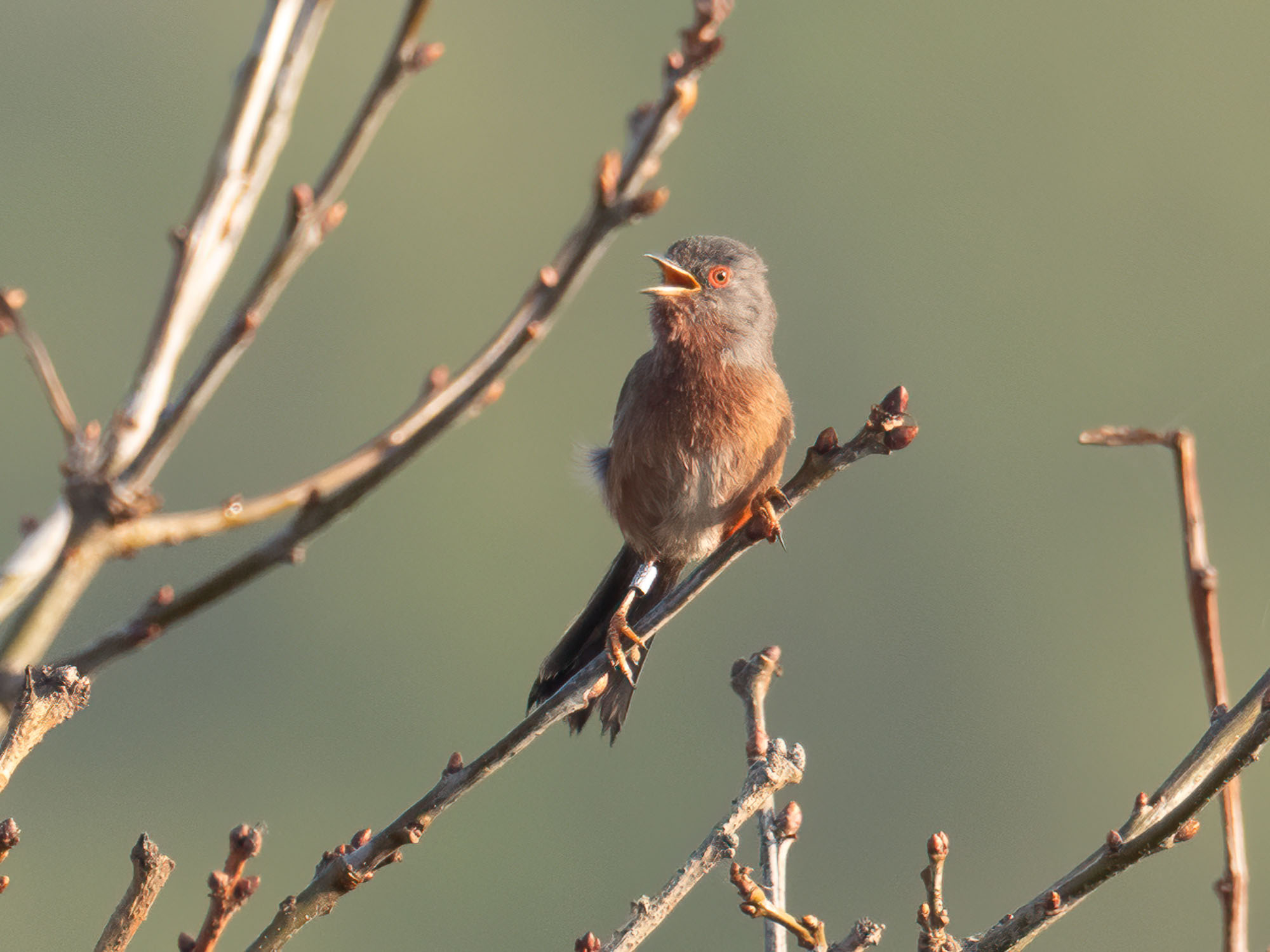
The male Dartford Warbler I first found in mid-January was singing for most of the month unable it seemed to attract a partner. I did see it with another male on the 5th and then I finally saw a female with one of the males on the 16th. Both males stopped singing in the last week of April. I’m hoping to find evidence of breeding in May.
male Dartford Warbler
The Little Ringed Plover pair continued to split their time between the muddy fringes and the shingle overthrow where they bred last year. They also flew over to De L’Orne Scrape to feed on several occasions. I saw them mating twice around last year’s nest site but it wasn’t until the 29th that they finally settled on a spot and I found the first egg.
male Little Ringed Plover
Wheatears were fairly thin on the ground this spring with only three sightings so far compared to 12 last year, my first was on the 3rd April.
Wheatear
There were two Spotted Redshank on the 3rd but none were seen after this date. They head off to northern Scandinavia to breed. Greenshank, however, were still around at the month end. Those that linger are more likely to breed in Scotland as opposed to Scandinavia.
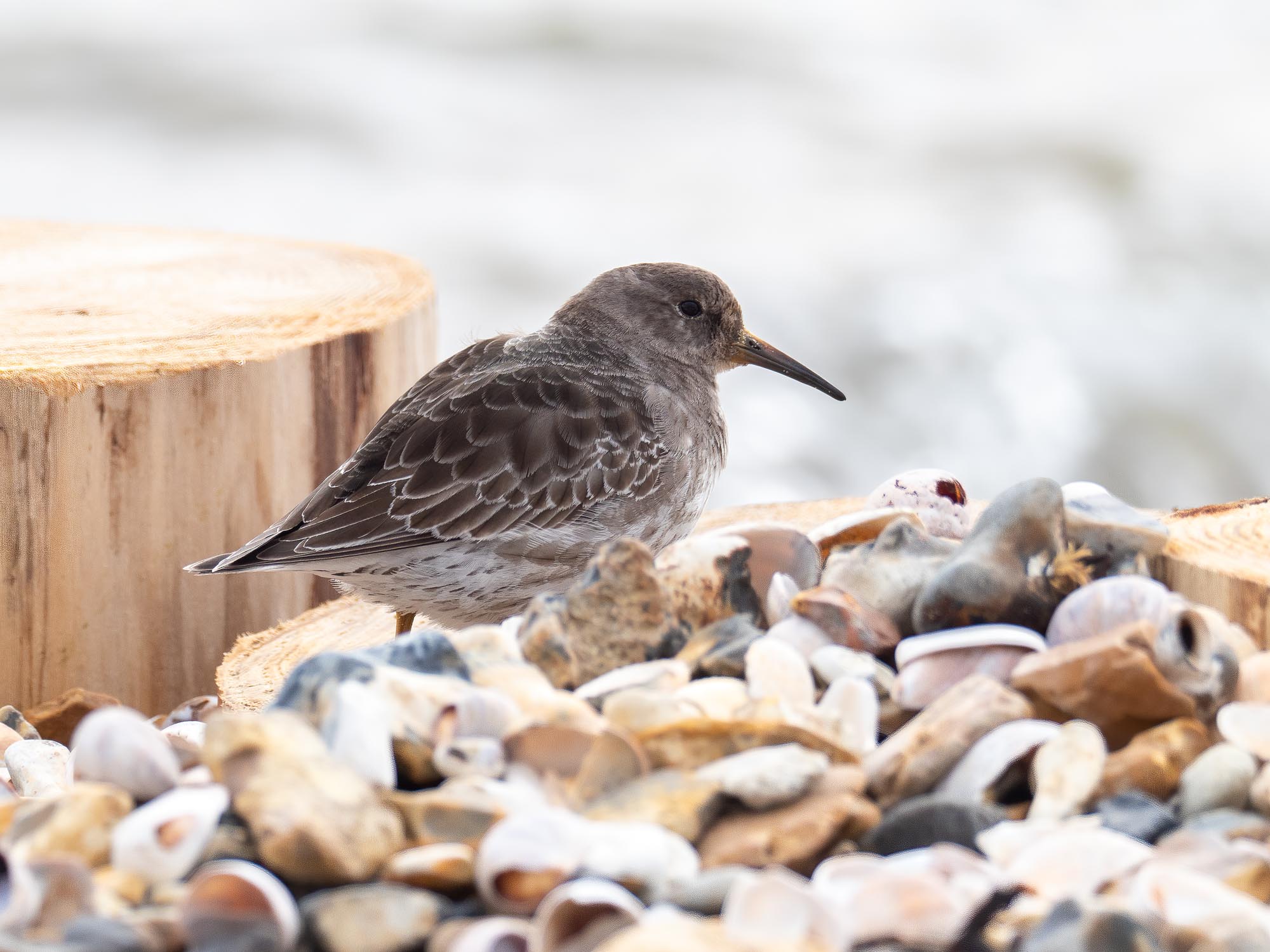
Also on the 3rd on the private side of the Park Shore fence the wintering Purple Sandpiper was associating with Turnstones. It seems likely to be heading back to Norway or Iceland soon. On the 16th I saw it again on the beach near Mary Monts with other lingering winter visitors, Grey Plover and Turnstone.
Purple Sandpiper
I tried out a new Emperor Moth pheromone lure. People have had good success with these in other places this spring. Emperors Moths are reasonably common in the New Forest but difficult to see well as they rarely land. I attached the pheromone-impregnated rubber bung to my tripod and stood upwind of several decent areas of heather and gorse but it wasn’t until my third try when I was on the beach at Park Shore that I got lucky.
He buzzed me several times before settling on my ruck sack and then my head! I managed to cup it in my hands and it stayed for a quick photo. This is the first ever record for Needs Ore/Park Shore and also the first ever record for the whole 10km square (SZ49). I saw other male Emperors at Mary Monts on 23rd and at the Wardens’ Hut on the 30th.
male Emperor Moth
The 9th of April finally brought me first Merlin of the year. A large looking female dashed out across in front of me when I was at Wheatear Corner and then landed on the up-turned tree roots on the shingle ridge. She will be heading north soon to breed on the moors in Wales, northern England or Scotland.
female Merlin
The adult Spoonbills headed back to the Netherlands mid-month leaving a second calendar year bird on its own for the rest of the month. His ring NBNZ confirmed a Dutch origin and that he wintered in Poole Harbour.
2nd calendar year Spoonbill
It was great to hear a Willow Warbler singing mid-month around Black Water. This is a declining bird especially in the south and they haven’t bred at Needs Ore for five years or more.
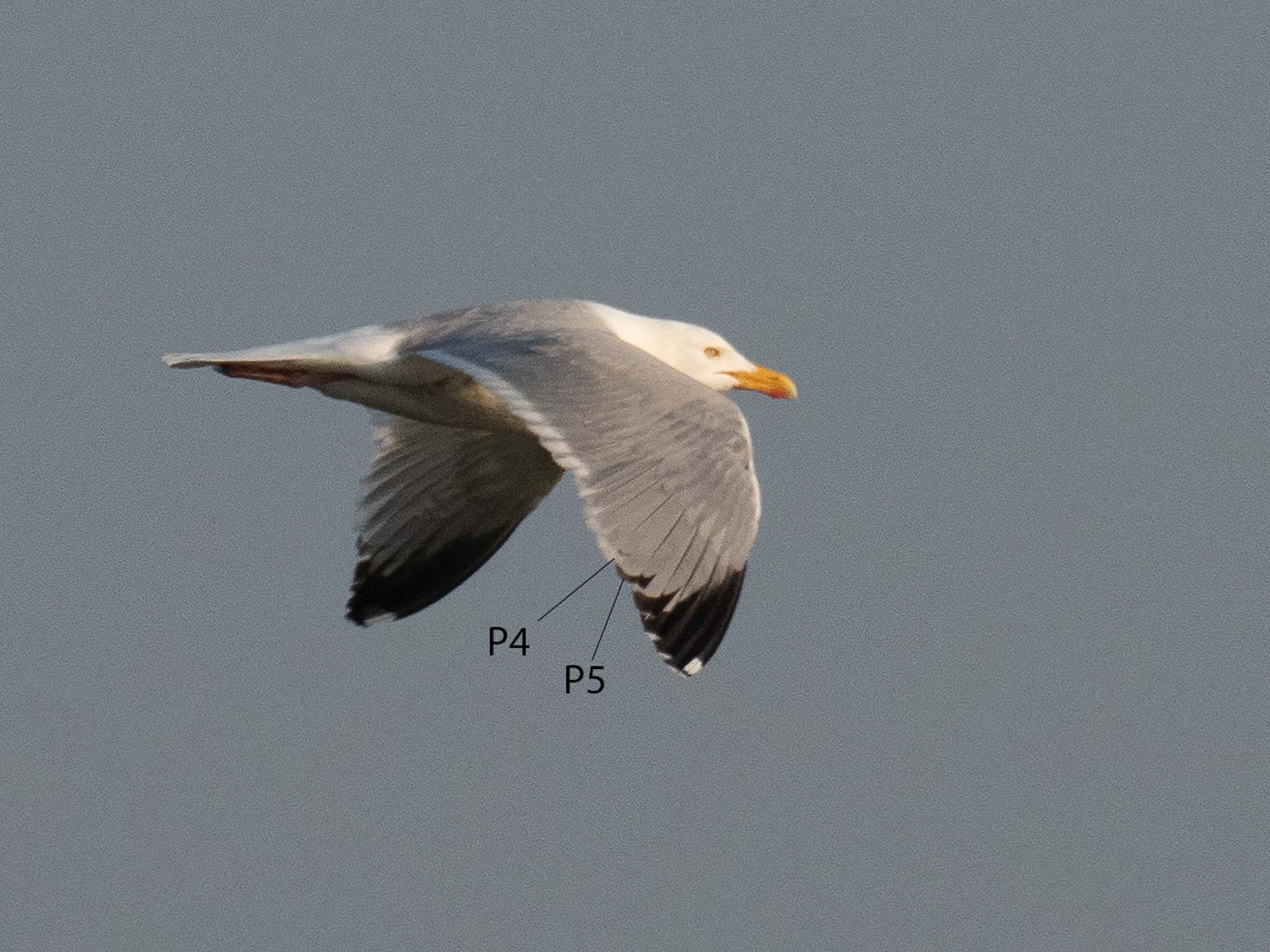
A Herring Gull mid-month showed an uncharacteristically wide black band on P5 and even a small black mark on P4. Several commentators online felt that this was a classic Yellow-legged Gull wing pattern but the bird in question turned out to have pink legs suggesting that a single feature taken in isolation (wing tip pattern) is not always indicative.
Herring Gull
The drake Garganey remained in the De L’Orne area for most of the month but was unable to find a female. He left just after the 16th.
drake Garganey
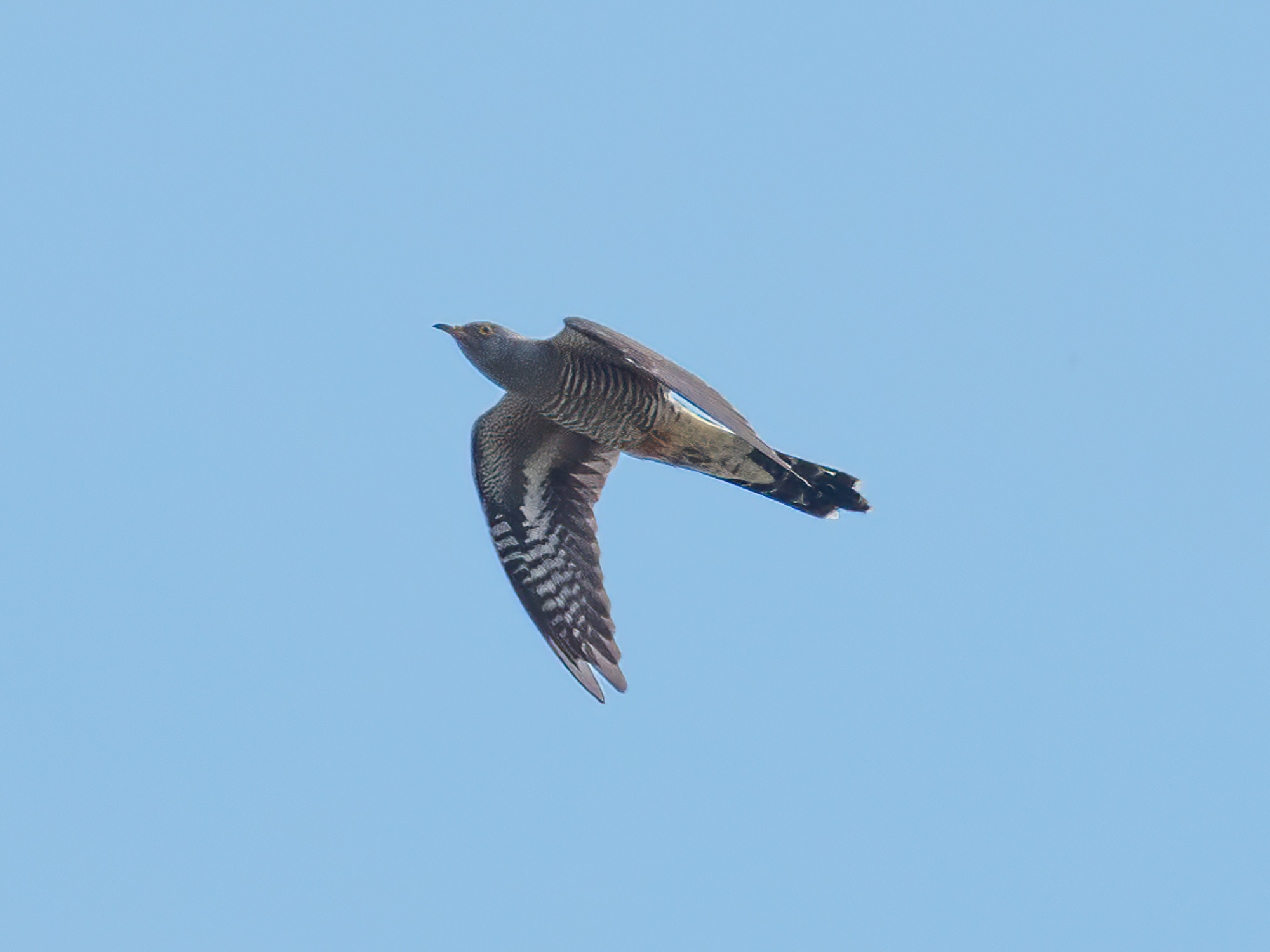
On the 16th I heard my first Cuckoo calling and as I walked along Warren Lane it flew across in front of me. This is two days earlier than last year. I heard Cuckoos on every visit during the rest of the month including a male coming in off the sea at the month end.
male Cuckoo
Sea watching mid-month produced the first trickle of spring passage, a Common Scoter pair west and seven Common Terns and the first Whimbrels heading east.
Common Tern passage picked up towards the end of the month including a tight fishing flock of 50 birds on the 20th. At times they streamed through at more than 30 per hour and then there’d be three or four hours with very few. The passage of Whimbrel and Bar-tailed Godwit seemed a bit more consistent with counts of 50-70 of each species on two separate sea watches in the final week of the month. Some of the Whimbrel stopped to feed inland in the fields but the Bar-tailed Godwit tended to keep moving.
Sea watching highlights included three 1st summer Little Gulls on the 29th.
2nd calendar year Little Gulls
Butterfly highlights included the first Green Hairstreak of the year on the Broom and Gorse bordering Gravelly Crossroads.
Green Hiarstreak
Lots of Speckled Woods flying along the hedgerows now and also good numbers of Peacock and the odd Comma. A butterfly patch tick on the 29th, my first Orange-tip on the reserve.
male Orange-tip
The Peregrines were seen mating on many occasions during the month but there was no evidence of a breeding attempt. They male and female are away from Gull Island a lot.
A highlight on the 21st was seeing my first odonata of the year, a Hairy Dragonfly quartering near Great Marsh. A few days later I later watched another patrolling the ditch opposite the Shore Hide.
Hairy Dragonfly
On the 23rd it was great to watch a Hobby flying all of the way across the Solent making landfall before heading over Shore Hide and then on towards Black Water.
Hobby
My first Little Terns of the year on the 27th were very distant, their amazingly rapid clockwork-toy flight action made identification easy despite the long range. On the same day a single Black-throated Diver headed east, there is a small spring passage of divers along the coast here, mainly Red-throated Divers and Black-throated Divers.
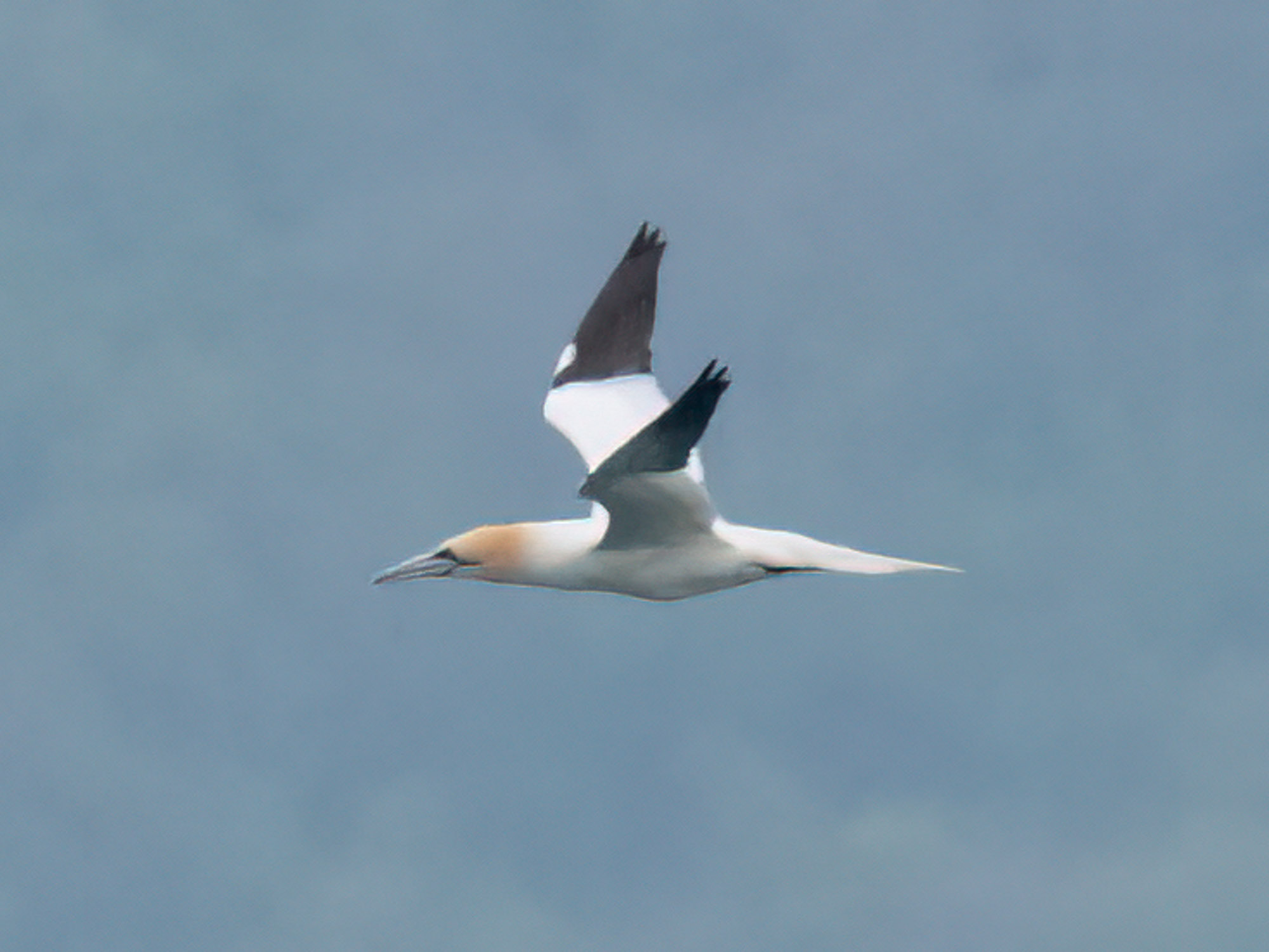
My first Gannet of the year on the 27th was a slight surprise and it came much closer than they normally do.
Gannet
It’s always a treat seeing the Green-winged Orchids springing up in Spring Meadow during April.
Green-winged Orchid
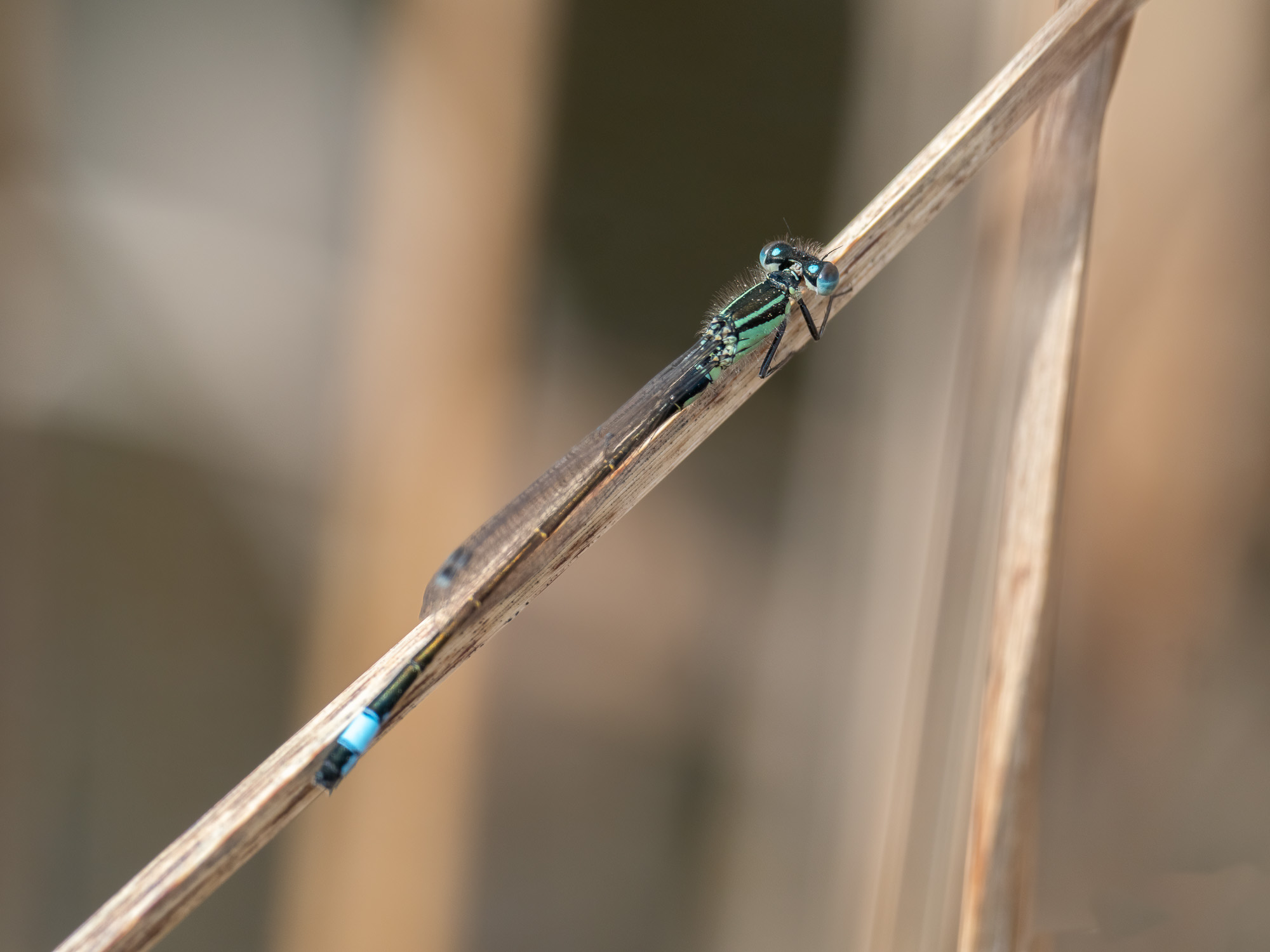
My first damselflies of the year were Blue-tailed Damselflies which I recorded in three different places around the reserve on the 29th.
Blue-tailed Damselfly
As I was heading down Gins West Bank on the 29th a Yellow Wagtail called above me, I didn’t see it which is a shame as they are pretty spectacular at this time of year.
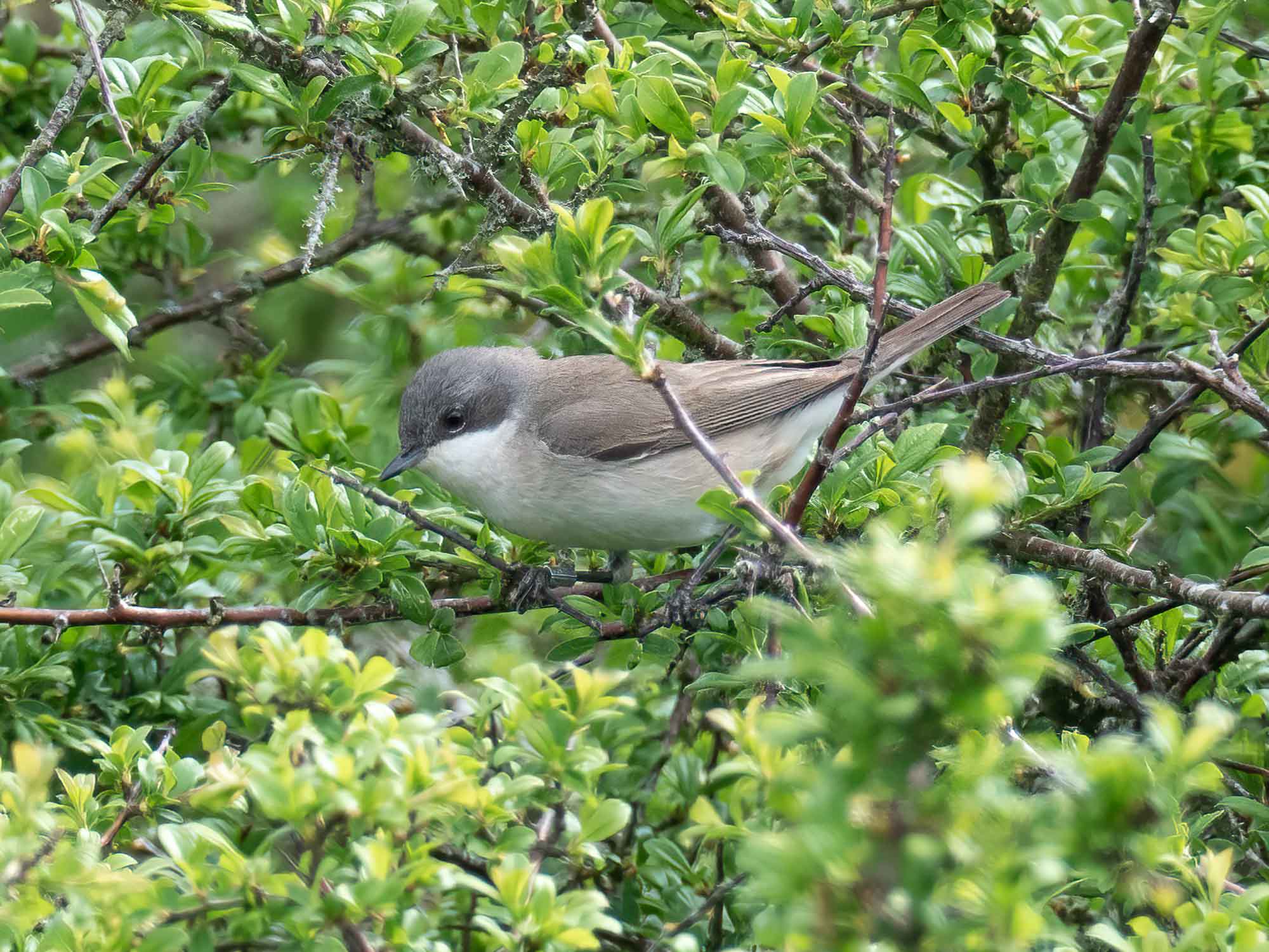
There were at least five singing Lesser Whitethroats around the reserve today including this ringed bird in Pullen Scrub. Sylvia warblers are very site faithful and so it may well be the same ringed bird that I saw singing from the same bush last April. It has been to East Africa and back in the meantime.
Lesser Whitethroat
Having spent all of the recent sea watches hoping for a Little Gull it was brilliant to finally see a group of three 1st summer birds heading east. Andy Johnson saw what is probably the same group of three going past Hayling Island later in the afternoon.
1st summer Little Gulls
Three Cuckoos today, a male calling and then a female bubbling in response before another male Cuckoo came in off the sea.
male Cuckoo
Our ringed adult Stonechats continue to bring in food items. The adults range a hundred yards or more looking for food and I was well away from the nest site when the female landed close to me.
Stonechat
Brilliant to see that the female Little Ringed Plover laid her first egg this morning. Last year she laid four eggs. If she does the same again this year she would finish the clutch and start incubating on Monday 2nd May and then hopefully the chicks would hatch around May 25th. The male flew over to check me out while I was busy watching very little (!) flying up the Solent.
male Little Ringed Plover
I managed to find another Linnet nest this morning, this time the female was bringing in feathers which are usually the final touches and so she should be laying in the next day or so. Across the reserve today we had 21 pairs of Avocet with 12 nests containing 45 eggs. No evidence of predation yet.
I found a dead shrew near the Warden’s Hut and judging by the dark colour and two-toned tail I think this a Water Shrew, much rarer than the Common Shrew. Another Emperor Moth was attracted to my lure while we were at the Warden’s Hut.
Water Shrew
Nearby this Ringed Plover scuttled off its nest and then just stopped to watch me. The nest was close by with two eggs. I got down low to blur the background.
Ringed PloverRinged Plover eggs
My first damselflies of the year were Blue-tailed Damselflies which I recorded in three different places around the reserve.
Blue-tailed Damselfy
A butterfly patch tick today, my first Orange-tip on the reserve. It looked likely to continue flying out of sight but then circled backed and landed briefly, enough time for a photo.
male Orange-tip
In readiness for their return Adam has been playing a Common Tern lure tape on De L’Orne Lagoon and today a Common Tern flew over the rafts. Several of the rafts had been kept covered to stop the Black-headed Gulls but now the terns are here they’ve been uncovered to give them a chance to find some space.
Common Tern
There were two Sedge Warblers and 12 Reed Warblers singing today, all of them around Black Water and the Gins.
Sedge WarblerReed Warbler photo by Brian Fairbrother
As I was heading down Gins West Bank a Yellow Wagtail called above me, I didn’t see it which is a shame as they are pretty spectacular at this time of year.
Yellow Wagtail
A very good passage of hundreds of Swallows today with four House Martins mixed in with them. The Green-winged Orchids have shot up a bit and so I stopped for another photo.
Green-winged Orchid
This Common Carpet, was flitting around the gorse near the point. A common species but the first I’ve knowingly seen here. Shows you that I need to start paying a bit more attention to day-flying moths.
Common Carpet
The male Peregrine flew in a bit closer than normal to feed on a carcass. At this closer range you could see that it was wearing an orange ring on its left tarsus, this is the county colour for Hampshire. It’s not possible to identify the bird further without being close enough to read the two letters on the orange ring. I hadn’t previously noticed that the male was ringed but this is probably because of long range views and heat haze rather than this being a different bird.


































 Patch Birding