We returned to check the moth traps early on Thursday morning. There were several interesting finds including several wetland specialists. Some of the highlights included:- Jersey Tiger, Southern Wainscot, Small Rufous, Twin-spotted Wainscot, Beautiful China Mark, Donacaula forficella, Yellow Belle, Cydia amplana and Crimson Underwing sp (which flew before we could identify it to species).
Sharp-angled Peacock photo by Peter CranswickCydia amplana photo by Peter Cranswick Jersey Tiger photo by Peter Cranswick Donacaula forficella photo by Peter Cranswick Common Wainscot photo by Peter Cranswick Iron Prominent photo by Peter Cranswick Small Wainscot photo by Peter Cranswick Broad-bordered Yellow Underwing photo by Peter Cranswick Lesser Swallow Prominent photo by Peter Cranswick Southern Wainscot photo by Peter Cranswick
Peter came down to stay with us for a few days. We spent most of Wednesday on the reserve and then set up three moth traps overnight. There were lots of Willow Warbler and Blackcaps moving through with some snatches of song from both species.
De L’Orne scrape was pretty active with newly arrived migrant waders. A juvenile Little Ringed Plover kept a low profile at the back of the scrape and 2 Knot waded and swam in the deeper water, a red adult and a lovely pinkish and scalloped juvenile. There were also eight scampering Dunlin, seven were juveniles.
adult and juvenile Knot
A flock of 18 Black-tailed Godwit touched down several times, they were all juveniles which is great, they’ve obviously stayed together since Iceland. A flock of 13 Shoveler flew over Black Water while a Yellow Wagtail called overhead as we stood at the De L’Orne Screen.
juvenile icelandic Black-tailed Godwitjuvenile icelandic Black-tailed Godwits, part of flock of 18
Greenshank have been a regular sighting on the scrape since multiple counts started in mid-July, 11 was the peak count on the 23rd July, there were six today. We later viewed the scrape from Two Bridges Gate and watched two distant Spotted Redshank on the De L’Orne Roosting Stones. Lesser Black-backed Gulls are a fairly unusual sight on De L’Orne with an adult and a juvenile present.
Hare’s-foot Clover and Fleabane
The hide at Venner was almost finished and the contractors will be moving over to De L’Orne in the next few days. Other than seeing the new hide other highlights included watching a group of 4 Whinchat on the fence line which runs along the north side of Three Fields North, the first time I’ve seen more than one Whinchat on the reserve.
Three of the four Whinchats (the third partly hidden on the lower wire)
Unusually coloured Field Grasshopper and Lesser Marsh Grasshopper
A slightly odd colour form of Field Grasshopper was in the beach gorse and a lovely Red Admiral was basking with flat wings.
Red Admiral
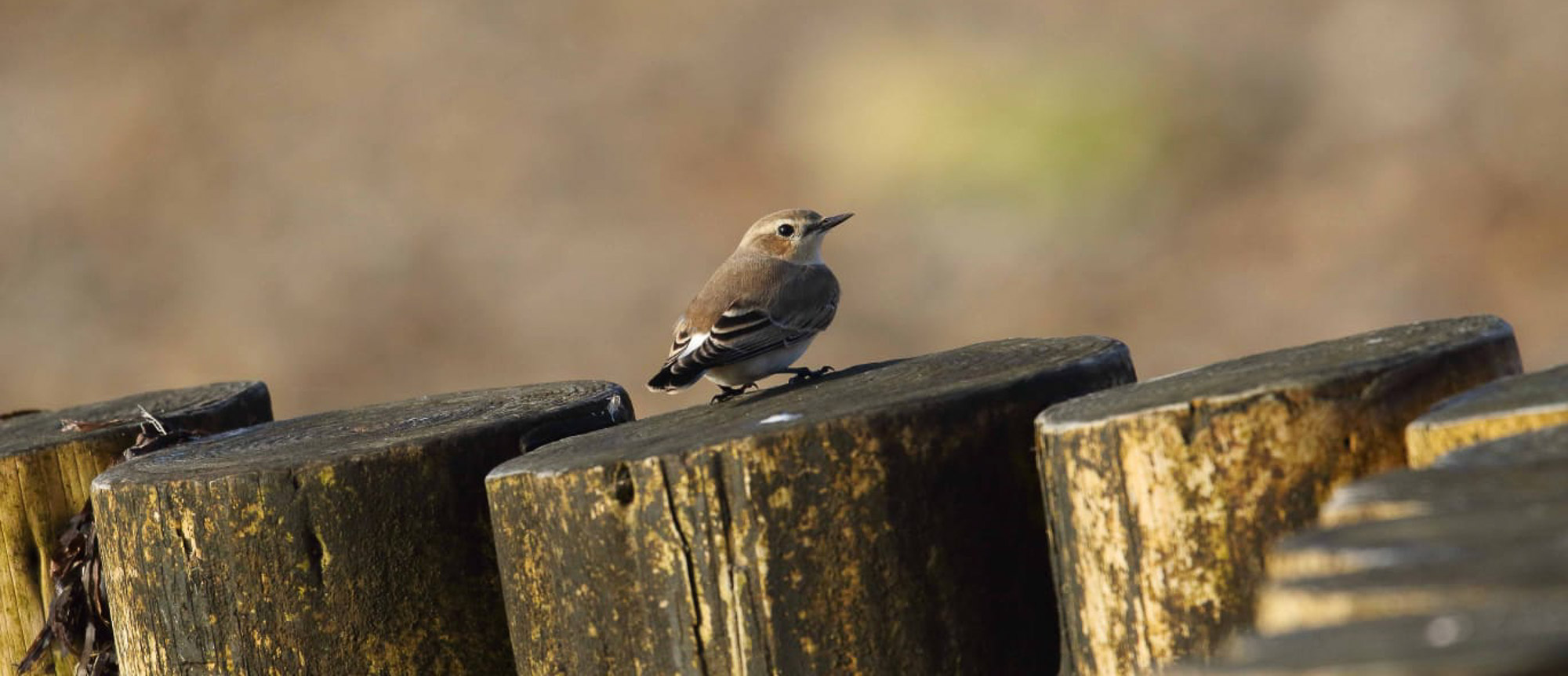
Great Marsh was quiet although a Hornet resting on the gravel track towards the Beach House was good to see. Hare’s-foot Clover is flowering on the shingle and there were two Wheatear on the fence line at Wheatear Corner.
Wheatear photo by Ian WilliamsonHornet
We set the moth traps in the Pullen area. Two of Peter’s MV Robinson traps and my MV Skinner all on Peter’s generator. As we were leaving a Nightjar floated past and I saw my first Dark bush-cricket on the reserve.
A Grey Wagtail called as it flew overhead on Gravelly Marsh, my first since January.
I spent an excellent morning watching Graham and Tara ringing with mist nets. There was loads of insight into ageing and sexing birds by looking at moult contrast between feathers and the colour and wear of feather edgings. Also assessing fat reserves and the start of body moult by checking the birds undersides. Every species we ringed seemed to have a different strategy for dealing with moult and migration.
The undoubted highlight was a Nightjar caught before sunrise and a treat to see up close. Early on there were lots of Sedge Warblers and then Willow Warblers, also Reed Warblers and a re-trapped Garden Warbler that Graham had previously ringed in June 2019 when it was breeding in the scrub about 150m north of where we were sitting! A re-trapped Whitethroat had been ringed here on this exact same day last year when it was a juvenile, it’s easy to forget that it’s been to Africa in the meantime.
A control Sedge Warbler was originally ringed as a juvenile on 1st September 2018 at Belvide in Staffordshire. Assuming it wintered in somewhere like Senegal that’s well over 15,000 miles of travel since then. Other species caught included Bullfinch, Linnet, Goldfinch and Greenfinch but thankfully no Blue Tits as these are, apparently, a menace of a bird to hold.
Reed Warbler
On the walk back to the car I looked for Heath Bumblebee in the heather but instead found my first cuckoo bumblebee on the reserve, a Field Cuckoo-bee (Bombus campestris). They parasitise the nests of the Common Carder Bee (Bombus pascuorum). The reserve misses some heath specialists like Keeled Skimmer and so perhaps Heath Bumblebee may be absent here although the coastal heather and gorse strip did produce a Silver-studded Blue a few weeks ago.
Field Cuckoo Bee (Bombus campestris)
There are a lot more Migrant Hawkers around now and each time I hope that one might be a Southern Migrant Hawker but to identify one I really need them to perch, but they rarely do. Until then I’ll need to develop my photographing flying dragonflies technique. Common Darters were the commonest dragonfly and it was nice to be able to compare a young male with a mature male.
Common Darter mature male left and immature male
There was a Wheatear on the flooded fields shingle bar and two more on the beach from Wheatear Corner. The number of Shoveler on Venner was up again to eight and a Barnacle hybrid drifted into view with a group of Canada Geese. Compared to a genuine Barnacle Goose there was too much black in the face particularly on the lores and it also lacked the black demarcation between chest and the flanks which should be paler. Also it was a little too big overall and the bill slightly too large.
Barnacle hybrid (Canada x Barnacle)
Bird of the day was a lovely Curlew Sandpiper, virtually the only wader on De L’Orne scrape. A striking moulting adult summer bird. I would have loved a better photo but the heat haze was awful. The adults arrive before the juveniles and amazing to think that this bird will have been in the Arctic tundra a few days ago.
Curlew Sandpiper distantly in the heat haze
On the beach at Mary Monts a Sanderling was picking through the high tide line with three Turnstones for company. A Green Sandpiper was in its favoured spot on the Flight Pond and a second bird was on De L’Orne lagoon later.
Green Sandpiper
We met up with Philip Hack as a Hobby flew overhead towards Gravelly Marsh. I had previously mentioned the Curlew Sandpiper to Philip which he later saw and he reciprocated with news of a Little Stint also on the scrape at De L’Orne.
Hobby photo by Dimitri Moore
We dashed over and after a nervous ten minutes the stint appeared. It had been hiding behind the grass at the front of the scrape but thankfully walked across the gap and then disappeared again on the other side. It was probably hiding in this way when we were watching the Curlew Sandpiper earlier. The Little Stint was an adult bird lacking the juvenile tramlines, the juveniles follow later in September and October. The Hobby went over again at 4pm putting everything up and we didn’t see either of the waders again.
As I headed back to the car one of the Shore Hide toilet Swallows settled on the beach fence line and a Little Ringed Plover flew over the Shore Hide as I was writing up my sightings in the book.
A miserable wet and windy day which brightened up a little in the afternoon. The highlight was the first returning Spotted Redshank on De L’Orne. I last saw one on the 1st April flying over De L’Orne calling ‘chew it’ with trailing legs extending beyond the tail. Today’s bird flew out of sight presumably to land on the De L’Orne Roosting Stones which are only visible, very distantly, from Two Bridges Gate or from the Sluice Gate. It was close to winter plumage with just a few black summer feathers on the underparts.
Spotted Redshank
There were also five Greenshank here, I heard a Green Sandpiper calling nearby and a Wheatear was a slightly unusual sight on the scrape. An adult and juvenile Shelduck flew across to land on the lagoon in front of De L’Orne screen. I hadn’t seen this juvenile before, it’s a lot older than any of the chicks I’d seen previously.
juvenile Shelduck
There were five recently arrived Shoveler on Venner, my largest count since April. The powder blue forewings were obvious as they flew around from behind the island. A juvenile Hobby also flew across in front of the island before landing in one of the trees. I’ve seen adult Hobbies on six occasions this summer and I’d imagine this young bird is from a local nest on the estate.
The fully grown Pochard ducklings which were raised on Venner had moved to Pullen with the female. On Great Marsh a group of 10 Mediterranean Gulls were resting on the scrape and I saw a Green Sandpiper at the far end of the Flight Pool. It’s an apt location name as birds are often very flighty on this stretch of water. The Green Sandpiper didn’t flush but only because I was half expecting there to be one and kept myself hidden behind a gorse bush.
Gravelly Marsh has supported a good breeding population of Linnets this year and one particular juvenile bird was happy to watch me as I walked past.
juvenile Linnet
Near the Shore Hide I came across a damselfly sheltering from the wind and rain. This is an immature female Blue-tailed Damselfly, they can have up to five colour forms and violacea is perhaps the most striking.
immature female Blue-tailed Damselfly form violacea
Trying to photograph the Sand Martins on Black Water was close to impossible. The camera just couldn’t focus and track quickly enough in the gloomy light with a 1.4x converter. These were the best two photos, nice to see that one of these birds is a juvenile with pale feather fringes, particularly noticeable on the tertials.
Sand Martins including juvenile bird on the left
Slightly easier to photograph was a young Moorhen on one of the posts near Black Water Hide. You can see the paler flank feathers which Moorhen show at all ages.
juvenile Moorhen
A Marsh Harrier dropped down below reed height. I believe that the pale and crisply edged greater coverts and primary coverts mean that this is a juvenile bird but ageing is slightly more complicated with Marsh Harriers. Looking back through earlier photos I can see that older birds also show these feather edges although perhaps not as crisply as on this bird. Juvenile birds tend to be darker without a paler breast patch (which this one appeared to have) and any paler areas are gingery as opposed to creamy.
Marsh Harrier
I later spoke to Graham Giddens and he commented – “your Marsh Harrier photo shows a juvenile, which hatched this summer. The head is buffy (an older bird would have a whiter head), the tail tips are buffy and fresh (an older bird would totally lack the buffy tips and probably also show some wear), the wing feathers are all of the same age and all are tipped with buff (an older bird would have done some moult and show different ages of feathers within the wing, and none of the primaries or secondaries would have buff tips). It is unusually pale on the shoulders, most juvs are darker chocolate brown, but a few juvs do exhibit the female-type creamy shoulders”
A very young recently fledged Reed Warbler jumped into the reeds right next to me almost too close for my telephoto lens. They only grow a tail and primary feathers once they’ve fledged so that they can manoeuver in the nest. The adult bird was a little anxious nearby. I’ve seen a lot of 2nd brood Reed Warbler activity recently.
fledgling Reed Warbler
In the damp area near the pines a male Migrant Hawker settled on a patch of brambles. I tried four different routes to get closer but I had to give up and settle for the initial mid-distance view. The characteristic ‘golf tee’ shape is visible at the base of the abdomen. Migrant Hawkers breed in the south but also occur as an autumn migrant from the continent. Southern Migrant Hawker is much rarer but expanding its range and has occurred at Needs Ore, last year for example.
Migrant Hawker
I heard but didn’t see a Common Sandpiper while at the Sluice Gate and nearby a fresh Painted Lady came around the corner at the Sluice Gate and settled on a thistle.
Painted Lady
I managed to get closer than normal to an Oystercatcher by approaching from behind the wooden structure on the slipway at the point. This one still has the full black collar of summer plumage.






 Patch Birding