March 2022, Spring 2022

March 23rd to 26th 2022

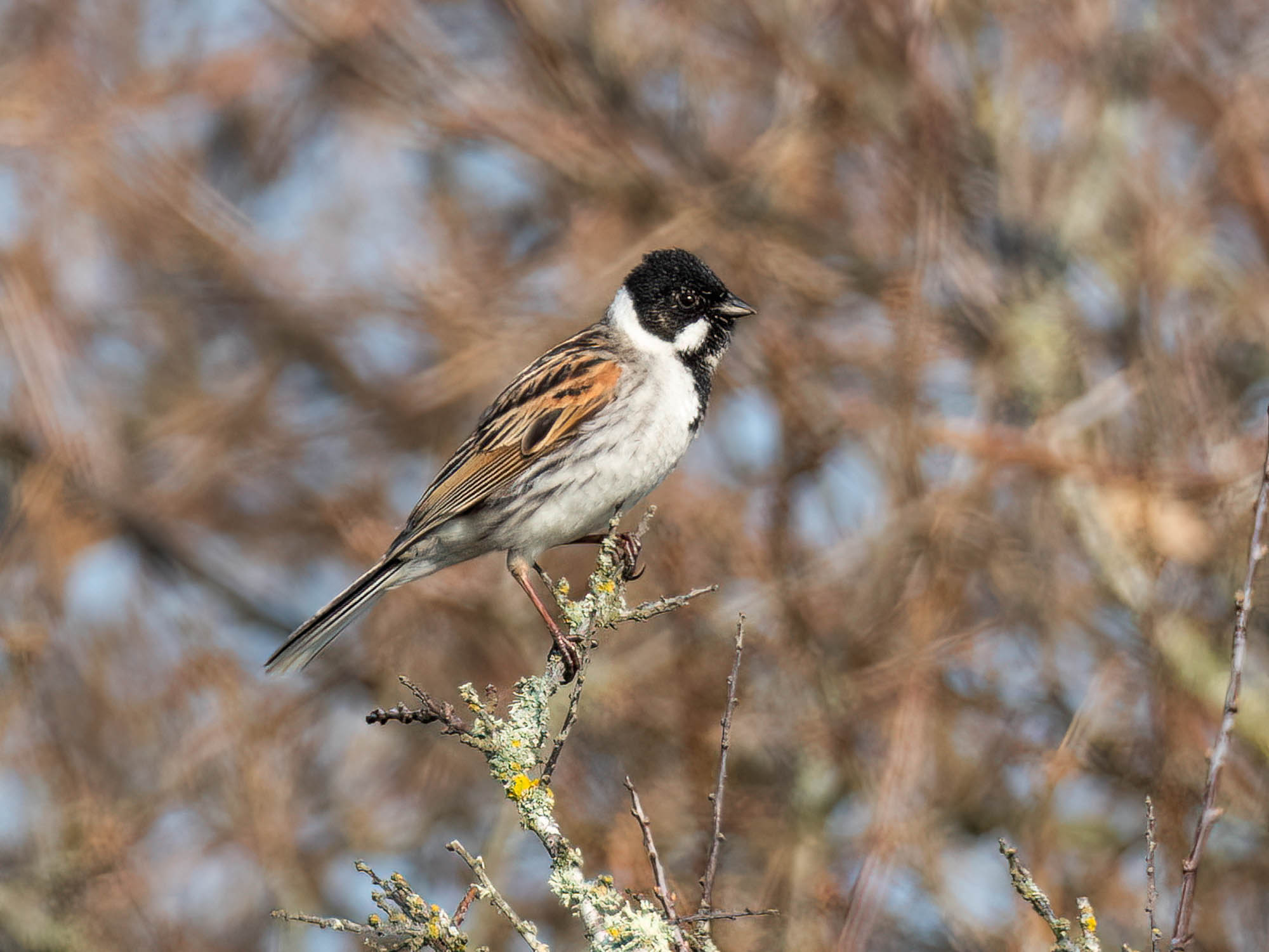
Linnets were singing all over the reserve and there were half a dozen pairs of Stonechats and a similar number of Reed Bunting pairs around Pullen, Black Water and the Reedy Ditch.
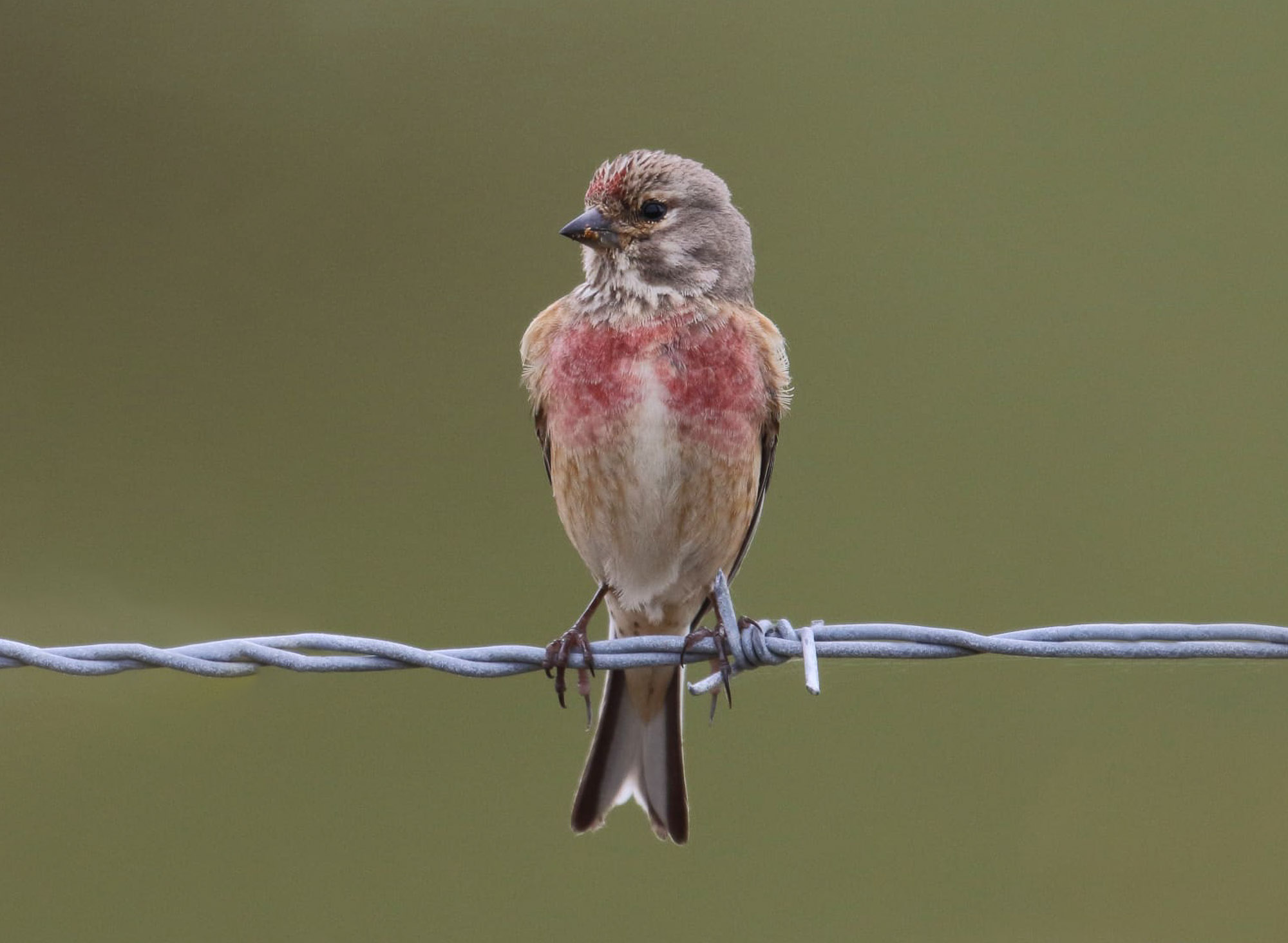
Linnet photo by Ian Williamson
Reed Bunting

The three year old male Marsh Harrier drifted over Pullen reedbed and a characteristic call had me turning around to watch a pair of Red-legged Partridges disappearing into the gorse, they’re getting harder to see here.

Red-legged Partridge

Near Pullen a blackthorn twig hosted two rare lichens right next to each other, Teloschistes chrysopthamus (Golden-eye lichen) and Physcia leptalea (with the raised black cups)

Golden-eye Lichen and Physcia leptalea

21 Herring Gulls were scattered along the low tide beach line and nearer Mary Monts there were 30 Mediterranean Gulls including three 1st winter birds.

Highlight on the sea was a Velvet Scoter which spent most of the morning drifting offshore straight out from the Shore Hide. The yellow bill sides and lack of white facial spots indicate that this is a male.

Velvet Scoter breed on Scandinavian coasts, particularly northern Norway, and they winter along the Baltic Coasts. Some reach the south and east coasts of the UK. There have been up to six along the Hampshire Coast this winter and there have only ever been half a dozen recorded at Needs Ore including three birds together from the Sailing Club in early December 2021.

Velvet Scoter

10 Eider headed east while a pair of Red-breasted Merganser were still lingering off shore. Common Gulls were also heading east but there’s been no sign of Slavonian Grebes since 25th February.
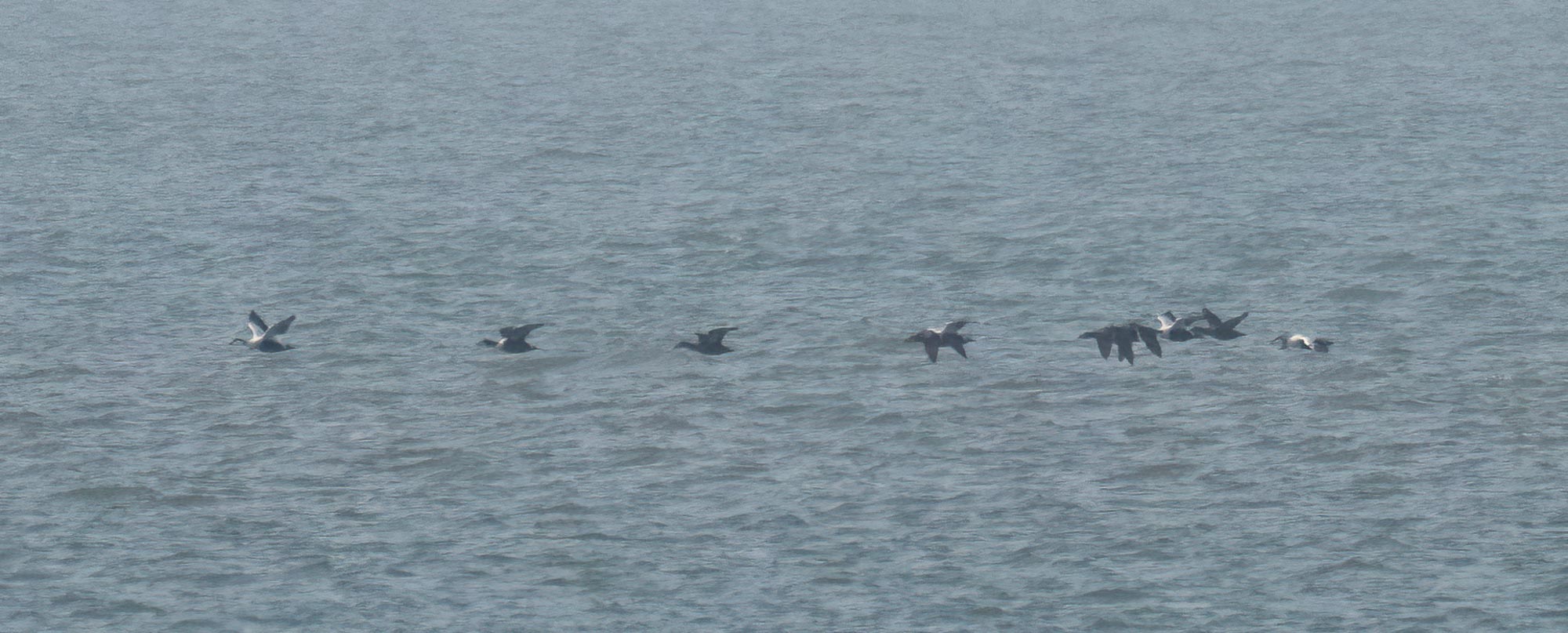
Eider

I walked onto the private areas to survey for Lapwing and Redshank and was delighted to find a Little Ringed Plover. It was within 20 yards of last years nest site and is no doubt one of the returning Little Ringed Plover from last year, he has been to Senegal and back since I last saw him in August! A real highlight.  
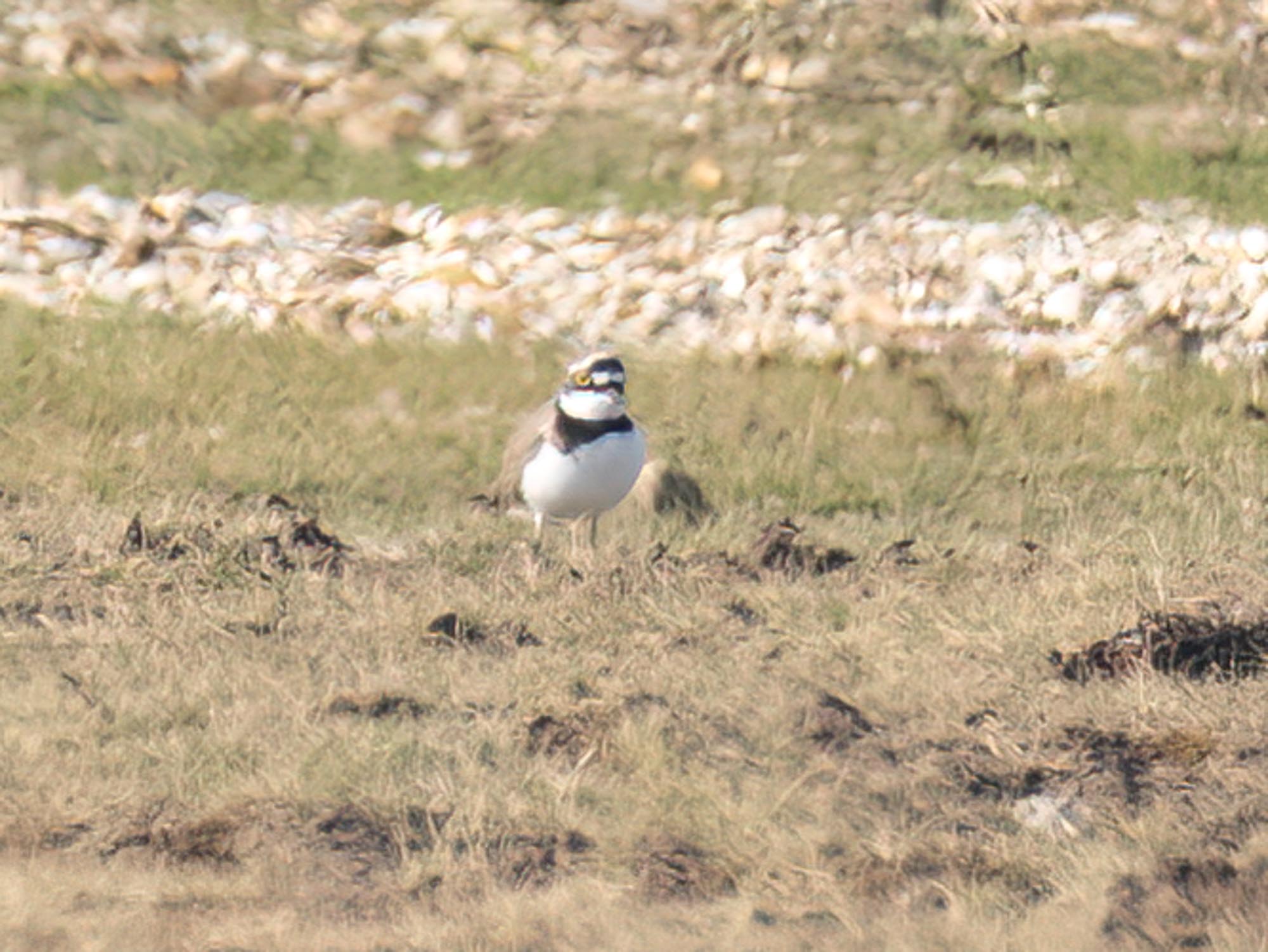
Little Ringed Plover

The Dartford Warbler was calling and singing nearby. I wasn’t able to see if it was ringed but I presume it was the first winter male which Graham ringed here on January 22nd and which has been seen and heard on several occasions over the last two weeks.

There were 17 Avocet on Great Marsh including AX, they were inspecting the newly created islands. I’m sure that good numbers of Black-headed Gulls will also use them.

I saw the Little Ringed Plover again, now on Great Marsh, feeding in an area which last years birds used regularly and where their three off spring spent most of their time. I’m pretty sure that only one bird has returned so far and that it is probably the male given the blackish face and breast band which appears to lack any brown feathers.

Little Ringed Plover

Little Ringed Plover adults don’t usually leave their breeding areas together and so it is unlikely that they maintain their bond in their wintering quarters. Pair bonding mainly happens after arrival back on breeding grounds although some pairs are already established on arrival like our pair from last year.

The Peregrine pair were on show on Gull Island including a very vocal display flight with stoops, tumbling, mock food passes and talon grappling. Shortly afterwards a procession of three Peregrines dashed past me heading towards the cottages. I think it was a new male being chased off by the resident male with the young female following close behind.

Peregrine photo by Brian Fairbrother

A pair of Common Seals were hauled up on the other side of the river, one of them looked like the same blonde individual that I had seen last month.

A Grey Wagtail called as it flew overhead near the Sluice Gate but I didn’t see it. Most of my records at Needs Ore seem to be autumn migrants with the odd winter record, this is my first spring record. Nearby a Small Tortoiseshell landed briefly near the Sluice Gate and a Comma was missing part of its wing, perhaps the victim of a bird strike.

Comma

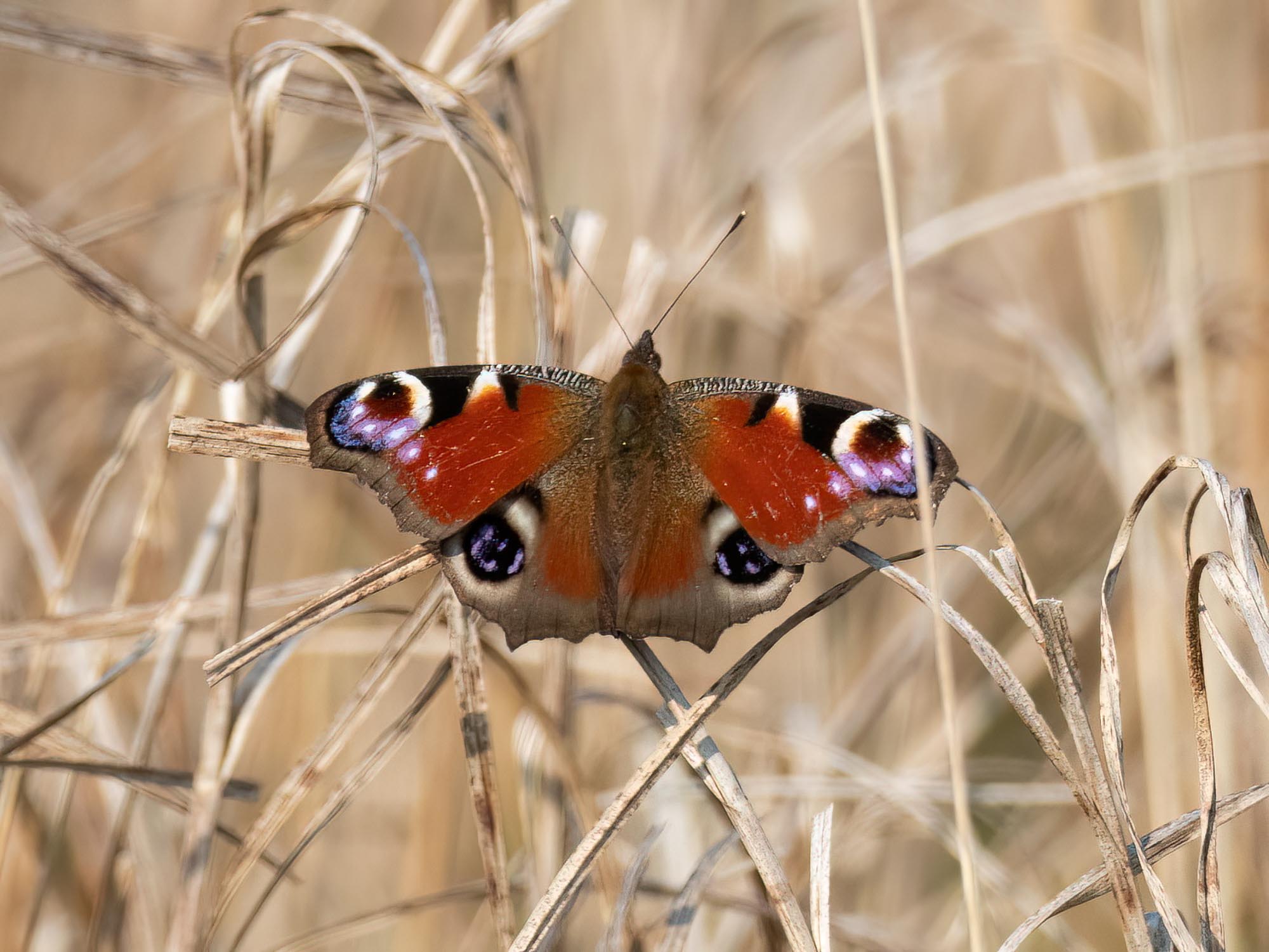
Another Comma was basking in the sunshine along the Main Hedge, there were also two Peacocks here. Lots of queen bumblebees were active nectaring on various blossoms, most of the ones I saw well were B. terrestris, Buff-tailed Bumblebee and also B. lucorum, White-tailed Bumblebee

Comma
Peacock

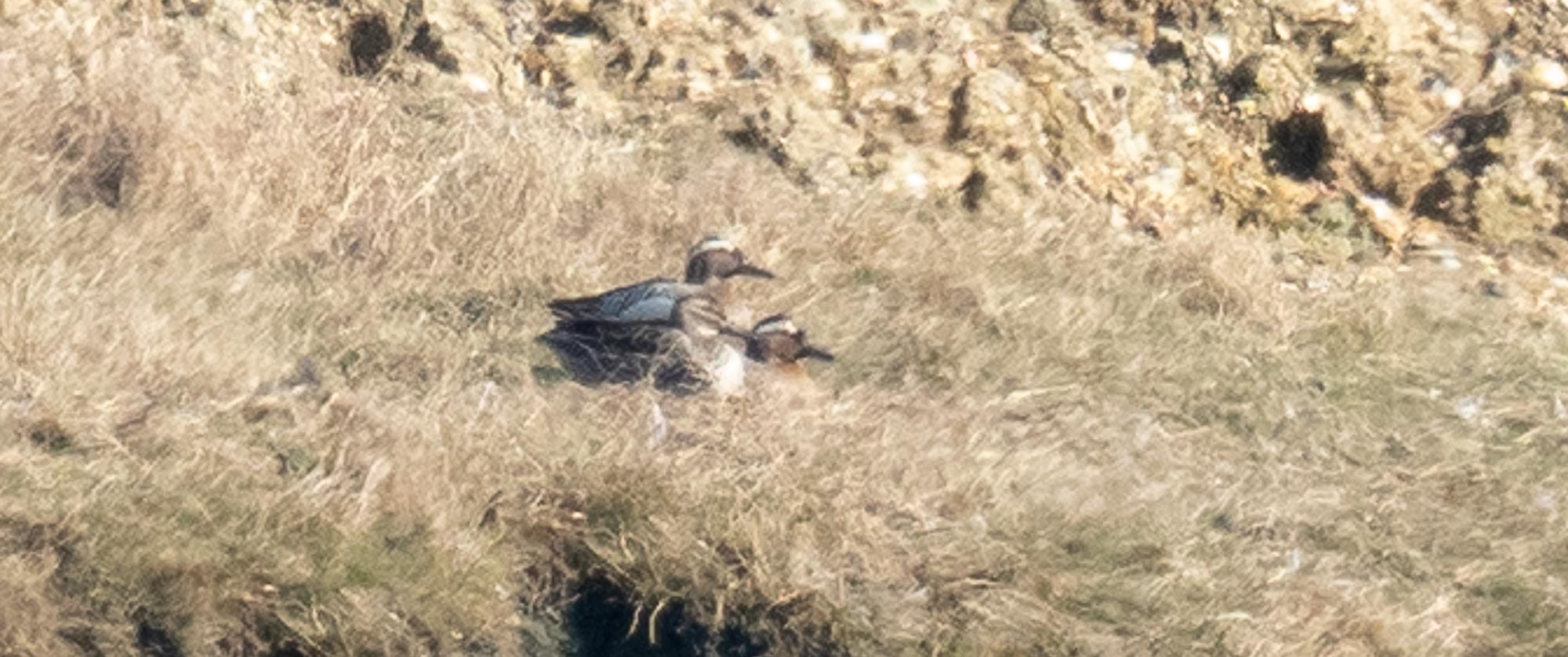
I was pleased to see that at least one of the drake Garganey was still here although given the number of Garganey that moved through Hampshire on Monday this could conceivably be a new bird. It was resting on the fringe of the island opposite De L’Orne hide and then ventured closer before hiding behind one of the newly created islands, it was much closer than when I had seen the group of three on Saturday.

drake Garganey

Garganey are early spring migrants on their way from their wintering grounds in Africa to breeding areas all across Europe and Russia with around 100 pairs breeding in the UK mainly in the south and east.

drake Garganey

The Spotted Redshank was still present on the scrape near the roosting stones and then later hiding along the Sluice Channel viewable from the Sluice Gate. The wintering Greenshank was also hiding here.

The Brents had been grazing on De L’Orne South but something flushed them on to the water where they were easier to count, there were 252 which is probably most of the remaining Brents on the reserve. There were only 100 Brents left in April on last year’s WeBS count.

My highest Avocet count so far this year was a combined 45 birds with the 17 earlier on Great Marsh and another 28 here on De L’Orne scrape/lagoon. Ominously there were two adult Great Black-backed Gulls standing close by, a sign of things to come, as the Avocet numbers increase and they start to nest so will the Great Black-backed Gull numbers increase.
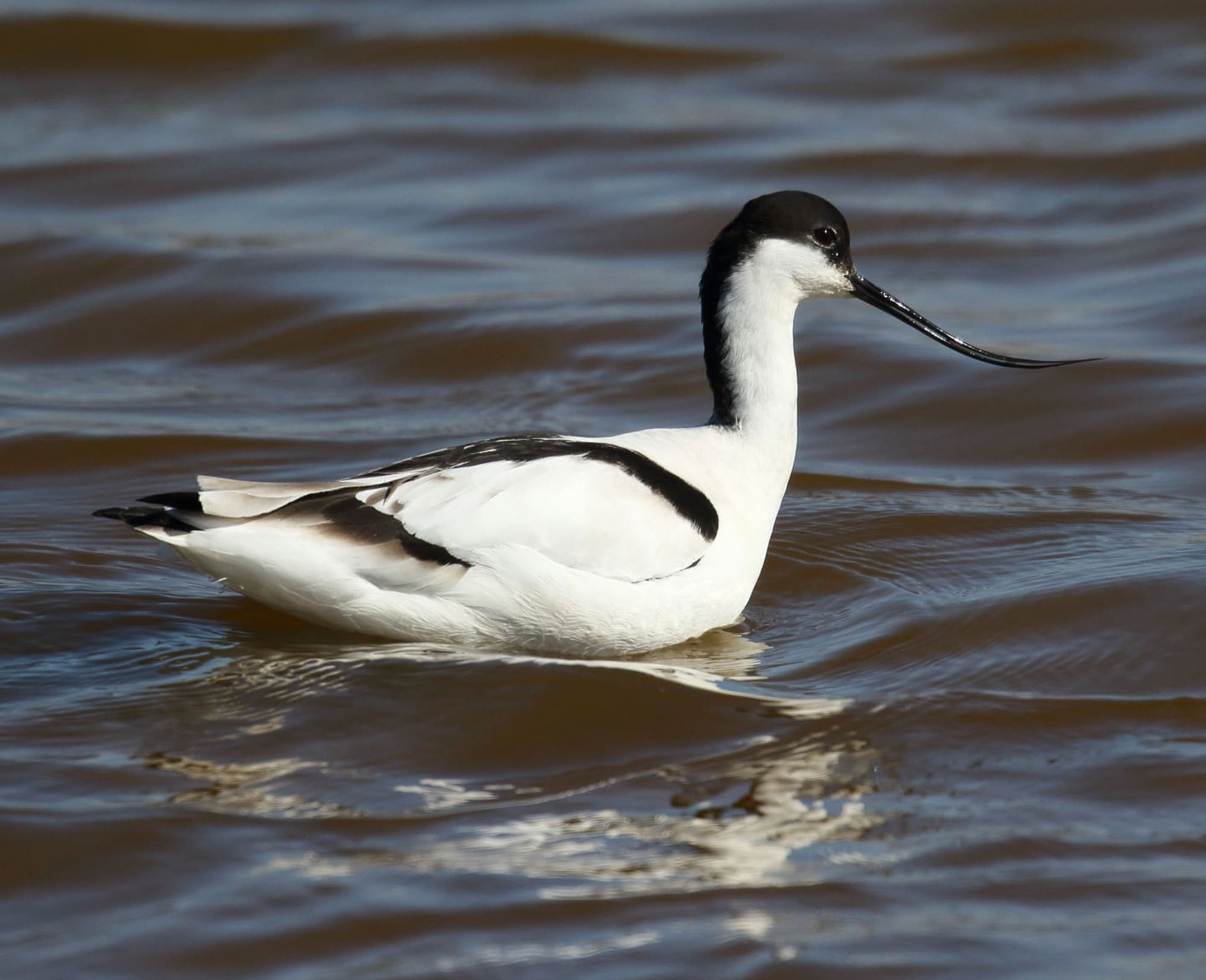
Avocet photo by Ian Williamson

22 pairs of Black-headed Gulls were already very noisy around the rafts. In a month’s time Adam will put out two extra rafts and set up a Common Tern tape lure to try and encourage them. Three pairs raised five young here in 2019. Holding the rafts back until the Common Terns have arrived from Africa means that they are less likely to be reserved by the Black-headed Gulls.

Adam accompanied me around the Breeding Bird Transect route which includes the private areas around the Gins. I will walk the transect once per week for 12 weeks, primary targets species will be Lapwing and Redshank. The walk around the Gins today produced at least 30 Snipe.

There were three pairs of both Pochard and Tufted Duck on Venner, both species bred here last year so it will be interesting to watch progress over the coming weeks. A Red Kite flew purposefully through the reserve as we sat in Venner Hide. Five Spoonbill on Venner included the 1st winter bird.

Red Kite photo by Brian Fairbrother

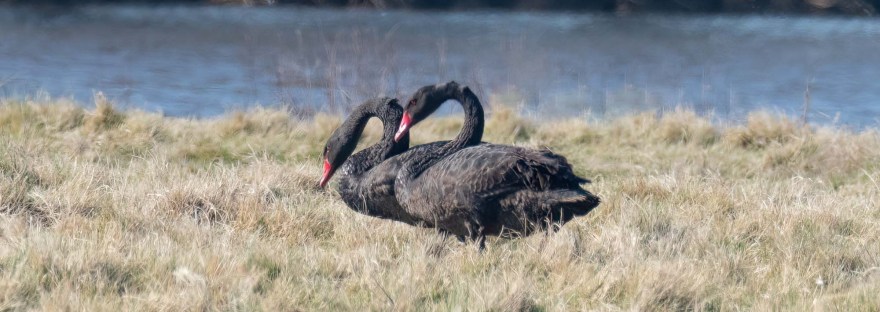
As Adam and I got back to the viewing gate Mike said he had just seen a Black Swan on Venner. It took a while for it to show again and in fact there were two. They are a native to Australia and have escaped from wildfowl collections in the UK. Just like Mandarin Duck they have become self-sustaining and are well established in the wild and so are likely to be officially added to the British Avifauna at some stage soon.

Black Swans

As I drove home I paused along Warren Lane to look into Droveway South and was pleased to see a flock of wagtails which included at least one White Wagtail.
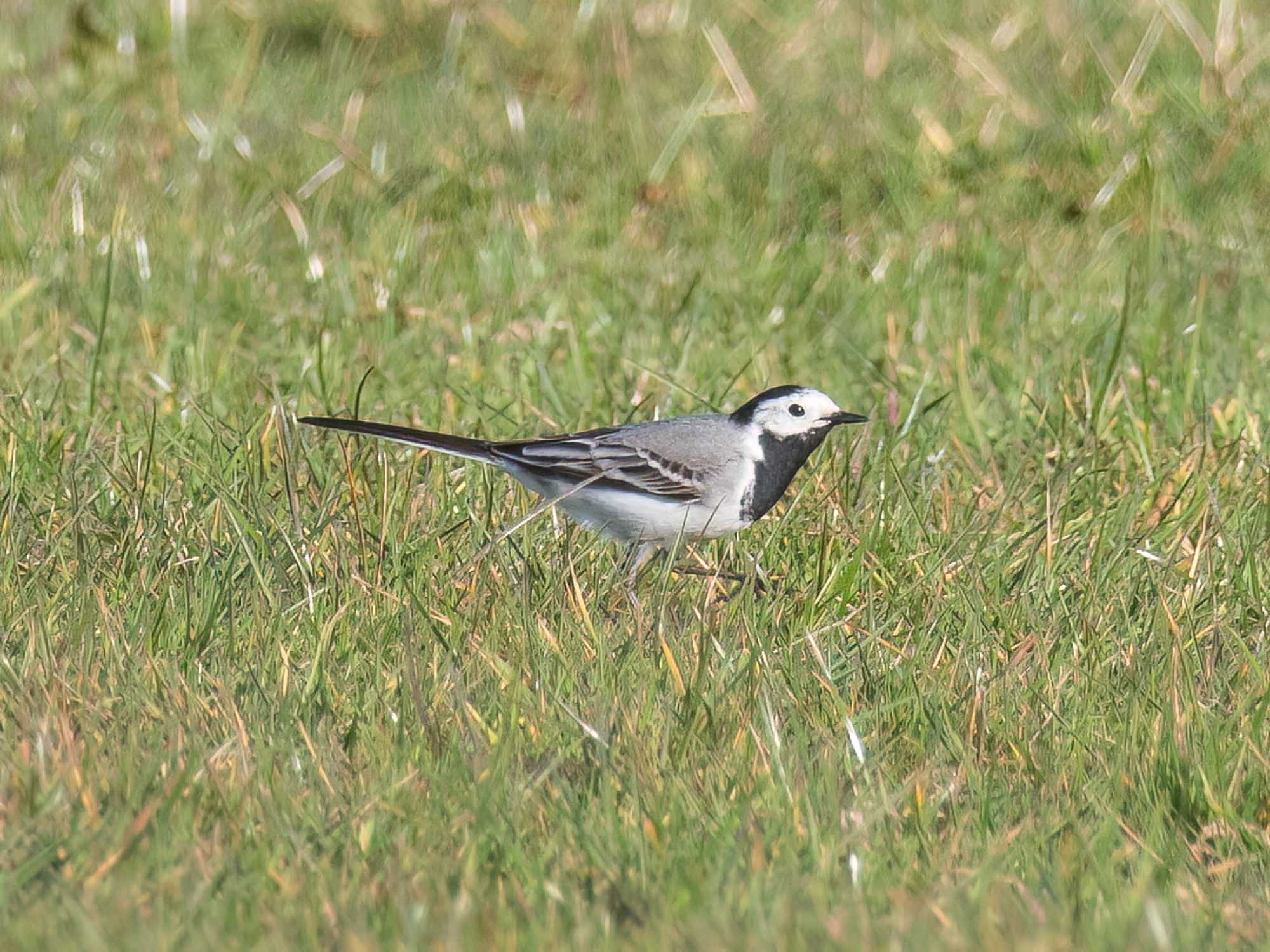
White Wagtail

Wheatears and Sand Martins are two of the species that you look out for at this time of year but White Wagtails are usually just as early. They are subtle but attractive birds which are often overlooked. They are a passage migrant through Britain from early March to May. Most are heading to Greenland and Iceland and most of the Icelandic population of 50,000 pairs is believed to pass through the UK.
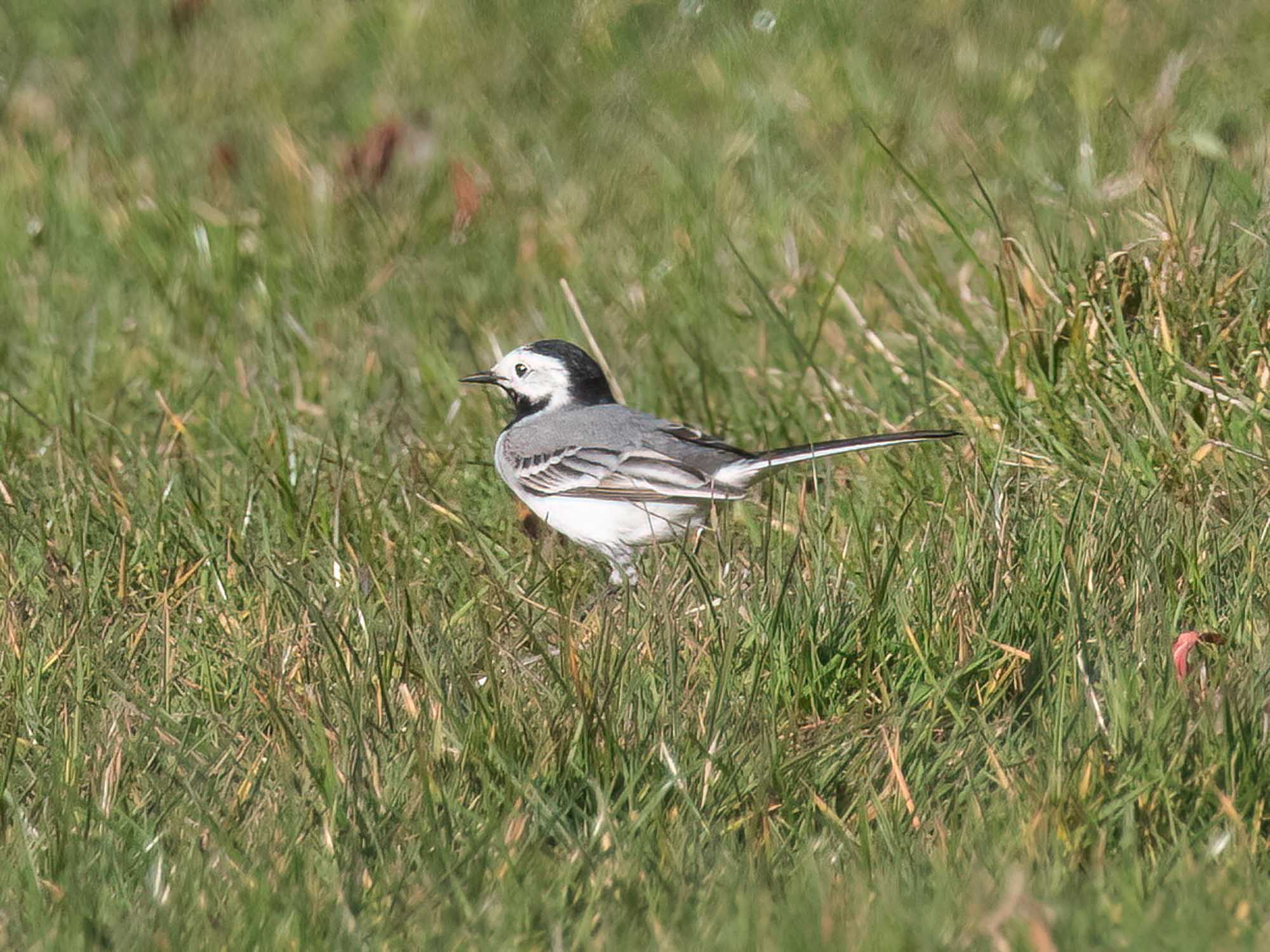
White Wagtail

The key features are shown nicely in the above photo. A clean demarcated black line across the nape, a pale/pure grey mantle, pristine white flanks and greyish (not blackish) rump. It was the 25th March that I first saw White Wagtails last year.

Another wagtail looked superficially similar at first glance but showed a slightly darker mantle, duskier flanks, a blackish rump and blackish mantle feathers coming through thus making it a moulting 1st winter Pied Wagtail.

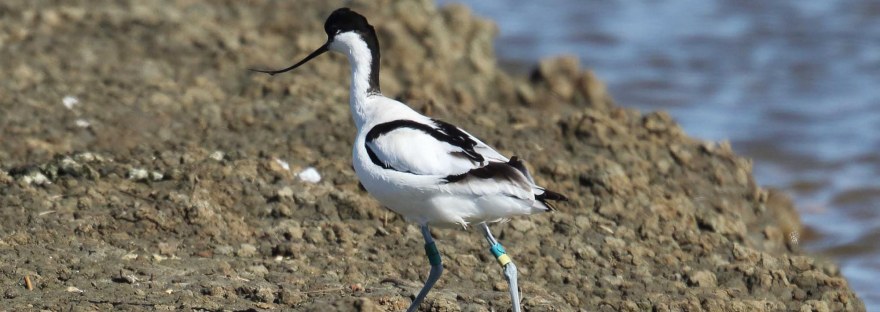
1st winter Pied Wagtail
birds, March 2022, Spring 2022

March 12th to 19th 2022

A period of settled light southerly winds looked hopeful, the most obvious migrants were singing Chiffchaffs with at least six around the reserve.

Chiffchaff photo by Ian Williamson

At the Sailing Club I arrived to see the male Peregrine dashing up the river. I then noticed the 2nd calendar year female on a favourite fence post below Exbury. Later the two joined each other on Gull Island and displayed, high stepping and neck lowering within a few yards of each other.

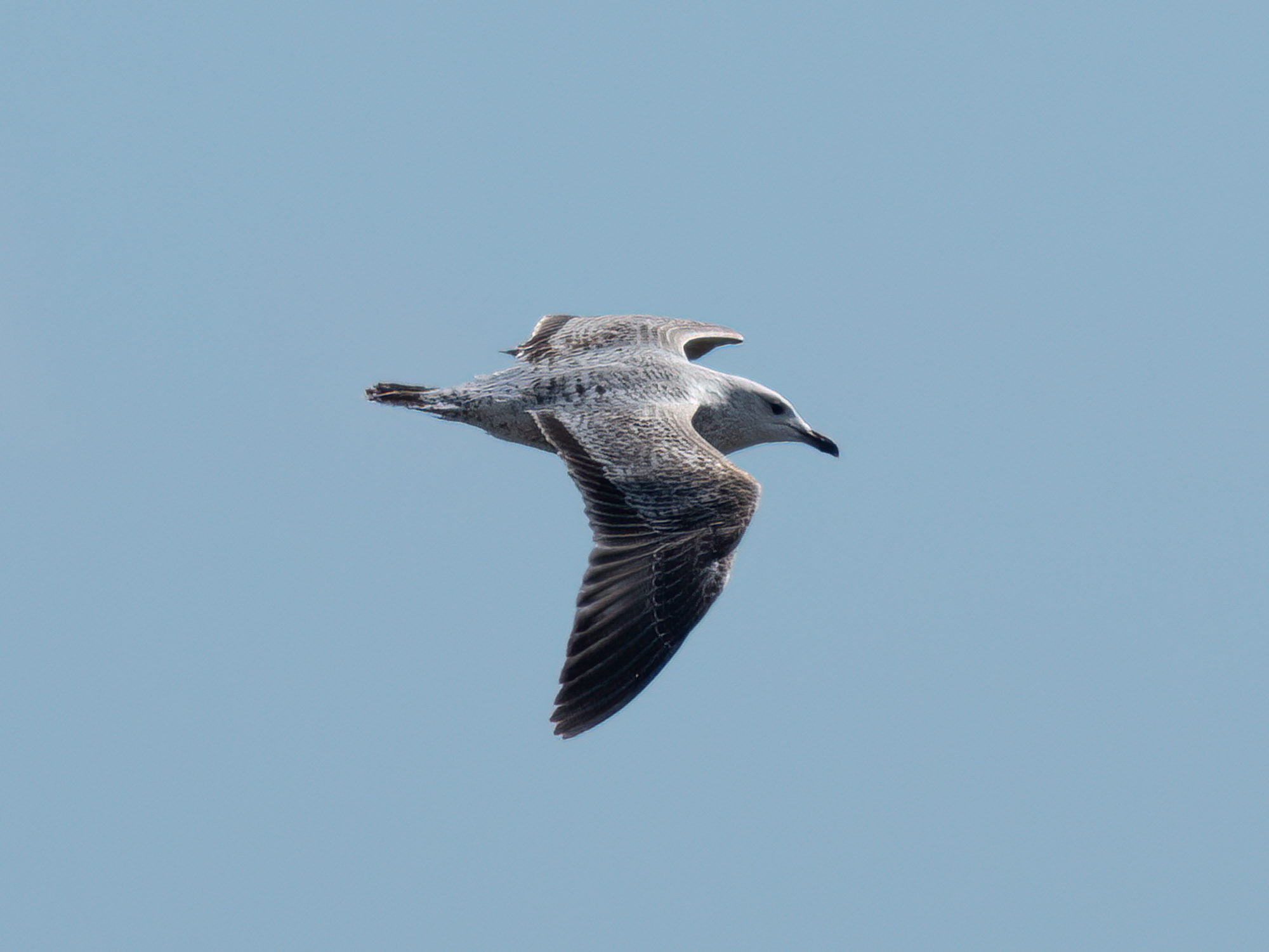
The two adult Lesser Black-backed Gulls were still in the river mouth, the darker bird with the small mirror on P9 and the paler bird with no mirror on P9 (see images from previous blog entry). A young gull came close to the Sailing Club with very dark secondaries and a very weak inner primary window. I initially wondered if this was a 2nd calendar year Lesser Black-backed Gull. However, reviewing the photos I think the chequered greater covert bar, the oak leaf pattered tertials and the very subtle primary window mean that this is within the normal range for Herring Gull. Olsen’s Gulls states that “there is large individual variation and some (mostly E Baltic Sea) may show…..almost uniform flight feathers (with much less window than expected)”

2nd calendar year Herring Gull with a weak primary window

I had given up hope of seeing any spring Dartford Warblers and so I was really pleased to see one on Gravelly Marsh with a ring on its right leg. I got an awful photo but thankfully Ian got an excellent one of the same male singing a few days later. Last year I saw a Dartford Warbler near here on the 18th April but there was no subsequent evidence of breeding and I didn’t hear any singing. Will be interesting to keep an eye on breeding activity this year.

singing male Dartford Warbler photo by Ian Williamson

There are at least four female type Marsh Harriers on the reserve, often around the Venner area, but only one definite male, the three year old below.

sub-adult male Marsh Harrier

Of the four female types there are three 2nd calendar year birds (hatched last summer). The shoulders on the bird below are fairly well marked but this is still a 2nd calendar year individual because of the buff tips to the primaries and secondaries, the buff coloured head and the chocolate coloured tail (not pale rufous).

2nd calendar year female Marsh Harrier

The other recent young Marsh Harriers include the missing primary feathered bird and the modestly marked individual, both photographed in the previous post.

Three Garganey had been found swimming on De L’Orne Scrape, a female and two stunning males. This is just two days earlier than the female which was found at Mary Monts last year. I headed over to De L’Orne and luckily the Garganey were still there although now resting with Shoveler and Wigeon on the bank at the back of the scrape. It’s a changing of the seasons with these newly arrived ducks from North Africa swapping over with winter visitors who are about to leave.

Garganey, two drakes and a duck

Black-headed Gulls were gathering and displaying around the nesting platforms on De L’Orne and twenty nine Avocets were on the Scrape. Also present here were five Redshank and one of the wintering Greenshank.

One of the Avocets was colour-ringed – Green/Blue, Blue/Lime (G/B-B/L). It was ringed at Needs Ore (at De L’Orne) as a chick in July 2014. In September 2014 it was seen at Cliffe Pools in Kent and then not recorded until May 2018 when it was seen at Orfordness in Suffolk. It is thought to have bred there and was also seen there in May 2019. In May 2020 it was also thought to have bred in Suffolk this time at Hollesley Marsh . I saw it again at Needs Ore in May 2021. Nearly eight years old is a good age for an Avocet, a typical lifespan is six years.

Eight year old Avocet photo by Ian Williamson

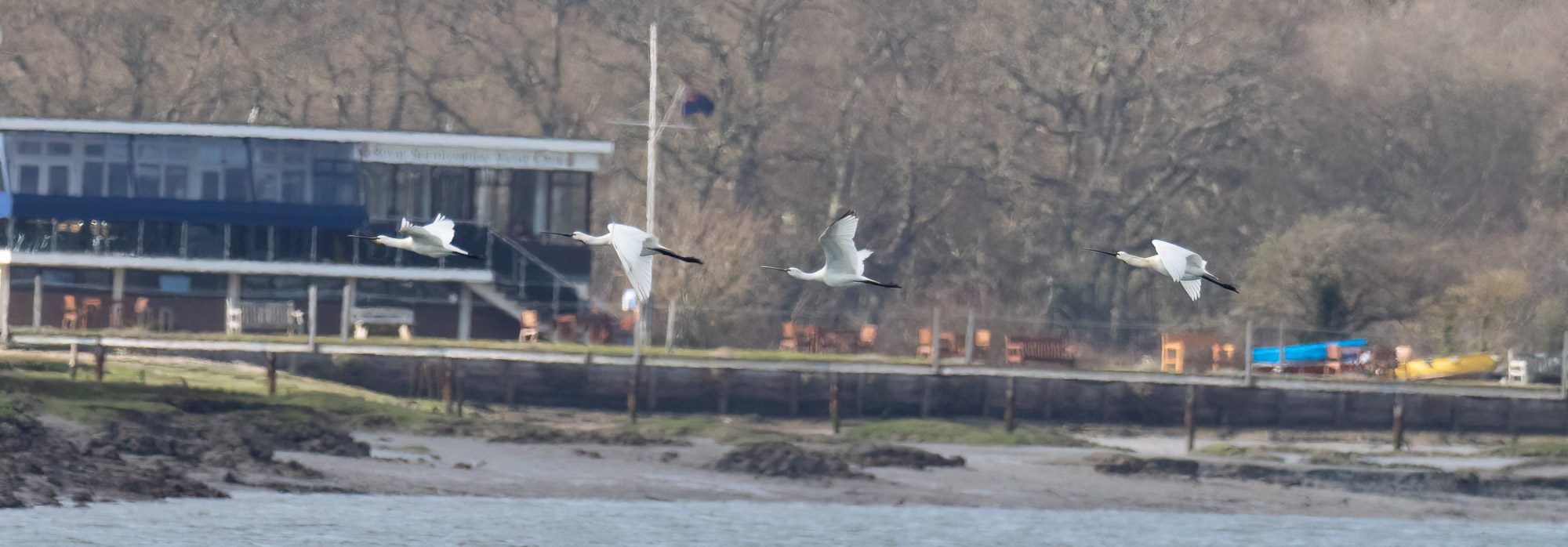
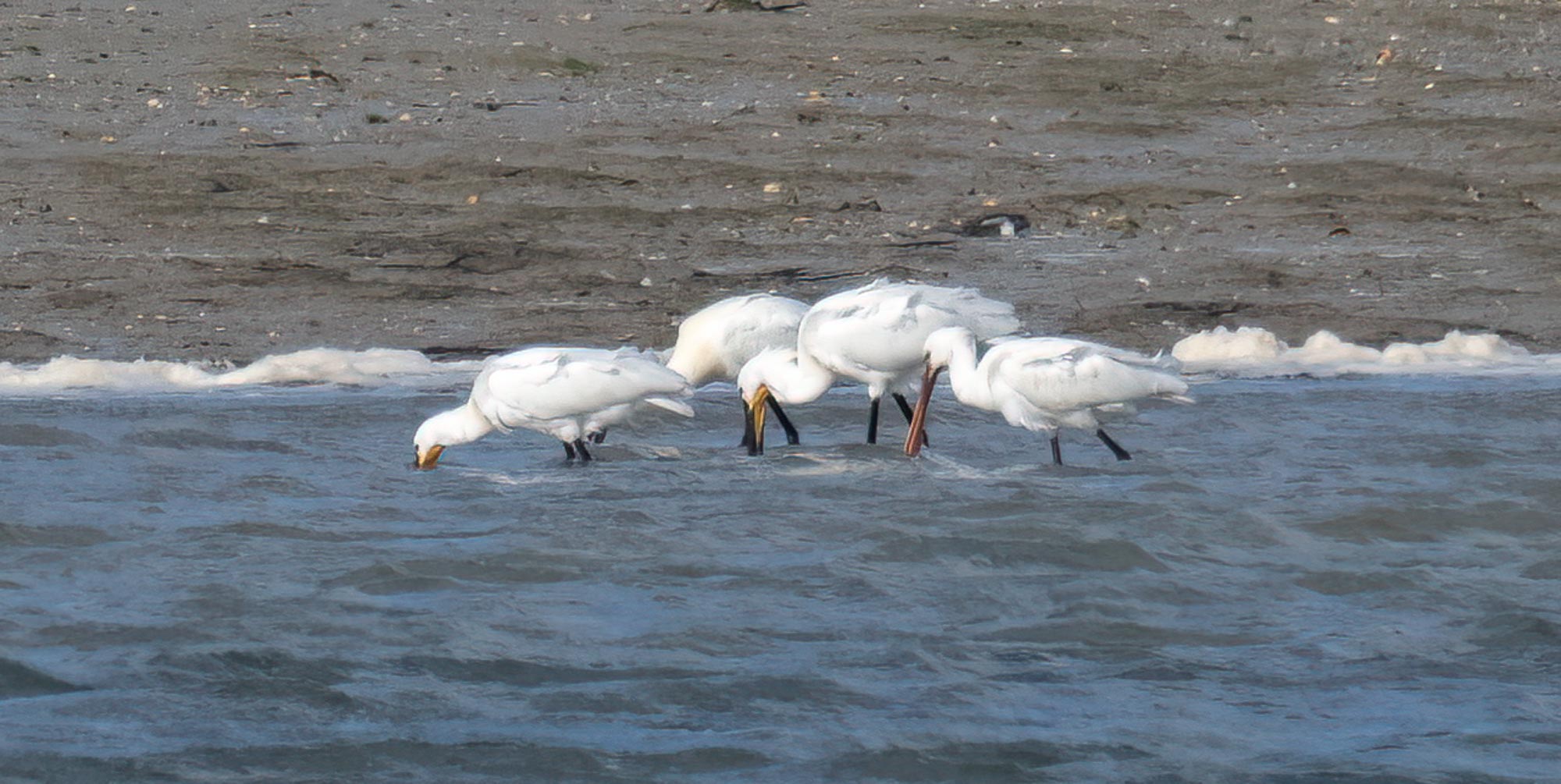
There were 12 Spoonbill resting on the edge of Venner South and later there were three on the river. A little later a fourth bird flew in to join them and I noticed its black primary tips, this is a 2nd calendar year bird.

Three adult and one 2nd calendar year (2nd from right) Spoonbills

Once it landed the black primary tips were hidden and so it was the lack of head plumes, the washed out pinkish bill and the lack of vivid red-orange throat patch which separated it from the adult birds.

Three adult and one 2nd calendar year (right bird) Spoonbills

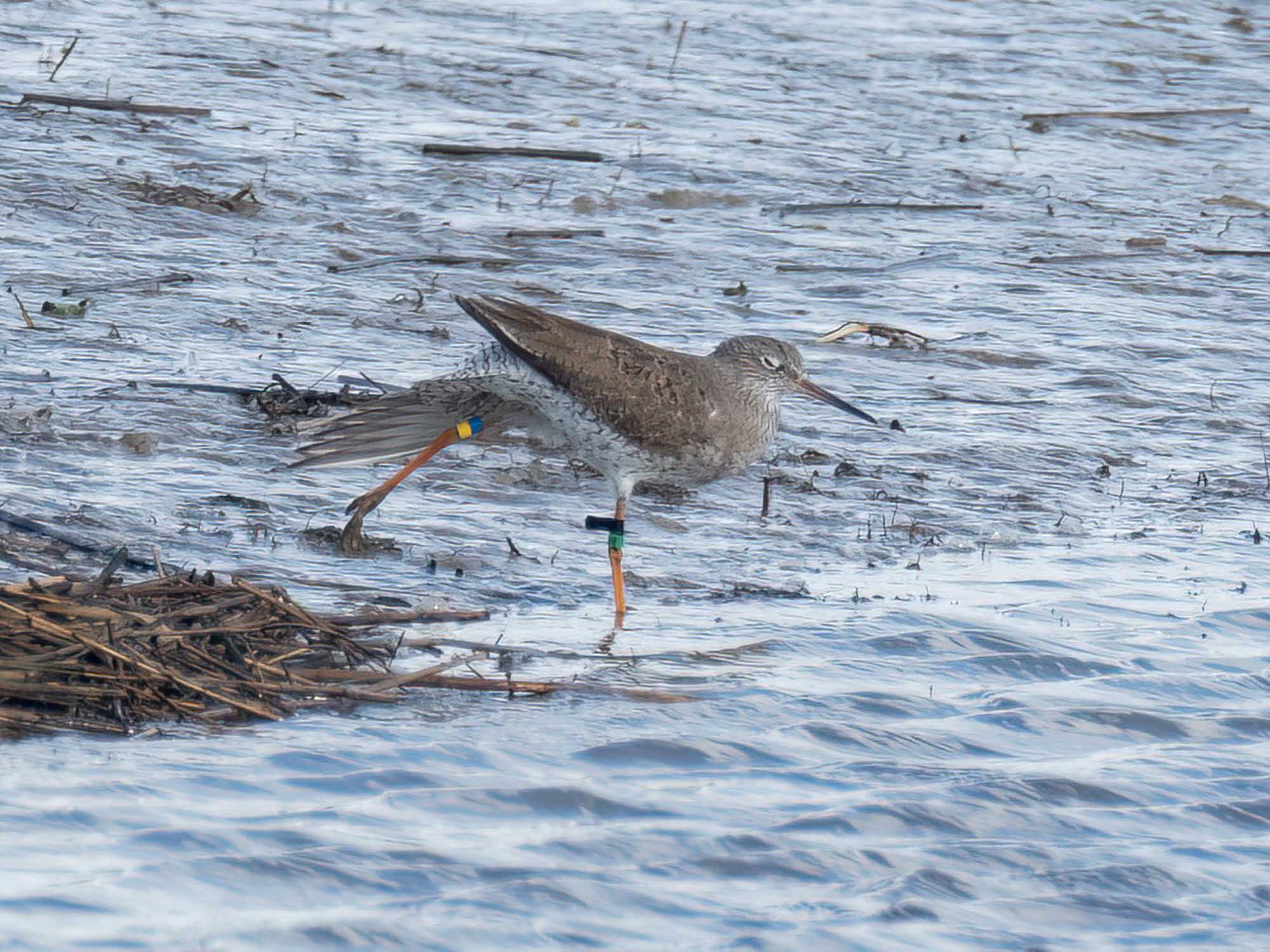
The Avon Valley 2nd calendar year Redshank was still present in its favourite spot near the Sluice Gate. Compared to when I first photographed it in the autumn you can see that it has now grown new anchor-tipped adult scapular feathers. I imagine that it will be returning to the Avon soon, they often breed in their first summer – I later heard from Lizzie that this bird had indeed returned to the Avon Valley field that it had hatched in. She saw it on Monday morning, I had seen it at Needs Ore on Saturday afternoon. The BTO say that only 43% of Redshank survive their first winter.

colour-ringed Redshank now back at the Avon Valley

There were around 500 Brents on De L’Orne South and one of the Pale-bellied Brent Geese was with them. A pair of Red-breasted Merganser drifted off shore from Mary Monts and a single male Eider headed west. 

I’m hoping to catch a clear recording of Grey long-eared bats this summer and so I’ve set up five detectors around Black Water and the Gins. If I get enough possible recordings then the County Recorder will help with possible trapping. While on the Gins the Spotted Redshank showed nicely before flying back past me towards De L’Orne.

Heading back home via the Reedy Ditch a juvenile Goshawk caused anxiety amongst the Crows and Woodpigeons before it headed off back towards Stagg’s Wood. The same juvenile was photographed at the top of Park Lane by Simon a few days later. Close by the resident breeding Kestrels were calling and displaying near Black Water House.

juvenile Goshawk photo by Simon Colenutt

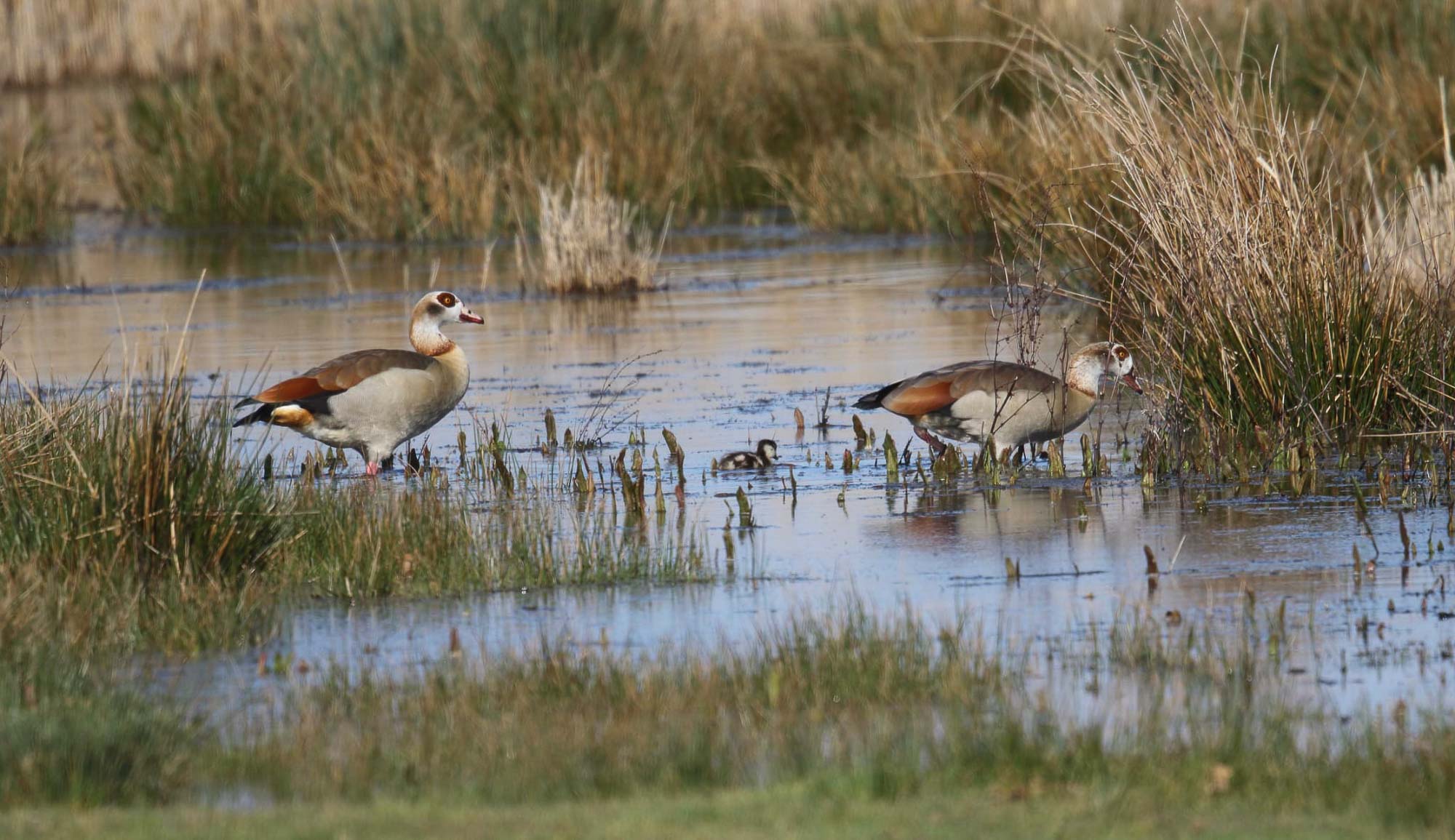
Ian had seen an Egyptian Goose pair with a single chick on the very early date of 18th March. I watched it feeding with its parents on Warren Flash. The Larsen Traps are now being set up and one was close by. Perhaps the Carrion Crows had already predated the rest of the brood.

Egyptian Geese pair with a single chick photo by Ian Williamson
March 2022, Spring 2022

Tuesday 1st March 2022

A day when I braved the drizzle. Arriving at 8am I finally succumbed to hopelessly damp optics at 2pm.

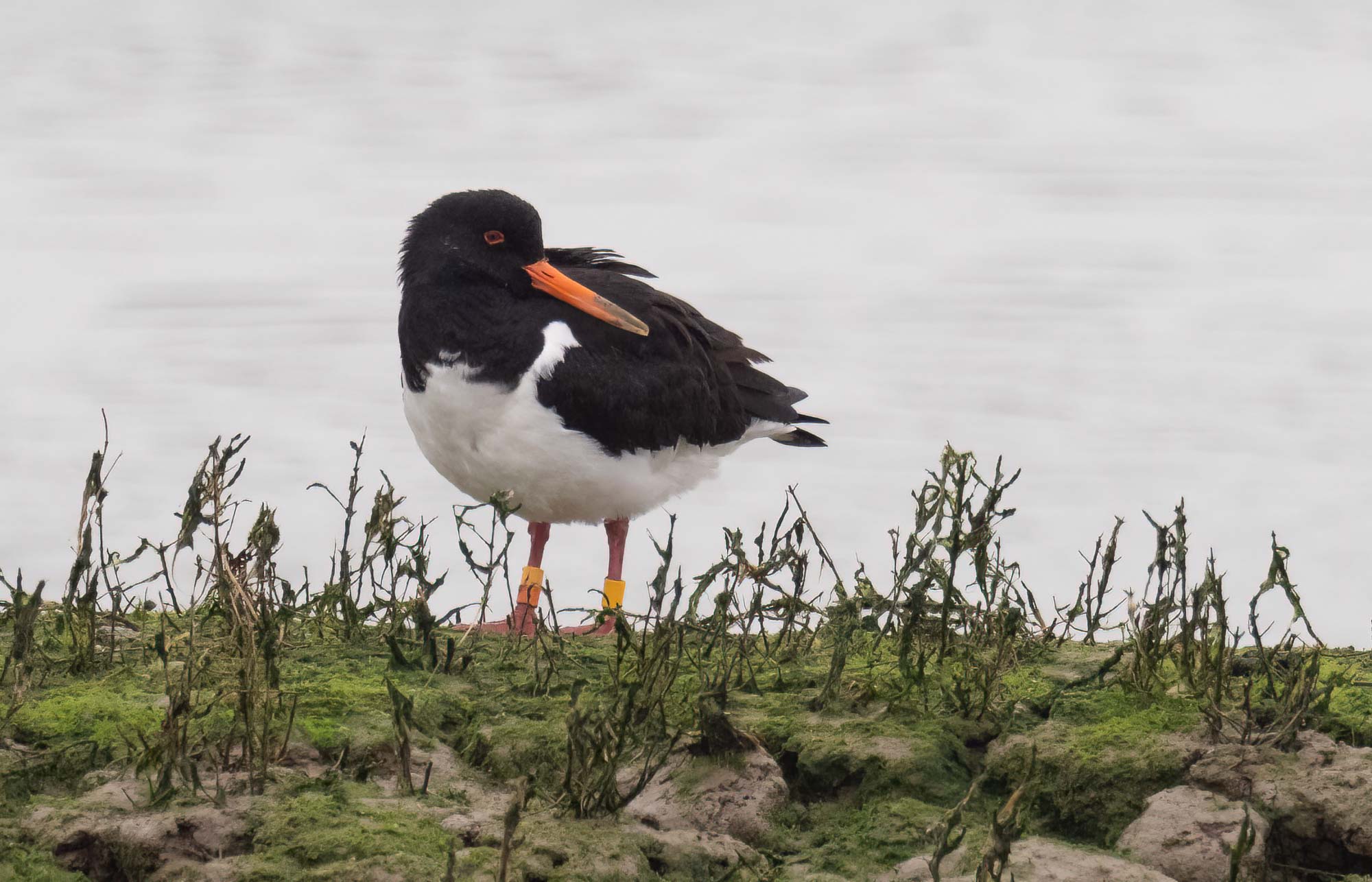
Ian had seen the returning Oystercatcher near the Warden’s Hut yesterday and so I decided to head to the Sailing Club first. The Oystercatcher was in exactly the same spot as I had seen it last year on an island in the Old Spit Channel. The rings are the same other than I couldn’t see the yellow ring on the right tibia. Maybe it was caught up in the feathers or possibly lost altogether since I saw it last June. It was ringed as an adult (not a chick or a 1st summer bird) in 1999 and so is at least 25 years old.

25 year old Oystercatcher

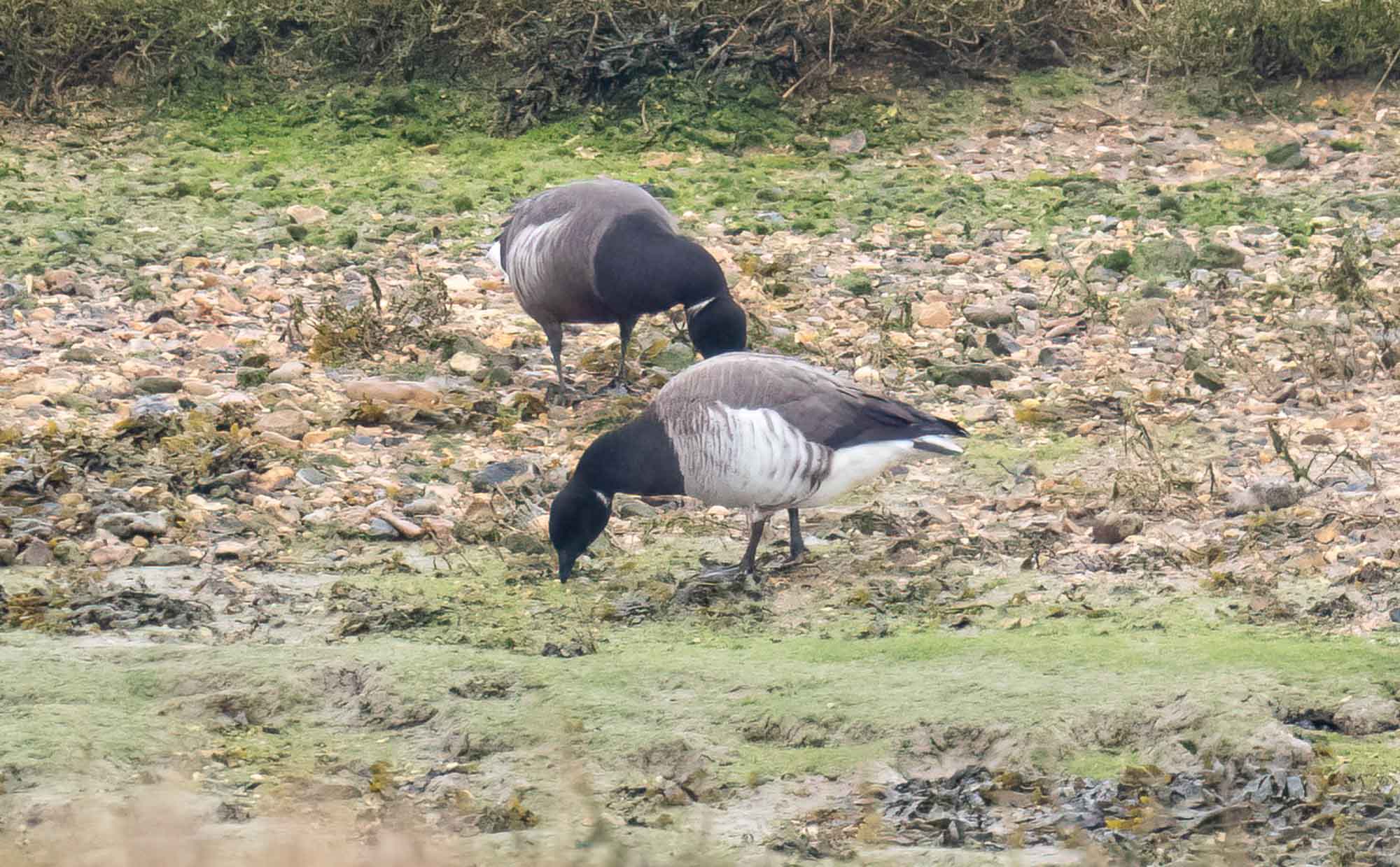
On the far end of Gull Island the 1st year Peregrine was surveying the river. I used the Warden’s Hut as a hide and was able to get closer to the Dark-bellied Brent Geese, they were feeding on the muddy inland edge of the spit and I was pleased to see that the Pale-bellied Brent Goose was amongst them. 

Pale-bellied Brent Goose

It was getting close to high tide and on the 17th Feb the spit opposite the cottages had been packed full of roosting waders. High tide was a similar height today but the spit was empty and the water level seemed much lower. I did ask the Hydrographic Office for an explanation but their detailed and helpful response left me really appreciating just how complex tidal prediction is. Local conditions mean that a tidal prediction for Buckler’s Hard or Stansore Point can be significantly off by the time you get to Warren Shore. 

From the Warden’s Hut I picked up the two Slavonian Grebes on the sea and soon afterwards another two were also drifting west on the falling tide. On the river there were at least six Great Crested Grebes clearly paired up now and two of them were bill wagging in the preliminary part of their courtship dance.

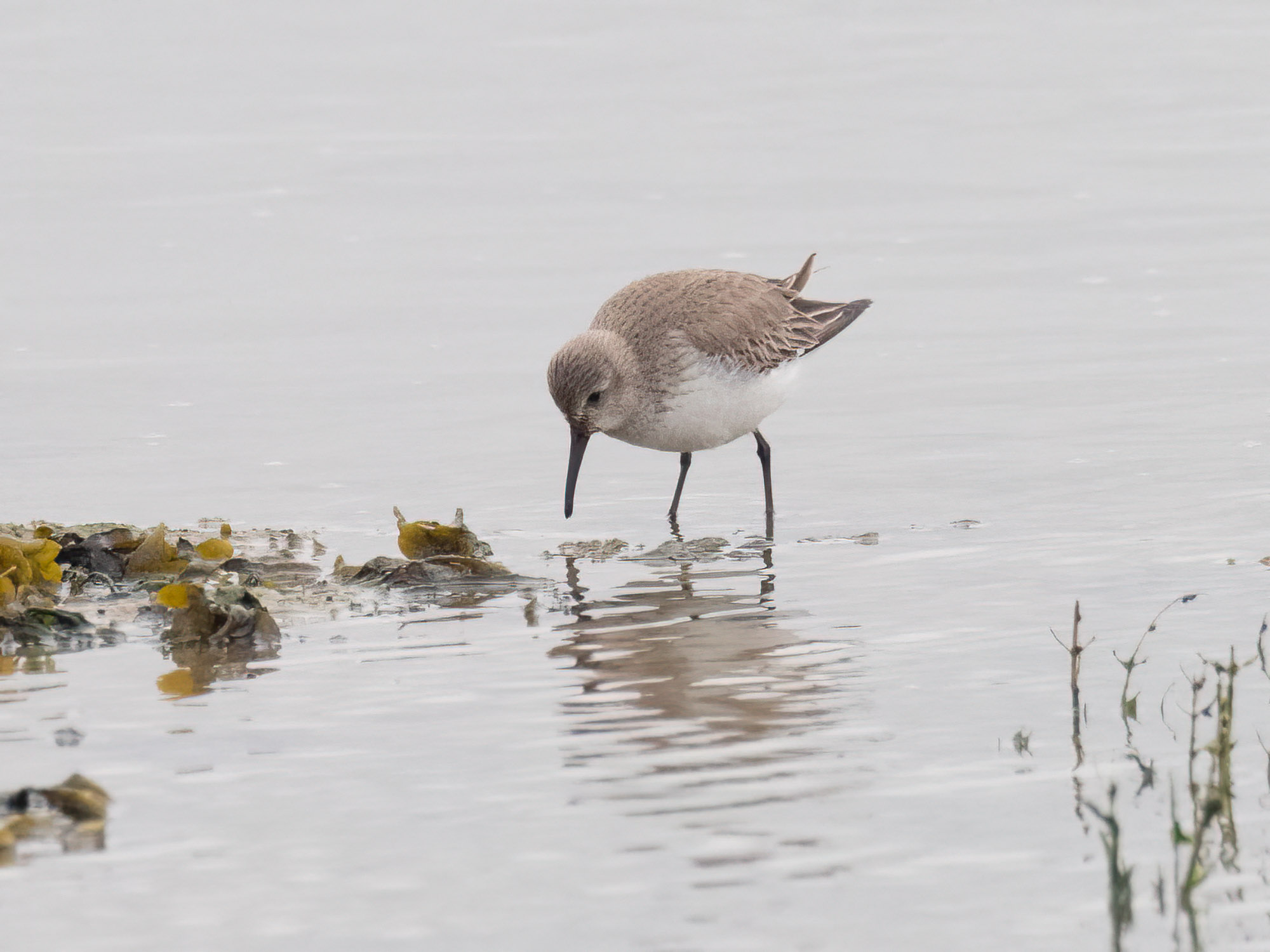
A small group of Dunlin landed close by. The race that winters around the UK is Calidris alpina alpina and they go back to Norway to breed.

Dunlin

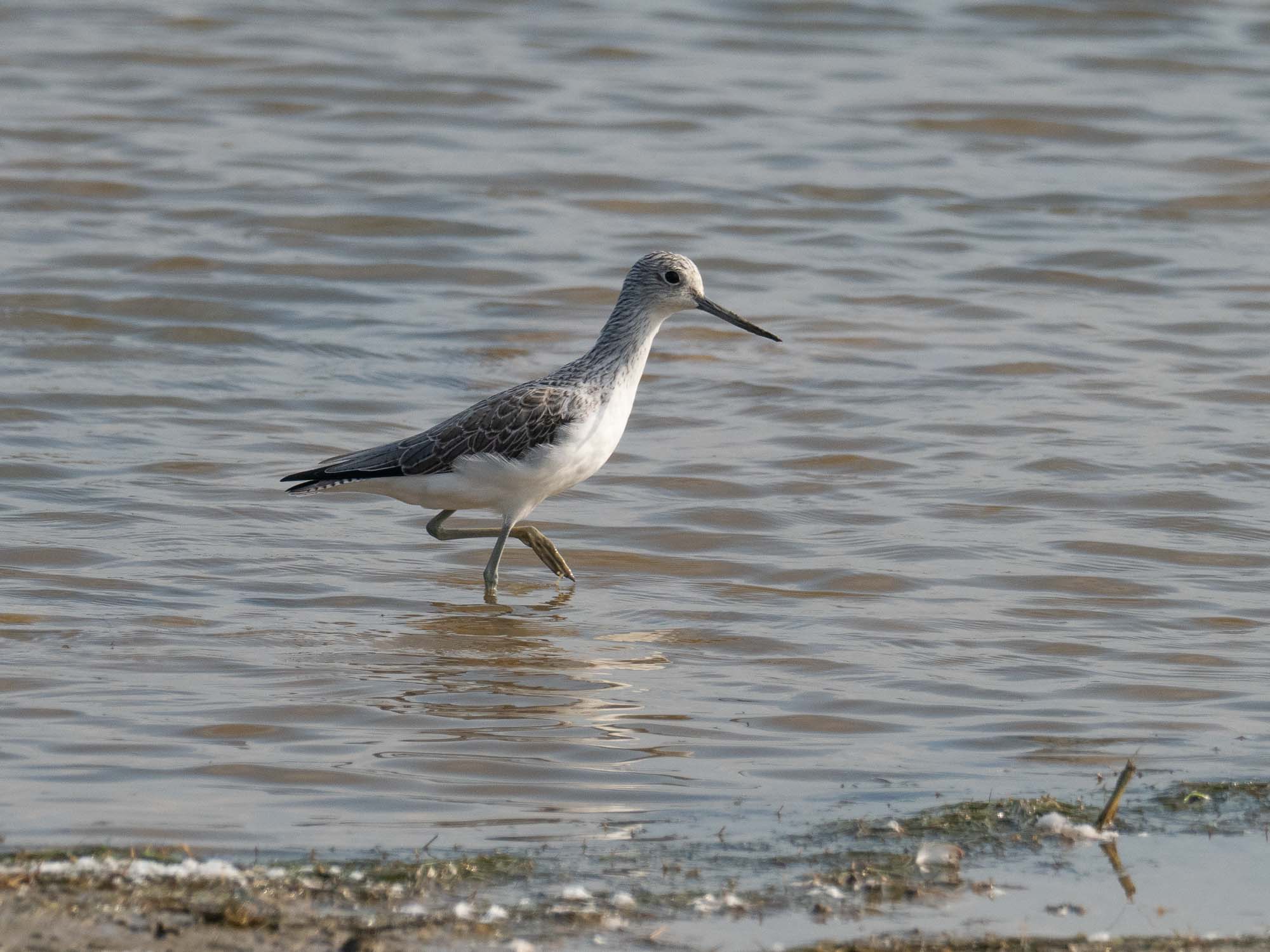
On De L’Orne a Kingfisher was sat at the back of the lagoon and there were 2 Greenshank on the Scrape. Greenshank that leave before mid-April are usually heading to Scotland to breed and those that leave in late April or early May are usually heading to Scandinavia or further east.

Greenshank

Having said that, in 2021 it was impossible to tell when the Greenshank left as I recorded a single Greenshank in every week of the year and so there didn’t appear to be a gap after which birds left for Scotland/further east and before returning birds appeared in the early autumn. I believe that Greenshank return north to breed in their first summer and so it seems odd that we should have had a Greenshank on De L’Orne in every week during May to July.

Also on the scrape the Avon Valley colour-ringed Redshank was still present and there were now 23 Avocets.

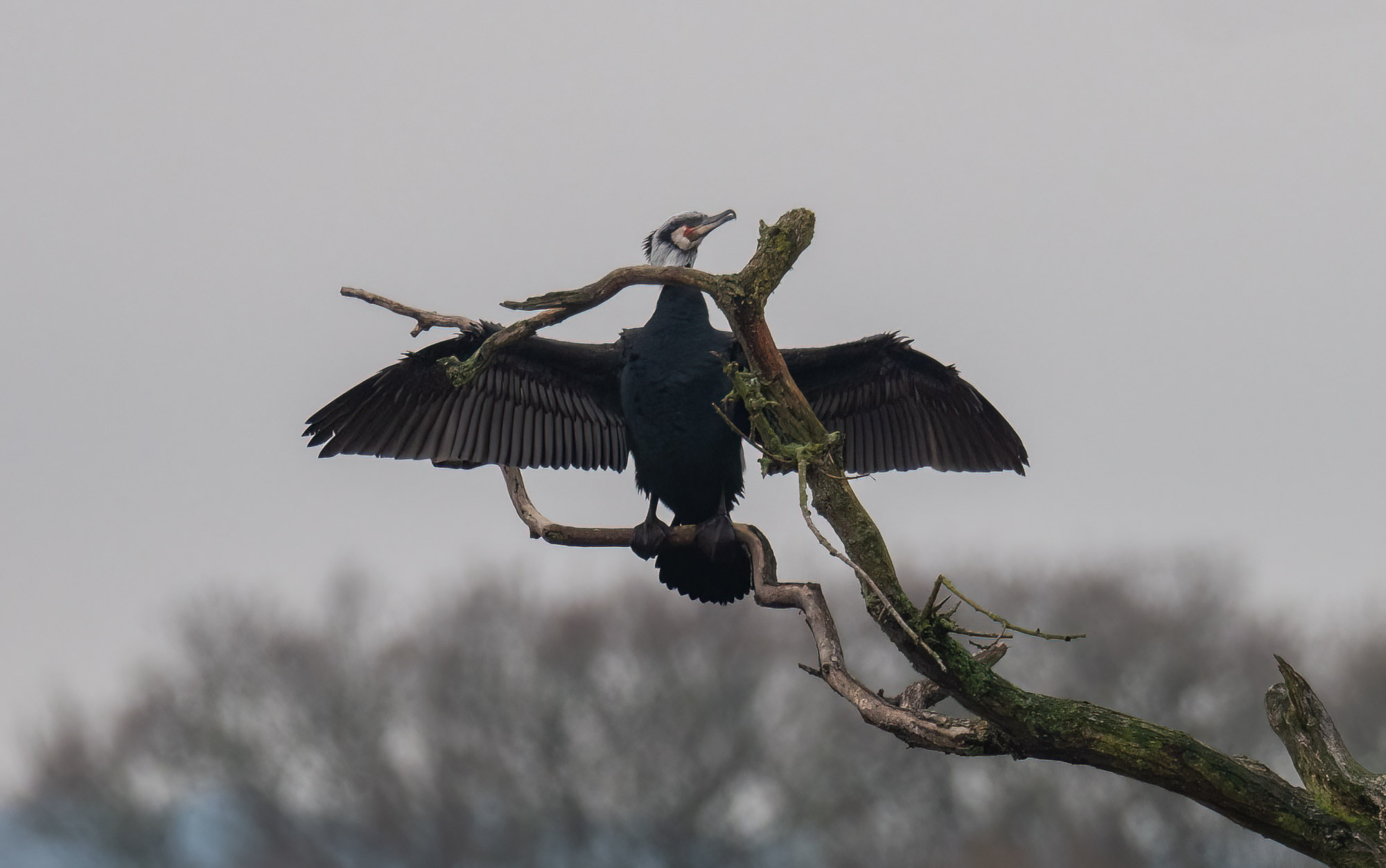
From Venner Hide I counted 62 Black-tailed Godwit on Wigeon Fields and a breeding plumage Cormorant was wing drying on the Island. The gular angle looks close to 90 degrees and with the extensively white head I wondered if this may be a sinensis race Cormorant. Given the overlap on this feature, however, it’s probably best to wait for an individual with a gular angle greater than 90 degrees.

Cormorant

Very few, if any, Cormorants breed in Hampshire although some non-breeders, maybe younger birds, do remain to spend the summer. Most of our wintering birds will head back to the continent to breed. Also on Venner there were 12 Tufted Duck and four Spoonbill.

Checking the sea again I picked up two distant rafts of Eider all drifting quickly west, groups of 25 and 15 with most of them head thrusting, wing flapping and bickering. 40 is my highest count here. A very distant diver headed east. The feet looked large and protruding so I initially doubted that it could be a Red-throated Diver but the characteristic head lifting, as though uncomfortable, was diagnostic.

As the tide receded further I could see more of the single beach and a colour-ringed Redshank appeared. I had a frustratingly short view before it flew off. It had a red or deep orange ring on the right tibia and a white/cream flag with three numbers/letters on the left tibia. Hopefully I will see it again and get longer views.

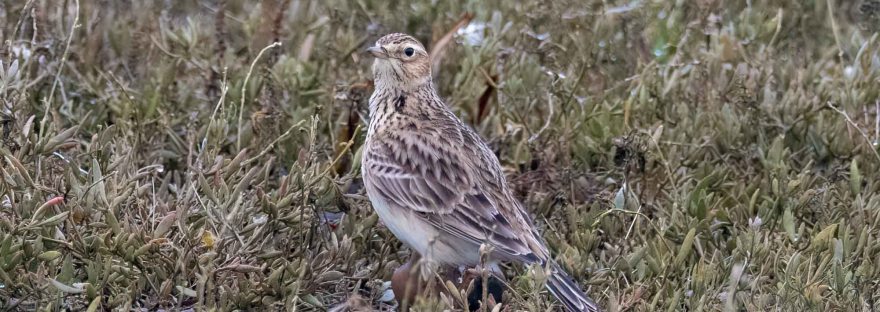
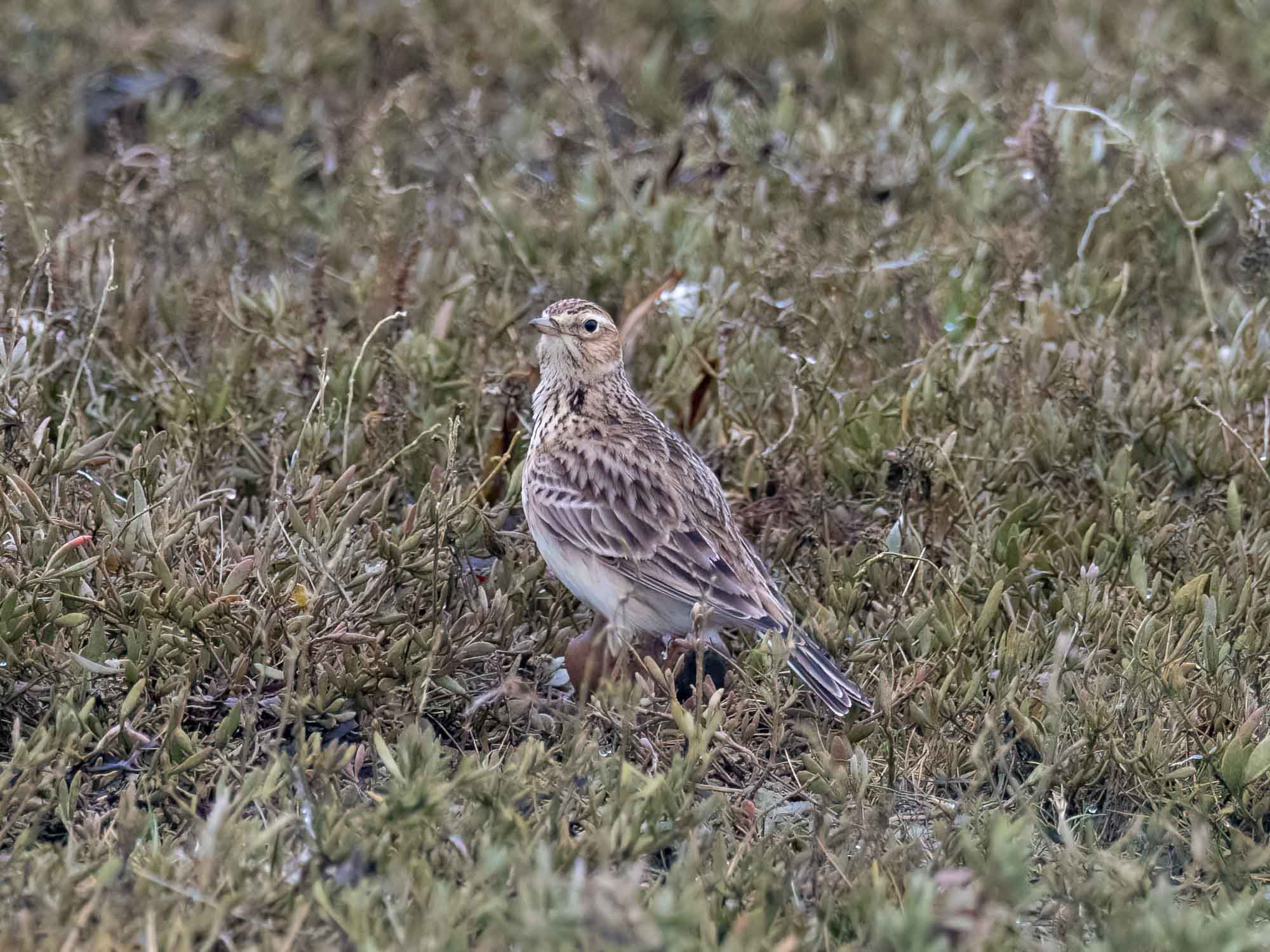
A Skylark flew up from the saltmarsh in front of me and uncharacteristically it soon landed and I managed a few photos.

Skylark

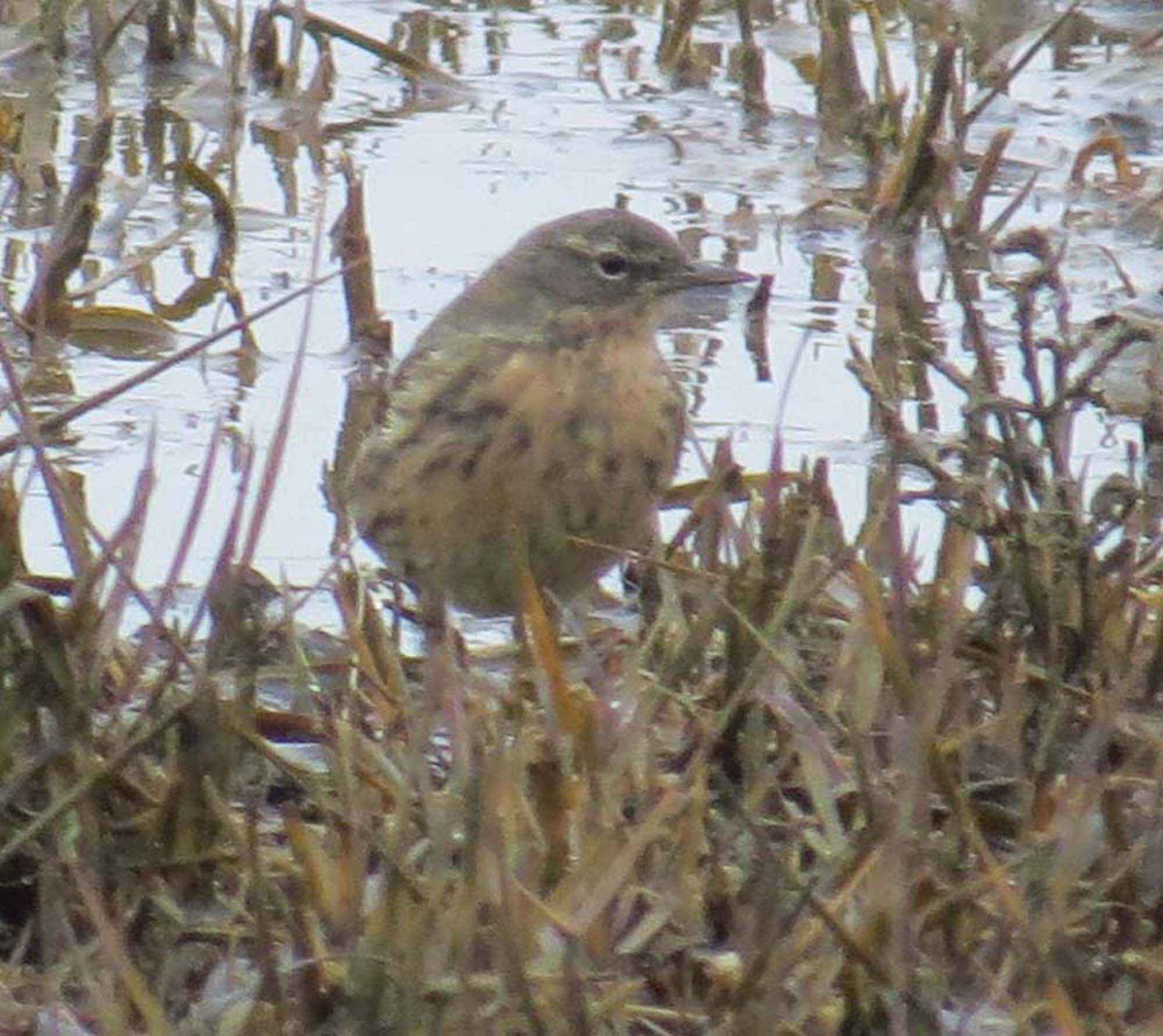
The highlight of the day was the pipit which also lifted up from this area. Even in flight I could see a pinkish wash to the chest and breast. It landed and I had brief scope views, the head was bluish and the supercilium was whitish, this was a nicely marked littoralis Scandinavian Rock Pipit. I’d seen several Scandinavian birds at the Sailing Club on the 3rd November 2021, this could be a bird that has wintered here and is now acquiring its summer colour.

littoralis Scandinavian Rock Pipit photo by Mike Rafter

In the autumn, migrant Rock Pipits of the subspecies littoralis arrive from Scandinavia. They can be very difficult to separate from the British petrosus race but the location of wintering Rock Pipits can help with assigning to race. Rock Pipits seen on the shoreline or a rocky coast are almost exclusively the nominate petrosus birds some of whom breed in Hampshire, Hurst Castle for example. Rock Pipits encountered on saltmarsh, however, like here are good candidates for the littoralis race.

I was frustrated not to get a photograph but thankfully Mike also saw the same bird and had better luck. This individual may well be the same Rock Pipit I have seen near Mary Monts on several occasions throughout the winter but only now is it assignable to race with its pinkish breast and bluish head.