April 2022, birds, Monthly Summaries, Spring 2022

Highlights April 2022

A frustrating run of cold northerly winds seemed to last all month slowing up the arrival of migrants and making this key sea watching period along the Solent very poor.

Small groups of Eider were moving back and forth on the sea early in the month and a female Red-breasted Merganser was still around on the 3rd. Dunlin and Turnstone were also hanging on at the month end. On the WeBS count early in the month there were impressive numbers of Mediterranean Gulls with 298 almost all adults gathering in their normal spot south east of Inchmery Quay.

Brown Hares continued to be in evidence including this obliging individual which trotted towards me showing the rufous colour, long legs, dark-tipped ears and also the tail held low unlike the Rabbit which holds it up flashing the white more obviously.
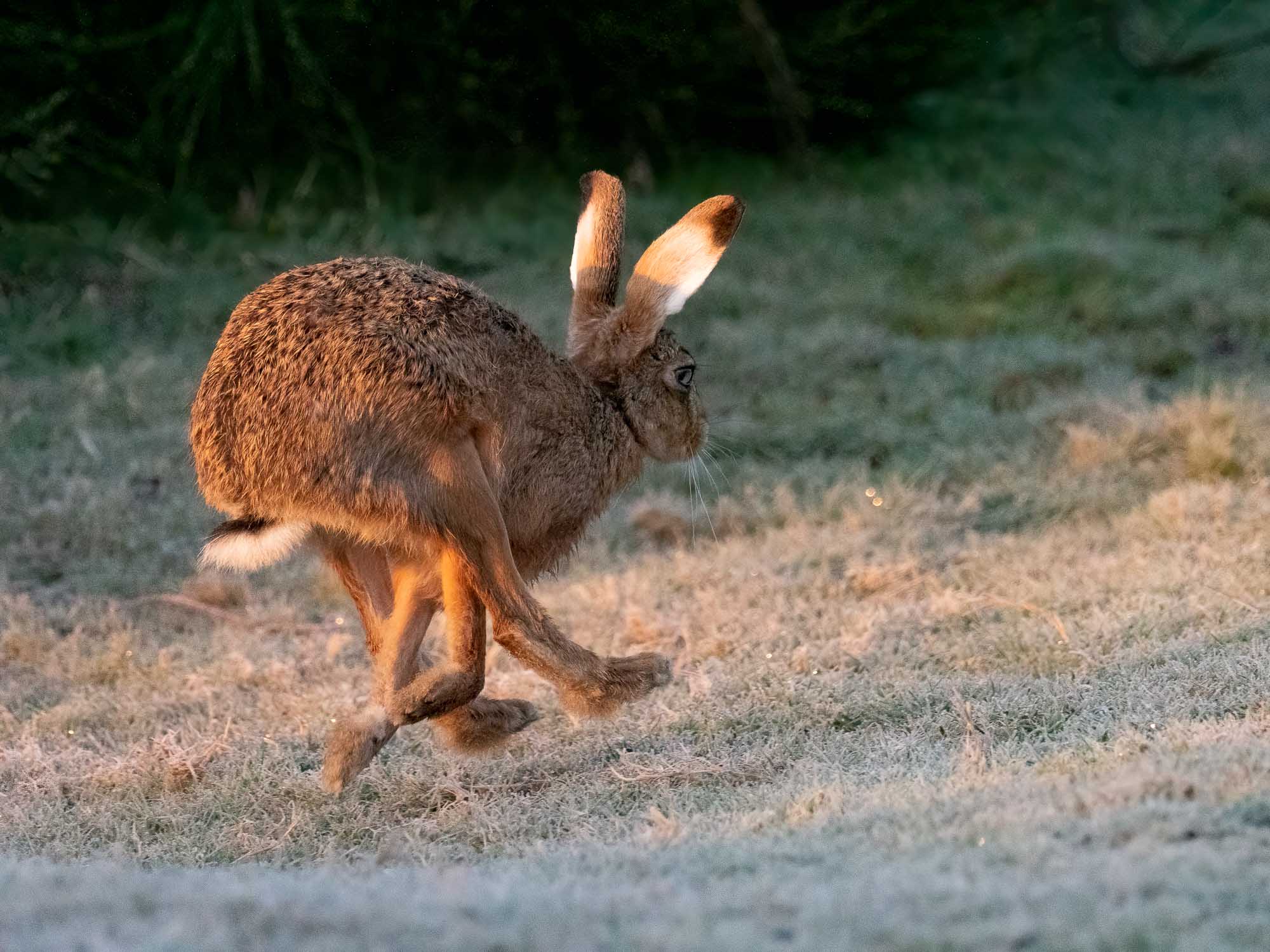
Brown Hare

A small passage of Green Sandpipers moved through early in the month. They are on their way to breed in Finland and Russia having spent the winter in southern Europe or possibly Africa.

The male Dartford Warbler I first found in mid-January was singing for most of the month unable it seemed to attract a partner. I did see it with another male on the 5th and then I finally saw a female with one of the males on the 16th. Both males stopped singing in the last week of April. I’m hoping to find evidence of breeding in May.
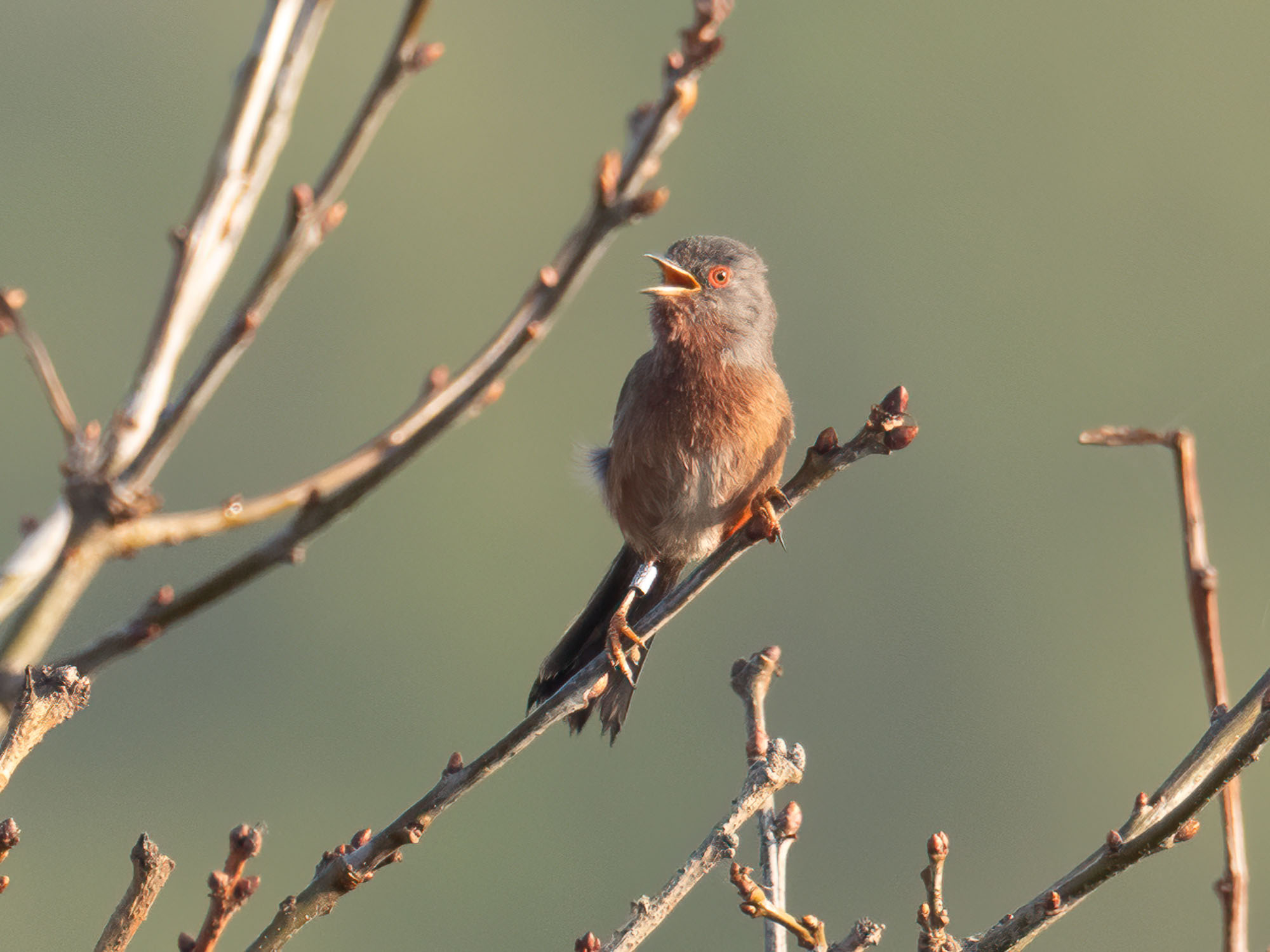
male Dartford Warbler

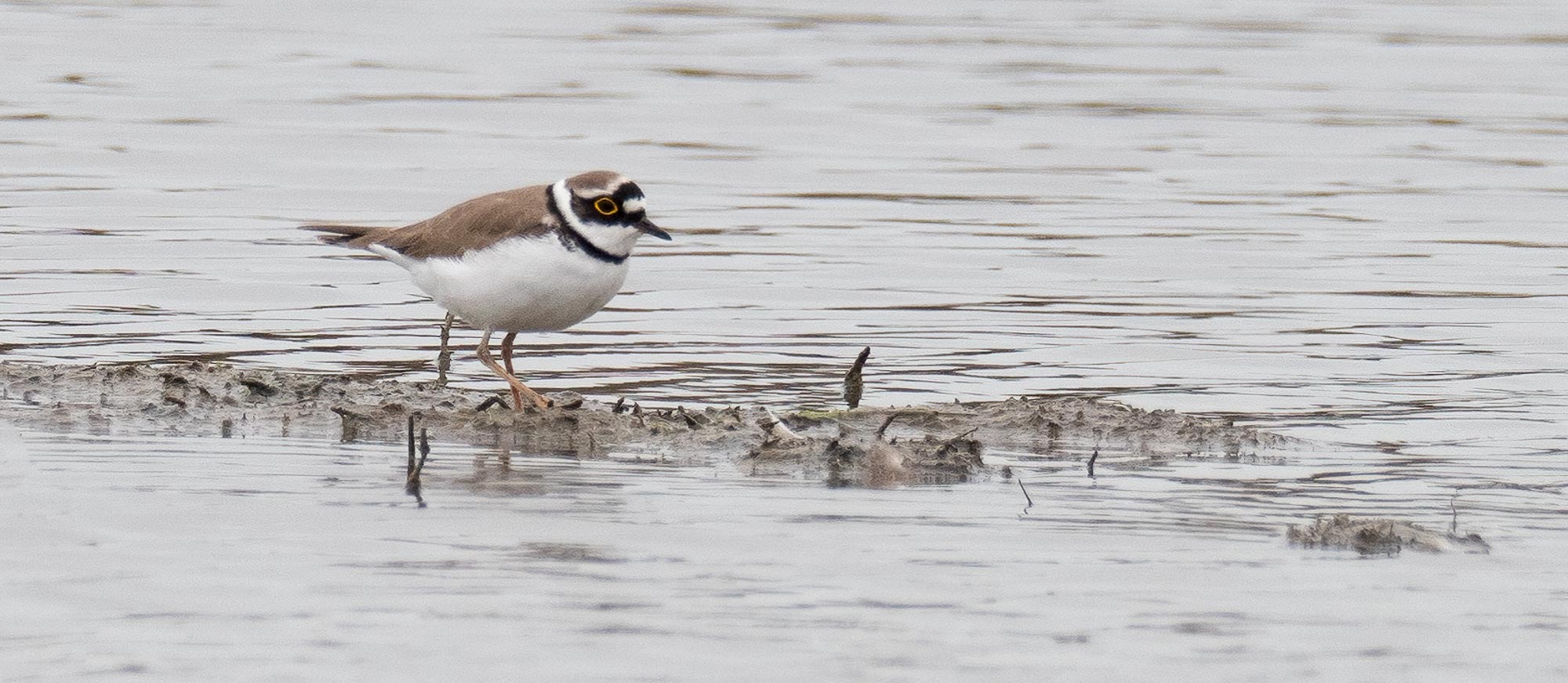
The Little Ringed Plover pair continued to split their time between the muddy fringes and the shingle overthrow where they bred last year. They also flew over to De L’Orne Scrape to feed on several occasions. I saw them mating twice around last year’s nest site but it wasn’t until the 29th that they finally settled on a spot and I found the first egg. 
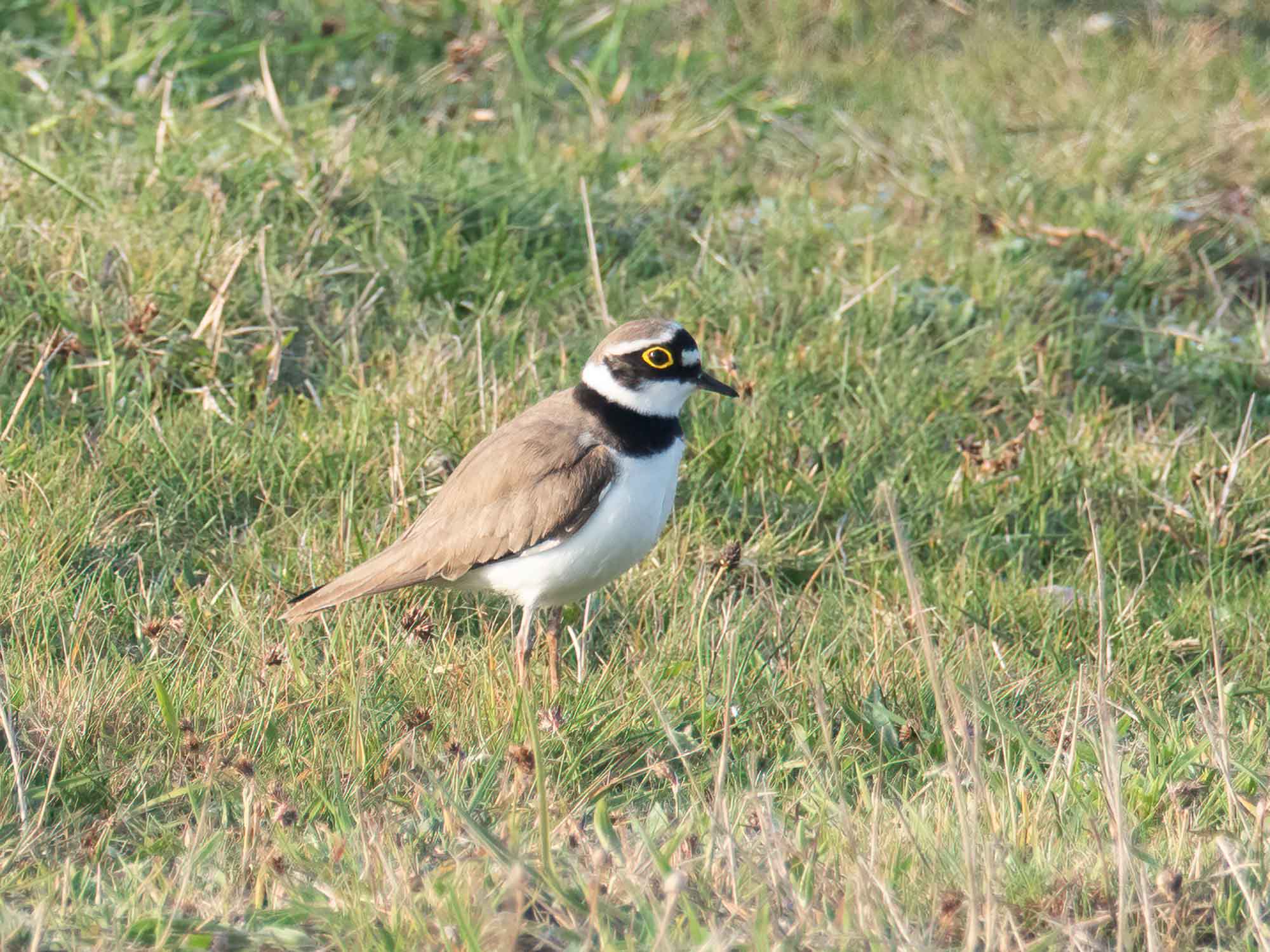
male Little Ringed Plover

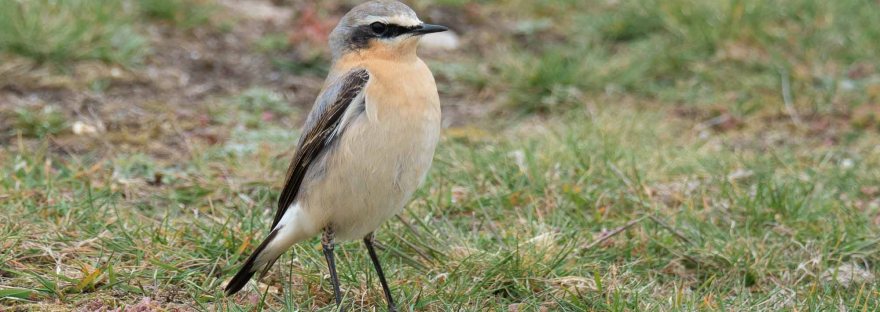
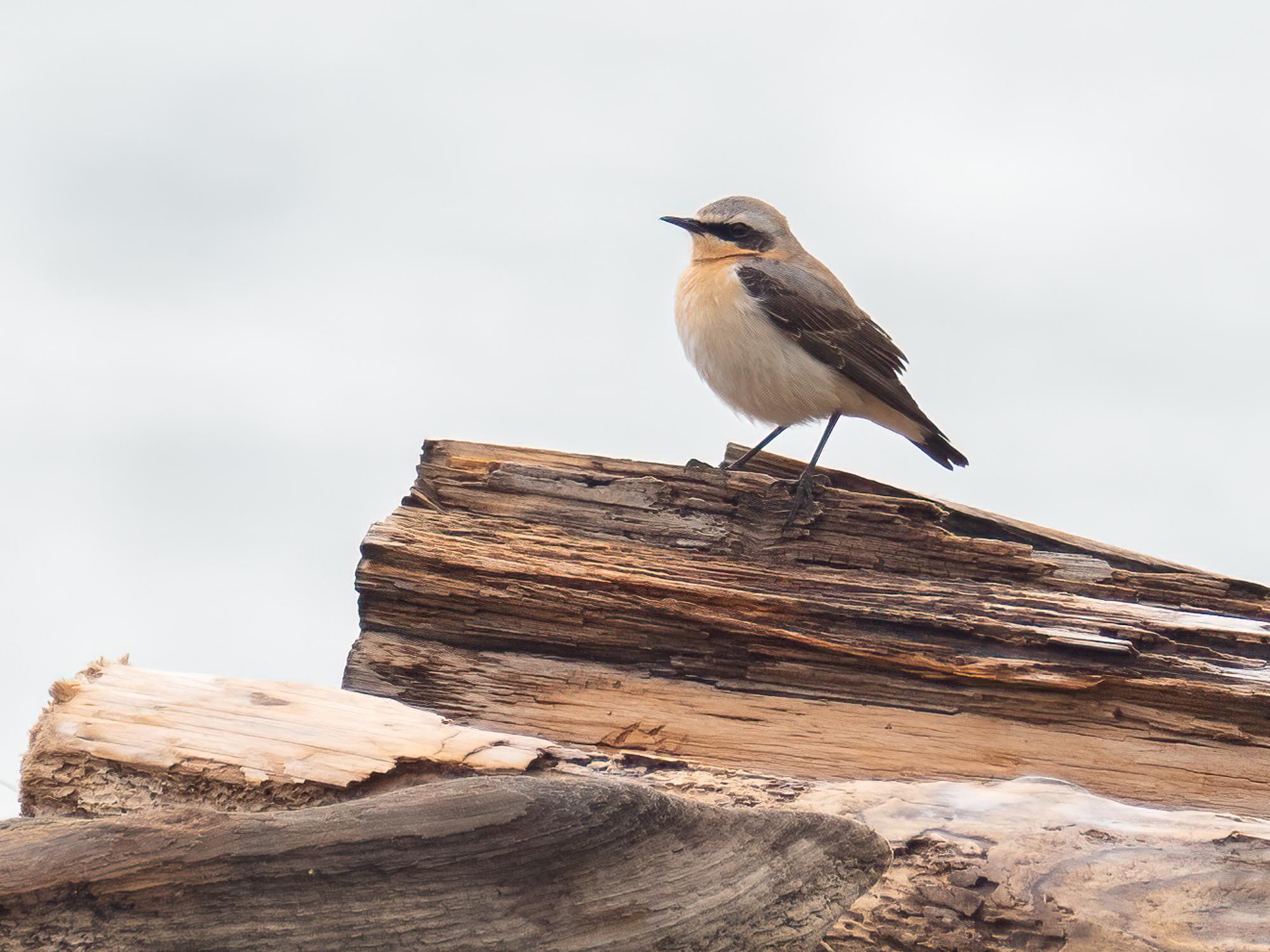
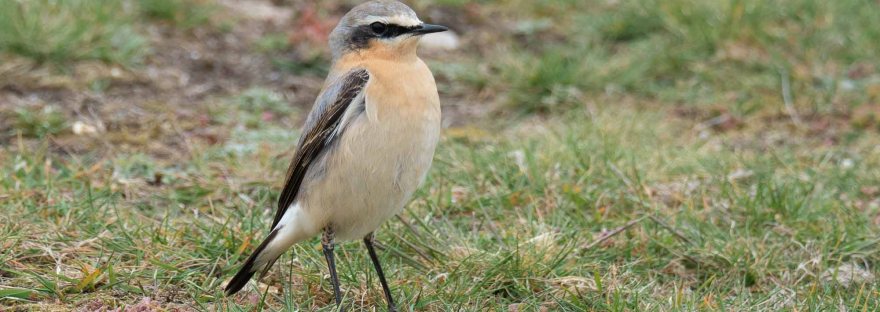
Wheatears were fairly thin on the ground this spring with only three sightings so far compared to 12 last year, my first was on the 3rd April.

Wheatear

There were two Spotted Redshank on the 3rd but none were seen after this date. They head off to northern Scandinavia to breed. Greenshank, however, were still around at the month end. Those that linger are more likely to breed in Scotland as opposed to Scandinavia.

Also on the 3rd on the private side of the Park Shore fence the wintering Purple Sandpiper was associating with Turnstones. It seems likely to be heading back to Norway or Iceland soon. On the 16th I saw it again on the beach near Mary Monts with other lingering winter visitors, Grey Plover and Turnstone.
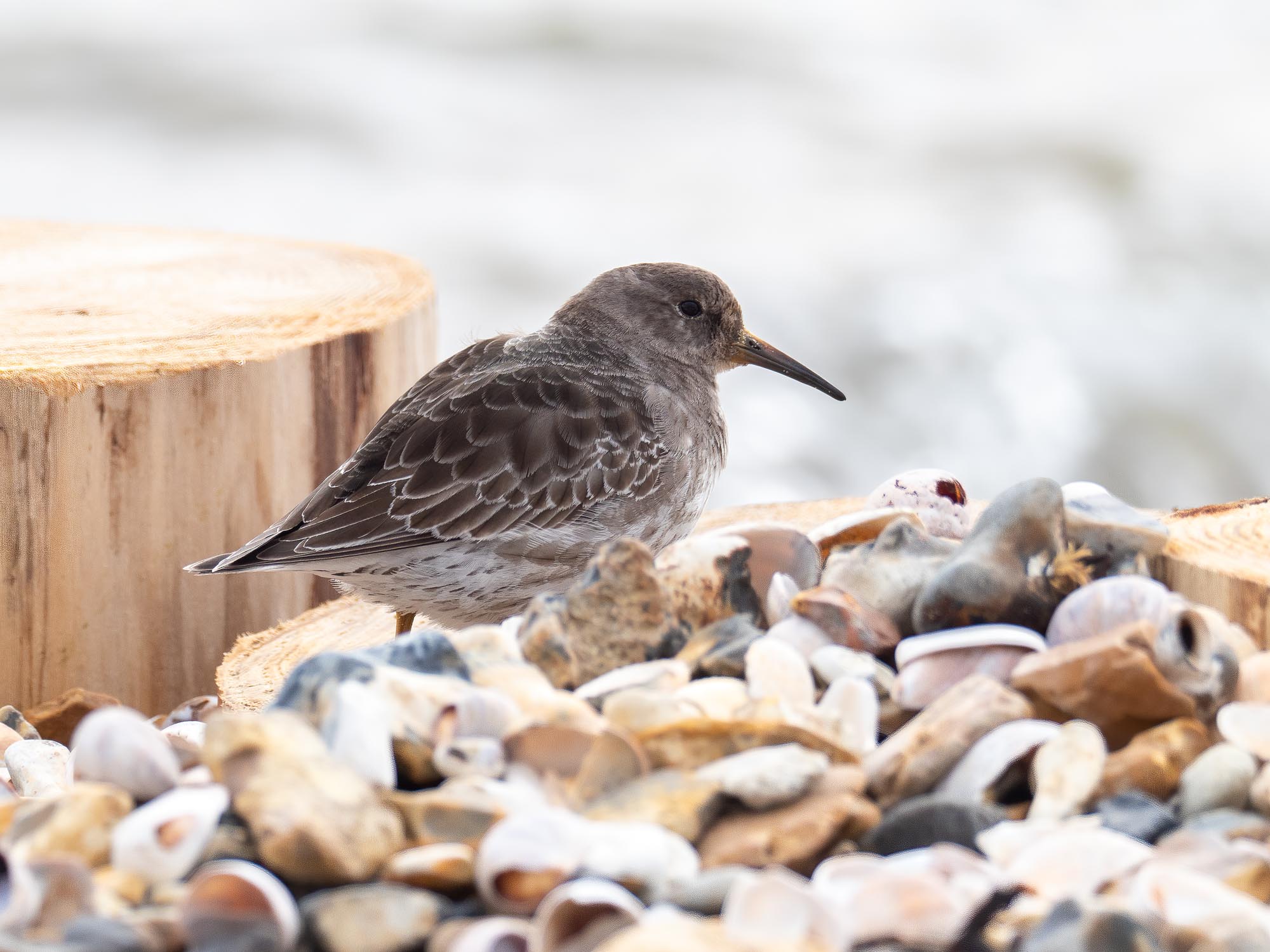
Purple Sandpiper

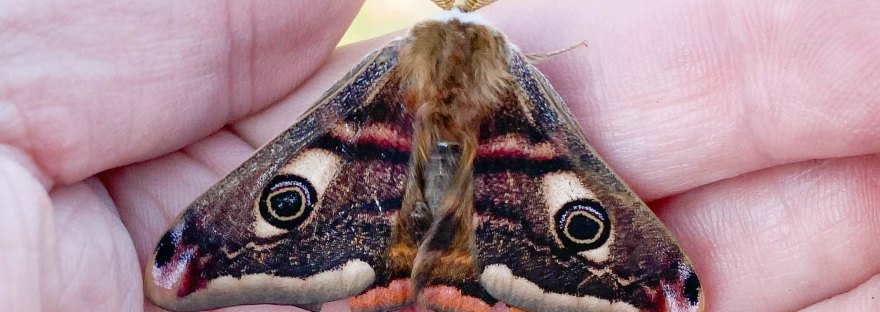
I tried out a new Emperor Moth pheromone lure. People have had good success with these in other places this spring. Emperors Moths are reasonably common in the New Forest but difficult to see well as they rarely land. I attached the pheromone-impregnated rubber bung to my tripod and stood upwind of several decent areas of heather and gorse but it wasn’t until my third try when I was on the beach at Park Shore that I got lucky.

He buzzed me several times before settling on my ruck sack and then my head! I managed to cup it in my hands and it stayed for a quick photo. This is the first ever record for Needs Ore/Park Shore and also the first ever record for the whole 10km square (SZ49). I saw other male Emperors at Mary Monts on 23rd and at the Wardens’ Hut on the 30th.

male Emperor Moth

The 9th of April finally brought me first Merlin of the year. A large looking female dashed out across in front of me when I was at Wheatear Corner and then landed on the up-turned tree roots on the shingle ridge. She will be heading north soon to breed on the moors in Wales, northern England or Scotland.

female Merlin

The adult Spoonbills headed back to the Netherlands mid-month leaving a second calendar year bird on its own for the rest of the month. His ring NBNZ confirmed a Dutch origin and that he wintered in Poole Harbour.
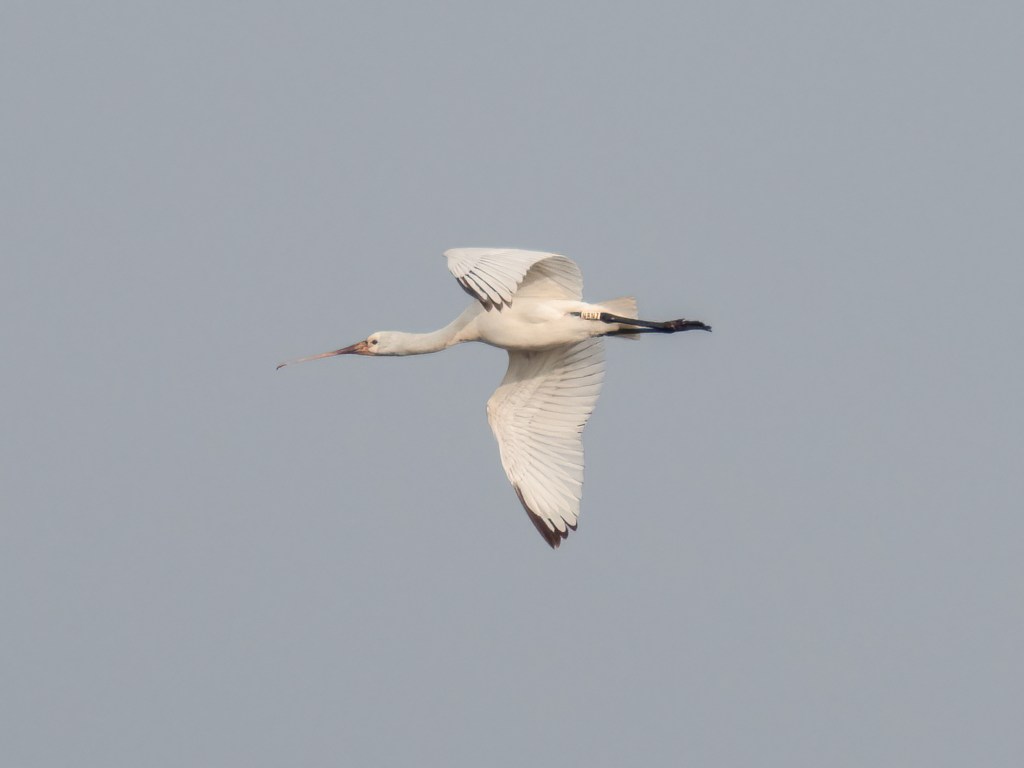
2nd calendar year Spoonbill

It was great to hear a Willow Warbler singing mid-month around Black Water. This is a declining bird especially in the south and they haven’t bred at Needs Ore for five years or more.

A Herring Gull mid-month showed an uncharacteristically wide black band on P5 and even a small black mark on P4. Several commentators online felt that this was a classic Yellow-legged Gull wing pattern but the bird in question turned out to have pink legs suggesting that a single feature taken in isolation (wing tip pattern) is not always indicative.
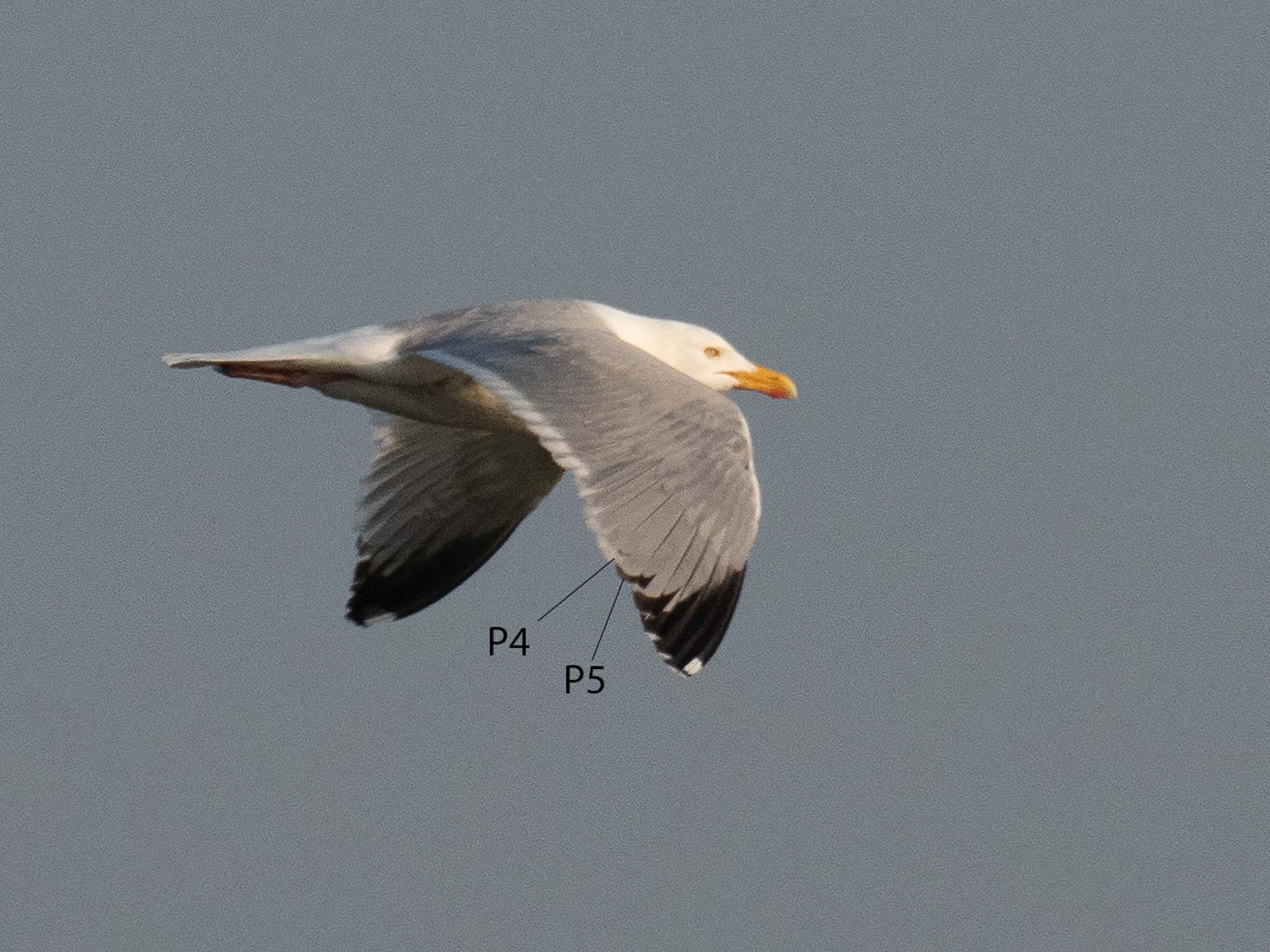
Herring Gull

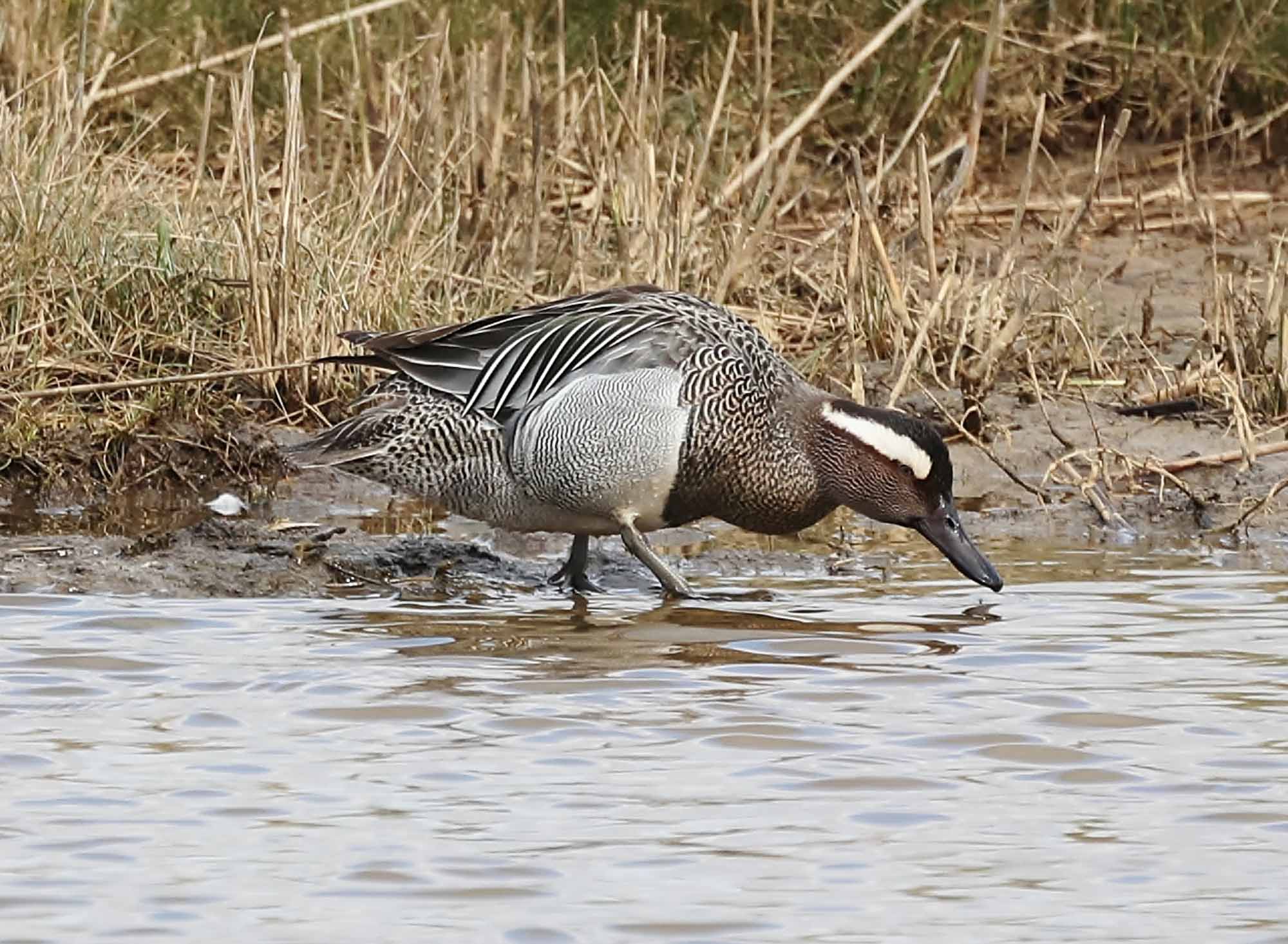
The drake Garganey remained in the De L’Orne area for most of the month but was unable to find a female. He left just after the 16th.
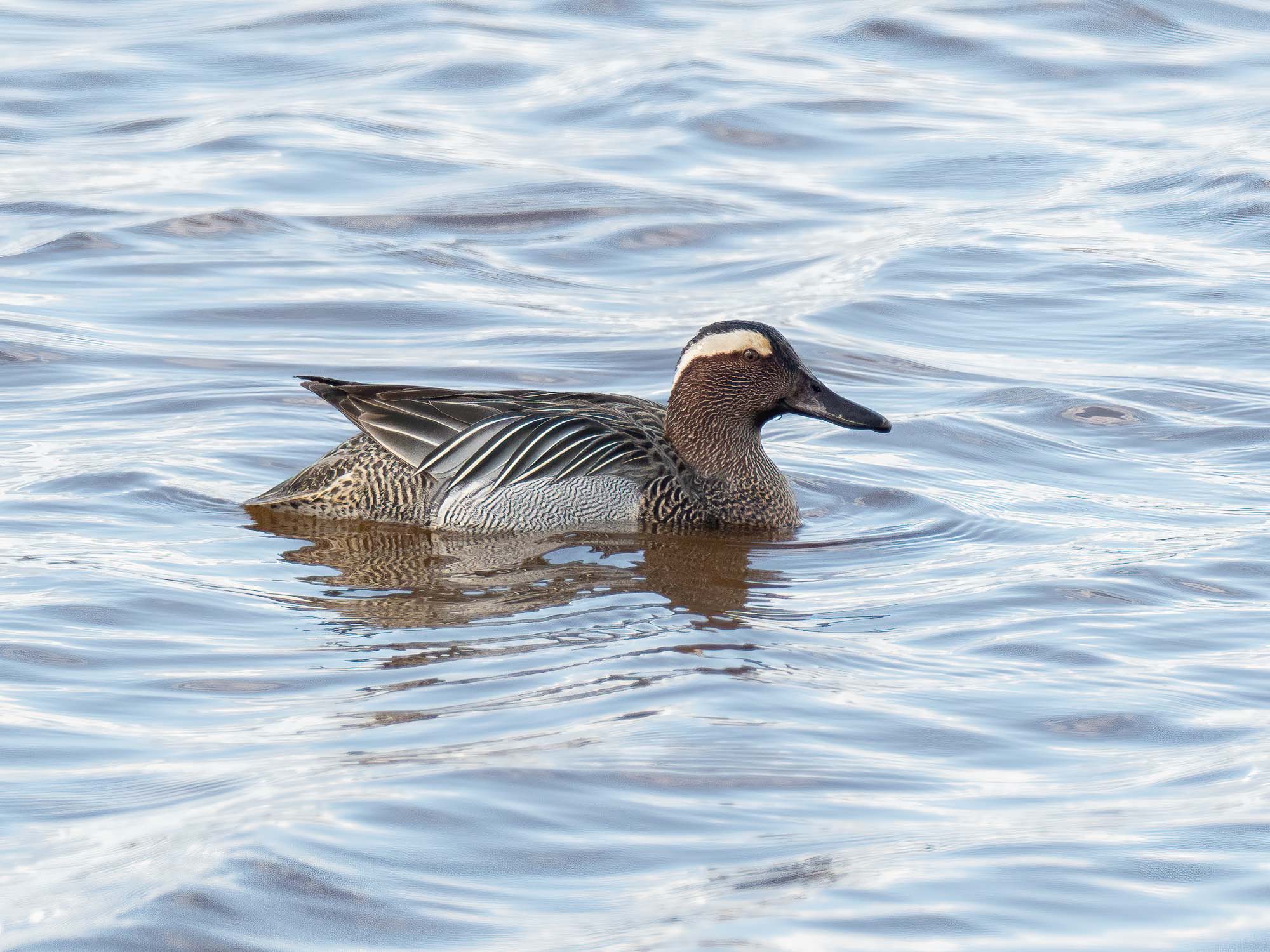
drake Garganey

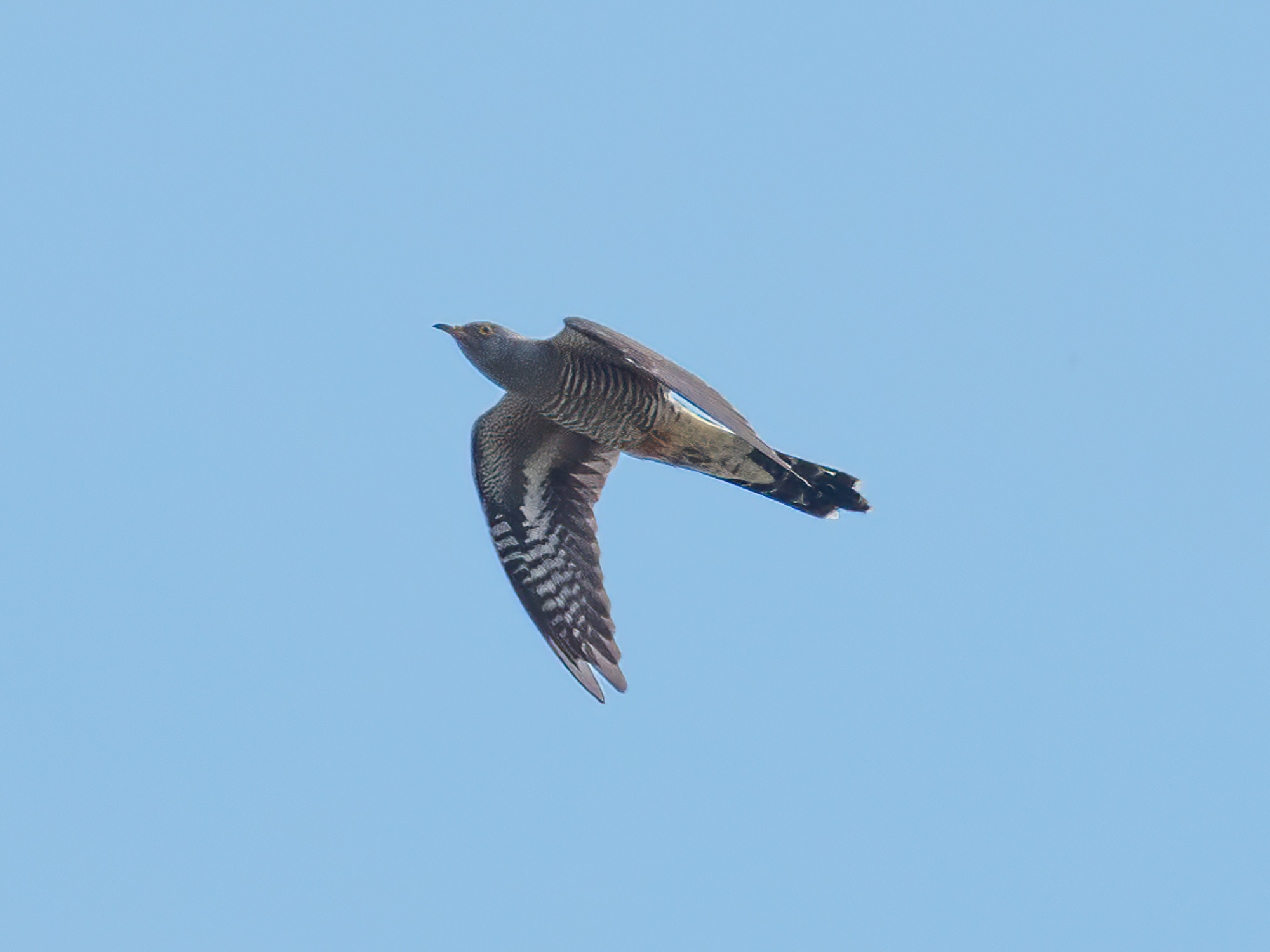
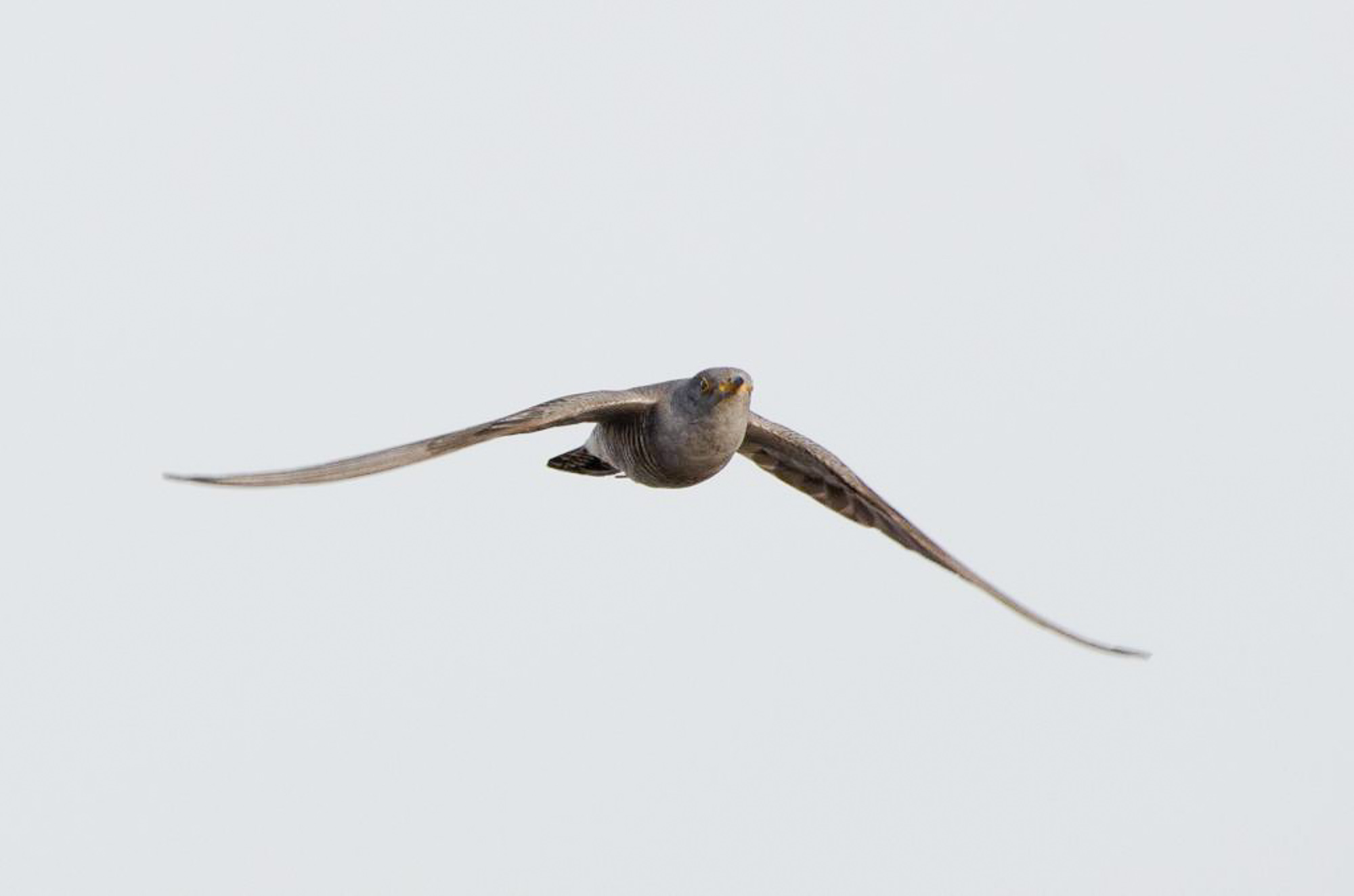
On the 16th I heard my first Cuckoo calling and as I walked along Warren Lane it flew across in front of me. This is two days earlier than last year. I heard Cuckoos on every visit during the rest of the month including a male coming in off the sea at the month end.

male Cuckoo

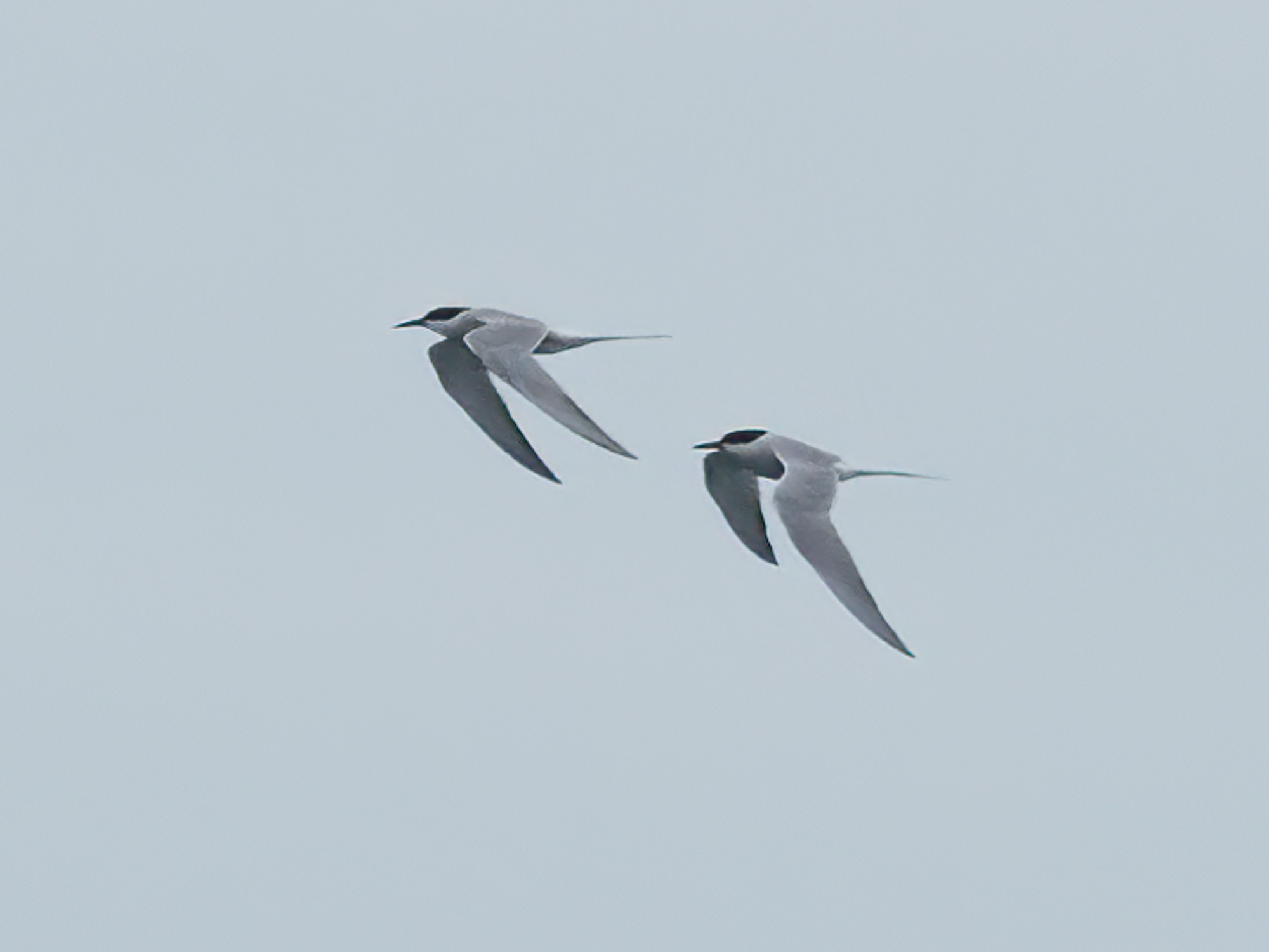
Sea watching mid-month produced the first trickle of spring passage, a Common Scoter pair west and seven Common Terns and the first Whimbrels heading east.

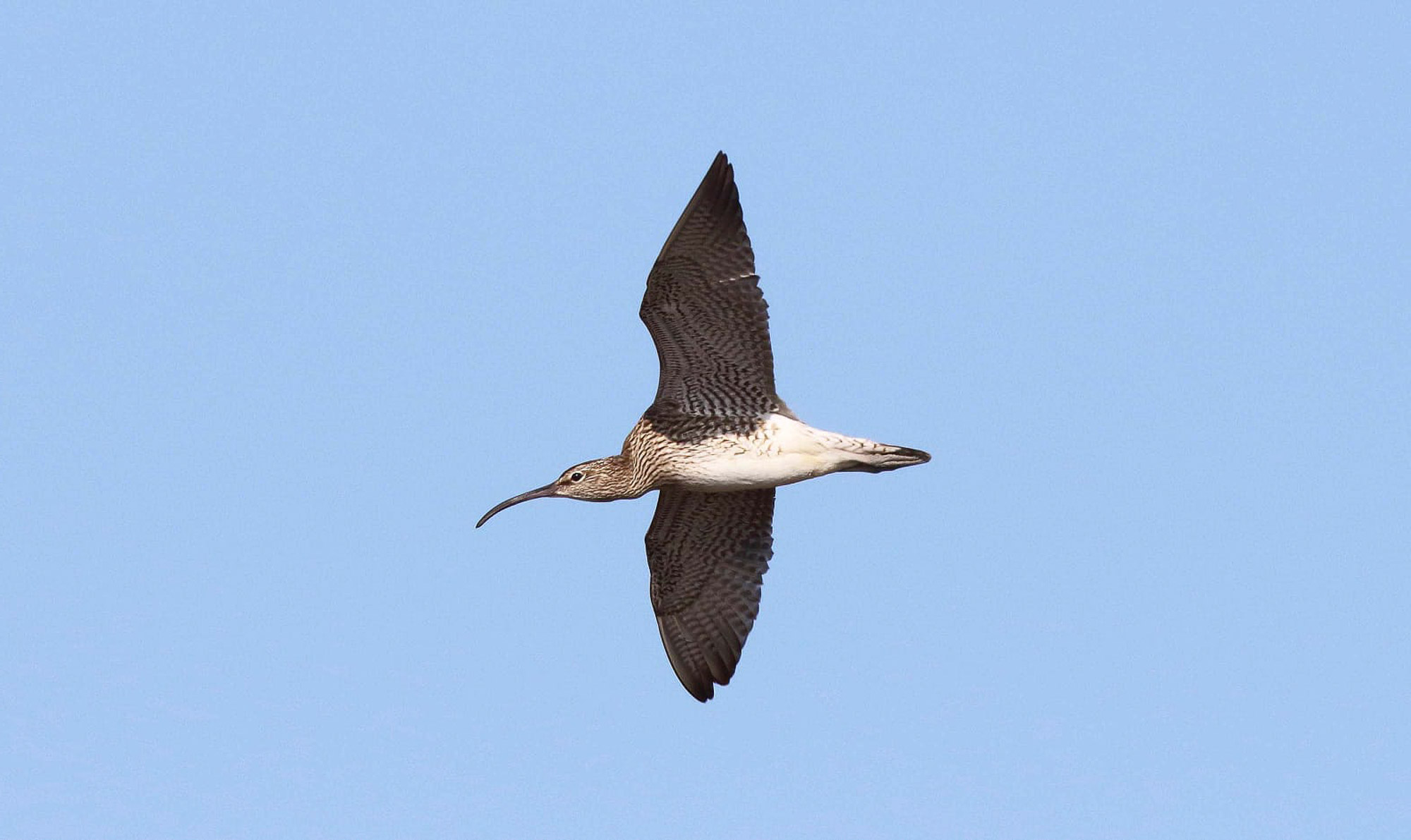
Common Tern passage picked up towards the end of the month including a tight fishing flock of 50 birds on the 20th. At times they streamed through at more than 30 per hour and then there’d be three or four hours with very few. The passage of Whimbrel and Bar-tailed Godwit seemed a bit more consistent with counts of 50-70 of each species on two separate sea watches in the final week of the month. Some of the Whimbrel stopped to feed inland in the fields but the Bar-tailed Godwit tended to keep moving. 

Sea watching highlights included three 1st summer Little Gulls on the 29th.

2nd calendar year Little Gulls

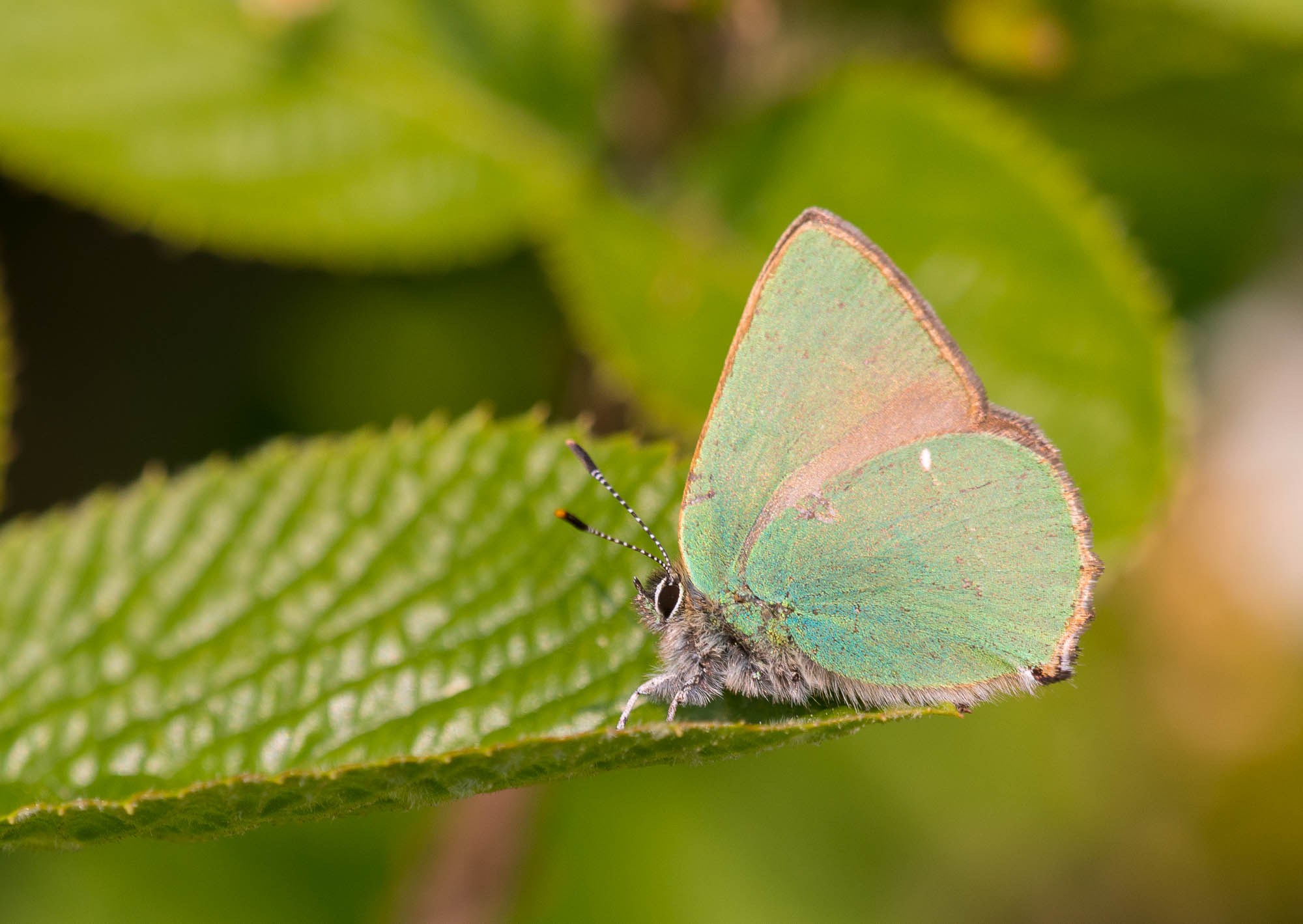
Butterfly highlights included the first Green Hairstreak of the year on the Broom and Gorse bordering Gravelly Crossroads.

Green Hiarstreak

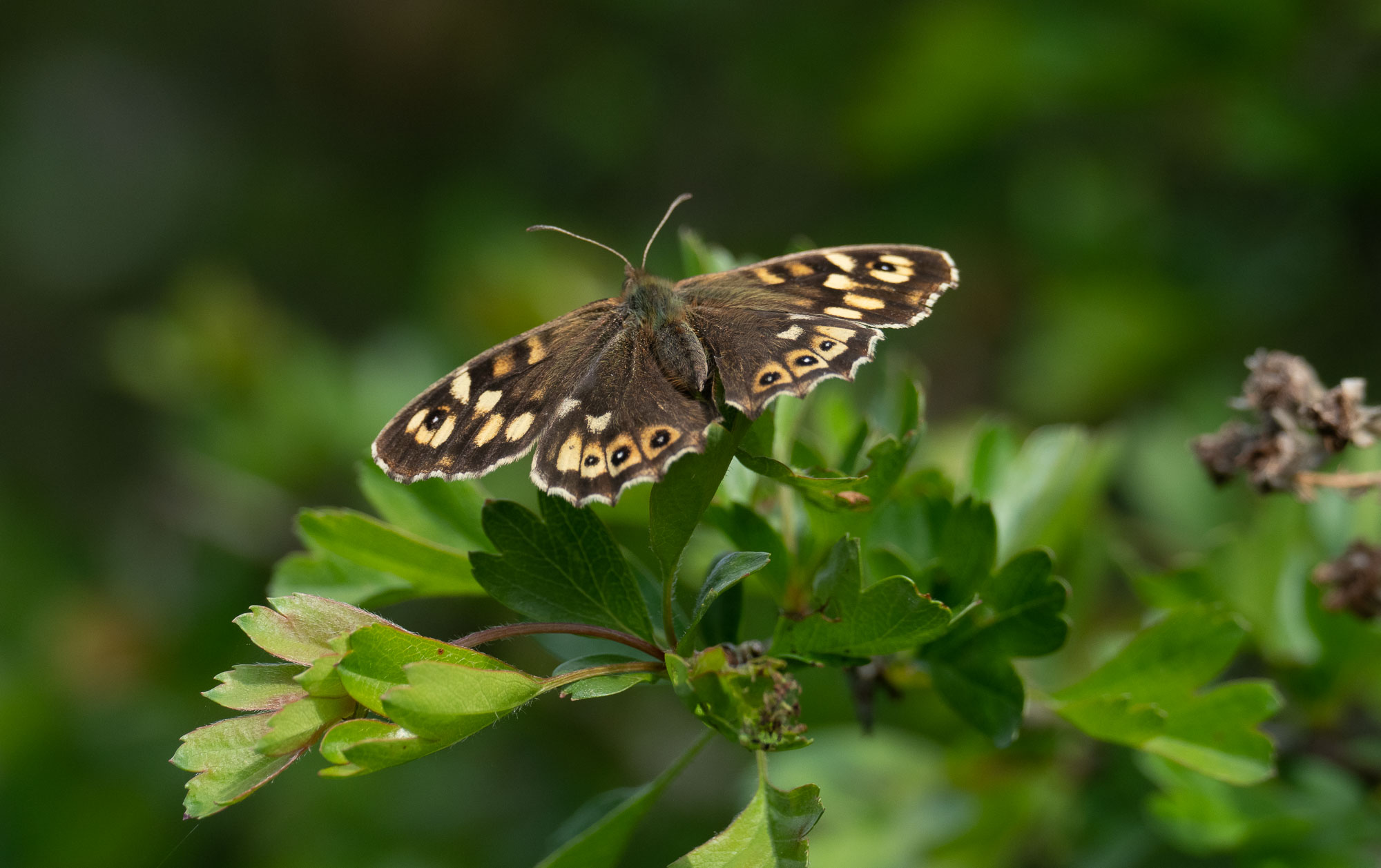
Lots of Speckled Woods flying along the hedgerows now and also good numbers of Peacock and the odd Comma. A butterfly patch tick on the 29th, my first Orange-tip on the reserve.

male Orange-tip

The Peregrines were seen mating on many occasions during the month but there was no evidence of a breeding attempt. They male and female are away from Gull Island a lot.

A highlight on the 21st was seeing my first odonata of the year, a Hairy Dragonfly quartering near Great Marsh. A few days later I later watched another patrolling the ditch opposite the Shore Hide.

Hairy Dragonfly

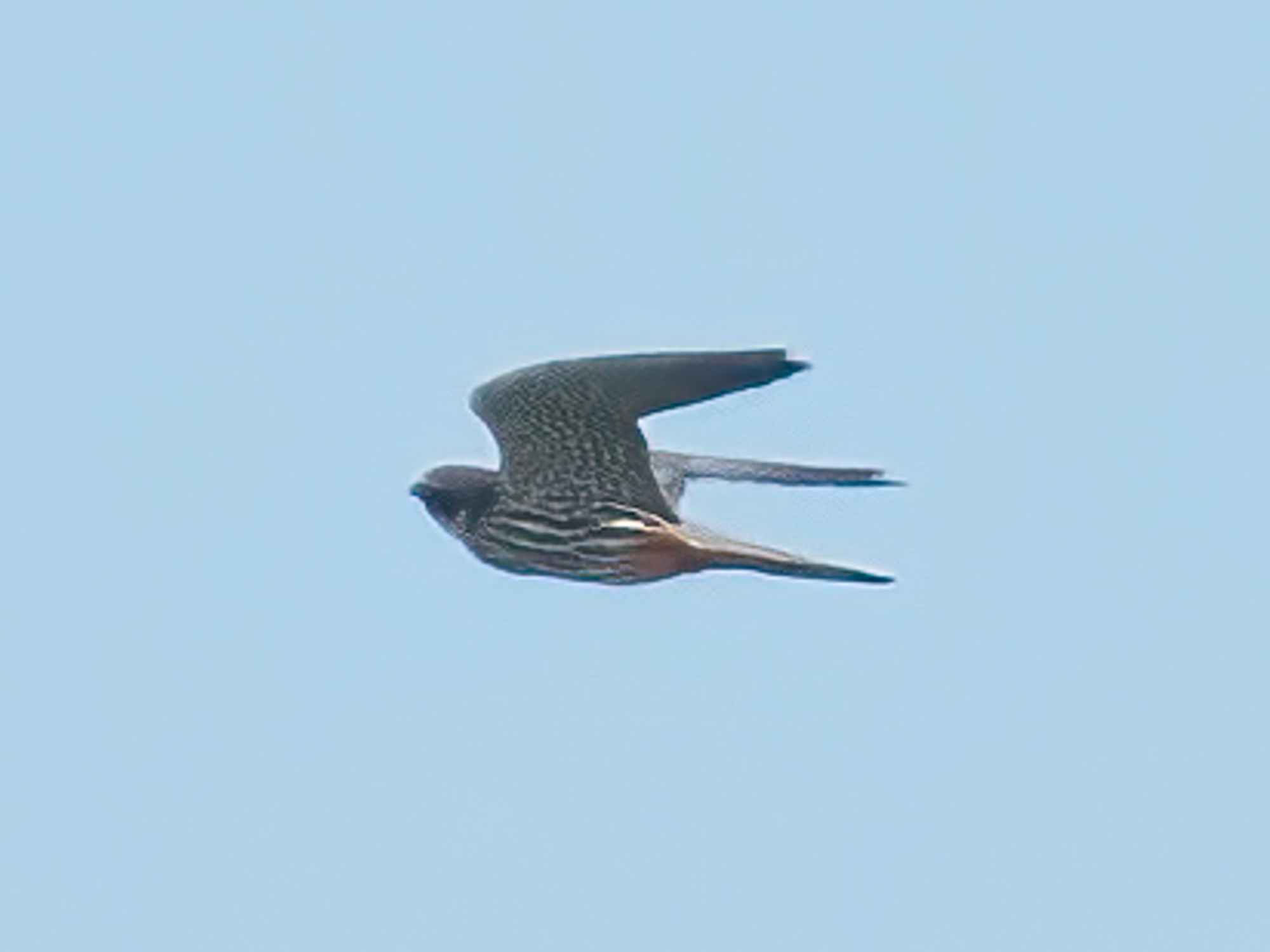
On the 23rd it was great to watch a Hobby flying all of the way across the Solent making landfall before heading over Shore Hide and then on towards Black Water.
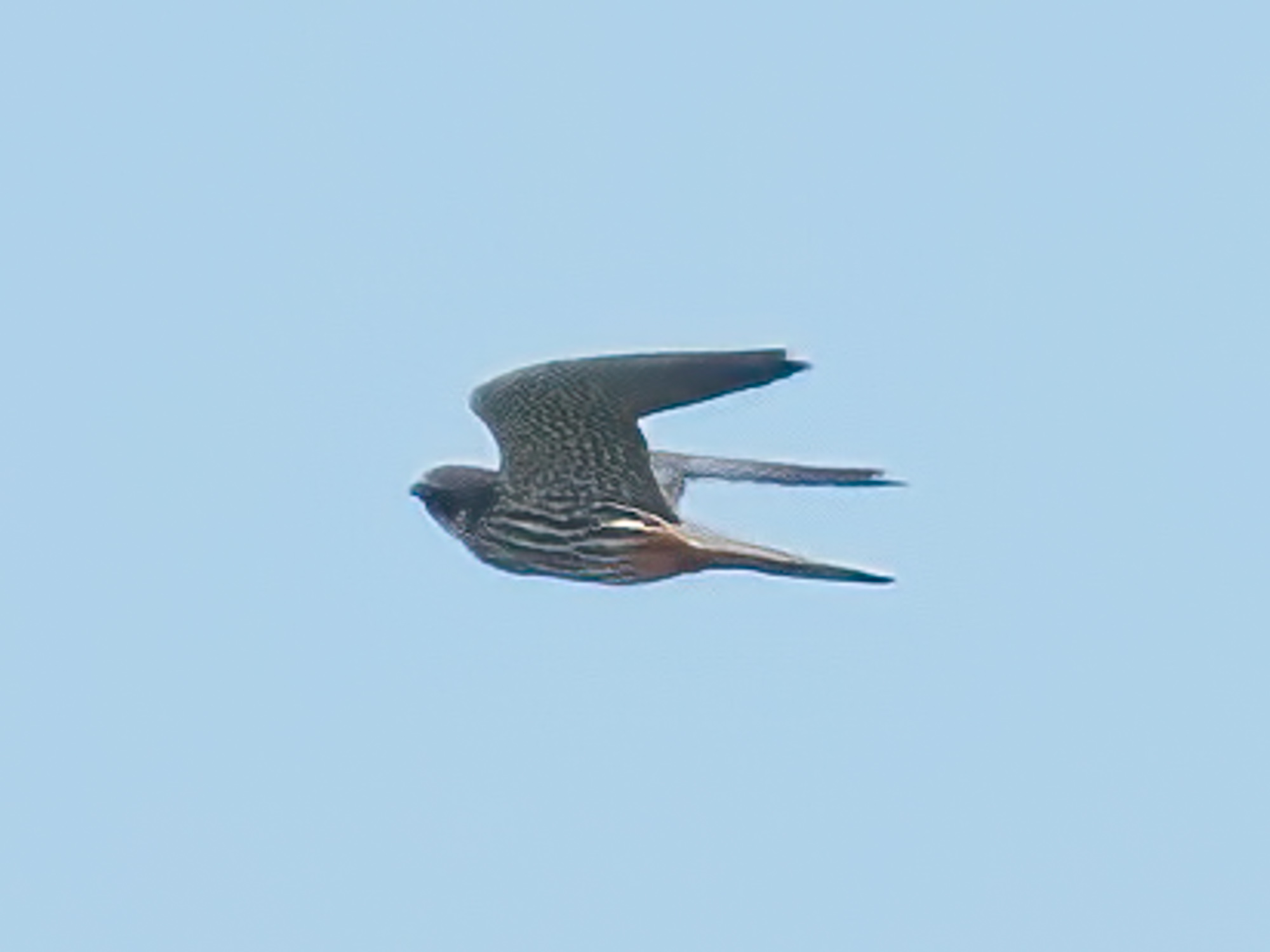
Hobby

My first Little Terns of the year on the 27th were very distant, their amazingly rapid clockwork-toy flight action made identification easy despite the long range. On the same day a single Black-throated Diver headed east, there is a small spring passage of divers along the coast here, mainly Red-throated Divers and Black-throated Divers.

My first Gannet of the year on the 27th was a slight surprise and it came much closer than they normally do.
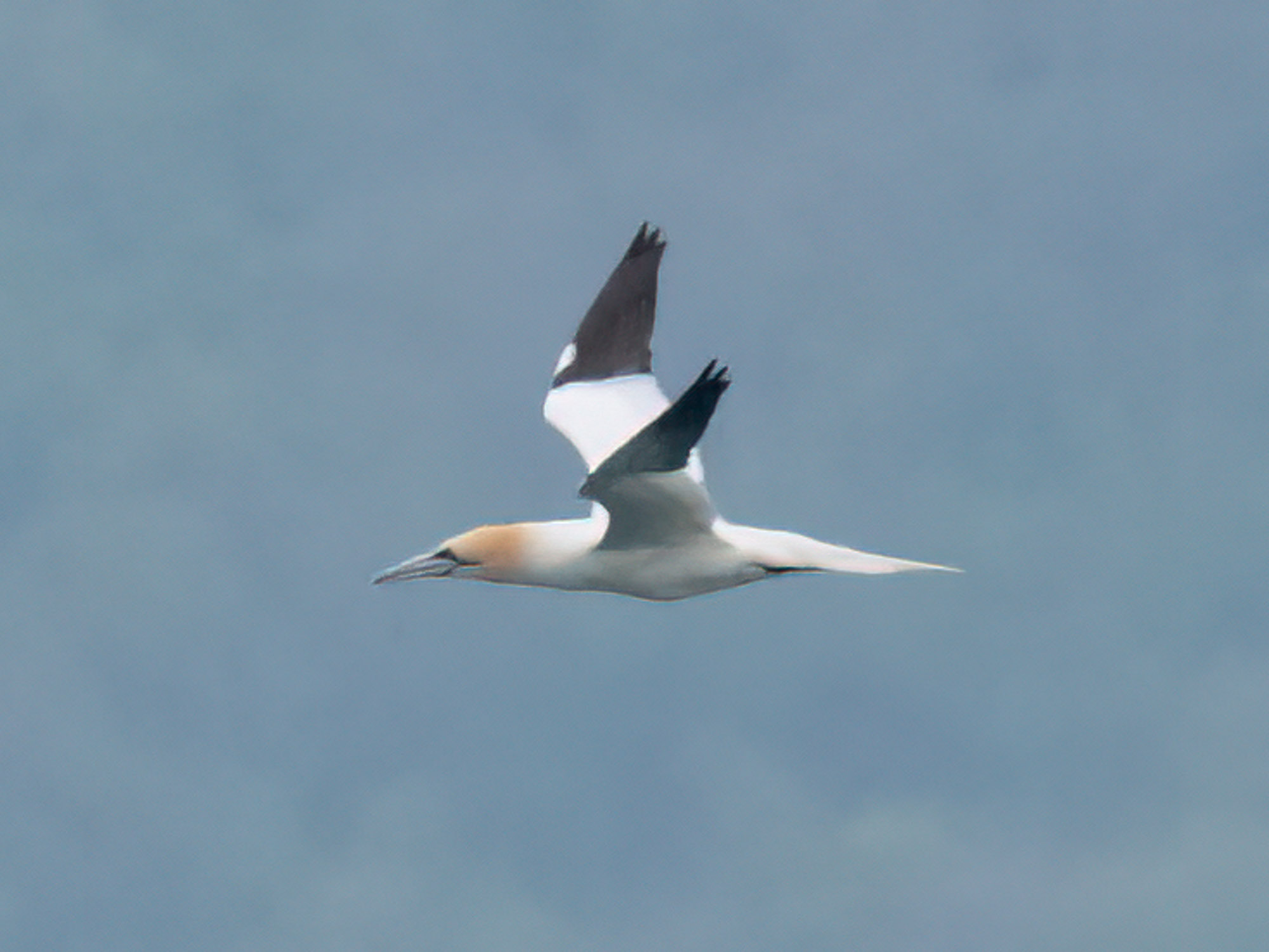
Gannet

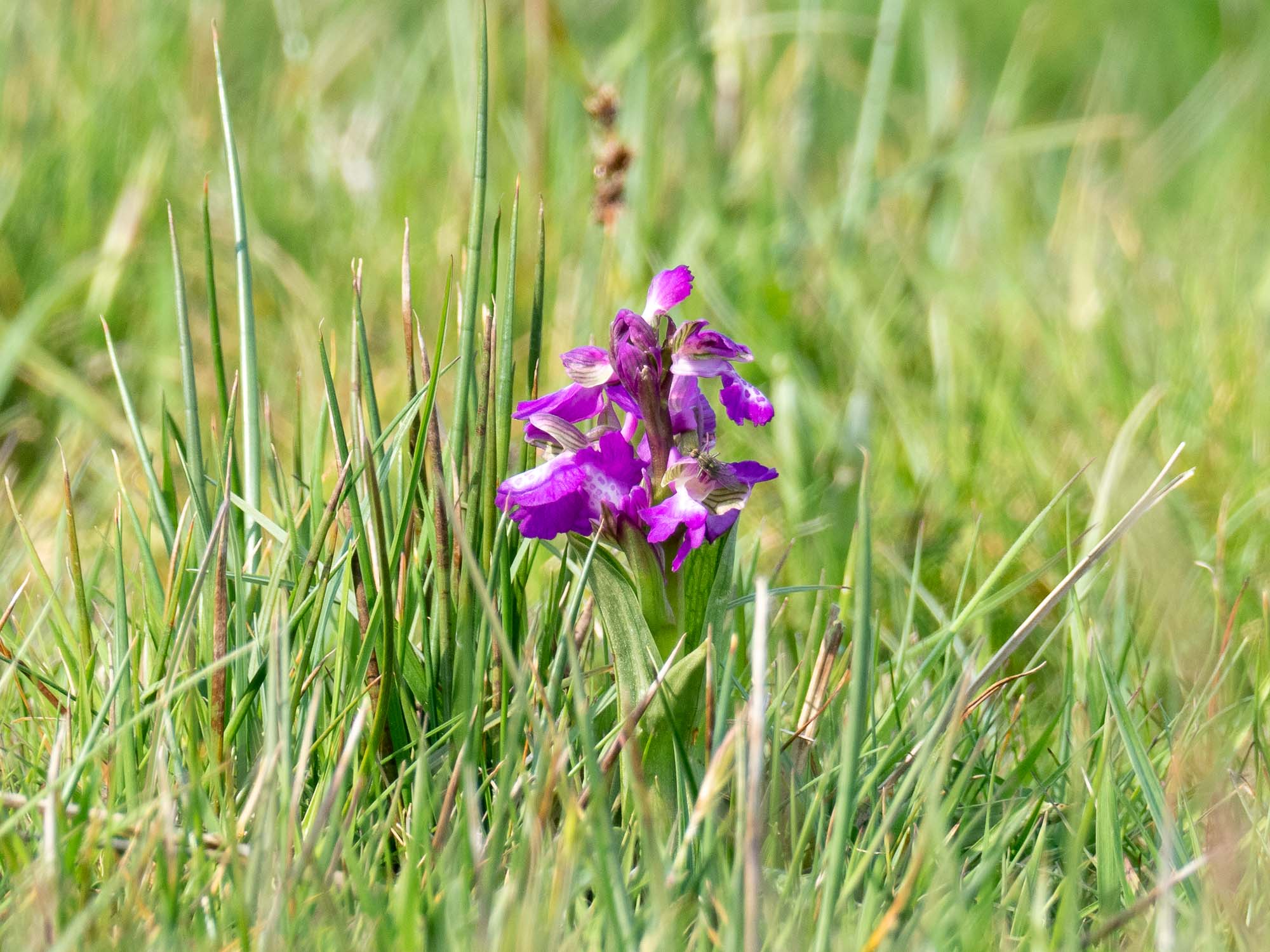
It’s always a treat seeing the Green-winged Orchids springing up in Spring Meadow during April.

Green-winged Orchid

My first damselflies of the year were Blue-tailed Damselflies which I recorded in three different places around the reserve on the 29th.
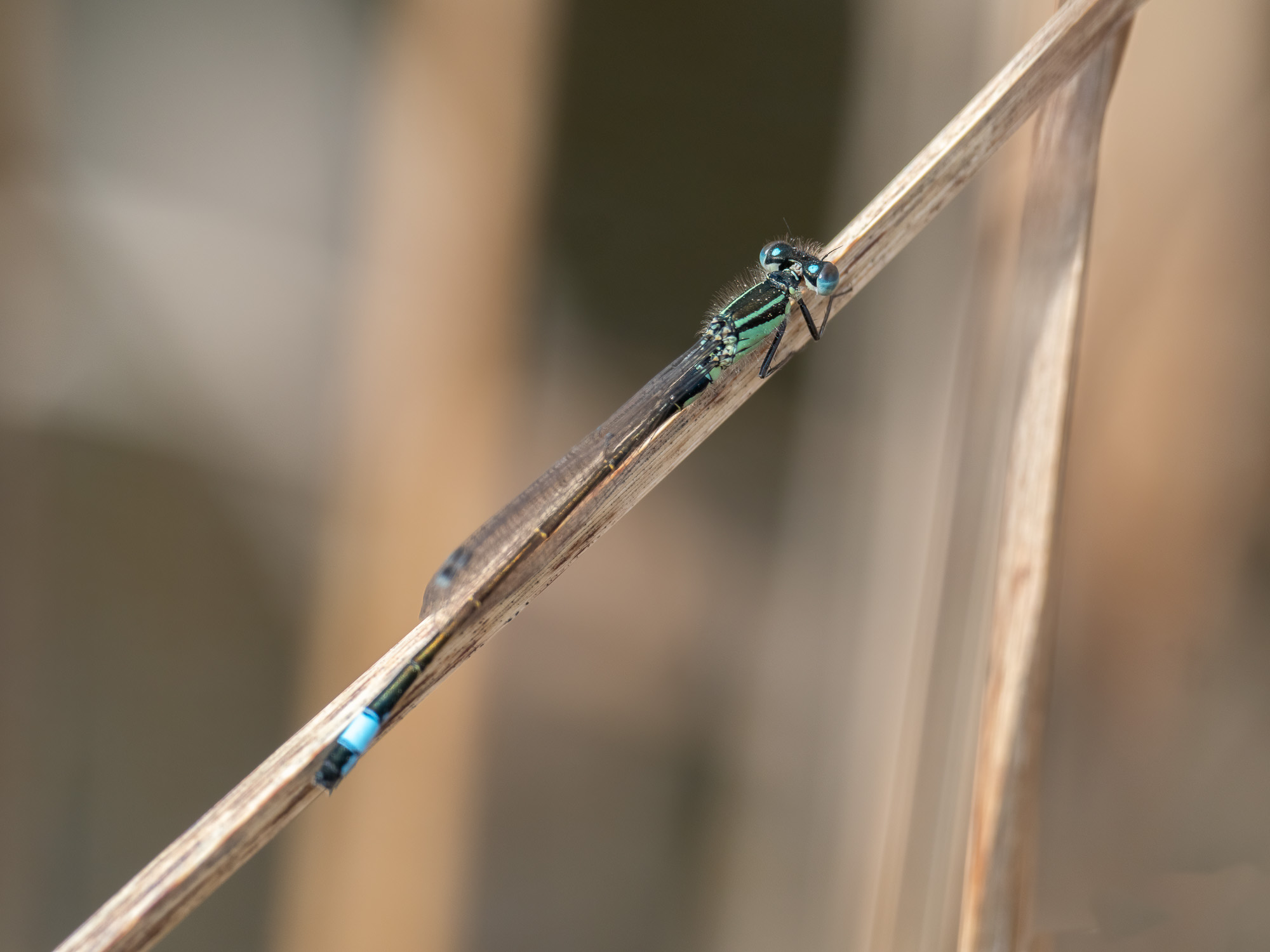
Blue-tailed Damselfly

As I was heading down Gins West Bank on the 29th a Yellow Wagtail called above me, I didn’t see it which is a shame as they are pretty spectacular at this time of year.
Yellow Wagtail calling over the Gins
April 2022, Spring 2022

April 29th 2022

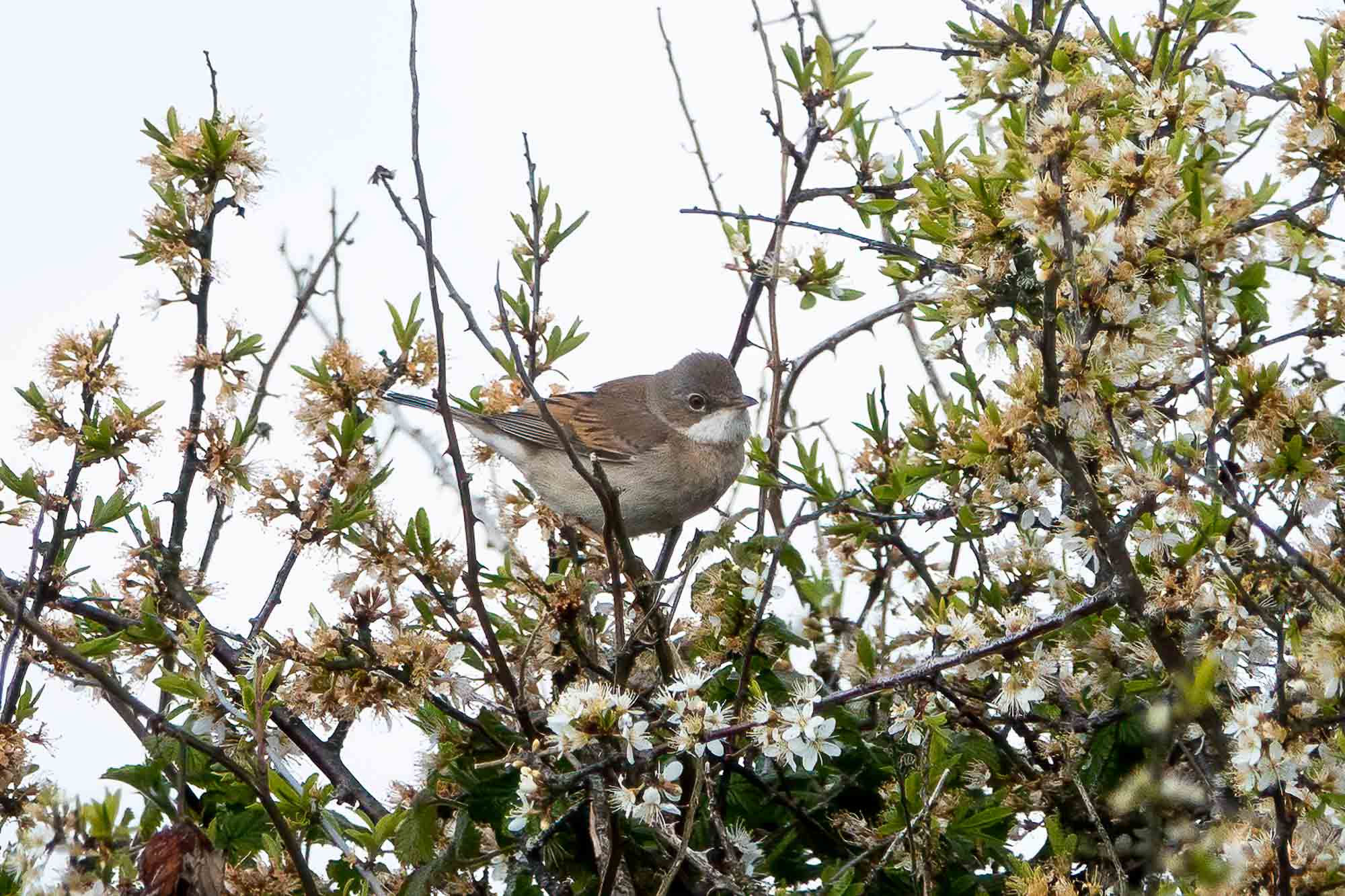
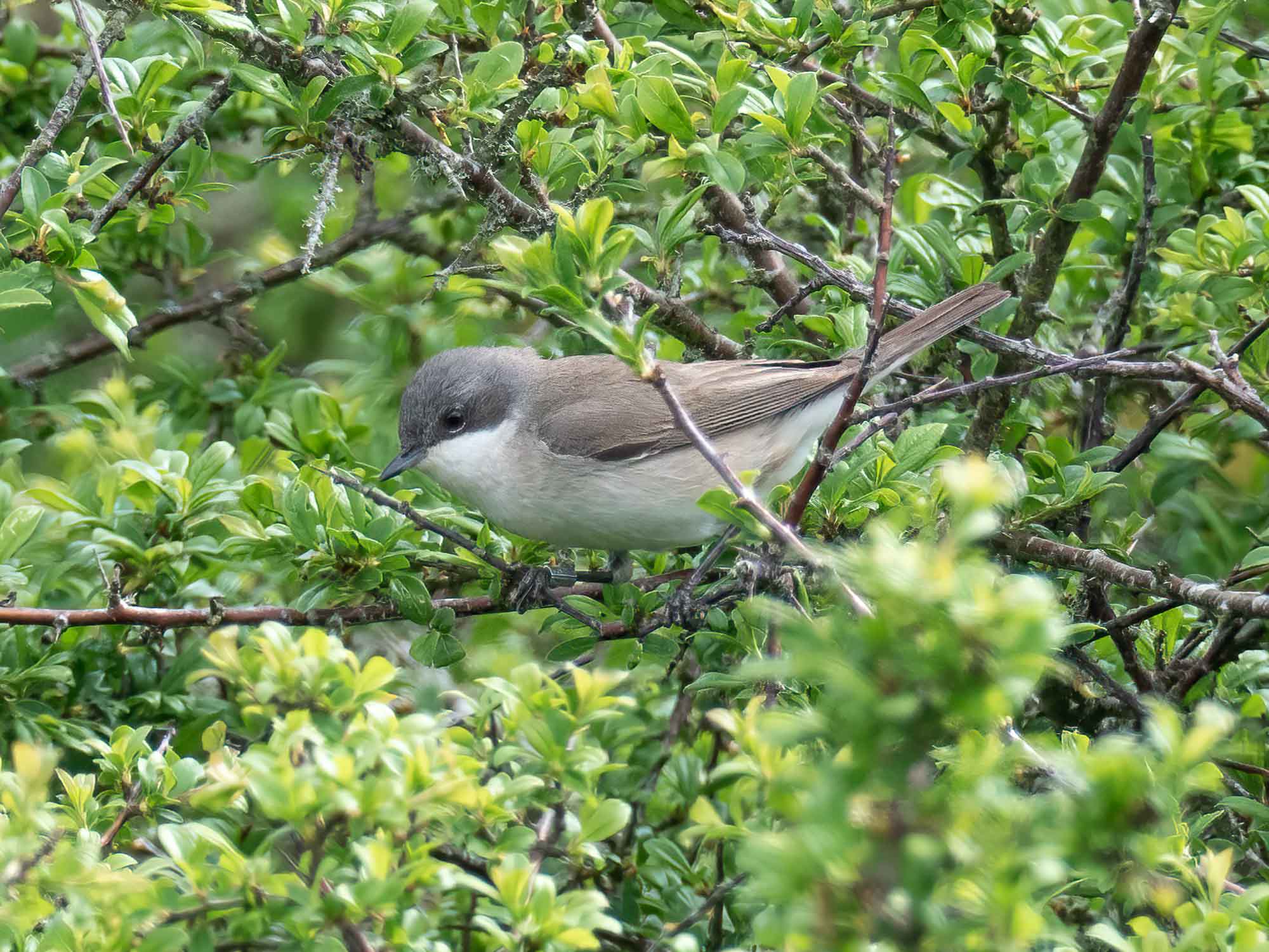
There were at least five singing Lesser Whitethroats around the reserve today including this ringed bird in Pullen Scrub. Sylvia warblers are very site faithful and so it may well be the same ringed bird that I saw singing from the same bush last April. It has been to East Africa and back in the meantime.

Lesser Whitethroat

Having spent all of the recent sea watches hoping for a Little Gull it was brilliant to finally see a group of three 1st summer birds heading east. Andy Johnson saw what is probably the same group of three going past Hayling Island later in the afternoon.

1st summer Little Gulls

Three Cuckoos today, a male calling and then a female bubbling in response before another male Cuckoo came in off the sea.

male Cuckoo

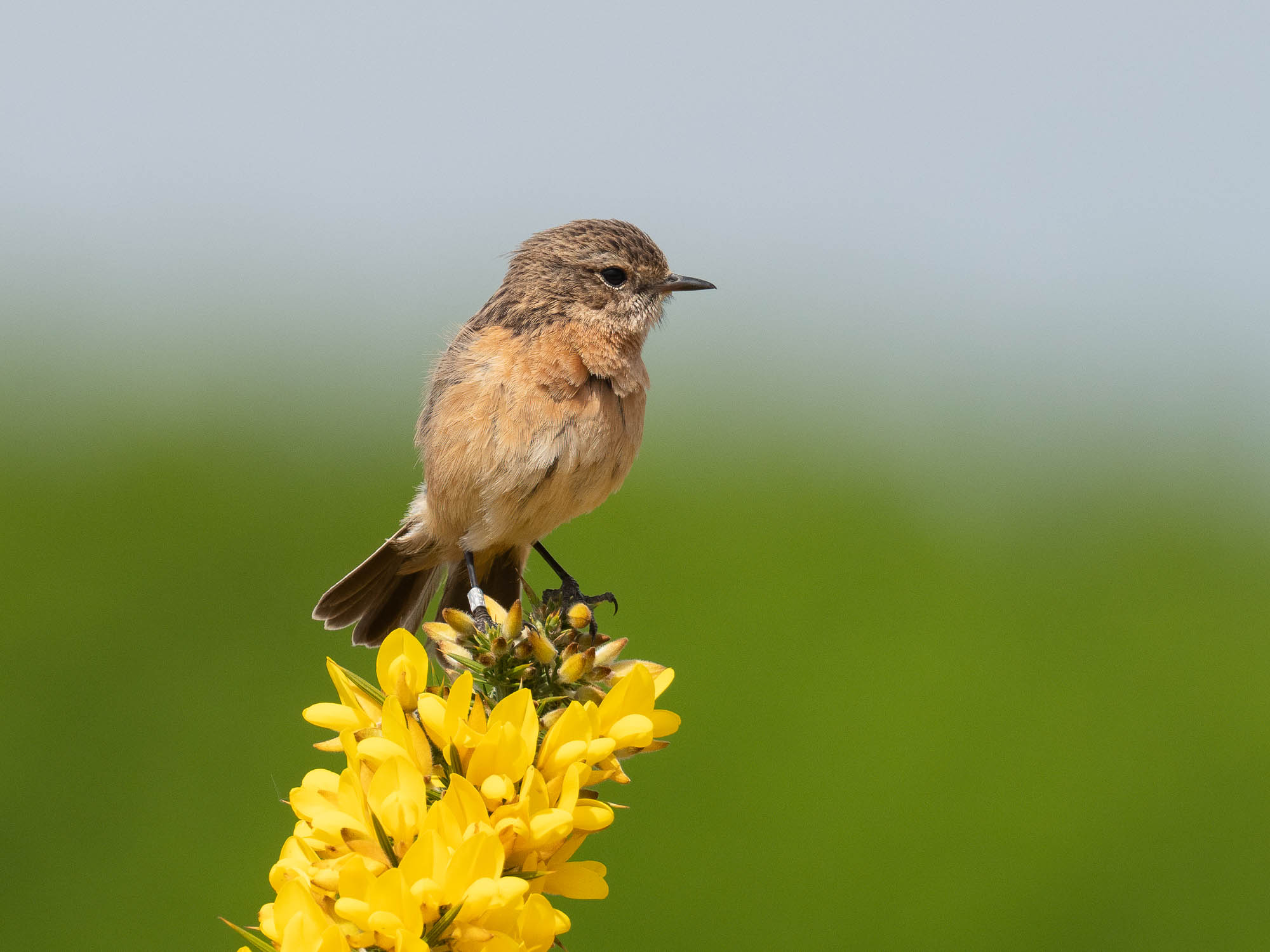
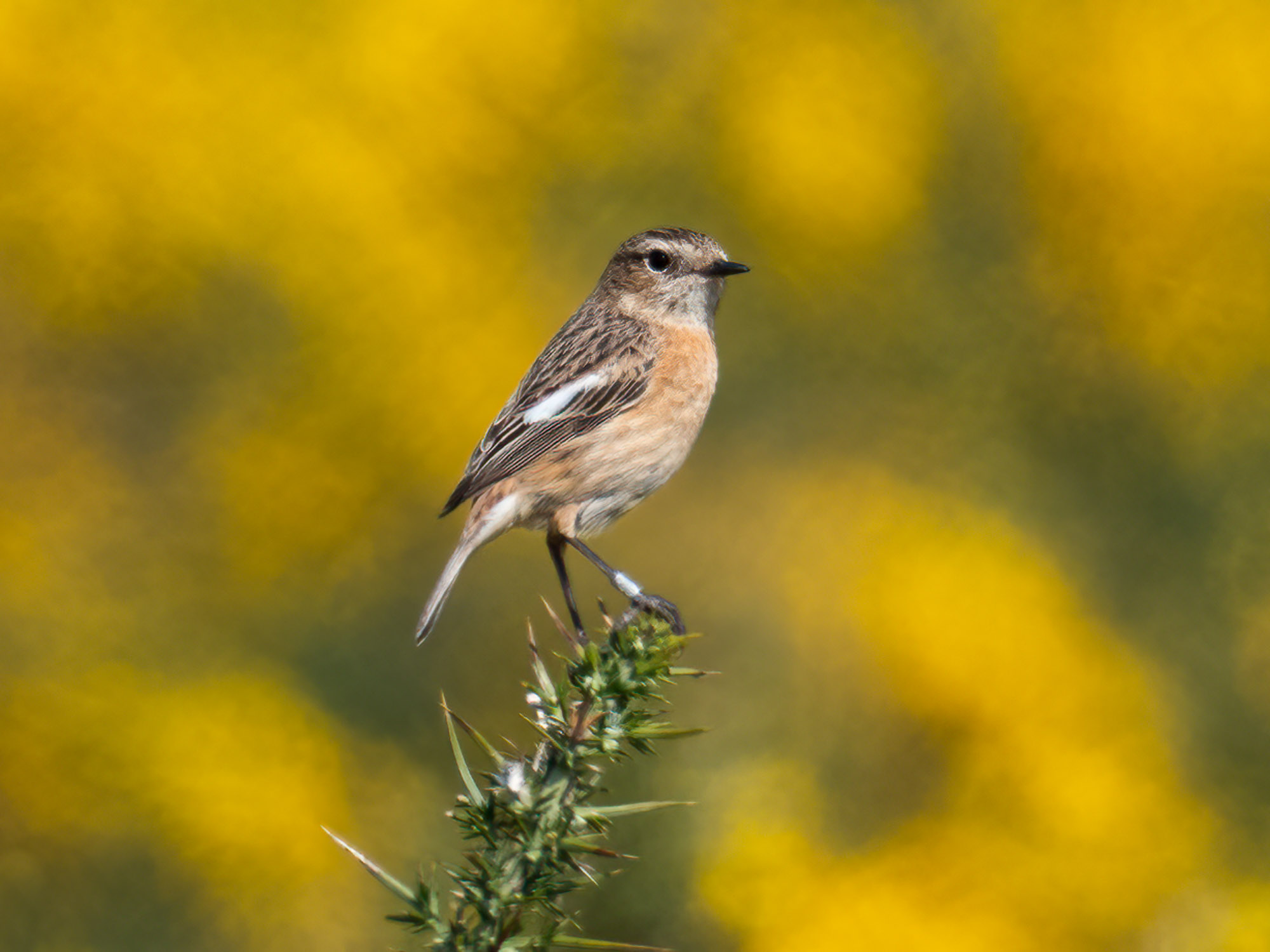
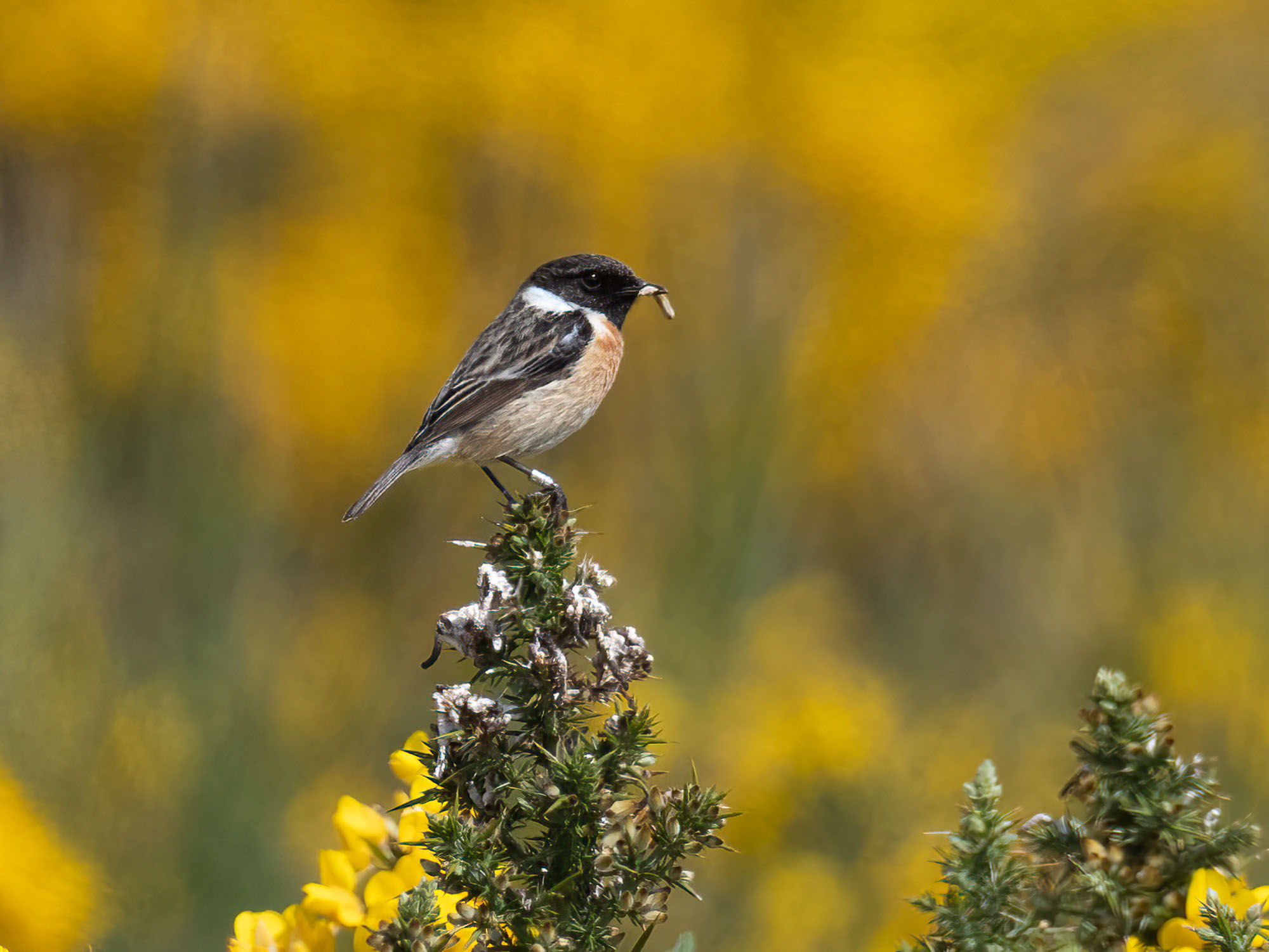
Our ringed adult Stonechats continue to bring in food items. The adults range a hundred yards or more looking for food and I was well away from the nest site when the female landed close to me.  

Stonechat

Brilliant to see that the female Little Ringed Plover laid her first egg this morning. Last year she laid four eggs. If she does the same again this year she would finish the clutch and start incubating on Monday 2nd May and then hopefully the chicks would hatch around May 25th. The male flew over to check me out while I was busy watching very little (!) flying up the Solent.

male Little Ringed Plover

I managed to find another Linnet nest this morning, this time the female was bringing in feathers which are usually the final touches and so she should be laying in the next day or so. Across the reserve today we had 21 pairs of Avocet with 12 nests containing 45 eggs. No evidence of predation yet.

I found a dead shrew near the Warden’s Hut and judging by the dark colour and two-toned tail I think this a Water Shrew, much rarer than the Common Shrew. Another Emperor Moth was attracted to my lure while we were at the Warden’s Hut.

Water Shrew

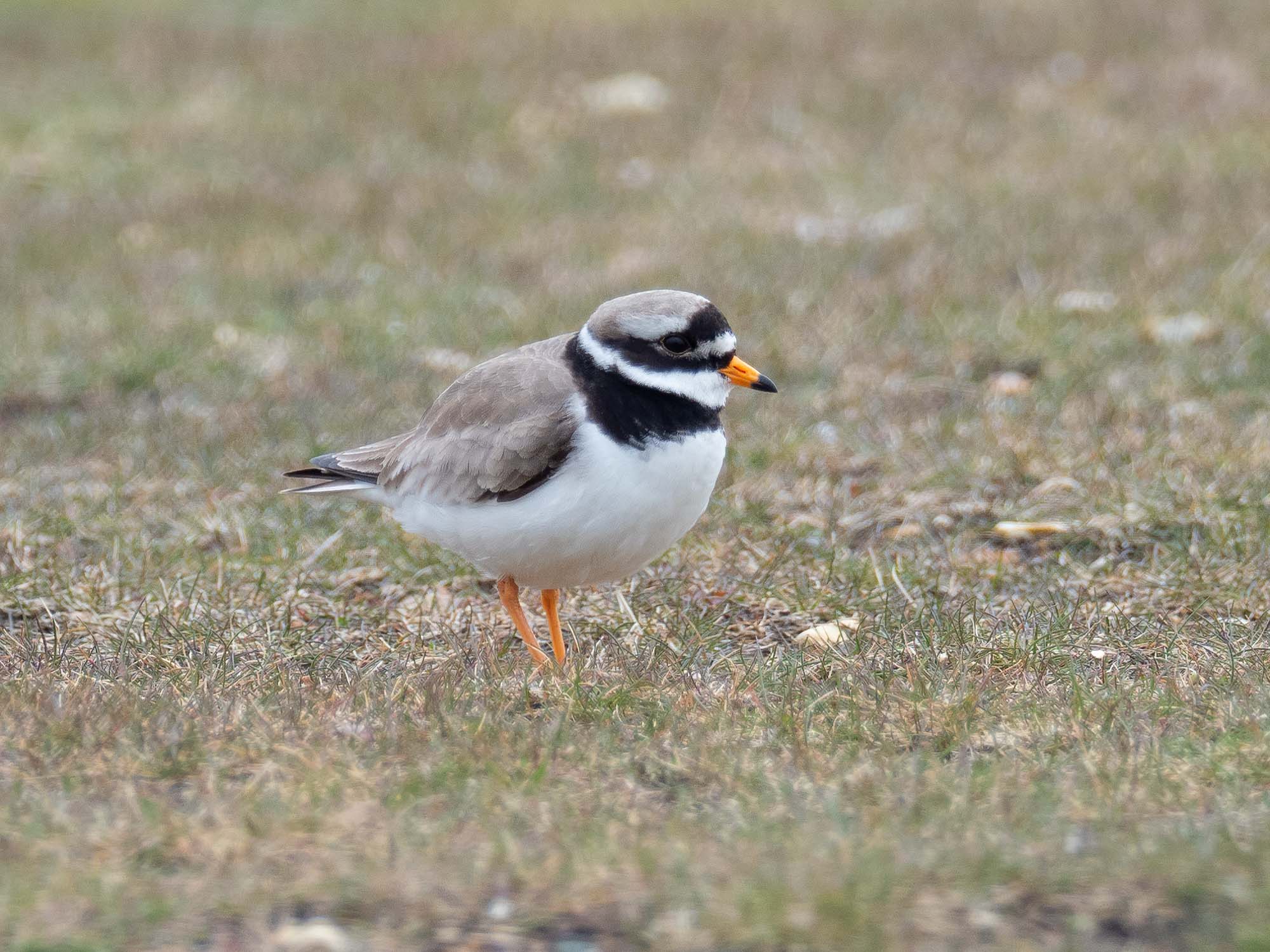
Nearby this Ringed Plover scuttled off its nest and then just stopped to watch me. The nest was close by with two eggs. I got down low to blur the background.

Ringed Plover
Ringed Plover eggs

My first damselflies of the year were Blue-tailed Damselflies which I recorded in three different places around the reserve.

Blue-tailed Damselfy

A butterfly patch tick today, my first Orange-tip on the reserve. It looked likely to continue flying out of sight but then circled backed and landed briefly, enough time for a photo.

male Orange-tip

In readiness for their return Adam has been playing a Common Tern lure tape on De L’Orne Lagoon and today a Common Tern flew over the rafts. Several of the rafts had been kept covered to stop the Black-headed Gulls but now the terns are here they’ve been uncovered to give them a chance to find some space.

Common Tern

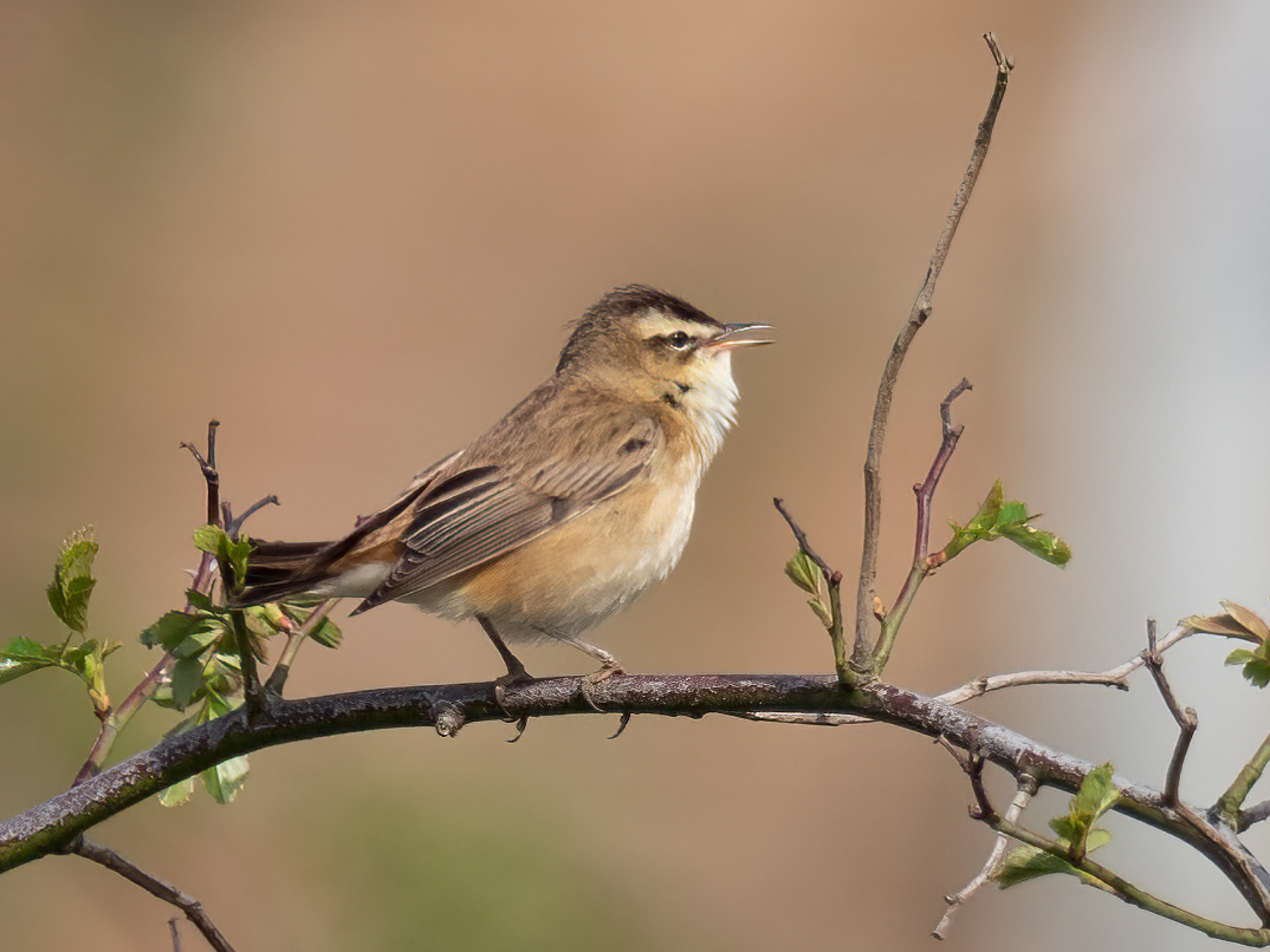
There were two Sedge Warblers and 12 Reed Warblers singing today, all of them around Black Water and the Gins.

Sedge Warbler
Reed Warbler photo by Brian Fairbrother

As I was heading down Gins West Bank a Yellow Wagtail called above me, I didn’t see it which is a shame as they are pretty spectacular at this time of year.

Yellow Wagtail

A very good passage of hundreds of Swallows today with four House Martins mixed in with them. The Green-winged Orchids have shot up a bit and so I stopped for another photo.

Green-winged Orchid

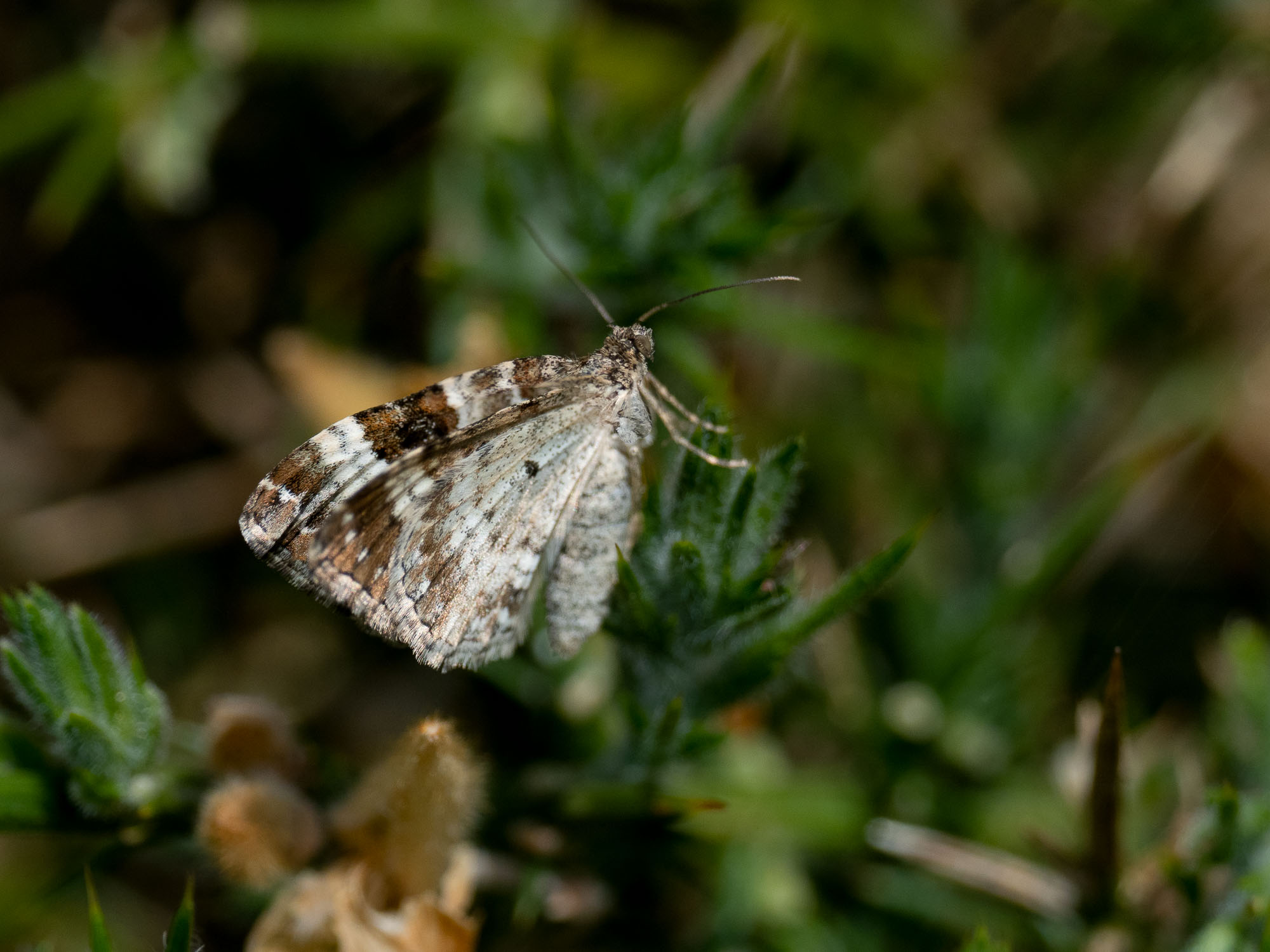
This Common Carpet, was flitting around the gorse near the point. A common species but the first I’ve knowingly seen here. Shows you that I need to start paying a bit more attention to day-flying moths.

Common Carpet

The male Peregrine flew in a bit closer than normal to feed on a carcass. At this closer range you could see that it was wearing an orange ring on its left tarsus, this is the county colour for Hampshire. It’s not possible to identify the bird further without being close enough to read the two letters on the orange ring. I hadn’t previously noticed that the male was ringed but this is probably because of long range views and heat haze rather than this being a different bird.

male Peregrine
April 2022, Spring 2022

April 20th to 27th 2022

We continued in the run of northerly winds and so spring passage on the Solent was light although it was good to see a tight fishing flock of 50 Common Terns on the 20th including several who had settled on the sea. Other highlights included eight Common Scoter also heading east.

Common Tern numbers were a bit up and down. A sea watch one afternoon produced more than 100 Common Terns heading east (30+ per hour) but another sea watch in the morning in similar conditions produced only 15 (4 per hour).

Common Terns

The passage of Whimbrel and Bar-tailed Godwit seemed a bit more consistent with counts of 50-70 of each species on two separate sea watches during the week. Many of the Bar-tailed Godwits are in summer plumage now and quite a lot of the Whimbrel flocks included a single Bar-tailed Godwit.

Whimbrel photo by Ian Williamson

My first Little Terns of the year on the 27th were very distant, their amazingly rapid clockwork-toy flight action made identification easy despite the long range. On the same day a single Black-throated Diver headed east, there is a small spring passage of divers along the coast here, mainly Red-throated Divers and Black-throated Divers.

My first Gannet of the year on the 27th was a slight surprise and it came much closer than they normally do.

Gannet

It was great to watch a Hobby flying all of the way across the Solent making landfall before heading over Shore Hide and then on towards Black Water.

Hobby in off the sea

The Little Ringed Plover pair continue to move between the muddy fringes and the shingle overthrow but have not selected a precise nest site yet, there are several bowl like impressions close to where they nested last year and I’ve seen them mating here several times.  

Little Ringed Plover pair mating

The female Dartford Warbler was seen again this time in close proximity to one of the males. I think she may be paired up with the male whose territory is to the eastern side of Gravelly as opposed to the male who is nearer to Great Marsh.

There are around 50 Avocet across the reserve. The 35 Avocets on De L’Orne are now egg laying, early in the week 11 eggs were seen in 4 nests with at least three other newly made nests ready. There were 11 sitting birds by the end of the week. There are smaller numbers of Avocet on Great Marsh, around 15-20 with no nests evident yet. In previous years they have attempted to breed on De L’Orne before moving to Great Marsh, probably having failed due to predation from the De L’Orne Great Black-blacked Gulls.

The young Spoonbill was still splitting his time between Great Marsh, De L’Orne and Venner. His ring reveals that he is a Dutch bird.

Dutch Spoonbill 2nd calendar year

Six Sand Martins headed east over the Flooded Fields while a single House Martin was over Venner. These are the only ones I’ve seen this spring. Swallow numbers are also still low in what appears to be a late spring for hirundines.

A family of two Egyptian Geese and six ducklings was on Venner Wigeon Fields and nearby Green-winged Orchids are starting to flower in Spring Meadow.

Green-winged Orchid
Small Copper

Butterflies included several Peacocks, Small Coppers, one or two Brimstones, a Holly Blue and lots of Speckled Woods.

Speckled Wood

My first Green Hairstreak of the year was on the Broom and Gorse bordering Gravelly Crossroads.

Green Hairstreak

There are at least 15 nesting pairs of Meadow Pipit on the reserve and the parachuting display of the males is a common sight and sound at the moment.

Meadow Pipit

A Red Kite flew up over the Flight Pond West field on the 21st and there was an obvious arrival of Lesser Whitethroats the same day with five singing males around the reserve. There are plenty of Reed Warblers now including this one with a richly varied song.

Reed Warbler
Reed Warbler

A male Sedge Warbler was singing at the northern end of the Gins. Greatly outnumbered by the 10 or more singing Reed Warblers it would be great if he finds a mate and breeds here.

Sedge Warbler

On a very similar date to last year the first Lapwing chick was seen on the 21st. There was only one chick and so the rest of the brood may have been predated already.

Lapwing and chick

Bad news from the five sample Lapwing nests we have been monitoring. Four have failed. Three were predated with four eggs in each of them, a Badger was suspected for two of them and a Fox for the third. A fourth was abandoned with 1 egg. Pretty depressing and shows you the incredible pressures ground nesting waders face.

Having found two possible Linnet nest locations I had a closer look and found both nests in the canopy of the gorse bushes. On Thursday both nests had one egg in each and by Sunday I could see that the females were incubating which they only do once they have a full clutch of 4 or 5 eggs. They should hatch around the 8th May which is around 2 weeks after the last egg was laid.

Linnet nest photo by Graham Giddens

A highlight mid-week was seeing my first odonata of the year, a Hairy Dragonfly quartering near Great Marsh. Any hawker seen in spring and early summer is certain to be this species. This individual had shiny silvery wings indicating that it was newly emerged or teneral. Needs Ore is a key site for this uncommon species. I later watched another Hairy Dragonfly patrolling the ditch opposite the Shore Hide, it landed only once.

Hairy Dragonfly

After a month hoping to attract a female it looks like the male Garganey has moved on.

The Stonechat nest I’ve been watching now has both adults returning with food items. When the parents had moved away to feed, Graham and I had a quick look and were delighted to see five chicks. They were 3-5 days old and a perfect age for Graham to ring them.

male Stonechat with five chicks nearby

The nest inspection and ringing was done under the appropriate licenses and with consent from Natural England. This type of ringing gives us and the BTO good information on clutch and brood sizes and this year Graham, Ian and myself are surveying the Linnets and Stonechats across the reserve in order to gain a more complete picture of breeding numbers and fledging success. More on this later.

Stonechat chicks photo by Graham Giddens

Only my third Wheatear of the spring gave me excellent views on Gravelly Beach.  

Wheatear
April 2022, Spring 2022

April 12th to 16th 2022

Warmer weather and wind from the south started to bring in migrants from the middle of the week and the warm spring days, cooler nights and light south-westerly winds also produced some misty starts. 

Canada Geese

Sea watching early in the period produced the first trickle of spring passage, a Common Scoter pair west and seven Common Terns and the first Whimbrels heading east. During the subsequent week a few more Whimbrel stopped to feed inland in the fields around Warren Farm and then small groups followed off shore including a tight flock of 25 heading east on the 16th. Throughout the period increasing numbers of Sandwich Terns were very visible and audible.

Sandwich Tern photo by Ian Williamson

Ringed Plover are starting to display around the Sailing Club.

Ringed Plover

They’ve been in short supply this spring but a Wheatear flicked along Gravelly Beach early in the week. The black ear coverts and lores indicate that it is a male and the wing feathers being paler brown indicate that it is a 2nd year bird (hatched last summer).

1st summer male Wheatear

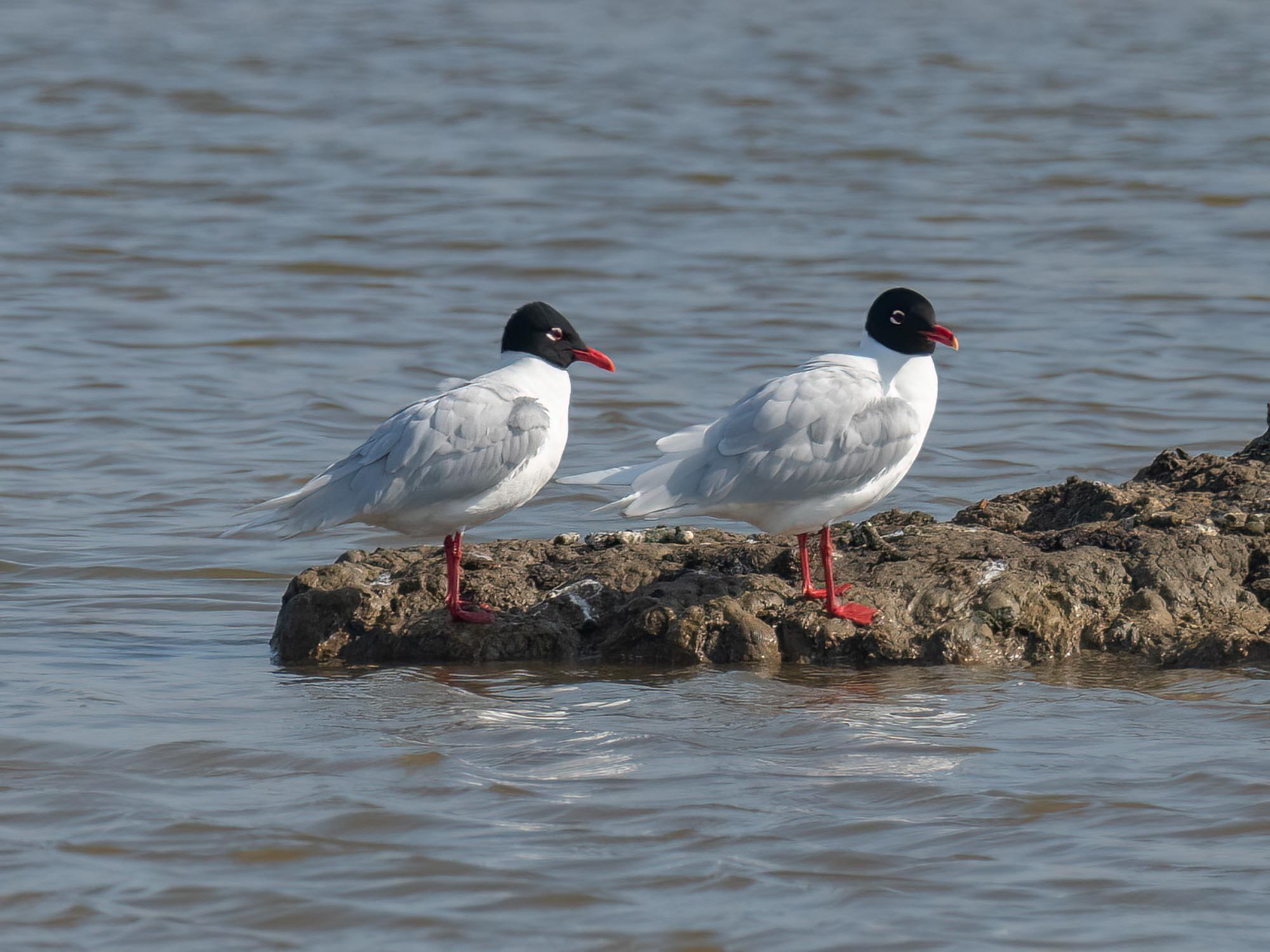
In amongst the 20 odd pairs of Black-headed Gulls which are using the rafts on De L’Orne Lagoon there has been a pair of Mediterranean Gulls. They seem to be hanging around and it makes me wonder if they are thinking of breeding here.

Mediterranean Gull pair

I found a Stonechat nest on the 12th. Both the male and the female are birds that Graham ringed and so they haven’t ventured far. She repeatedly returned to the nest area without nesting material and later flew a short distance, shook her feathers and defecated, all of which suggests that she is already incubating.

female Stonechat

However, I later saw what I assumed was the nest and it was still empty. I wondered if they had abandoned but on two subsequent occasions I watched from long distance with a scope and both birds return to the area before the female dropped into the gorse while the male stood on guard on a nearby exposed branch. Not sure why she may be taking some time before laying.

male Stonechat

The Dartford Warbler was still singing throughout the week and for large parts of the day. I’d been hoping to see a female ever since I first found the male in mid-January. The closest I’d come was seeing another ringed male earlier in April.

male Dartford Warbler

I was delighted, therefore, to finally see a female on his territory. I think she must be newly arrived, hopefully they will pair up.

female Dartford Warbler

Linnets are breeding all over the reserve with perhaps 30 or more nests. I found three likely nest locations with each female returning regularly with large pieces of nesting material suggesting that they are at the start of nest building. The female does all the nest building while the male accompanies her everywhere. I didn’t approach but I’ve got good directions and photos to enable me to check progress.

male Linnet on guard duty

This Herring Gull showed an uncharacteristically wide black band on P5 and even a small black mark on P4. These are features which might suggest Yellow-legged Gull but they are also just about within the range for Herring Gull. The red spot on the bill doesn’t bleed onto to the upper mandible and although it’s difficult to say for certain the legs do look pinkish. Mantle colour is difficult to judge but perhaps this is too pale for Yellow-legged Gull. Overall, this suggests that this is a Herring Gull and that a single feature taken in isolation (wing tip pattern) is not always indicative.

Herring Gull with extensive black bar on P5

The Little Ringed Plover pair spent most of their time feeding on the muddy fringes but regularly returned to the shingle overthrow where they bred last year. This is where I have seen them displaying, mating and sitting briefly. No sign of eggs yet and I think they are getting disturbed by people and dog walkers. Hopefully after the bank holiday weekend they may get a chance.

male Little Ringed Plover

There are around 50 Avocets on the reserve with 35 on De L’Orne. A few were sitting on the islands although I think this is resting in the warm weather and not incubation. They tend to lag behind Lapwing with egg laying.

The number of White-tailed Eagles on the reserve has dropped significantly. It may be that our established older male has moved away and taken some of the younger birds with him. I saw only one during this period, drifting over the Reedy Ditch on the 12th.

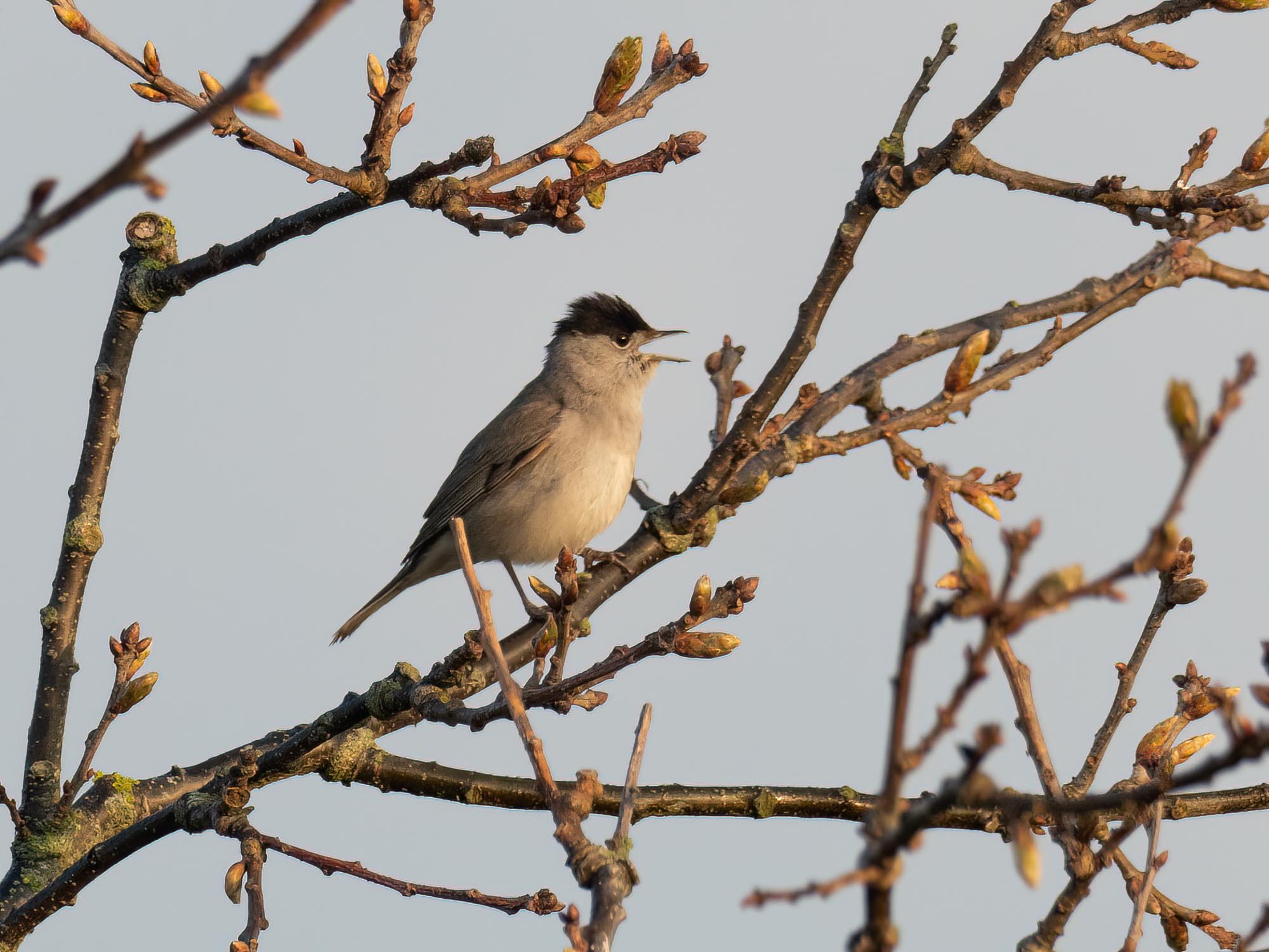
My first Blackcap was singing near the Flycatcher Tree on the 12th with three or four more appearing over the subsequent few days.

Blackcap

At the viewing gate on the 16th a Sedge Warbler flew across in front of me before landing in the bushes at the end of the Main Hedge. Soon afterwards a Lesser Whitethroat started singing before showing itself briefly. This is a favoured spot for Lesser Whitethroat, they bred here last year. A bit like Willow Warblers, Sedge Warblers aren’t easy to see at Needs Ore and I don’t think they bred here last year despite the apparent perfect habitat.
A Bar-tailed Godwit seen flying up the river on the 12th wheeled around and landed briefly nearer to the Sailing Club. It’s almost certainly a newly arrived spring migrant, they are a different population to the wintering birds.

Bar-tailed Godwit photo by David Cuddon

Lots of Speckled Woods flying along the hedgerows now and also good numbers of Peacock and the odd Comma.

Peacock photo by Brain Fairbrother

The insect highlight, however, was undoubtedly at Park Shore where an Emperor Moth was attracted to a pheromone lure which I had attached to my tripod. He buzzed me several times before settling on my ruck sack and then my head! I managed to cup it in my hands and it stayed for a quick photo. They are very difficult to see well but more common than you’d think although having said that this is the first ever record for Needs Ore/Park Shore and also the first ever record for the whole 10km square (SZ49).

Emperor Moth

There are at least 10 singing male Reed Buntings mainly around Black Water. Where females were seen there didn’t seem to be any nesting activity yet, no collection of nesting material.

male Reed Bunting

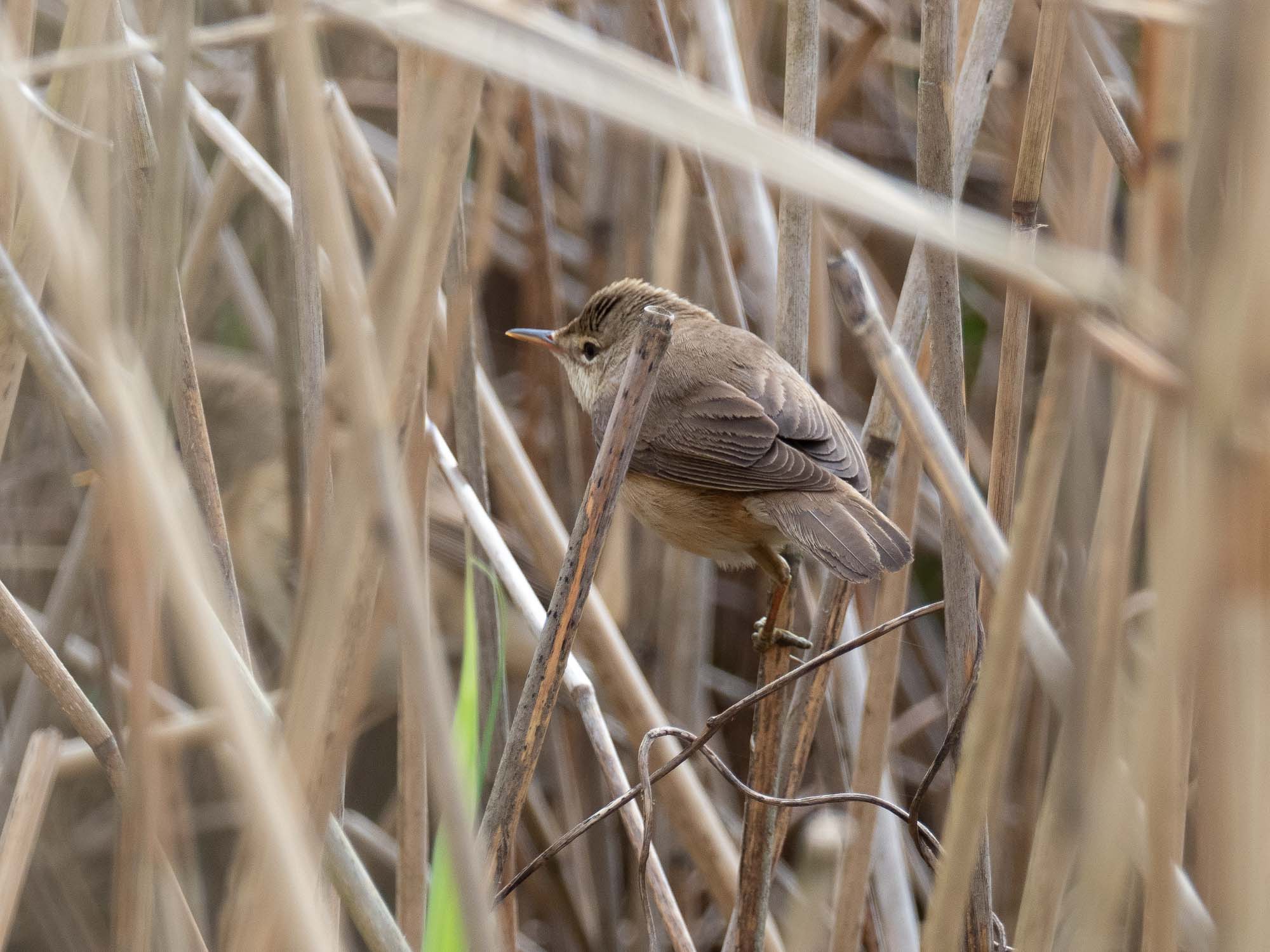
There was also a good arrival of Reed Warblers mid-week with at least nine singing males around Black Water.

Reed Warbler

Although not singing or calling yet a Whitethroat on the 14th was 10 days later than my first last year, yet it was still the earliest seen by anyone on the reserve, another indication that spring is a little later this year. Two days later there were a few more Whitethroats about and with some of them singing.

Whitethroat

It was great to hear a Willow Warbler singing mid-month around Black Water. This is a declining bird especially in the south and they haven’t bred at Needs Ore for five years or more.

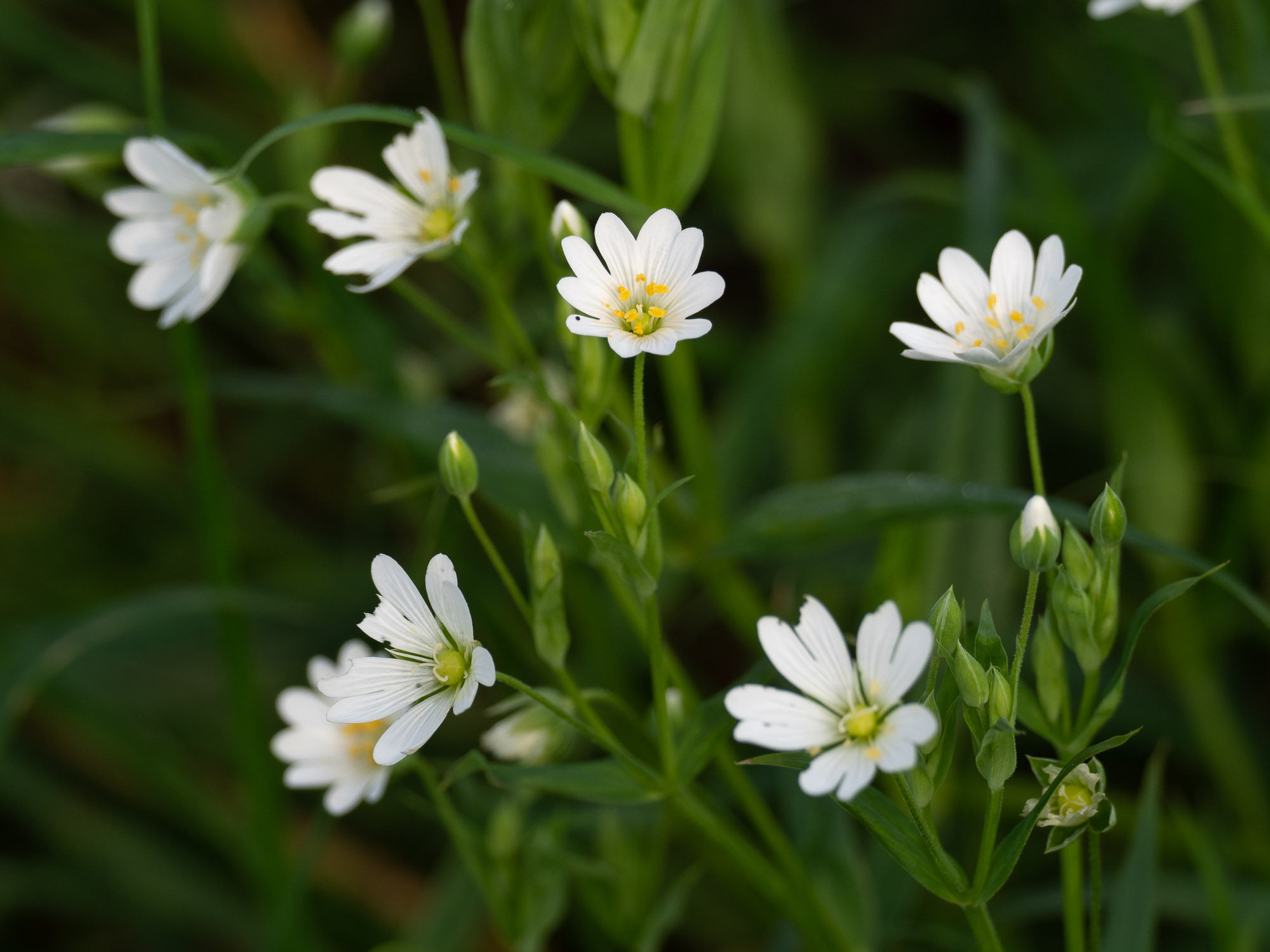
Greater Stitchwort is now flowering in the hedgerows.

Greater Stitchwort

The Peregrines were seen mating again mid-month. She still seems to be spending lots of time away from any nest which makes me think that she hasn’t laid any eggs yet.

Oystercatchers are now clearly paired up with at least six pairs around Black Water, Venner and De L’Orne. There are lots more on the spit and Gull Island which will be counted in the next few weeks.  

Oystercatcher pair

The drake Garganey is still present now appearing to split his time between the Gins and De L’Orne Flood. Females can be elusive but over the four weeks of his stay (he first appeared on the 19th March) if there was a female around then someone ought to have seen her by now.

Garganey photo by Terry Jenvey

Lapwing nests on both the Gins and on Wigeon Fields were found predated, both were empty of eggs where there had been four eggs in each six days earlier. Badger and Fox are suspected.   

At the end of the week I heard my first Cuckoo calling and as I walked along Warren Lane it flew across in front of me. This is two days earlier than last year.

Cuckoo photo by Dimitri Moore

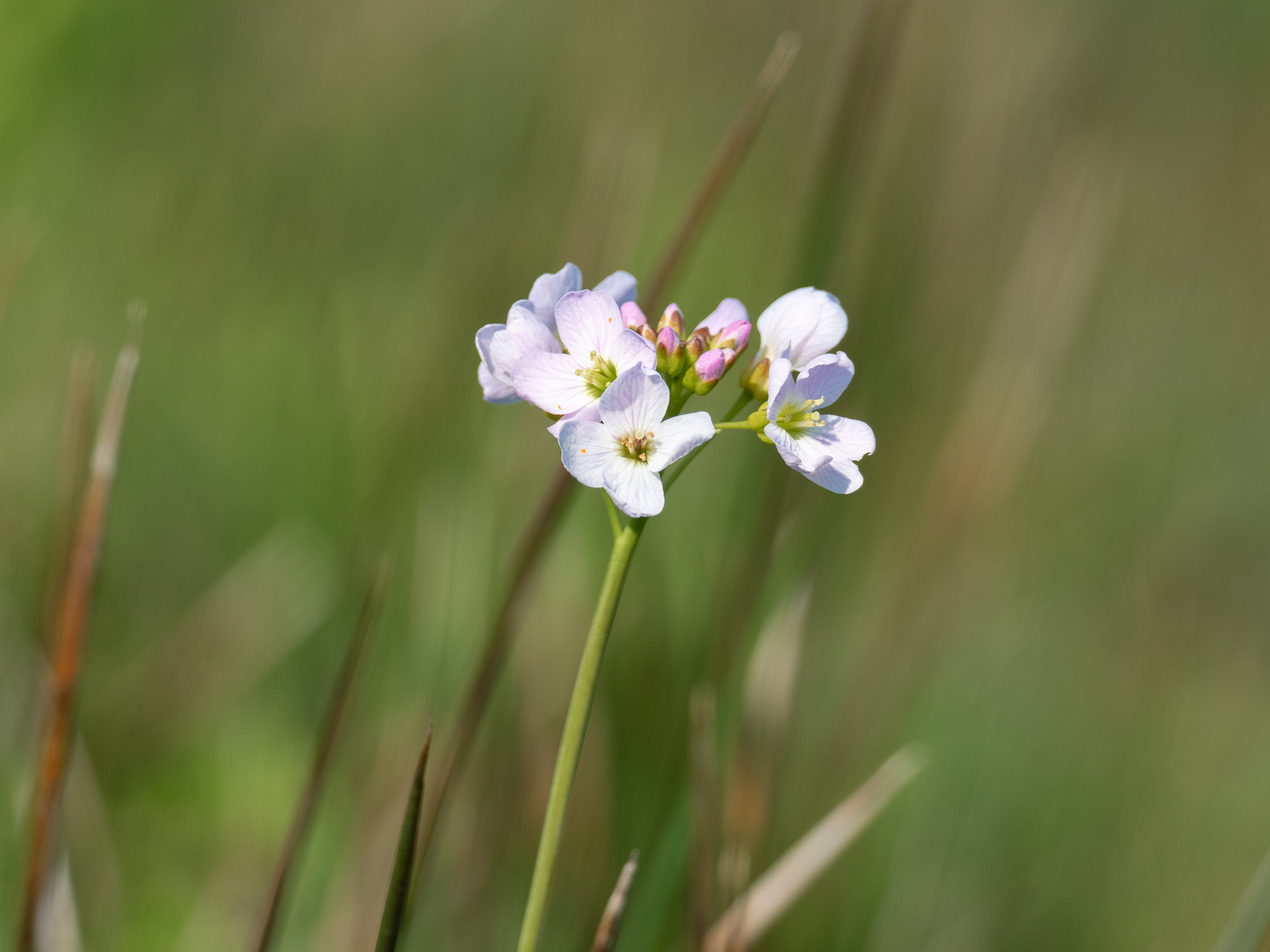
Further up the lane Cuckooflower was flowering in Spring Meadow, so named as it often flowers in the same week as the Cuckoo arrives.

Cuckooflower

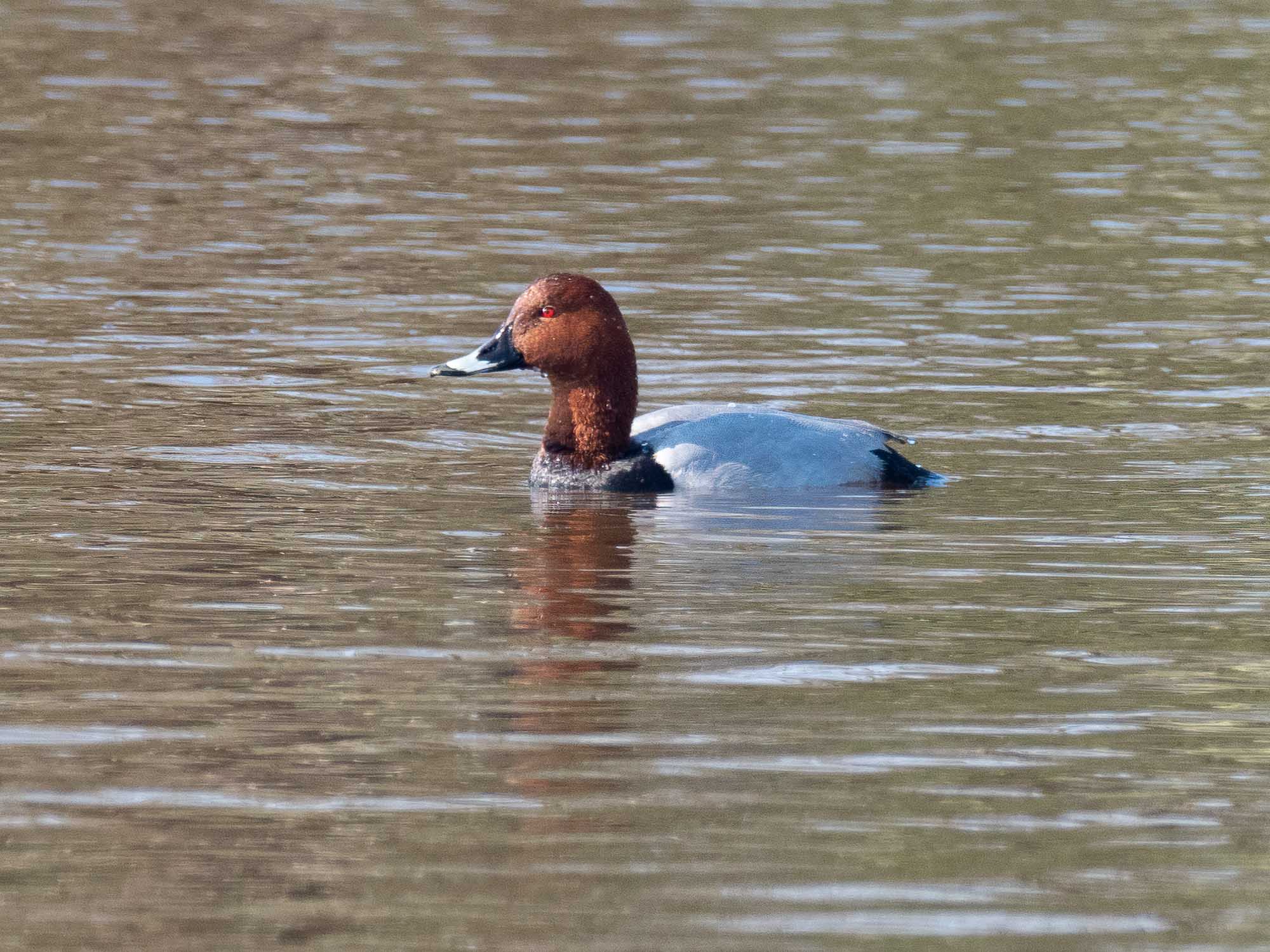
Five months after I first saw it the Purple Sandpiper remained on the beach near Mary Monts with other lingering winter visitors, Grey Plover and Turnstone. There are still at least two pairs of Pochard on Venner and Pullen. Despite being a very uncommon breeder in Hampshire they look likely to breed here again this year.  
Pochard