August 2021, Summer 2021

Thursday 26th August 2021

There was a slightly autumnal feel about today with a cool breeze and hirundines streaming east. Lots of Lesser Whitethroats, Whitethroats, Wheatears and Whinchats were moving but the sound track of the day was provided by a large, swirling and mobile group of Yellow Wagtails.  There’d obviously been a big arrival with their ‘feest’ calls a constant overhead. They landed regularly giving some lovely photo opportunities. I saw them at all parts of the reserve, perhaps 50 altogether.

Yellow Wagtail
Yellow Wagtail Calling
Whitethroat

The juvenile Green Woodpecker appeared again. The area around Pullen Hide and the Nightingale Enclosure has been the favoured location.

juvenile Green Woodpecker photo by Ian Williamson

When you see a Brown Hare and a Rabbit together you can see just how different they are. The Brown Hare is much larger and browner with a more obvious pale iris, longer legs and longer dark-tipped ears and their white under tail is hidden as they run away.

Brown Hare and Rabbit
Brown Hare

Nearby four Egyptian Geese were on the low tide line off Mary Monts.

Egyptian Geese photo by Ian Williamson

Just like last Sunday a Tree Pipit flew over calling at 7:05am, this one was on Gravelly Marsh. Soon afterwards I met Graham and Tara who had ringed two Tree Pipits. After a quick chat with them I noticed an Osprey heading east just off shore from Mary Monts. It was already heading away from me and my camera struggled to focus in the gloomy light.

There were at least four Whinchats again today all of them on various fence lines and the same number of Wheatear. The single Green Sandpiper was again slowly walking and bobbing along the edge of the De L’Orne flood.

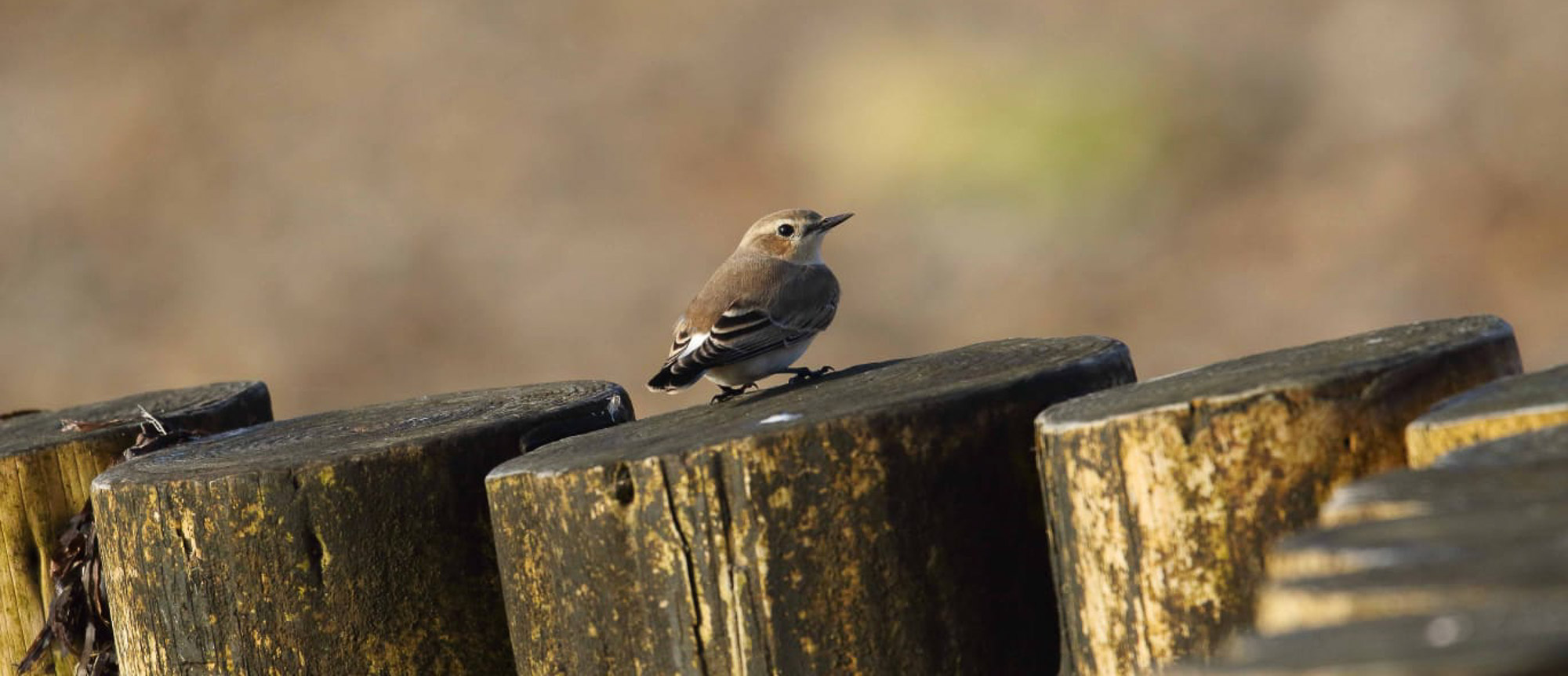
Wheatear and Whinchat

The new, very impressive, hides at Venner and De L’Orne were both opened today. On De L’Orne scrape there were six Greenshank and a Spotted Redshank with a Snipe along the back edge. Several Mediterranean Gulls and a single Sandwich Tern were mixed in with the Black-headed Gulls. There were 39 Black-tailed Godwit feeding on De L’Orne flood viewable from the boardwalk, most of them were juveniles.

There was a moulting Great Crested Grebe on Venner and a Pintail flying over Black Water, both birds were the first returning winter visitors for these species. A Coal Tit calling from the top of the pines near Black Water Hide was the first I’ve recorded since 21st March, they stay close to their nest site during the summer before dispersing in the autumn. 

Yellow Wagtail

I’d only seen one Small Tortoiseshell prior to the individual that bombed past the Viewing Gate and the 18 Little Egrets on Inchmery was my highest count on the reserve.

While at the Sluice Gate a Kingfisher called loudly from beyond the overhanging trees to the left but didn’t appear. We walked back to the Pines Gate and then saw it perched on the branch low down 50 yards along the ditch.

Kingfisher

Nearby a Sparrowhawk emerged from the brambles carrying a Lesser Whitethroat which was still ‘tacking’ in alarm!

As we headed back to the car I picked up the Osprey again high over the river. We headed back to the Sailing Club for a better view and then I noticed it carrying a fish just off shore. Given the distance between the two sightings this had to be a second bird and it became clear that we were watching an adult and a juvenile. The younger bird had a large white patch on the upper wings and the adult lacked paler patches and feather edgings and was moulting its central tail feathers. The adult also showed a solid black band across the underwings.

juvenile Osprey photos by Mike Rafter and Dimitri Moore

Alan later enjoyed a close view of the juvenile and managed to photograph the ring it was wearing, he has asked for more information which he will share with me.

The adult settled in a bare tree on the Inchmery side to eat the fish. We headed back to the hides where we picked up the Ospreys again and then the White-tailed Eagle suddenly appeared from the Gins direction and was immediately mobbed by the adult Osprey.

adult Osprey mobbing the White-tailed Eagle photo by Ian Williamson

The young White-tailed Eagle G393 is a 2019 male and has now been in the area for 5 months, he has clearly set up a territory and will be old enough to breed next year.

White-tailed Eagle photo by Dimitri Moore

The County Bat recorder has confirmed my Barbastelle record from the Pullen Hide on 26th June 2021. A rare species. The spectrogram shows the FM sweep from 44kHz to 29kHz in around 4.5ms.

Barbastelle sonogram
August 2021, Summer 2021

Sunday 22nd August 2021

The sun hadn’t been up long as I watched a Wheatear resting on the dried creek near the boardwalk. Behind it, on De L’Orne flood there were 23 Black-tailed Godwits, all juveniles. A Green Sandpiper was also present walking along the edge of the vegetation towards the shingle bar and at 7:05am a Tree Pipit called above me as it headed south, a patch tick.

Green Sandpiper

The brand new hide at Venner is impressive and just about finished but still locked up. Looking down the side of it I could see the seven fully grown Tufted Duck ducklings were still present but four fully grown Shelduck ducklings had appeared for the first time and the number of Little Grebe juveniles had increased to three. There were also two distant Whinchat on the fence line at the back of Wigeon Fields.

adult and juvenile Little Grebes

The Spotted Redshank which roost near the De L’Orne Roosting Stones are not normally viewable from the viewing screen but today a single bird was on show. Shortly afterwards a second bird called nearby and flew over to join it.  

Spotted Redshank

The family of 4 Avocets from Normandy Marsh, an adult and three juveniles, have now been here for five weeks, they were sweeping for food in unison. A juvenile Ringed Plover and a juvenile Dunlin were associating together and feeding nearby.

Field Grasshopper

There were another two Whinchat on the fence line along the northern edge of Three Fields North. As well as Willow Warblers quite a few Lesser Whitethroats were on the move and so a bit more visible, these are my first Lesser Whitethroat sightings in six weeks.

Whinchat photo by Ian Williamson

There were lots of Migrant Hawkers all over the reserve, perhaps 30 or more. I checked as many as I could for Southern Migrant Hawker but no luck.

Migrant Hawker
Migrant Hawker photo by Ian Williamson

A sighting of Green Woodpecker flying over Warren Lane was my first non-heard-only record this year.

juvenile Green Woodpecker photo by Ian Williamson

As I walked past the Pullen Hide another Tree Pipit called overhead.

Tree Pipit overhead

As I walked towards Gravelly a Goshawk exploded from the undergrowth to my right. On Great Marsh there were few birds on the drying scrape although the Flight Pond was still favoured by Green Sandpipers, now up to four birds, my highest ever count at Needs Ore.  

Small Heath photo by Ian Williamson

At around 9:30am I headed over to Inchmery for my WeBs count. Highlights included the first returning summer plumaged Grey Plover, 116 Curlew, 49 Redshank, 14 Little Egret, 6 Whimbrel, a single Bar-tailed Godwit and a single Lesser Black-backed Gull.

Grey Plover
August 2021, Summer 2021

Thursday 19th August 2021

We returned to check the moth traps early on Thursday morning. There were several interesting finds including several wetland specialists. Some of the highlights included:- Jersey Tiger, Southern Wainscot, Small Rufous, Twin-spotted Wainscot, Beautiful China Mark, Donacaula forficella, Yellow Belle, Cydia amplana and Crimson Underwing sp (which flew before we could identify it to species).  

Sharp-angled Peacock photo by Peter Cranswick
Cydia amplana photo by Peter Cranswick
Jersey Tiger photo by Peter Cranswick
Donacaula forficella photo by Peter Cranswick
Common Wainscot photo by Peter Cranswick
Iron Prominent photo by Peter Cranswick
Small Wainscot photo by Peter Cranswick
Broad-bordered Yellow Underwing photo by Peter Cranswick
Lesser Swallow Prominent photo by Peter Cranswick
Southern Wainscot photo by Peter Cranswick
August 2021, Summer 2021

Wednesday 18th August 2021

Peter came down to stay with us for a few days. We spent most of Wednesday on the reserve and then set up three moth traps overnight. There were lots of Willow Warbler and Blackcaps moving through with some snatches of song from both species.

De L’Orne scrape was pretty active with newly arrived migrant waders. A juvenile Little Ringed Plover kept a low profile at the back of the scrape and 2 Knot waded and swam in the deeper water, a red adult and a lovely pinkish and scalloped juvenile. There were also eight scampering Dunlin, seven were juveniles.

adult and juvenile Knot

A flock of 18 Black-tailed Godwit touched down several times, they were all juveniles which is great, they’ve obviously stayed together since Iceland. A flock of 13 Shoveler flew over Black Water while a Yellow Wagtail called overhead as we stood at the De L’Orne Screen.

juvenile icelandic Black-tailed Godwit
juvenile icelandic Black-tailed Godwits, part of flock of 18

Greenshank have been a regular sighting on the scrape since multiple counts started in mid-July, 11 was the peak count on the 23rd July, there were six today. We later viewed the scrape from Two Bridges Gate and watched two distant Spotted Redshank on the De L’Orne Roosting Stones. Lesser Black-backed Gulls are a fairly unusual sight on De L’Orne with an adult and a juvenile present.

Hare’s-foot Clover and Fleabane

The hide at Venner was almost finished and the contractors will be moving over to De L’Orne in the next few days. Other than seeing the new hide other highlights included watching a group of 4 Whinchat on the fence line which runs along the north side of Three Fields North, the first time I’ve seen more than one Whinchat on the reserve.

Three of the four Whinchats (the third partly hidden on the lower wire)

Unusually coloured Field Grasshopper and Lesser Marsh Grasshopper

A slightly odd colour form of Field Grasshopper was in the beach gorse and a lovely Red Admiral was basking with flat wings.

Red Admiral

Great Marsh was quiet although a Hornet resting on the gravel track towards the Beach House was good to see. Hare’s-foot Clover is flowering on the shingle and there were two Wheatear on the fence line at Wheatear Corner.

Wheatear photo by Ian Williamson
Hornet

We set the moth traps in the Pullen area. Two of Peter’s MV Robinson traps and my MV Skinner all on Peter’s generator. As we were leaving a Nightjar floated past and I saw my first Dark bush-cricket on the reserve.

Tree Pipit overhead