Sunday 12th September 2021

There was a significant Chiffchaff movement today with ‘hueeting’ and tail pumping birds all over the reserve, at least 50 in total including five in one small bush alone. Blackcaps and Meadow Pipits were also highly visible in good numbers. I reached Great Marsh as the Great White Egret lifted up from the scrape.

Great White Egret photo by Ian Williamson

There were several loud and low flying Yellow Wagtails and having patrolled the private areas around Gravelly Marsh I decided to walk from the Gravelly cattle grid to Flycatcher Tree north of the Reedy Ditch. In the Droveway opposite Black Water House a Garden Warbler appeared briefly and several Chiffchaff were fly-catching in a sheltered spot opposite.  My first Treecreeper for a while appeared nearby.

Chiffchaff

A Redstart was feeding and moving along the hedge bordering Droveway North gradually moving closer to the dead trees at Black Water Farm. All along the hedge line it would drop down into the field looking for insects, it did this at least four times.

Redstart

A single Reed Warbler at the Reedy Ditch is getting quite late now. They had a good breeding season with lots of juveniles around and at least two broods. A singing male was the first long distance migrant of the year back on the 1st April at Black Water. It definitely feels like the changing of the seasons when the last of them departs again. 

There were good numbers of Wheatears today with at least ten seen.

Wheatear

Next I wandered over to the hides where one of the Ospreys was hunting over the De L’Orne area. A single Whinchat was on the furthest post along Whinchat Fence.

High tide was at 3:40pm and so we headed over to Inchmery for my WeBS count. This month Ian and I are doing the two sectors together so that he sees my routine and I can see his, this will be handy if we ever need to cover each other.

At Inchmery highlights were building numbers of Oystercatcher and Redshank, 110 and 81 respectively before a juvenile Osprey flew right over our heads flying purposefully on to Lepe. Later a second individual was seen catching a fish off the Warden’s Hut. The splash was visible from our position nearly a mile away.

Osprey

We headed back to Needs Ore to complete Ian’s sector. The Great White Egret was in the Reedy Ditch but took off as soon as we got out of the car, it eventually landed on the river beyond De L’Orne. On the walk over the flooded fields a young Hobby dashed over the boardwalk chasing Meadow Pipits. One of the Ospreys had caught another fish and had settled on the fence posts which run directly away from the new De L’Orne hide.

Osprey

The flood area which spills over from De L’Orne lagoon towards the boardwalk has been good for waders and today a major highlight was finding nine juvenile Ruff feeding together, one of the highest Hampshire counts in recent years. One of them was much smaller and raised the heart rate temporarily although it proved to be a small female. I’ve been visiting Needs Ore for a full year now and Ruff is the 175th species I’ve seen. A stretching year list target for future years.

Ruff photo by Ian Williamson

Other highlights on the WeBS count included building numbers of Wigeon and Teal, 51 and 379 respectively, most on Gins East. Also 20 Pintail and a Jersey Tiger.

Thursday 9th September 2021

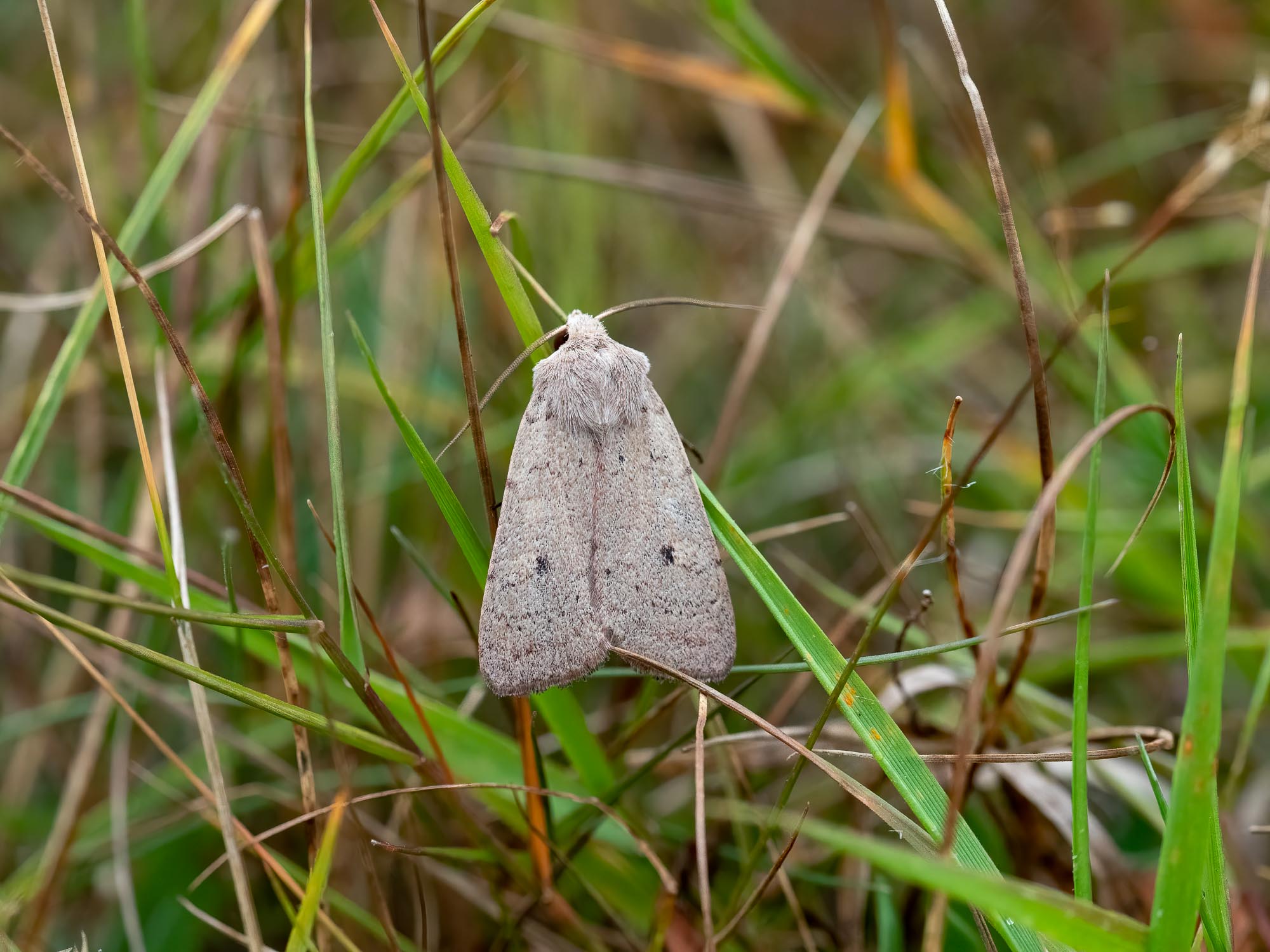
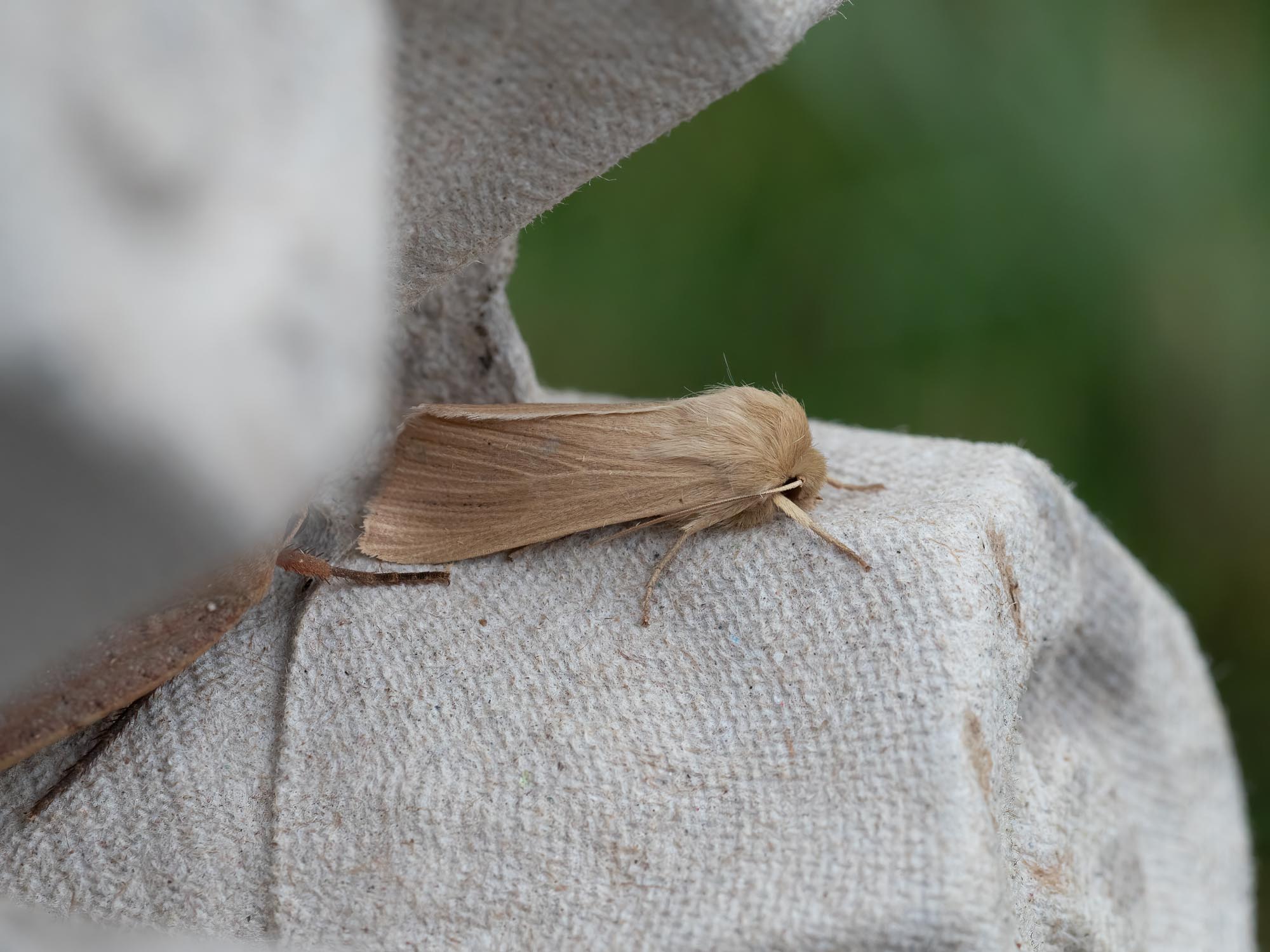
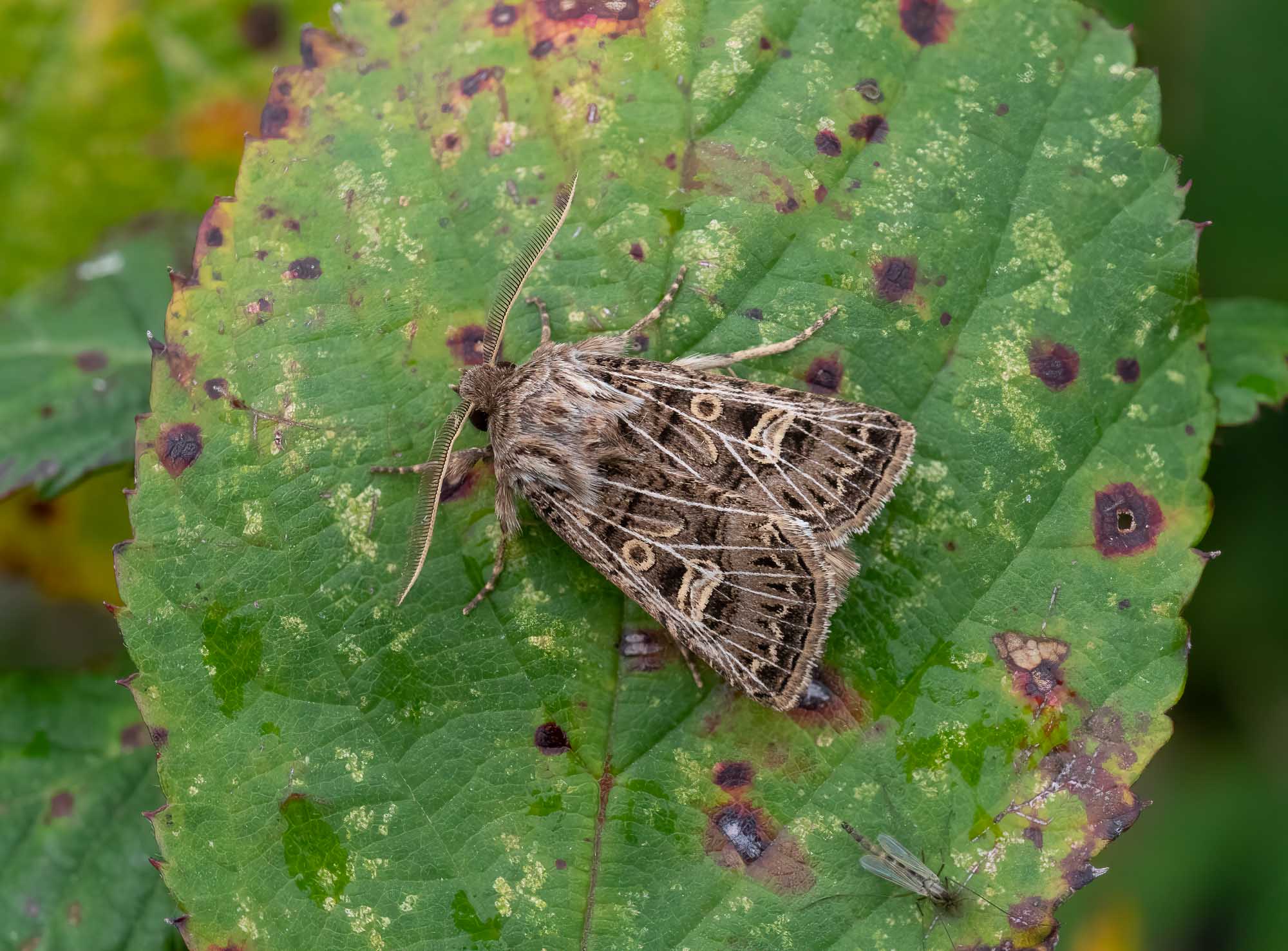
I ran my Robinson and Skinner MV traps overnight in the Pullen area and met up with Simon at 7am to go through them. Having Simon with me certainly speeded up the process! Highlights included Convolvulus Hawkmoth, Pinion-streaked Snout, Chilo phragmitella, Neglected Rustic, Heath Rustic, Mathew’s Wainscot and L-album Wainscot.

Convolvulus Hawk-moth
Pinion-streaked Snout
Chilo phragmitella
Neglected Rustic
Heath Rustic
Mathew’s Wainscot
L-album Wainscot
Short-cloaked Moth
Feathered Gothic
Hedge Rustic

Wednesday 8th September 2021

I arrived around sunrise and already there were several Migrant Hawkers on the wing. In fact over the first hour these dragonflies outnumbered the birds. Grey Wagtails continued to be vocal overhead with the odd Yellow Wagtail still moving through.

Migrant Hawkers photo by Ian Williamson

The early sun had just broken through as I checked the private areas around Great Marsh. I rounded the corner carefully to view the scrape and was pleased to see the Great White Egret feeding close by.  

Great White Egret

Another place I approach very carefully is the area around the causeway at the eastern end of the Flight Pond. There are often nervous Black-tailed Godwit or Snipe here and today a regular Green Sandpiper watched me suspiciously before fleeing to the other end of the pond.

Green Sandpiper

I headed past the low islands of blackberries and gorse with Whitethroats churring in good numbers. An olive-brown passerine flew across, rather weakly, in front of me. The long undertail coverts and rounded tail gave the bird a tapering pointed look at each end and together with a streaky back it definitely looked like a Grasshopper Warbler.    

It dived deep into the brambles. I walked around the other side hoping for a better view and eventually it flicked up briefly before disappearing again. I could then see it deep in the brambles and could see a longish pulled out acrocephalus-type bill with a plain face and a streaked crown confirming the ID. Graham has ringed four Grasshopper Warblers on Great Marsh this autumn but seeing them otherwise is almost impossible and my main hope had been to hear a singing male in the spring.

Robin

I didn’t have much time to visit the eastern end of the reserve but did manage to see the Osprey in its favoured tree  directly below Calshot Tower as you look from De L’Orne Hide/screen. A distant single Whinchat was perched on the bushes along the edge of Three Fields East.

Mottled Grasshopper

Friday 3rd September 2021

There were lots of Whitethroats, Chiffchaffs and Sand Martins on the move today. On Gravelly Marsh every bird I lifted my binoculars for seemed to be a Whitethroat. Providing a bit of variety a Lesser Whitethroat near the Water Trough was tacking at me from the bramble bush. There was also plenty of slightly harsher tacking from a handful of Blackcaps.

Lesser Whitethroat

As has been the case all autumn the waders on Great Marsh were all on the Flight Pond, there were two Green Sandpipers and six Snipe and the 12 Black-tailed Godwit were yikkering to each other quietly. A Wheatear was sat on the barbed wire at the back of the pond.

A Tree Pipit called overhead but again I didn’t manage to see it. The grounded pipits I saw were all Meadow Pipits like the one below – bland facial expression, flank streaks as thick as breast streaks, single toned underparts and weakish bill.

Meadow Pipit

The Yellow Wagtail calls are more penetrating and today they seemed to be flying lower and so it was easier to see them looping away overhead.

Yellow Wagtail

I checked the Guides Camp Hedge near the Cattle Grid and watched a Garden Warbler emerge from the brambles. Soon afterwards a pair of much warmer brown juvenile Reed Warblers also emerged. Grey Wagtails are now returning and there were at least two calling during the morning. Their calls are much more penetrating than Pied Wagtails as they often have to be heard above a noisy river or stream. 

A female type Redstart showed very briefly in the small tree opposite the Reedy Ditch layby. I leant on the gate to check the clearing in front of Silver’s Copse and a pair of Spotted Flycatchers appeared and perched prominently.

Spotted Flycatcher

A little further along the lane I checked Flycatcher Tree and found another pair of Spotted Flycatchers.

Spotted Flycatcher photo by Ian Williamson

While there one of the Ospreys floated over Lovell’s West and a Grey Plover called in the distance. In roughly the same direction a Hobby stooped on the hirundines, mainly Sand Martins streaming east.

Reed Bunting

As I walked back down Warren Lane a superb male Redstart flicked up on to the fence line on the eastern side of Droveway South. In the autumn the bright colours are partly hidden by buffy fringes but at this range it looked really smart, already my fourth Redstart of the autumn.

Roe Deer photo by Ian Williamson

Near the Shore Hide a Sparrowhawk charged past being mobbed by Swallows with the Swallows diving back in towards it and almost making contact, very brave. Migrant Hawkers were everywhere with at least 100 on the reserve. I saw my first female of the year and then a pair in cop.

female Migrant Hawker
Migrant Hawkers

A walk over to the hides produced three Whinchats on Whinchat Fence and an impressive 41 Black-tailed Godwit on De L’Orne Flood while the Green Sandpiper crept along the muddy fringe behind them.

Whinchat photo by Ian Williamson

The area in front of NFOC hide has been opened up dramatically with all of the reeds removed so that there is a clear 90 degree view and mud has been dragged to create four new islands for waders to drop on to, hopefully. Roosting on Venner Island a young Cormorant showed extensive white underparts. 

extensively white-breasted Cormorant

On De L’Orne Scrape Greenshank numbers were up to nine and there was a new Common Sandpiper. The juvenile Knot was still present, only just identifiable in the awful heat haze. Directly in front of Calshot Tower from the De L’Orne screen the Osprey was sat in a favourite tree. A Kingfisher watched down from a fence post into the still water while a Whimbrel called as it flew over the scrape. On Blackwater Pintail numbers had increased to eight.

It was pretty warm by now and so just before heading home I checked Shore Hide Ditch and was pleased to relocate the Southern Migrant Hawker.

Southern Migrant Hawker