A brief morning only trip. It was very spring-like in the warm sunshine. Lots of birds were singing including several Meadow Pipits in parachuting display and Skylarks rising up into their song flight.
Skylark
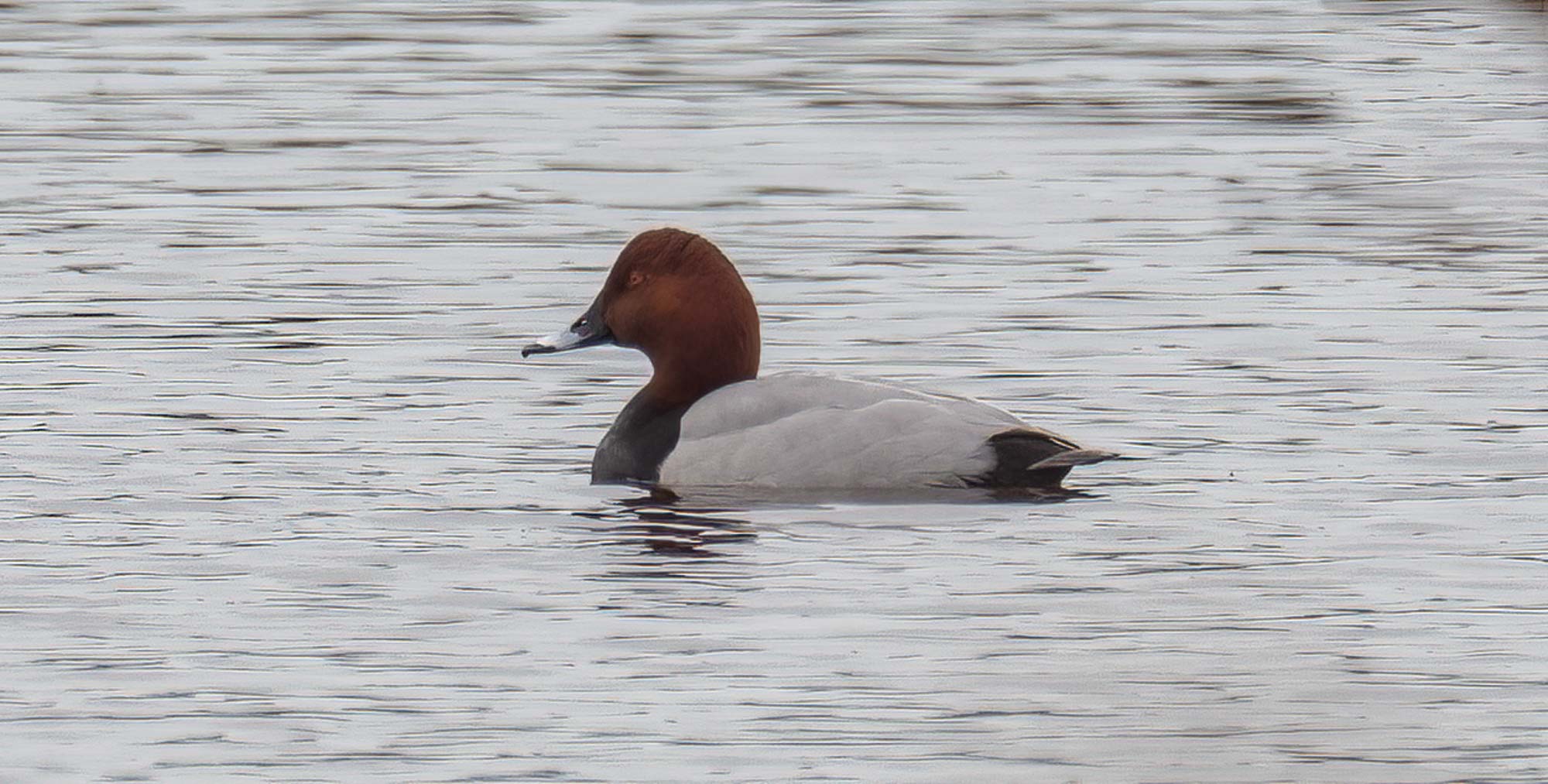
A male and female Pochard were on Venner, perhaps they may breed again this year. Also four Tufted Ducks, this is a much reduced total from the 32 who were here three weeks ago.
male Pochard
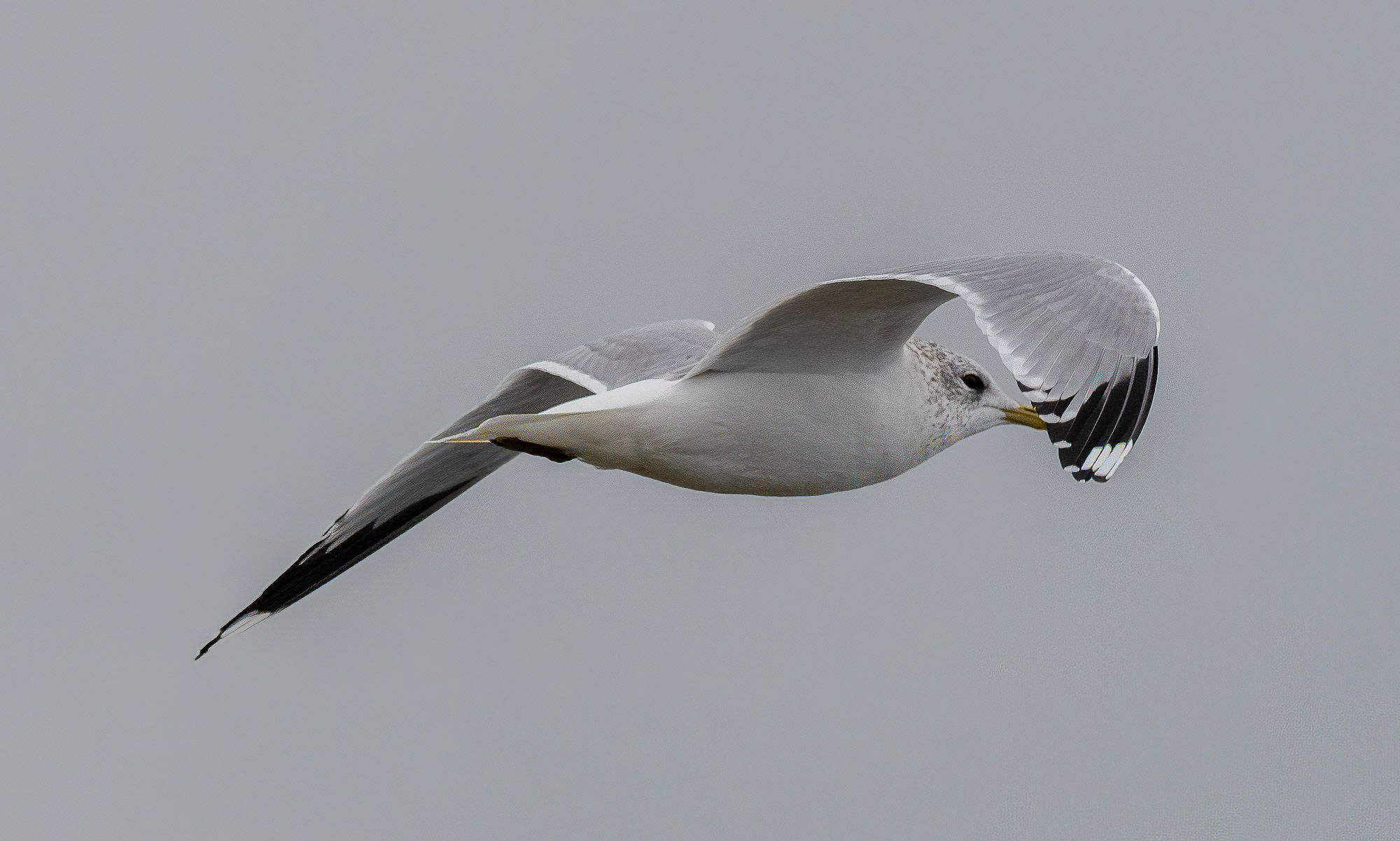
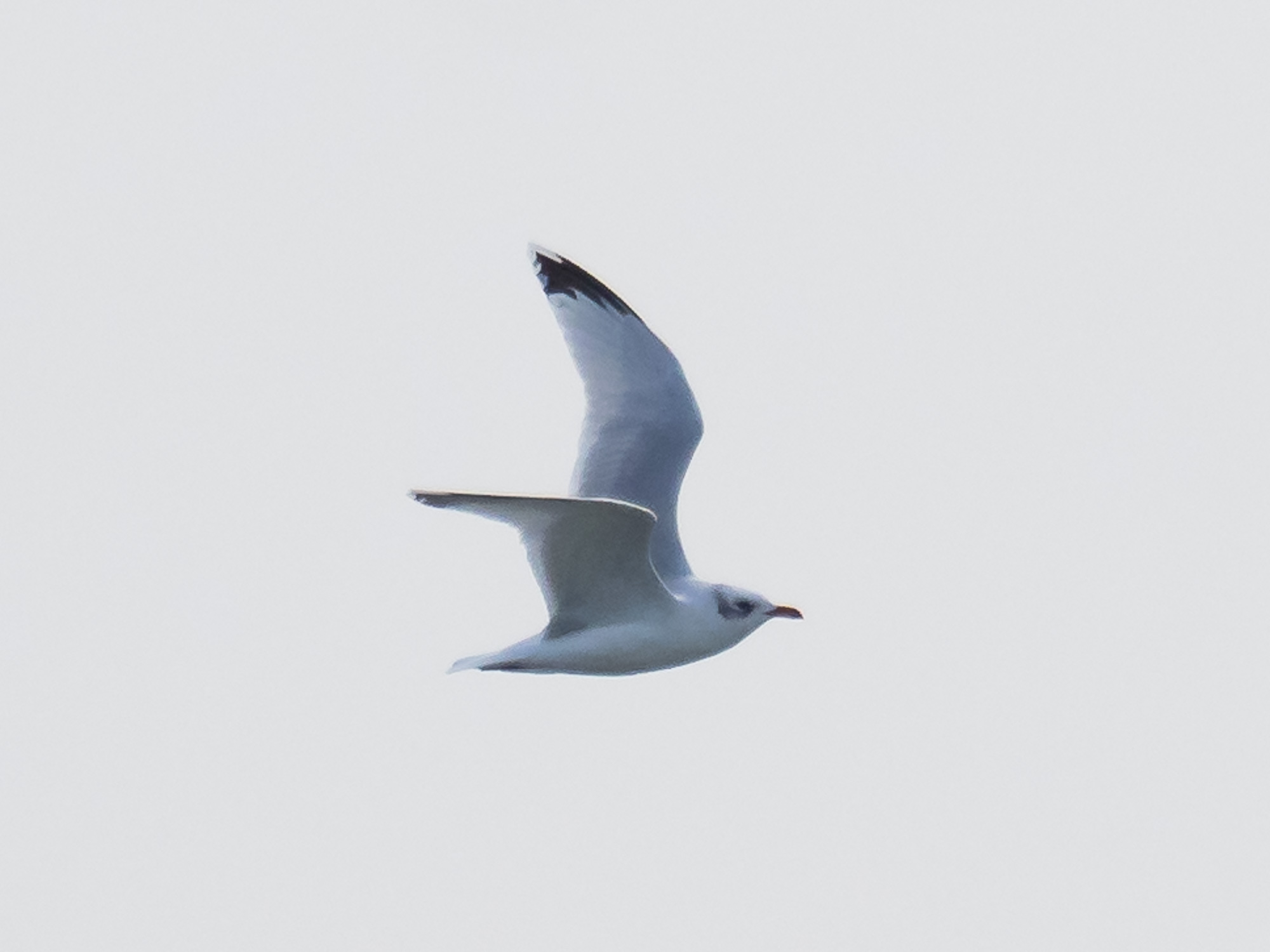
Common Gulls are usually seen way over on Inchmery and so it was nice to see an adult flying close by over the flooded fields.
Common Gull by Ken Button
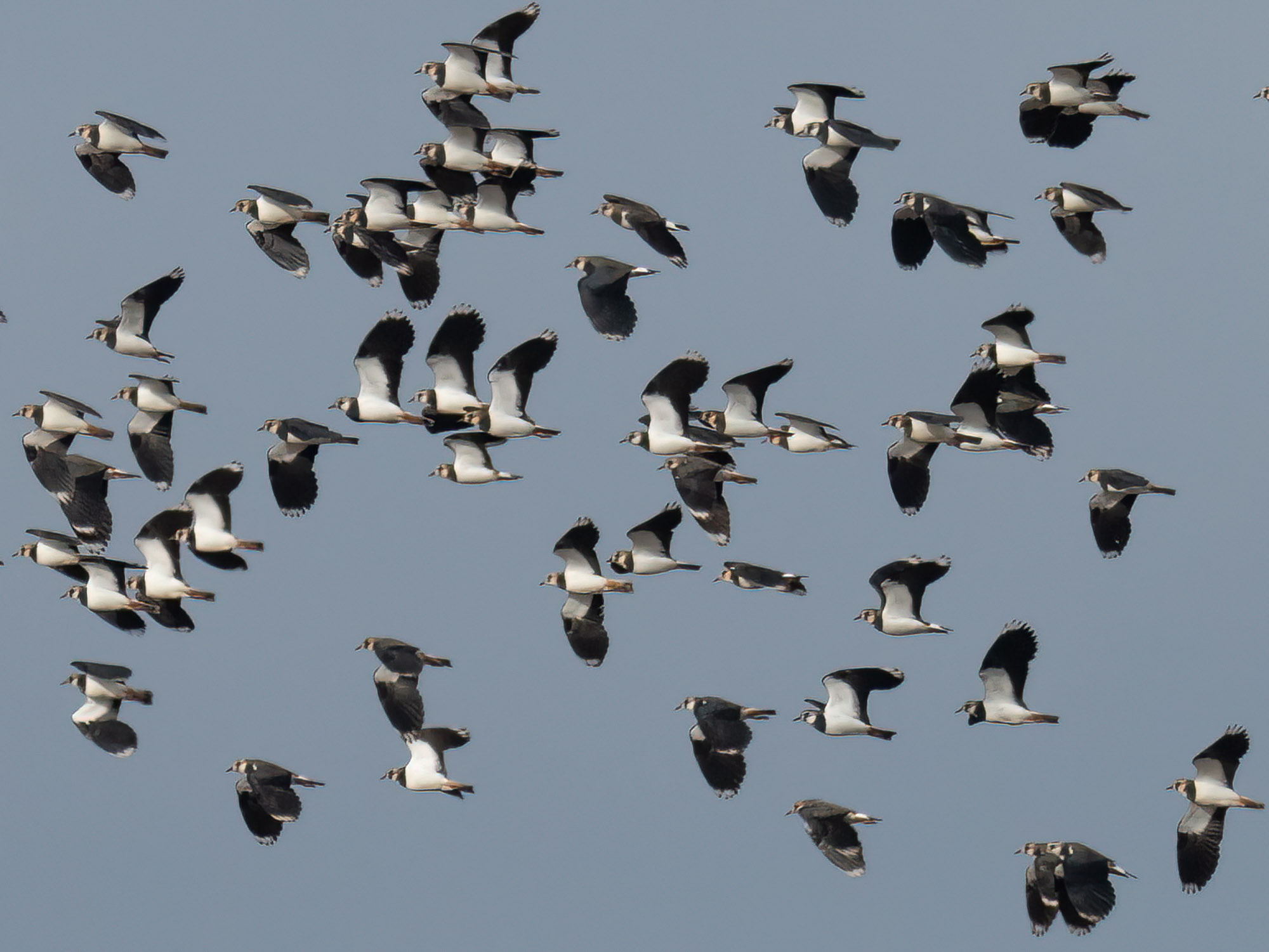
On De L’Orne there were two Golden Plover and another 20 Golden Plover were on the far side of Wigeon Fields with 16 Black-tailed Godwit and around 80 Lapwing.
male Marsh Harrier photo by Terry Jenvey
It was nice to see the male Marsh Harrier at point blank range again. Photos confirm that the same three year old male is being seen regularly, he may be old enough to breed this year. The Lapwing which were also on the Gins are now starting to chase off intruders including the Marsh Harriers.
male Marsh Harrier photo by Brian Fairbrother
There were noticeably fewer Teal on the reserve this morning suggesting that some may already be heading back to Scandinavia and Northern Europe. The WeBS count last Sunday counted only 146 compared to 631 in January and 926 in December.
Coot numbers have increased to 36, interesting to see their slightly ridiculous feet which help to distribute their weight, aid propulsion underwater and also help them get airborne.
Coot
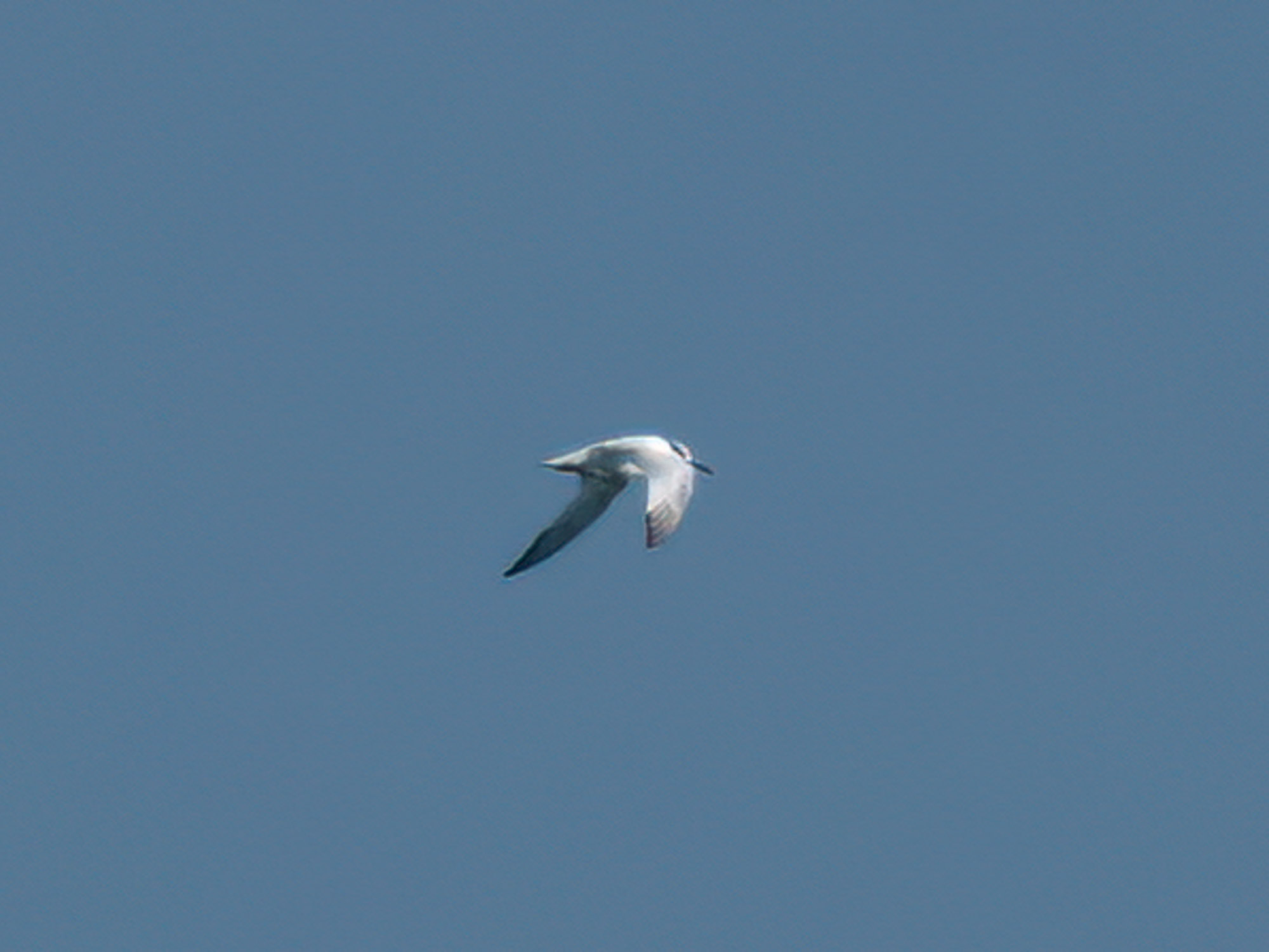
Highlight of the day was an unexpected Sandwich Tern patrolling up the river off the sailing club. This will be a bird that has wintered in Hampshire rather than an early migrant. It’s the only Sandwich Tern seen at Needs Ore this winter. There have been a handful wintering in the county but mainly around Langstone Harbour.
I met up with Ian first thing. We spent some time watching the sea but it continued to be quiet. There were two Slavonian Grebes opposite the cottages but not much else.
Slavonian Grebes
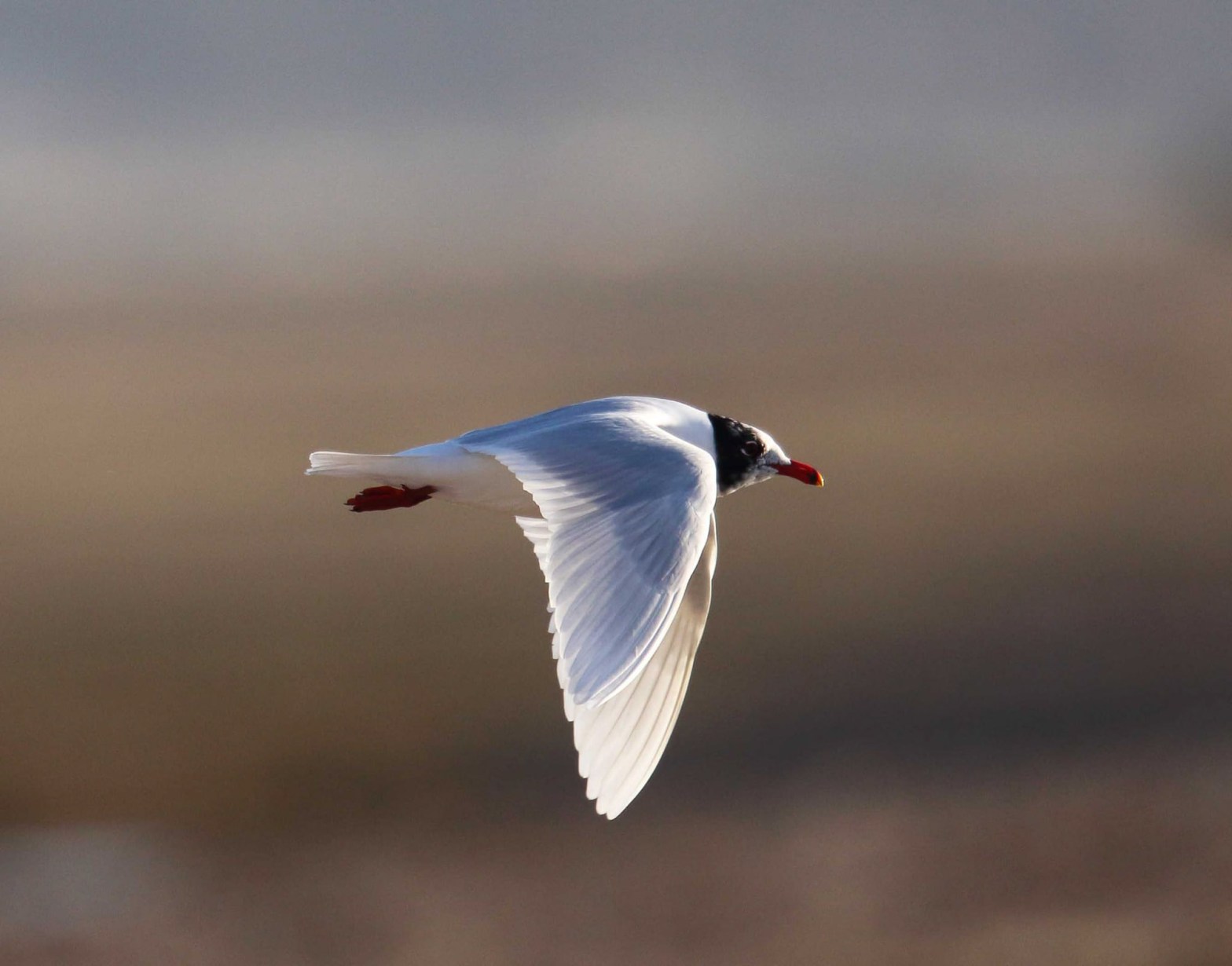
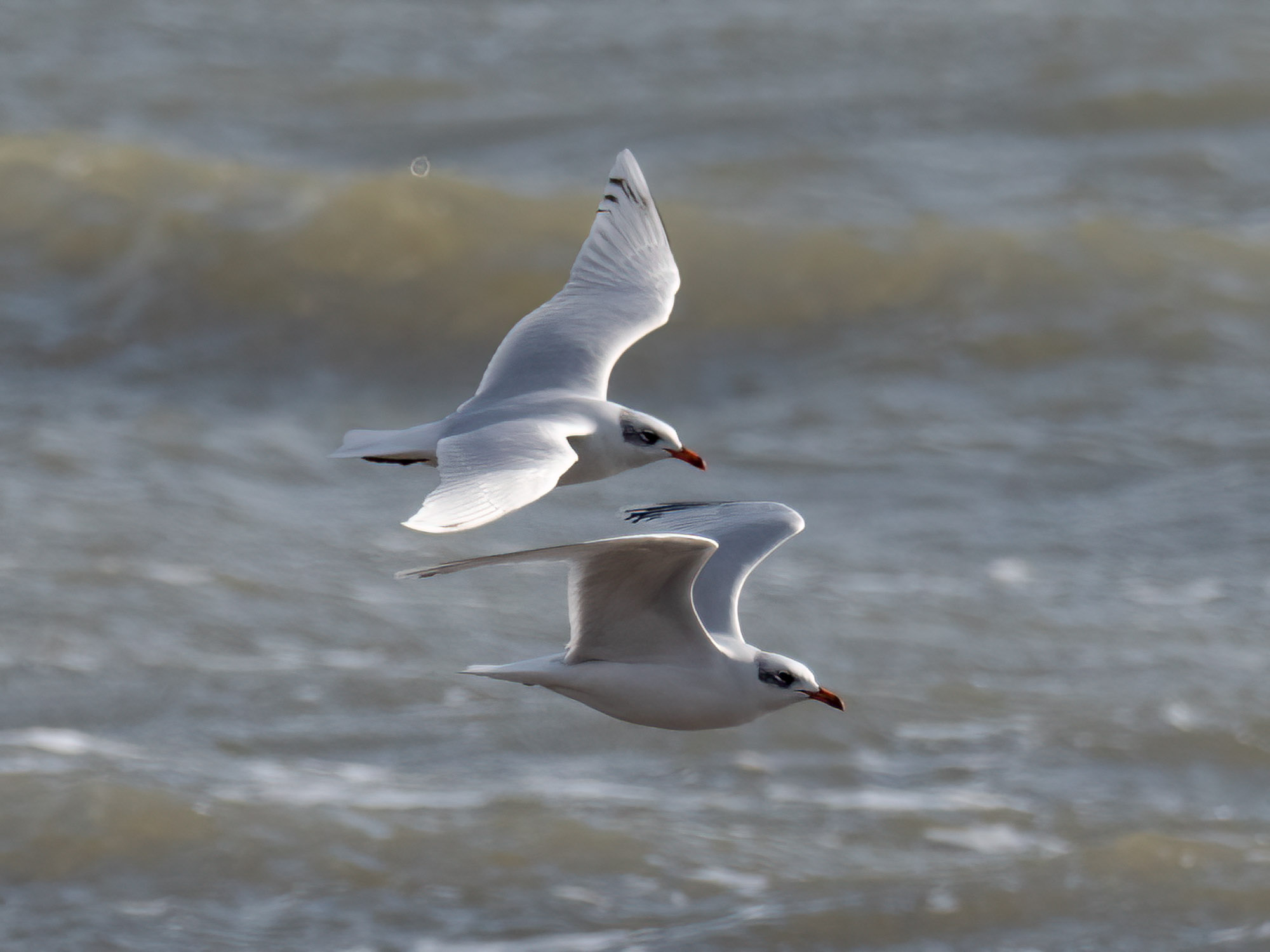
Mediterranean Gulls are now acquiring their summer hoods.
Mediterranean Gull photo by Ian Williamson
Seeing the shoreline looking spring-like in warm sunshine made me think about the first Wheatears returning although this probably won’t be for another three weeks or so.
Oystercatcher
After a 10am meeting with Adam I managed a few hours around the hides. The number of Avocets had increased again, now up to 21 including three of Graham’s yellow flagged birds. Although not full on courtship display they were pretty frisky in the warm sunshine.
Avocet
AX was ringed as a chick at Great Marsh in the summer of 2018 and is old enough to breed. I saw it on Great Marsh three times in April and May last year but it was perhaps pushed away as it subsequently moved to Titchfield Haven in June 2021 and perhaps it bred there. It will be interesting to see if it stays longer this year.
VI was ringed as a chick at Great Marsh in June 2019 and I was the last person to report it, on Great Marsh, in June and July 2021. It wasn’t old enough to have bred last year but it may be this year. The Avocets don’t tend to appear on Great Marsh until early April.
Black-tailed Godwit photo by Brian Fairbrother
There were sizeable flocks of Black-tailed Godwits in the air and on a couple of occasions the Golden Plover also wheeled overhead, there were around 80 and they appeared to drop back down on to the Gins.
Spoonbill photo by Brian Fairbrother
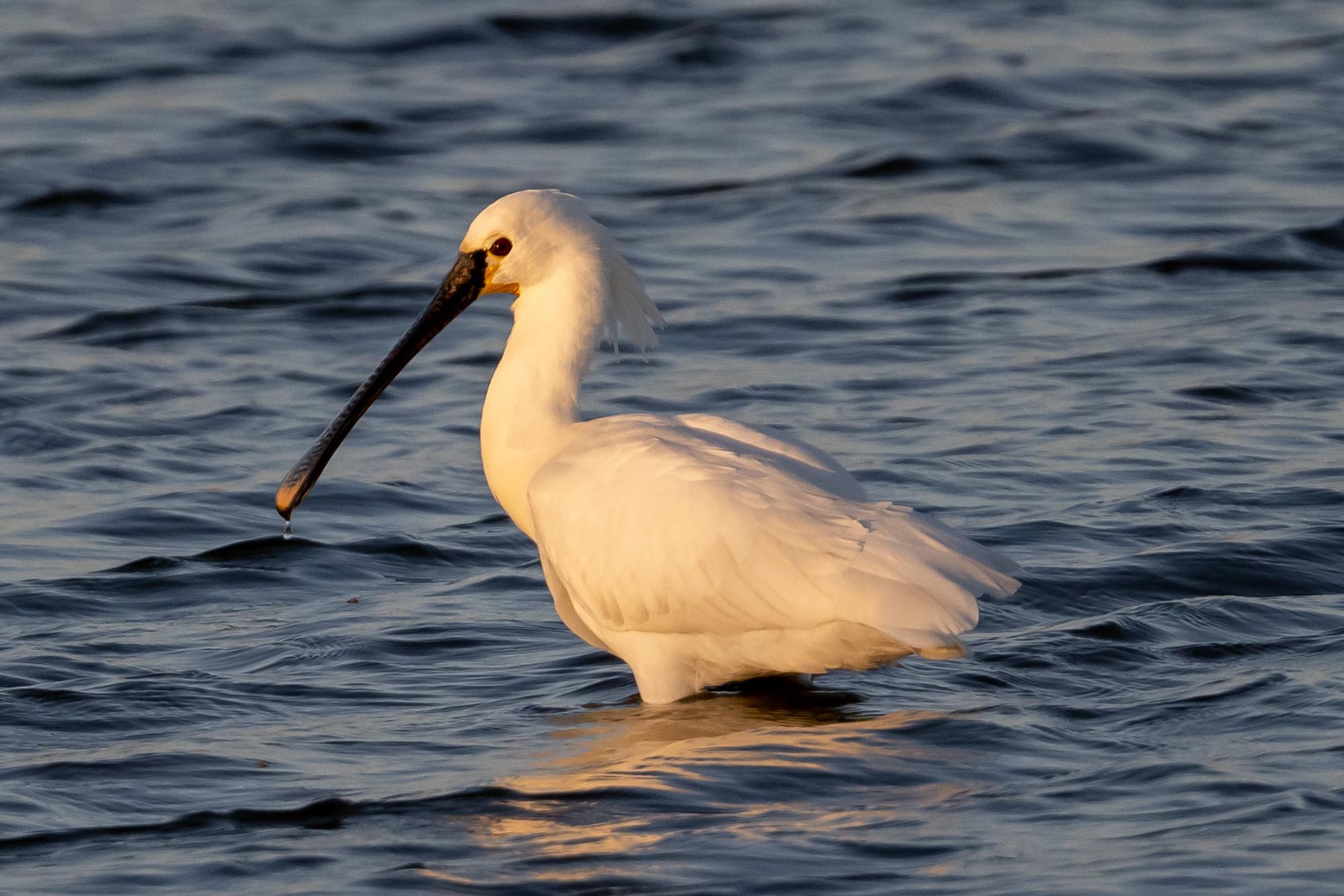
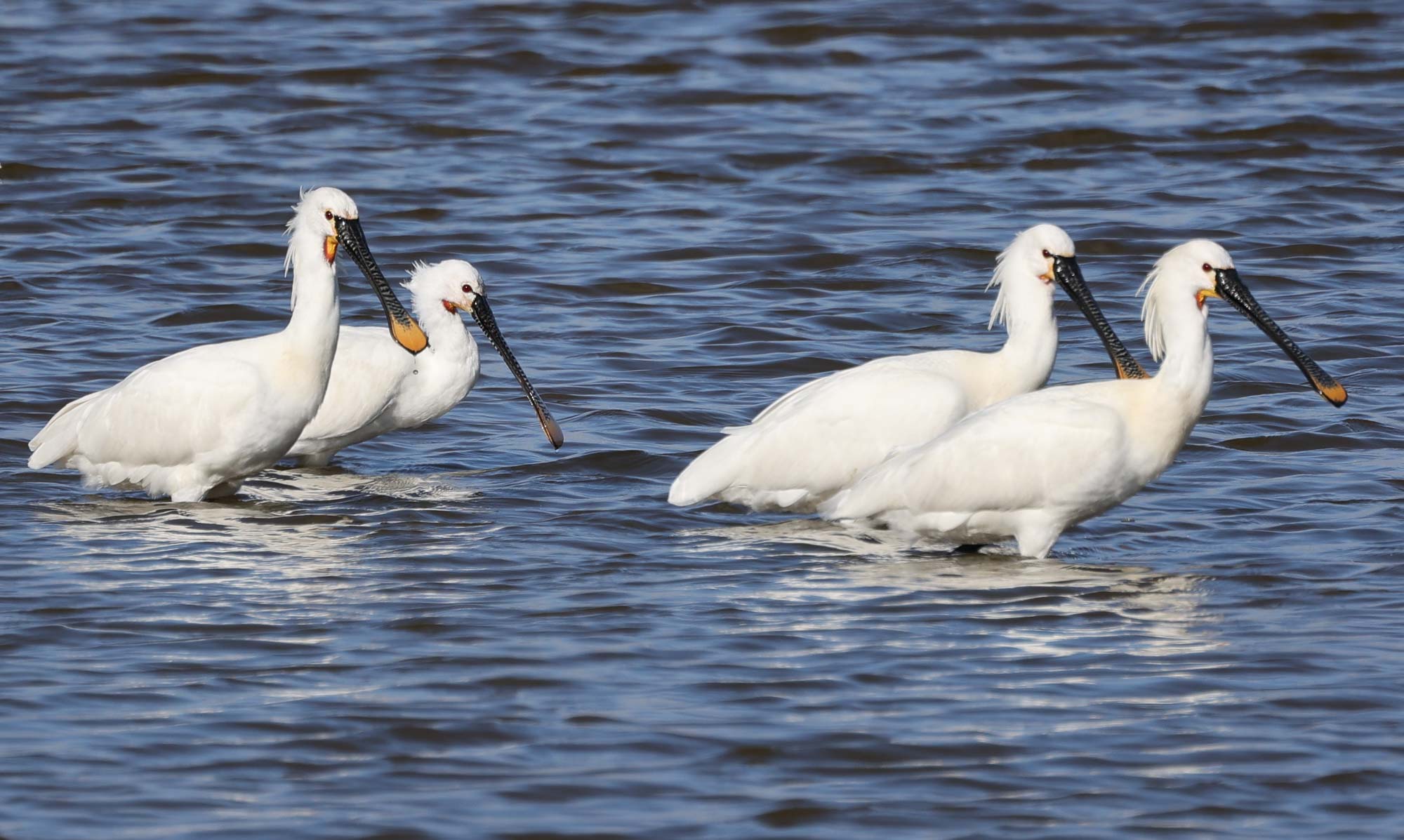
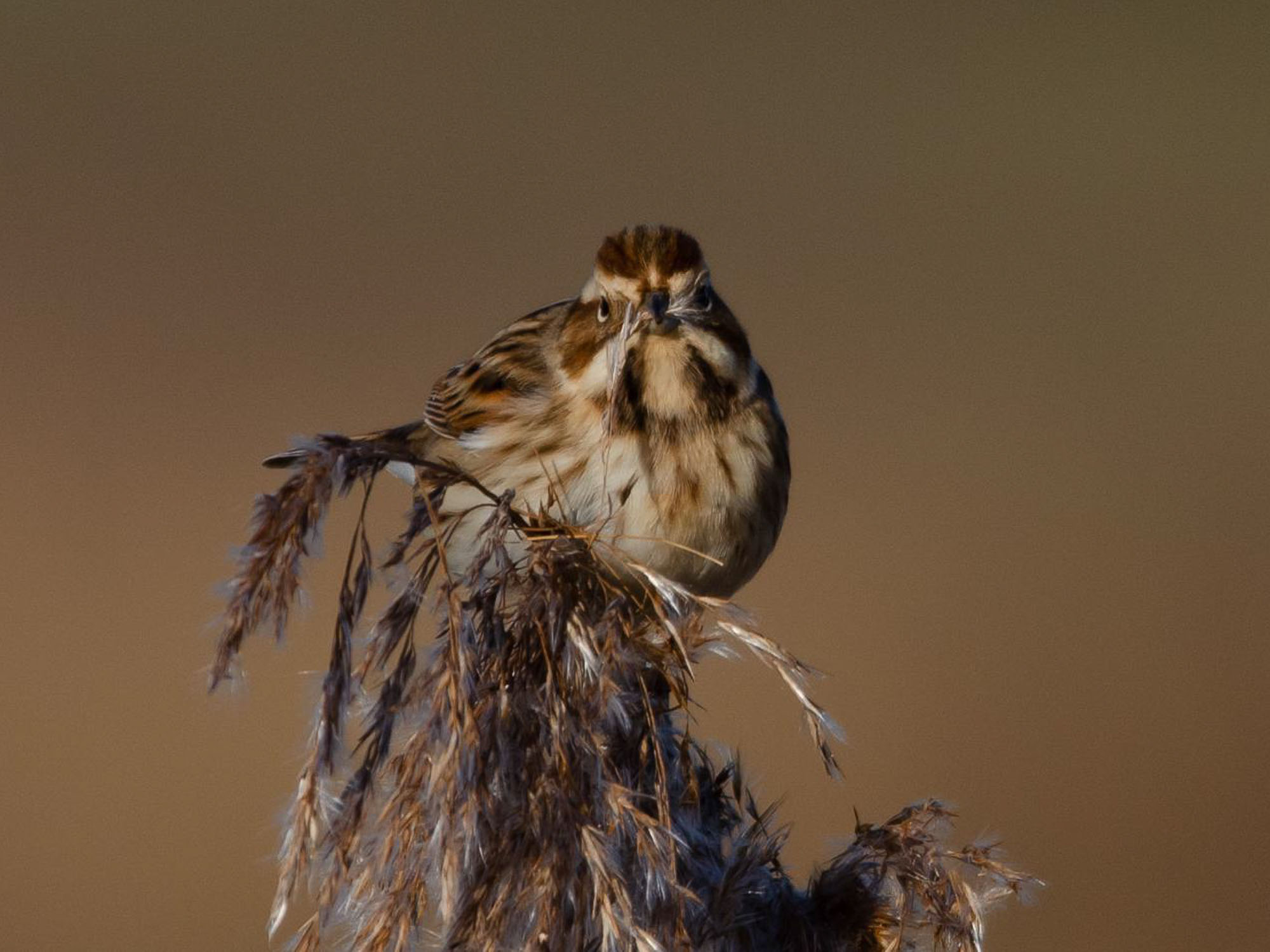
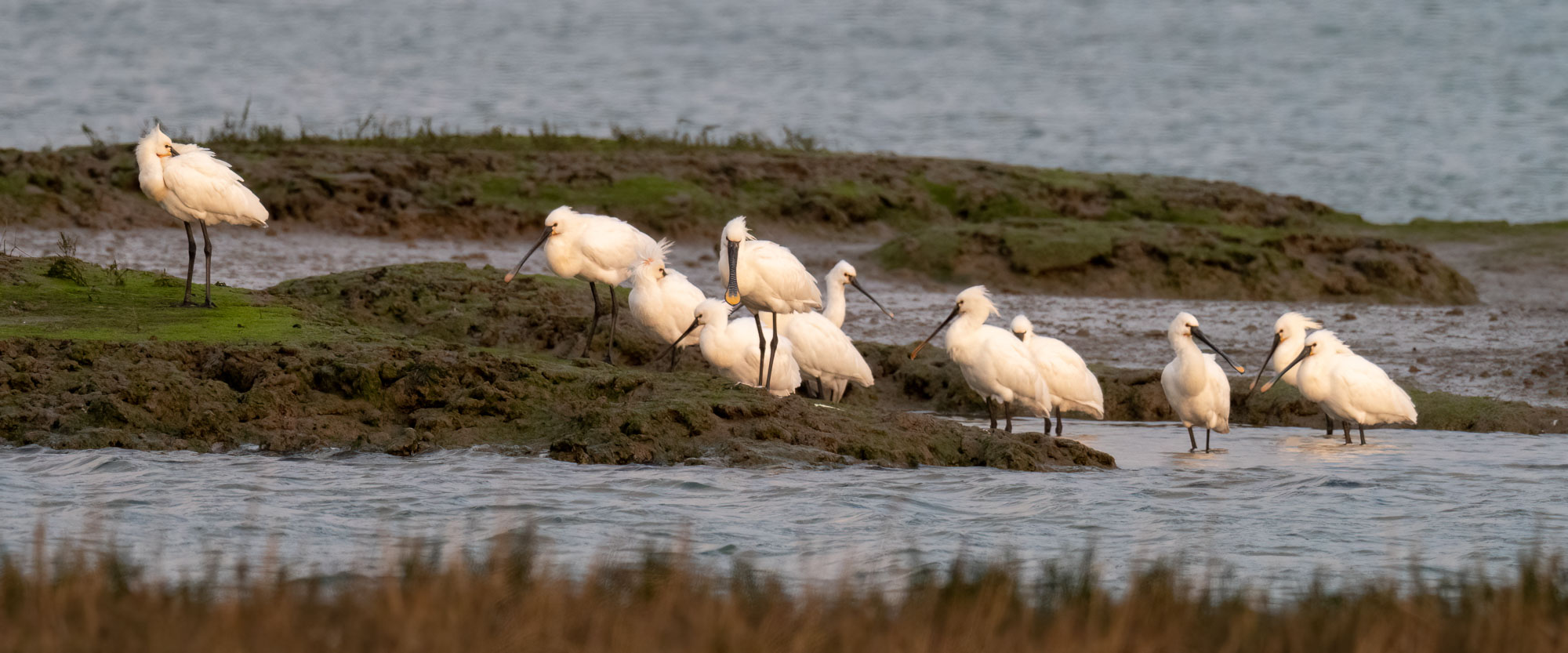
14 Spoonbills showed very well looking nice in the warm afternoon light and lots of Reed Buntings were singing from various wet areas around the reserve.
Spoonbill photo by Terry JenveyReed Bunting photo by Dimitri Moore
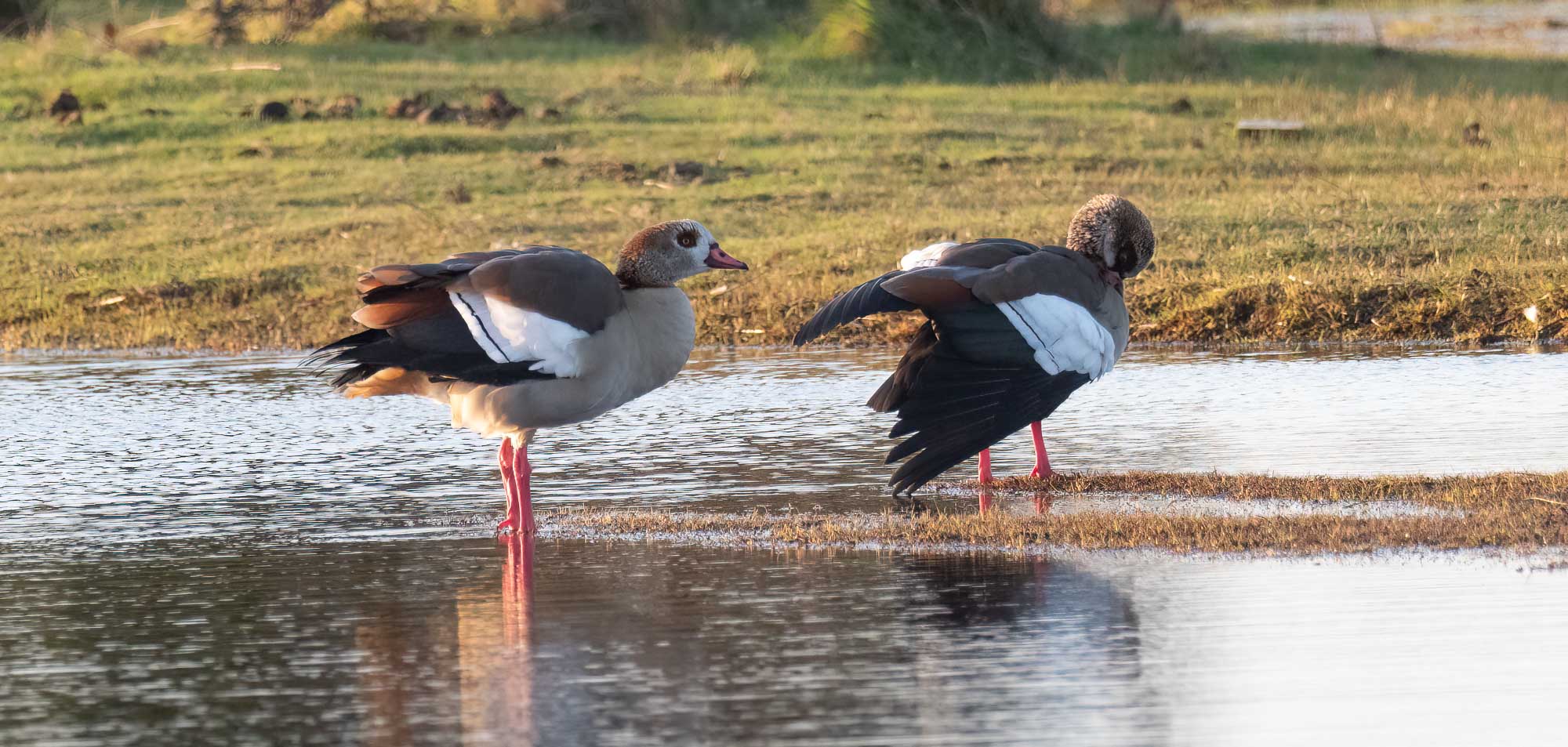
On the wet area near Mary Monts two Egyptian Geese were preening in the early sun and two Marsh Harriers, a young male and a female drifted over. It was pretty quiet on the sea other than one of the White-tailed Eagles being mobbed by a Herring Gull over the shoreline.
Egyptian Geese
I headed to the hides. There was very little activity on De L’Orne and the highlight at Venner was watching one of the White-tailed Eagles approaching very closely to Brian and I in the hide.
White-tailed Eagle
The Canada Geese didn’t seem at all bothered.
White-tailed Eagle
From the Sailing Club 47 Pintail were gathered on the far side near the river mouth. A male Pied Wagtail was singing from the ground in front of the Sailing Club, probably the male that bred in the eaves last year.
Pied Wagtail
Three Rock Pipits and four Skylarks called confidently as they headed over and a Pale-bellied Brent Goose was feeding in the distance on Inchmery.
I had more luck with my second check of De L’Orne scrape, this time viewing from the south, from the Sluice Gate. It’s further away but you don’t have to look into the morning sun from this angle.
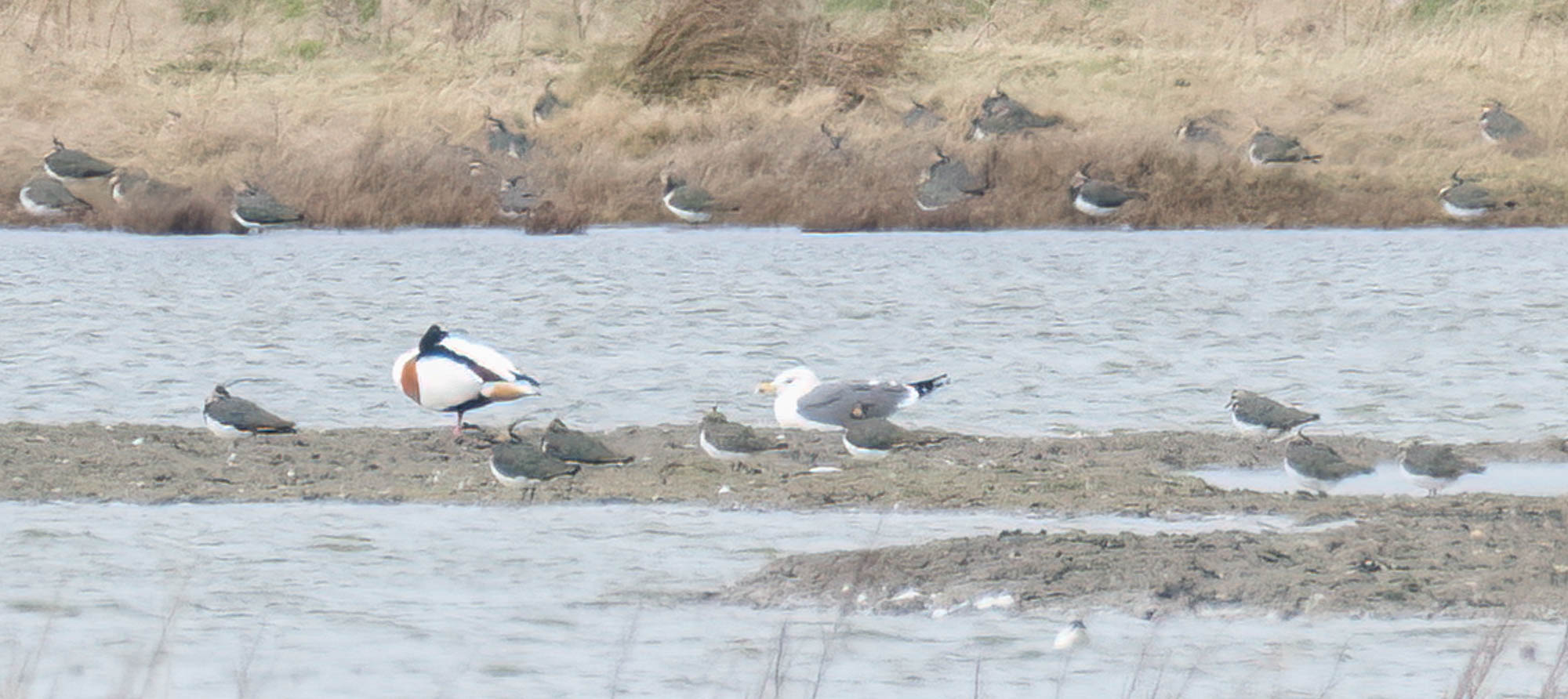
On De L’Orne scrape a large gull caused some confusion. Structure is quite difficult to judge in a siting bird and light can make a big difference to your perception of mantle colour. This, I think, is an adult Lesser Black-backed Gull with a paler than normal mantle colour.
Lesser Black-backed Gull
Also on the scrape were 34 Golden Plover, 18 Avocet, one of the wintering Greenshank, five Black-tailed Godwit and at least 58 Shelduck (quite a few were hidden). One of the Mediterranean Gulls on the scrape was wearing a yellow ring but it was too distant to read. Also on the scrape was a pale beige-coloured Lapwing. I’ve seen it two or three times before, each time on the scrape.
pale Lapwing
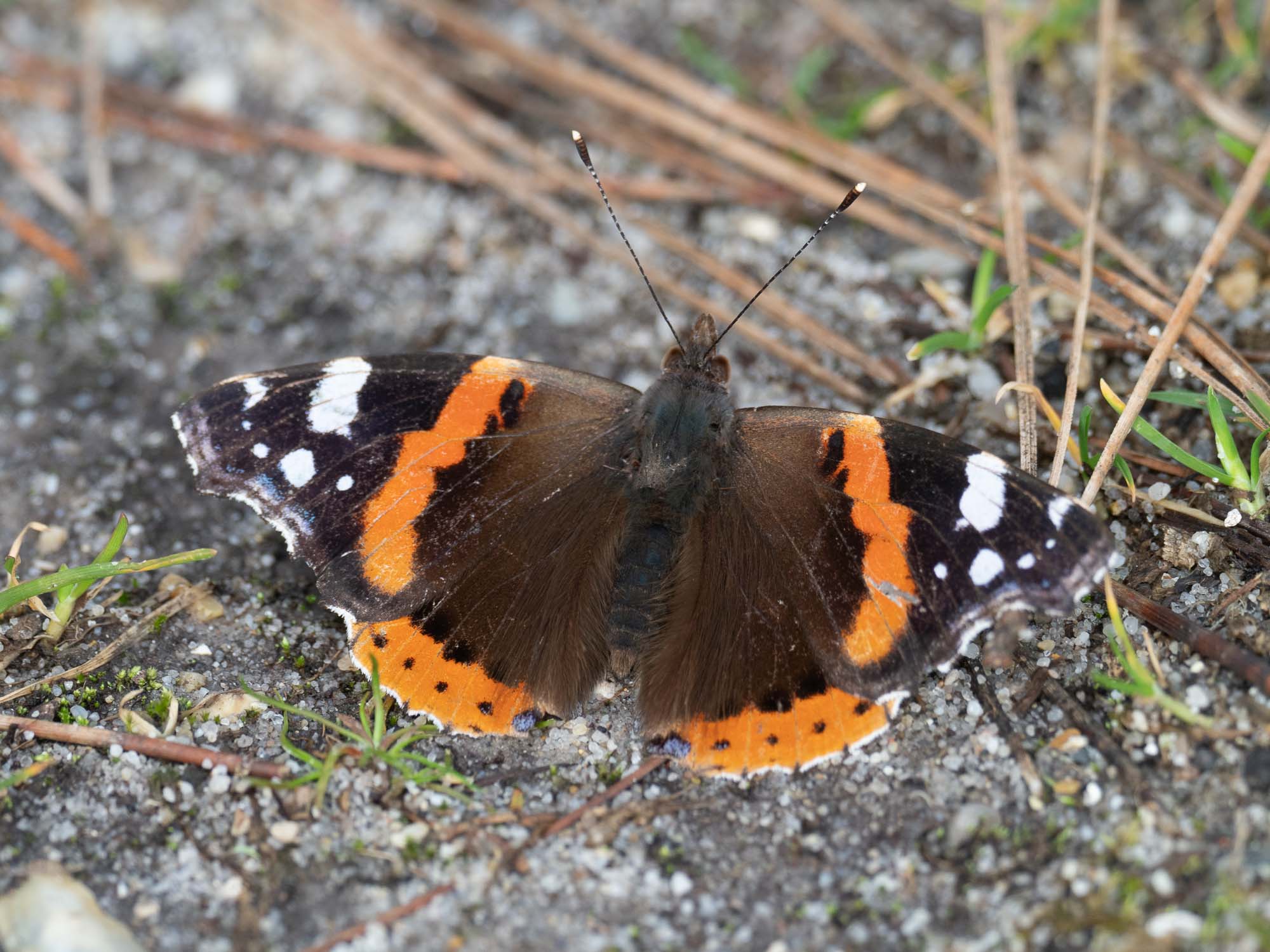
Another butterfly today, a Red Admiral settled on the path near the Cottage Pines and nearby a queen Buff-tailed Bumblebee flew passed me but didn’t stop for a photo. She will be carrying last summer’s eggs and may be looking for an abandoned mouse hole in which to build a nest.
Red Admiral
At high tide I walked back to the Cottages to check the wader roost which is directly opposite over the saltmarsh on Warren Shore. This is the closest place to watch a high tide wader roost on the reserve. Conditions weren’t perfect as it was windy and I was looking in to the sun. The wintering Purple Sandpiper was asleep and there were also seven Bar-tailed Godwit, 45 Knot, a single Golden Plover and three Snipe. In the background 11 Eider headed west.
Purple Sandpiper (left of centre)
Later on at Park Farm I picked out a Pale-bellied Brent Goose. I’m pretty sure that this is a second individual as it seems less well marked than this morning’s Inchmery bird.
Pale-bellied Brent Goose (centre)
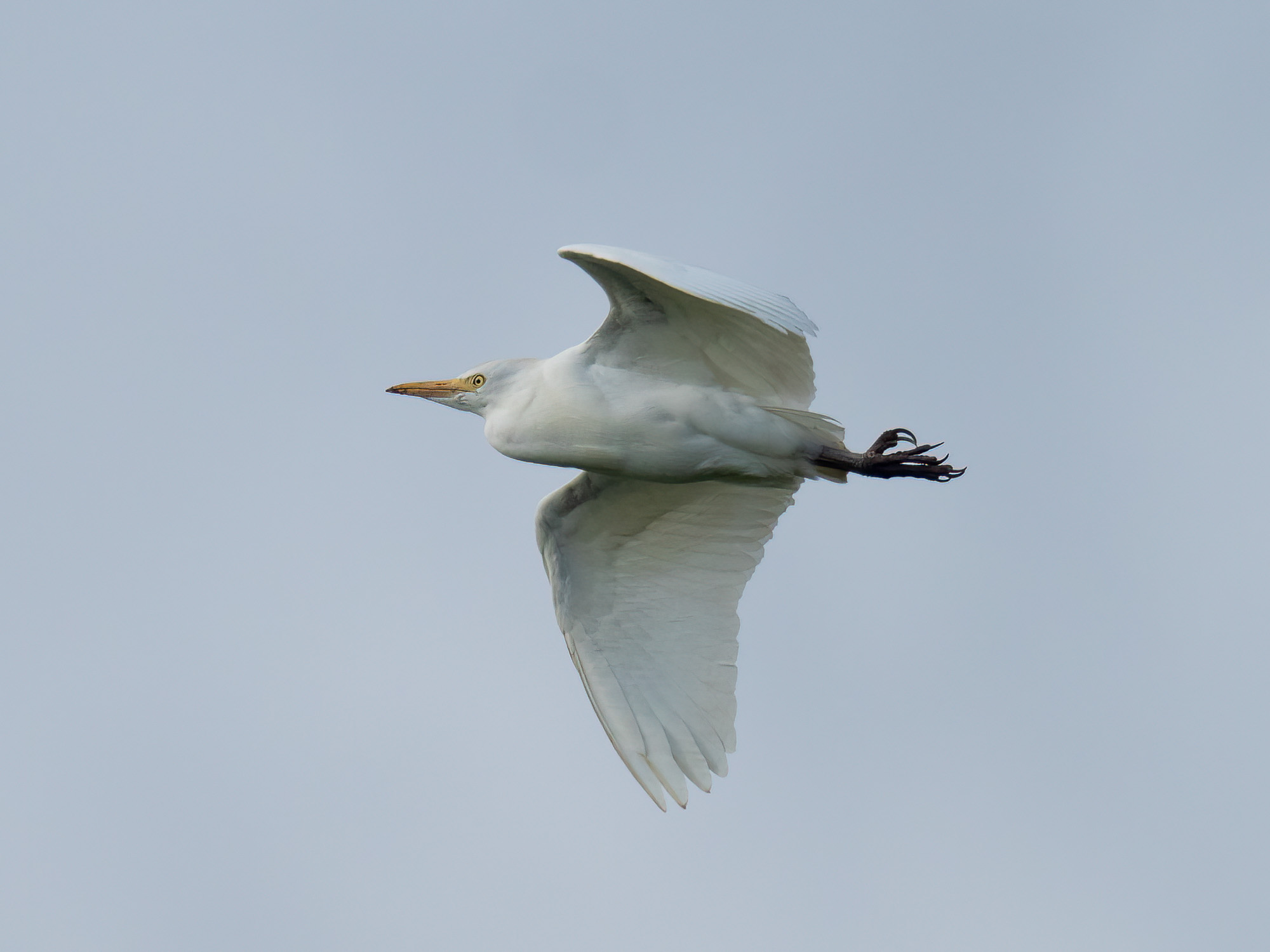
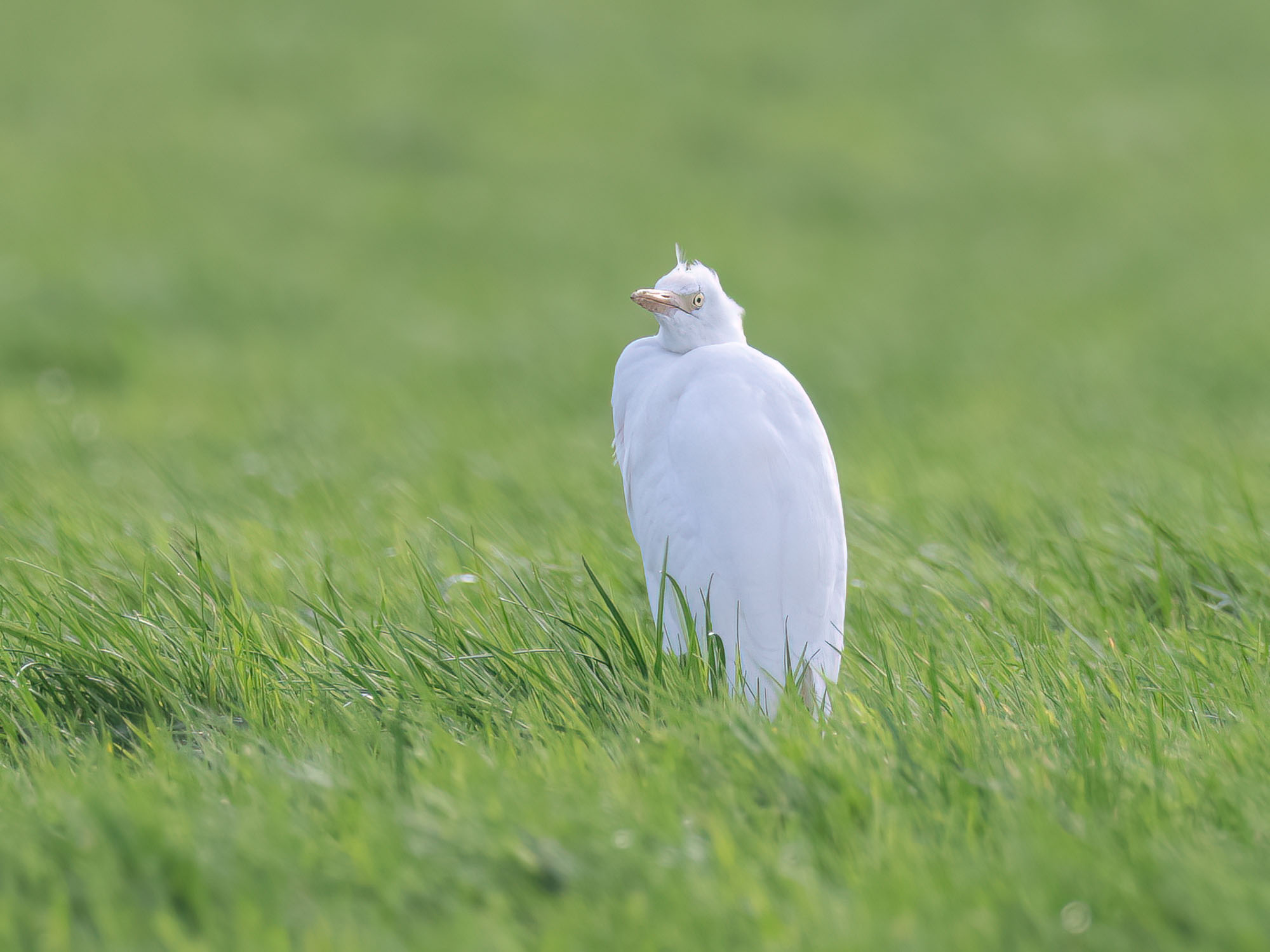
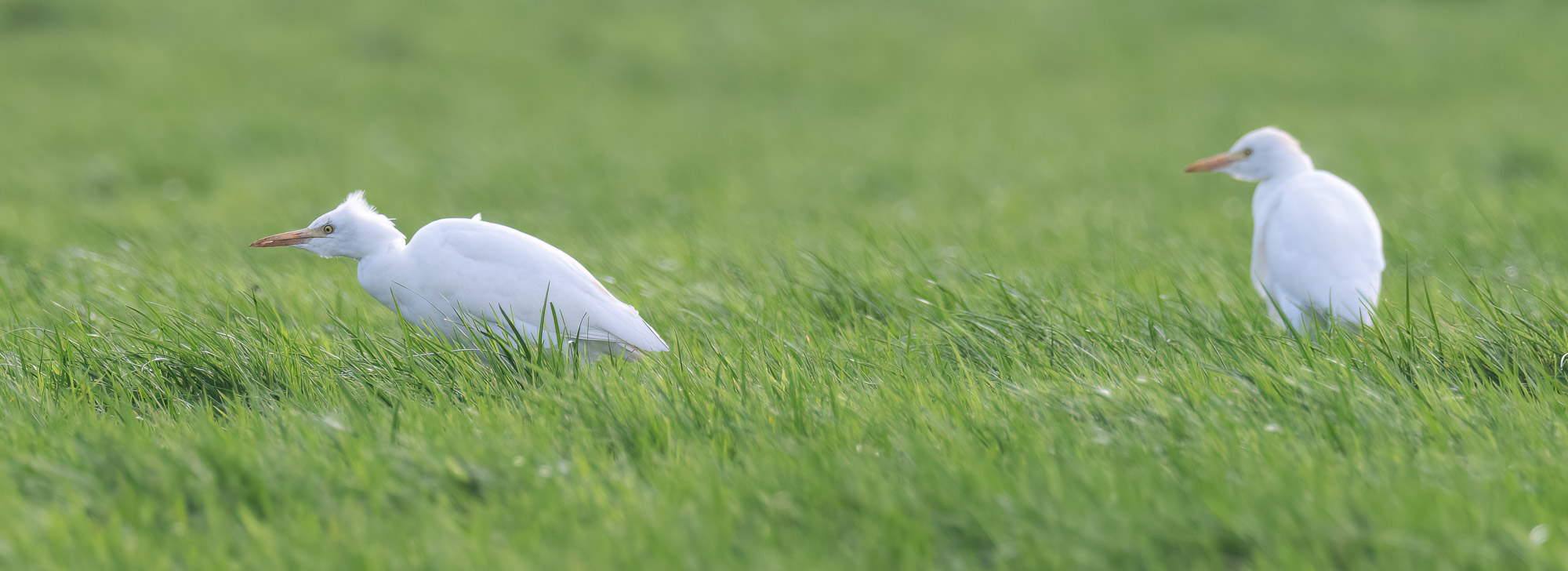
As I drove to park at the bottom of Park Lane the Cattle Egrets flew over the car and settled in the field on the east side of the road.
Cattle Egret
It was nice to be able to photograph them a bit closer and down at ground level to let the grass blur nicely.
Cattle Egrets
A Chiffchaff was calling from the hedge near Rye Errish Copse. Park Shore was a little bleak and desolate with storm Eunice starting to build, winds are forecast to gust to 90mph tomorrow. A 2nd winter Mediterranean Gull with extensive black primaries headed into the wind, probably the blackest primaries I’ve seen on a 2nd winter bird.
A very cold morning made even more uncomfortable by a strong breeze. I headed to the Sailing Club to start with a bit of shelter.
Dark-bellied Brent Goose
The Spoonbills were on this side of the river, on Sluice Gate Saltmarsh. While I was in the car I got some photos and they were settled but as soon as I opened the door they took off and headed to Venner, all 12 of them. At the same time the wintering Spotted Redshank was in the air somewhere, calling, but I didn’t see it.
Spoonbills
I tend to watch the sea from three or four different locations. The large bush near Mary Monts which can provide some shelter in the wind, the Sailing Club which also provides shelter from the prevailing westerly winds but it is slightly further away from the water. I also sea watch from Gravelly Beach when I’m patrolling the private areas and Park Shore is also worth watching.
2nd winter Mediterranean Gulls
Today I watched the sea from the Sailing Club and I was pleased to see a diver heading west. The large protruding feet, slowish flight action and half collar all indicated Great Northern Diver, my first of the year.
A large Herring Gull passed close to shore, the heavily streaked head in mid February and the lack of any black mark on P5 made me wonder about the nominate Scandinavian race argentatus. However, you’d expect the P10 wing tip to be extensively white and so this is no doubt just a late moulting British argenteus.
Herring Gull
Soon afterwards I was pleased to watch a male Common Scoter also heading west. Common Scoter seem to have a slightly strange way of holding their head in flight, held high, rather stretched out exaggerating a bulbous head shape. Common Scoter was another year tick.
Looking backing up the river, in the distance and level with the Yacht Club, I could just about make out a small group of Golden Plover resting with the Lapwing and Black-tailed Godwits.
Lapwing
Having met up with Dimitri we later caught up with the full Golden Plover flock on De L’Orne Scrape, there were 120, the largest count at Needs Ore for five years.
While we watched from the screen a Great White Egret flew over. The first one I’ve seen for three months.
Great White EgretGreat White Egret
Although female-type Marsh Harriers are a familiar sight an adult or near adult male Marsh Harrier is more unusual. This male showed really nicely heading over Venner Wigeon Fields while we were in Venner Hide. It’s not a full adult, I’d say it’s probably three years old.
male Marsh Harriermale Marsh Harrier
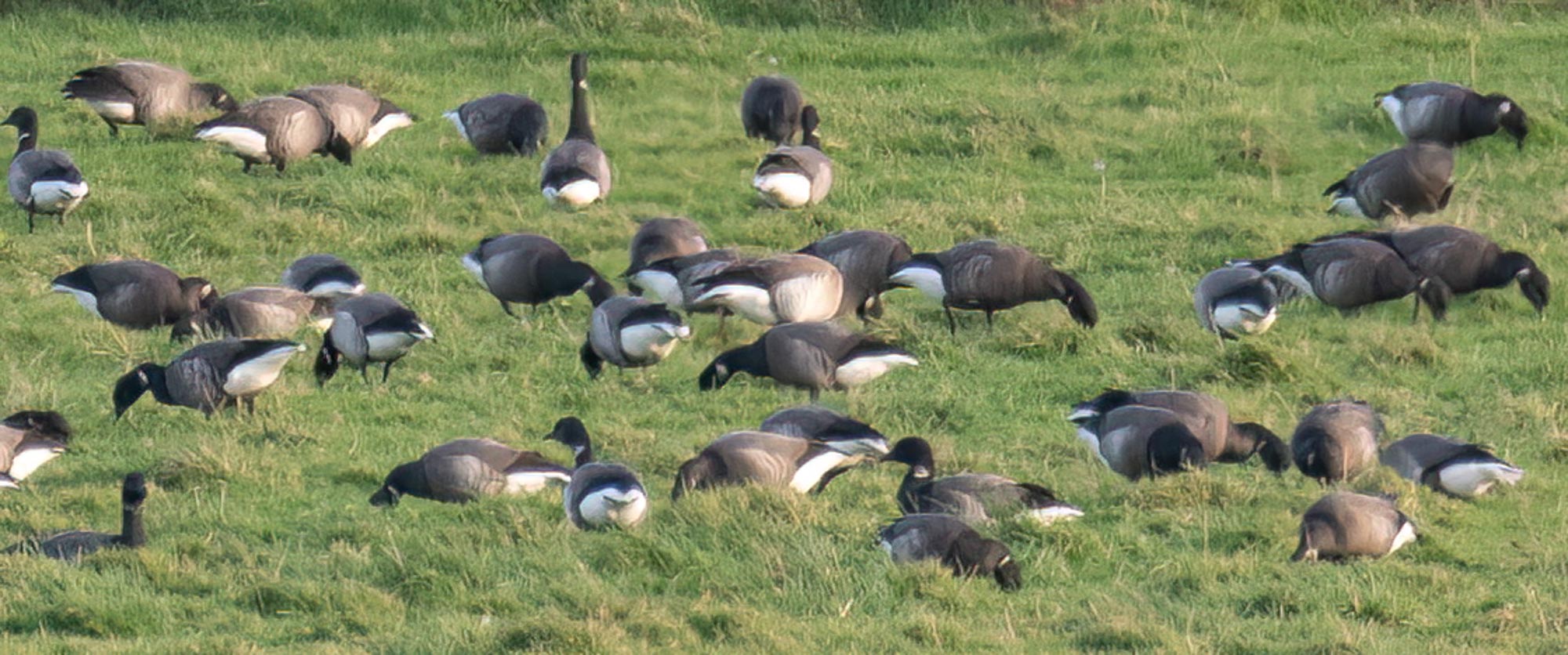
It was good to see that Brent Geese were grazing along the Main Hedge Fields again, this time 190 of them with Canada Geese on Droveway East.
Brent Geese on Droveway East
I finished the day with a brief visit to the top of Park Lane. The geese flock were mainly obscured but suddenly took to the air and a Peregrine soon appeared. It settled in the field looking bemused that the field was now empty. It was an adult bird, the first adult Peregrine I’ve seen since 5th December. Fingers crossed that it is one our breeding pair and that they still have plans to breed at Needs Ore.
A telescope view of the two Cattle Egrets down on Park Farm made it a three egret day.















 Patch Birding