April 2022, Spring 2022

April 12th to 16th 2022

Warmer weather and wind from the south started to bring in migrants from the middle of the week and the warm spring days, cooler nights and light south-westerly winds also produced some misty starts. 

Canada Geese

Sea watching early in the period produced the first trickle of spring passage, a Common Scoter pair west and seven Common Terns and the first Whimbrels heading east. During the subsequent week a few more Whimbrel stopped to feed inland in the fields around Warren Farm and then small groups followed off shore including a tight flock of 25 heading east on the 16th. Throughout the period increasing numbers of Sandwich Terns were very visible and audible.

Sandwich Tern photo by Ian Williamson

Ringed Plover are starting to display around the Sailing Club.
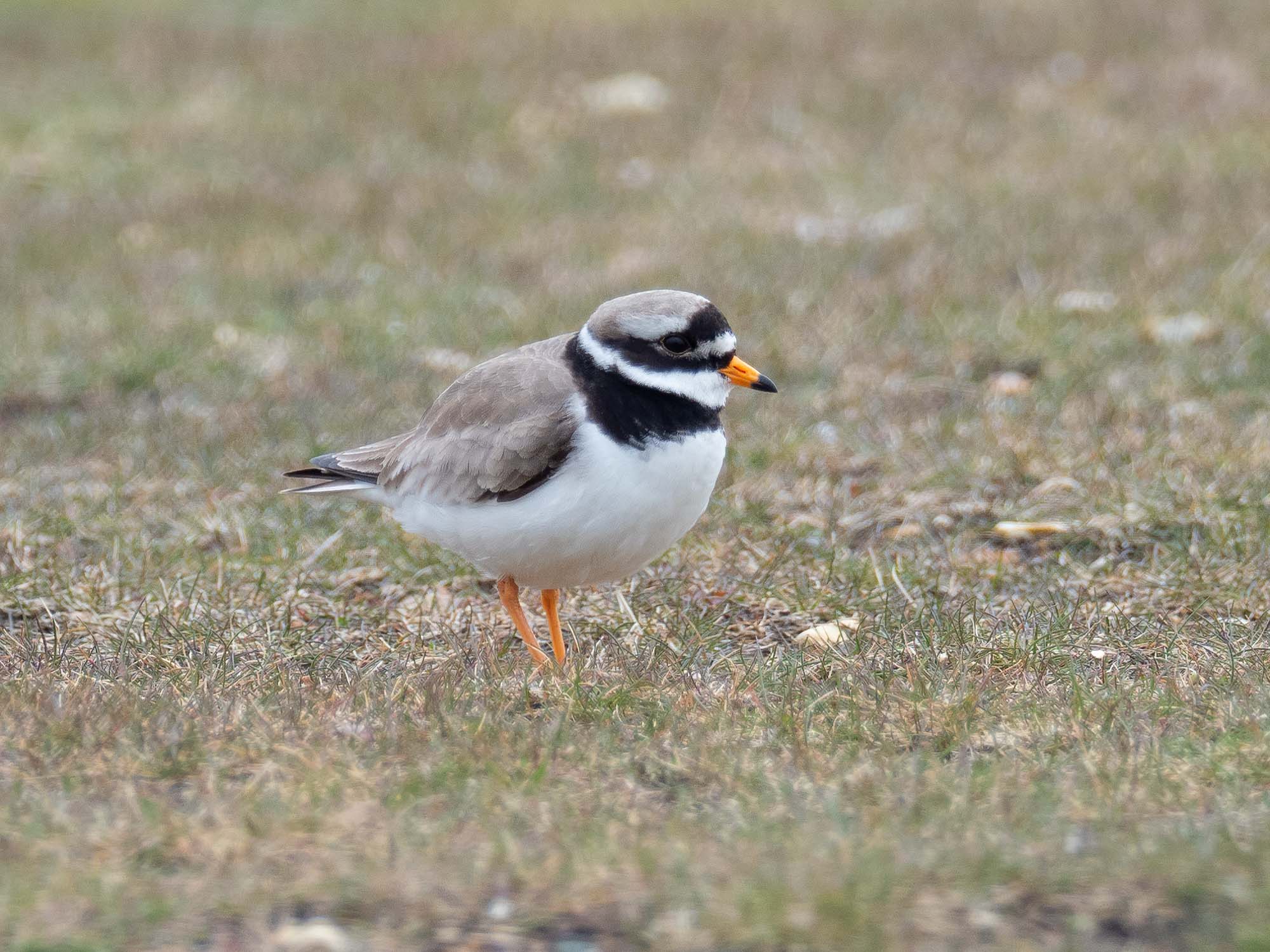
Ringed Plover

They’ve been in short supply this spring but a Wheatear flicked along Gravelly Beach early in the week. The black ear coverts and lores indicate that it is a male and the wing feathers being paler brown indicate that it is a 2nd year bird (hatched last summer).
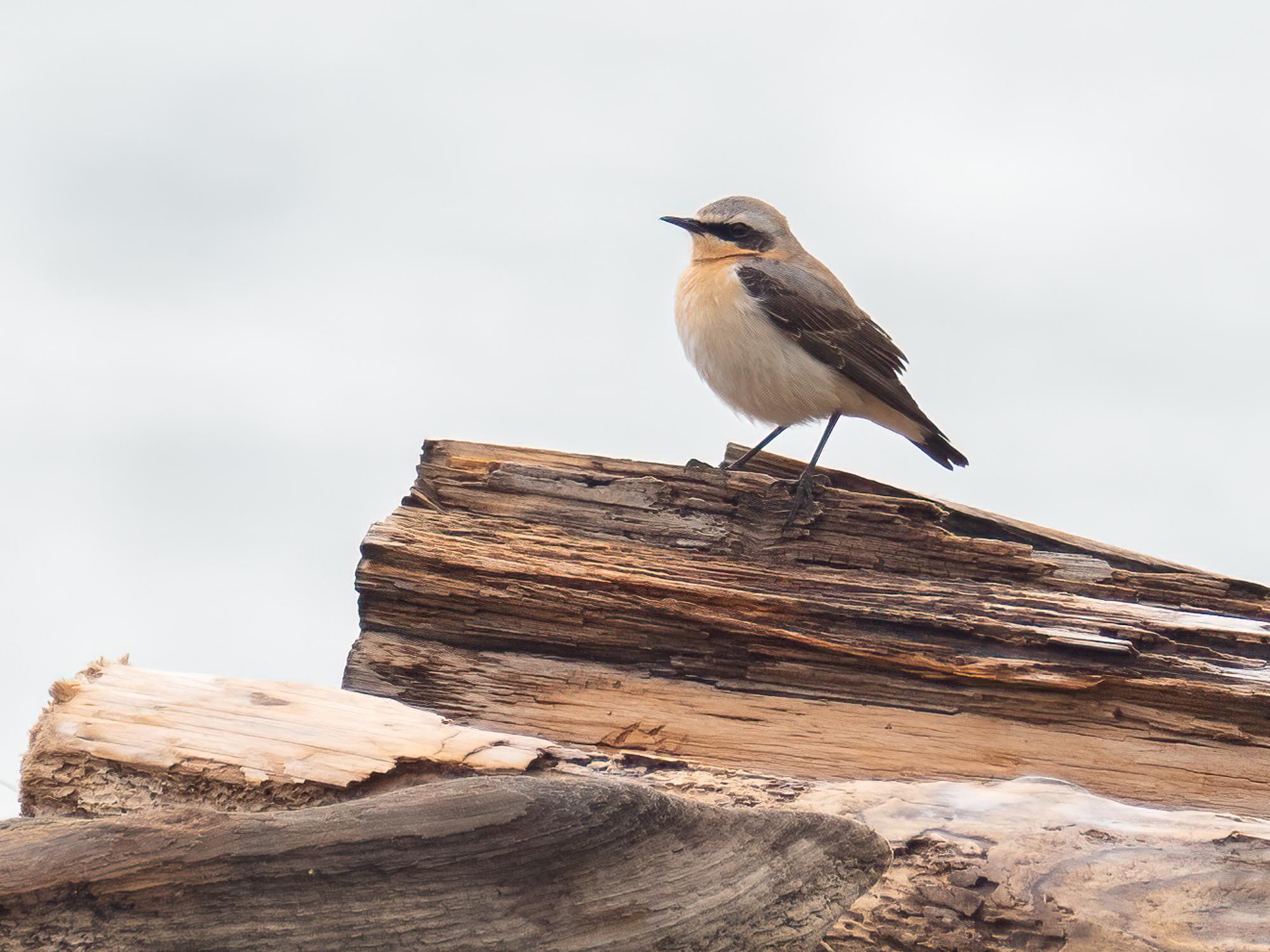
1st summer male Wheatear

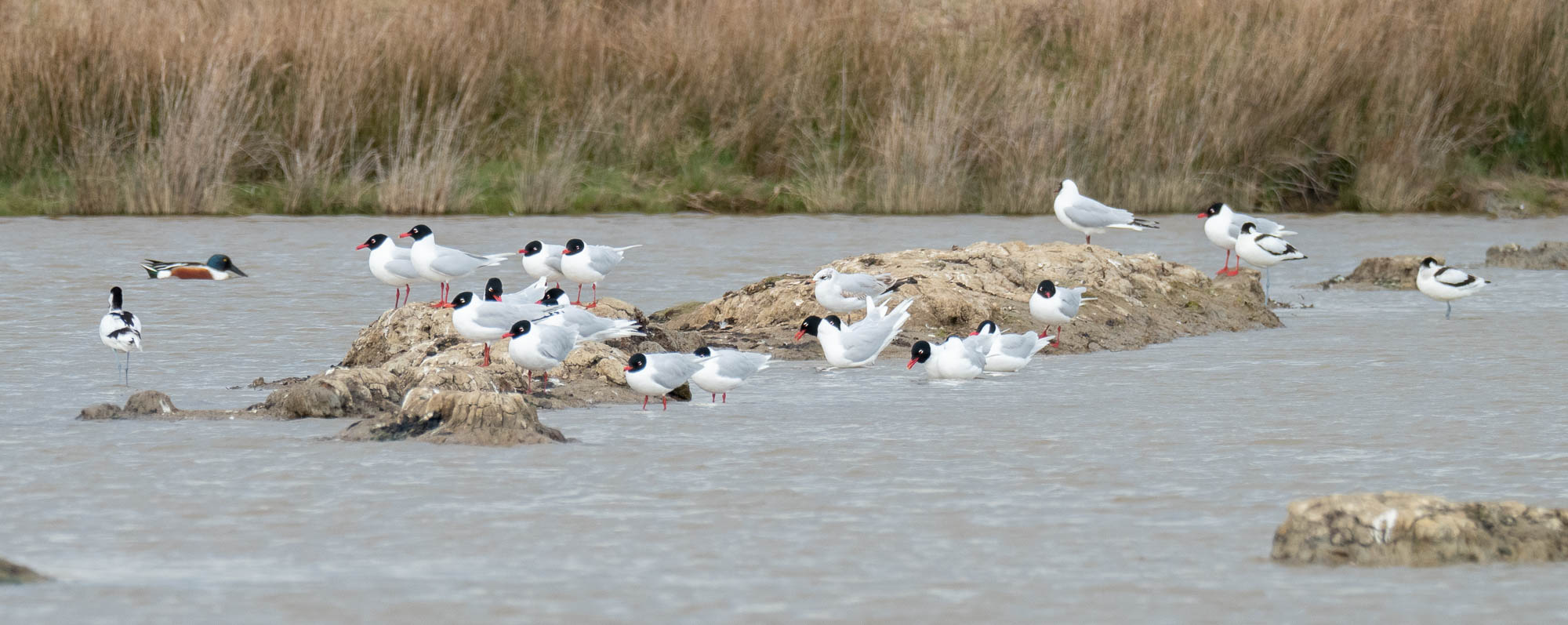
In amongst the 20 odd pairs of Black-headed Gulls which are using the rafts on De L’Orne Lagoon there has been a pair of Mediterranean Gulls. They seem to be hanging around and it makes me wonder if they are thinking of breeding here.
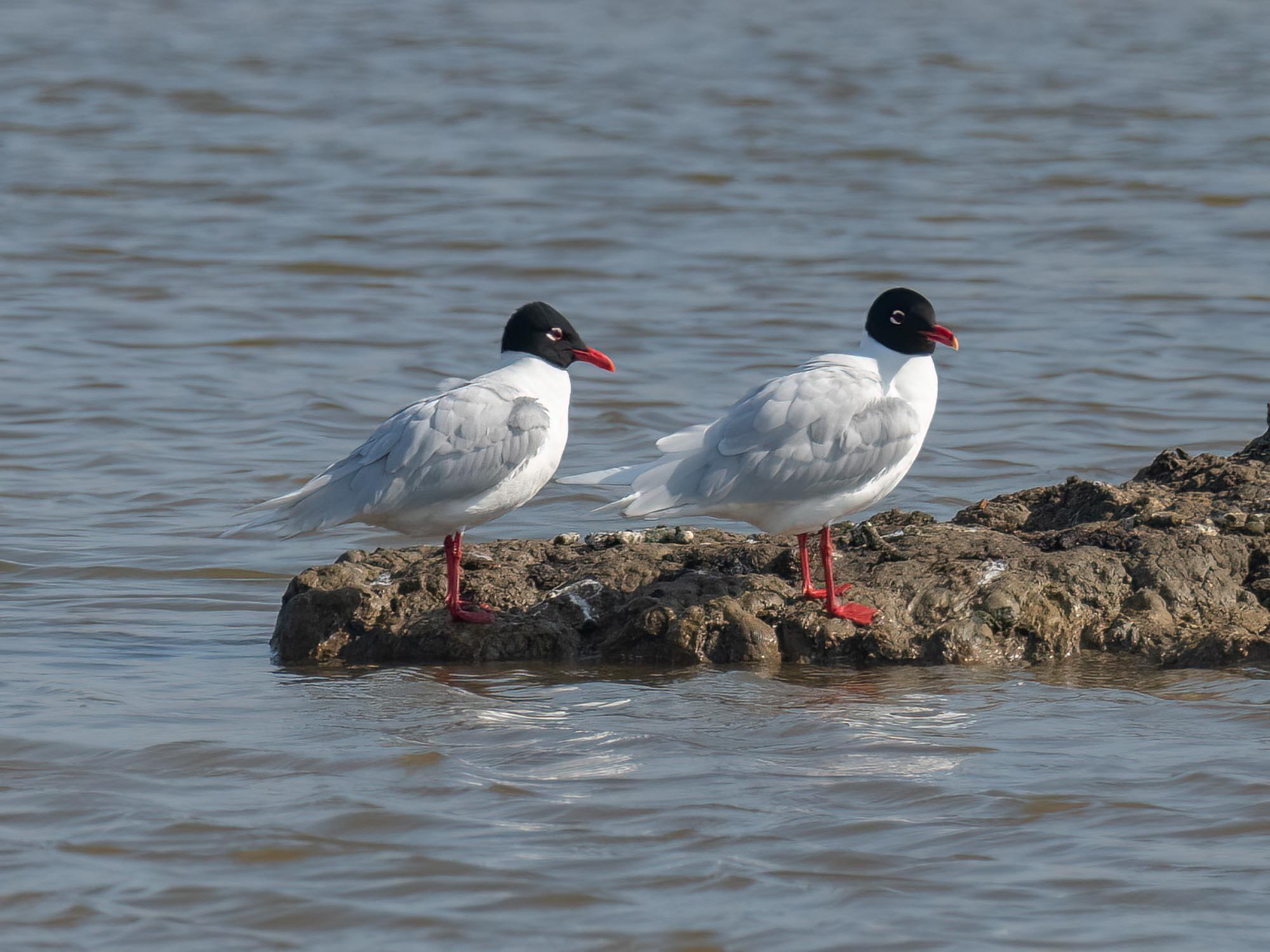
Mediterranean Gull pair

I found a Stonechat nest on the 12th. Both the male and the female are birds that Graham ringed and so they haven’t ventured far. She repeatedly returned to the nest area without nesting material and later flew a short distance, shook her feathers and defecated, all of which suggests that she is already incubating.
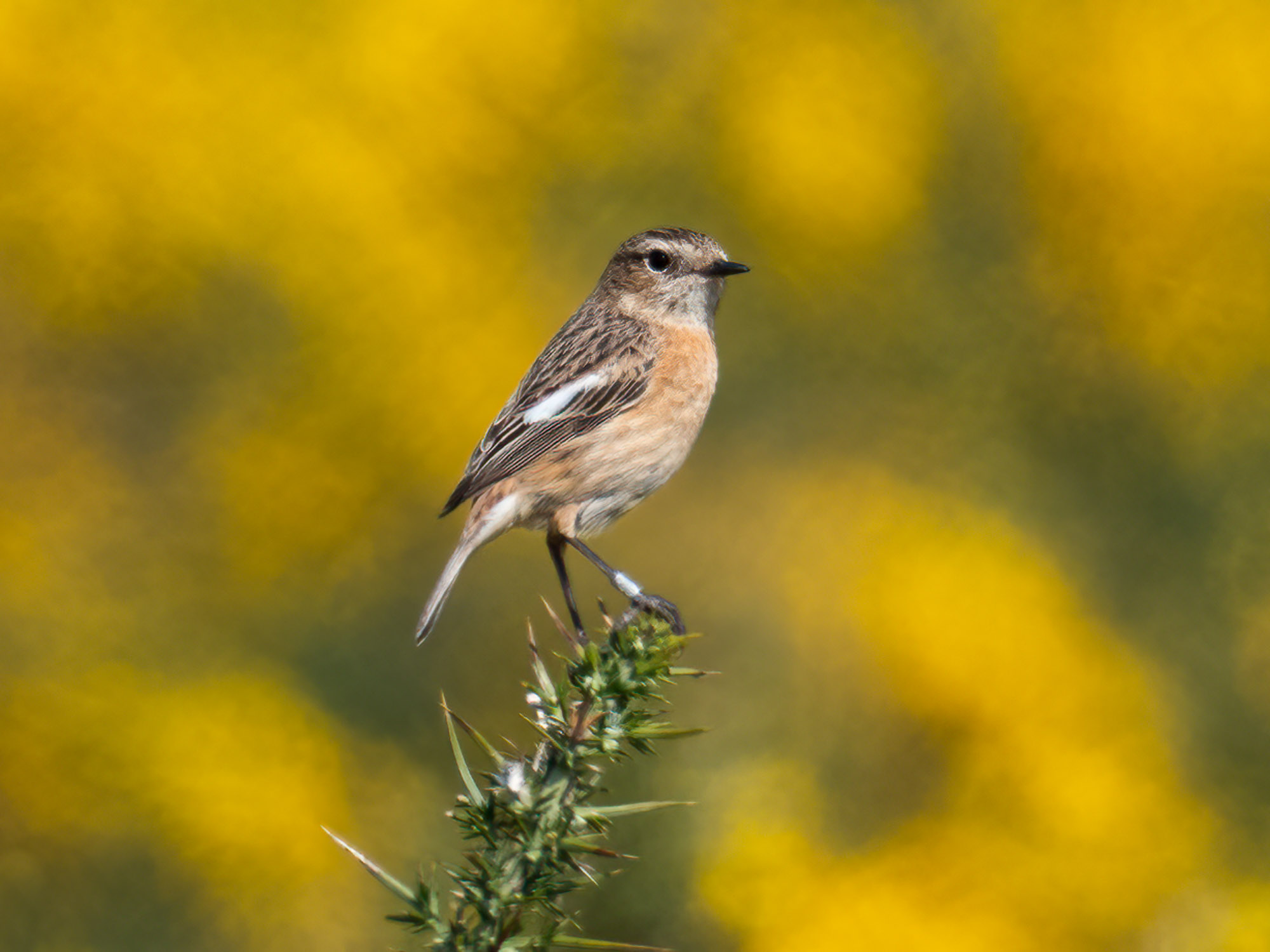
female Stonechat

However, I later saw what I assumed was the nest and it was still empty. I wondered if they had abandoned but on two subsequent occasions I watched from long distance with a scope and both birds return to the area before the female dropped into the gorse while the male stood on guard on a nearby exposed branch. Not sure why she may be taking some time before laying.

male Stonechat

The Dartford Warbler was still singing throughout the week and for large parts of the day. I’d been hoping to see a female ever since I first found the male in mid-January. The closest I’d come was seeing another ringed male earlier in April.

male Dartford Warbler

I was delighted, therefore, to finally see a female on his territory. I think she must be newly arrived, hopefully they will pair up.

female Dartford Warbler

Linnets are breeding all over the reserve with perhaps 30 or more nests. I found three likely nest locations with each female returning regularly with large pieces of nesting material suggesting that they are at the start of nest building. The female does all the nest building while the male accompanies her everywhere. I didn’t approach but I’ve got good directions and photos to enable me to check progress.

male Linnet on guard duty

This Herring Gull showed an uncharacteristically wide black band on P5 and even a small black mark on P4. These are features which might suggest Yellow-legged Gull but they are also just about within the range for Herring Gull. The red spot on the bill doesn’t bleed onto to the upper mandible and although it’s difficult to say for certain the legs do look pinkish. Mantle colour is difficult to judge but perhaps this is too pale for Yellow-legged Gull. Overall, this suggests that this is a Herring Gull and that a single feature taken in isolation (wing tip pattern) is not always indicative.

Herring Gull with extensive black bar on P5

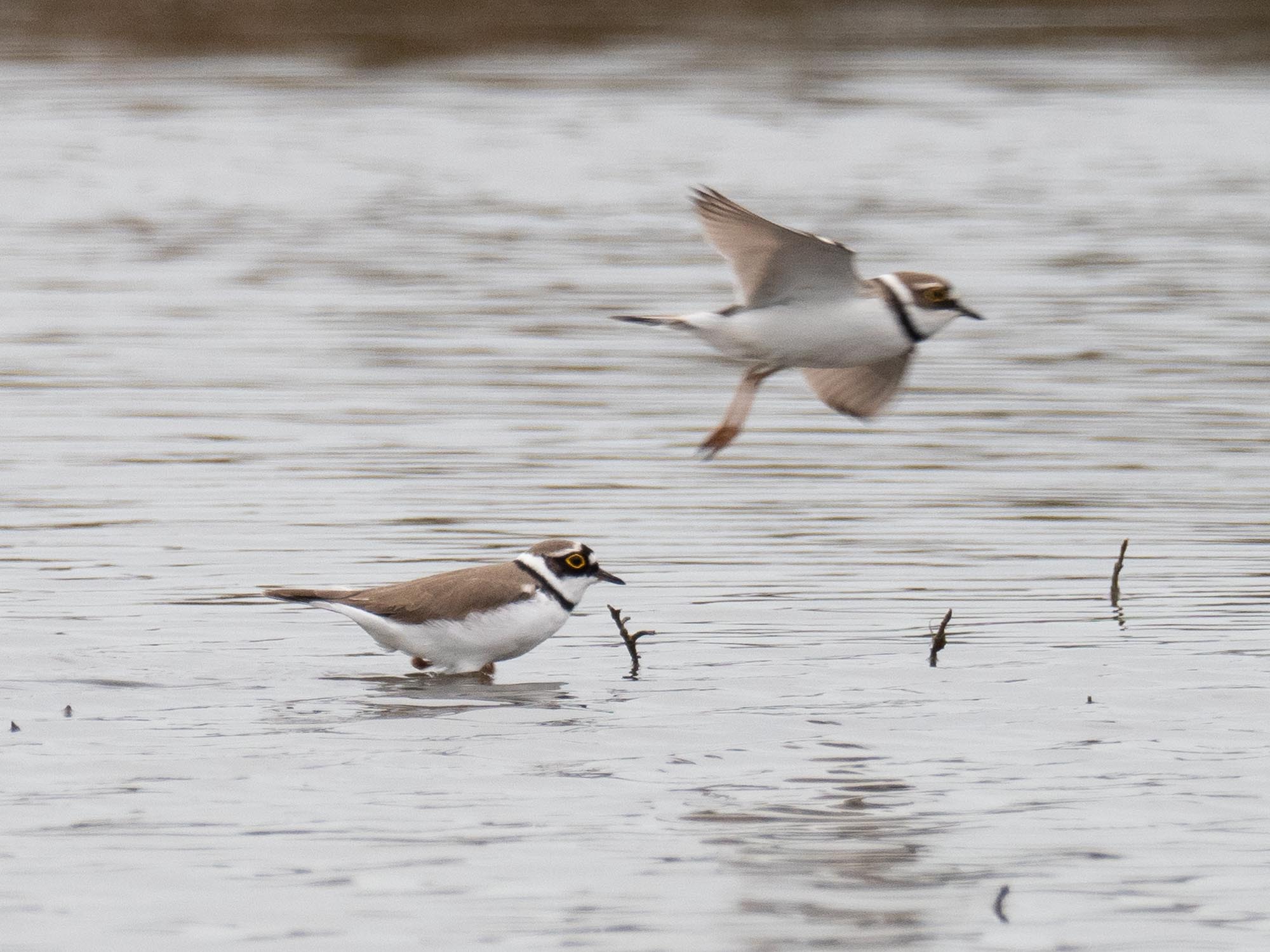
The Little Ringed Plover pair spent most of their time feeding on the muddy fringes but regularly returned to the shingle overthrow where they bred last year. This is where I have seen them displaying, mating and sitting briefly. No sign of eggs yet and I think they are getting disturbed by people and dog walkers. Hopefully after the bank holiday weekend they may get a chance.
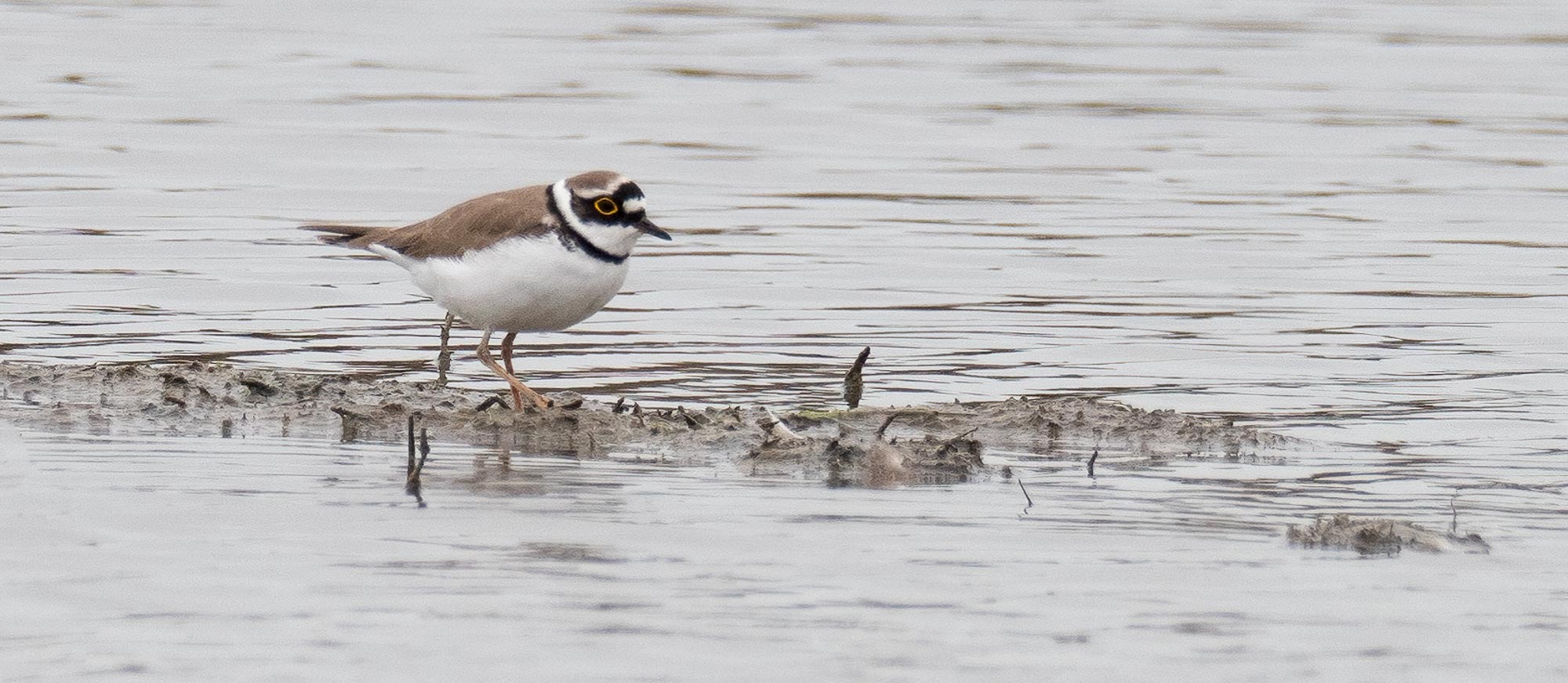
male Little Ringed Plover

There are around 50 Avocets on the reserve with 35 on De L’Orne. A few were sitting on the islands although I think this is resting in the warm weather and not incubation. They tend to lag behind Lapwing with egg laying.

The number of White-tailed Eagles on the reserve has dropped significantly. It may be that our established older male has moved away and taken some of the younger birds with him. I saw only one during this period, drifting over the Reedy Ditch on the 12th.

My first Blackcap was singing near the Flycatcher Tree on the 12th with three or four more appearing over the subsequent few days.
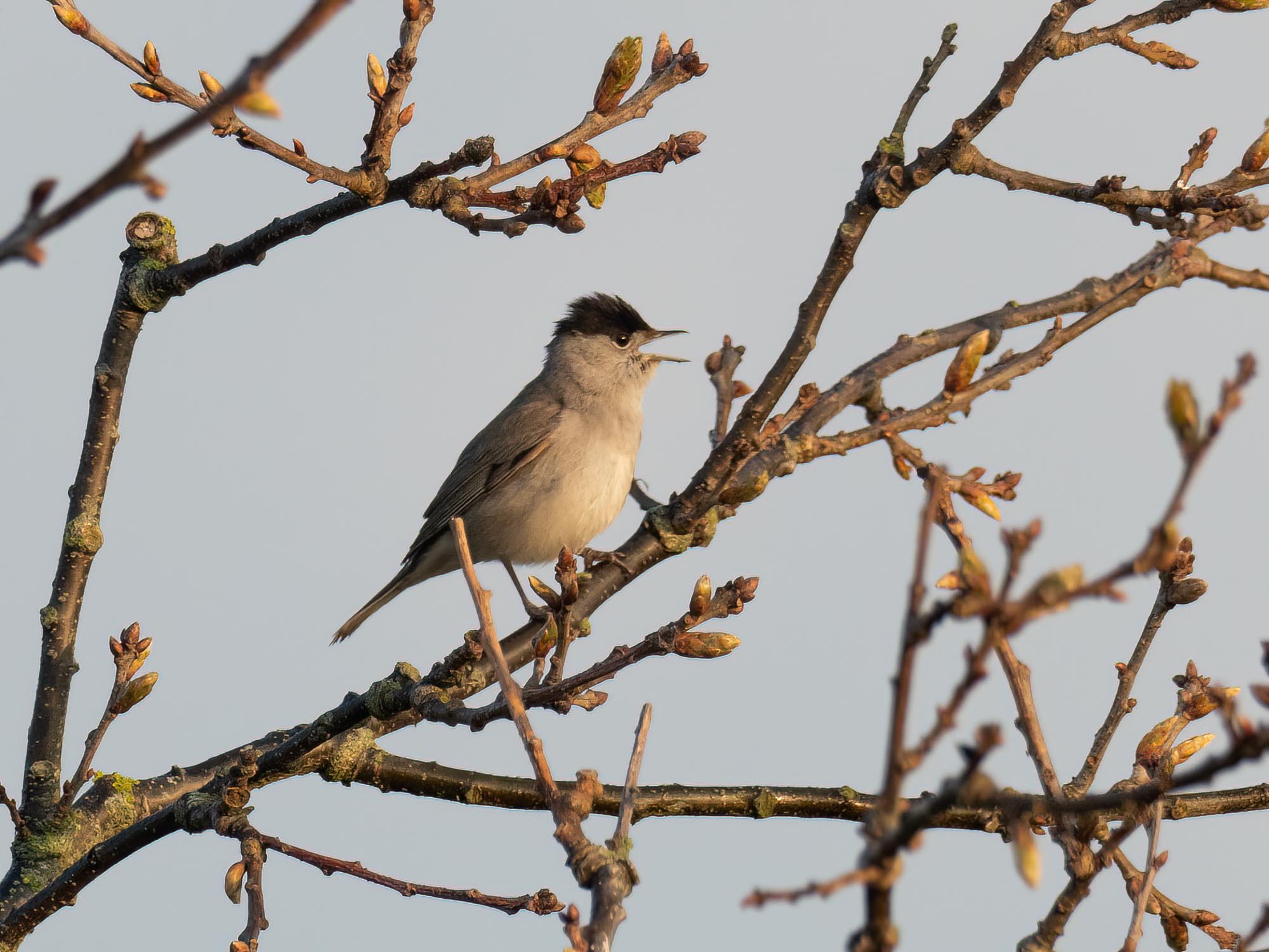
Blackcap

At the viewing gate on the 16th a Sedge Warbler flew across in front of me before landing in the bushes at the end of the Main Hedge. Soon afterwards a Lesser Whitethroat started singing before showing itself briefly. This is a favoured spot for Lesser Whitethroat, they bred here last year. A bit like Willow Warblers, Sedge Warblers aren’t easy to see at Needs Ore and I don’t think they bred here last year despite the apparent perfect habitat.

A Bar-tailed Godwit seen flying up the river on the 12th wheeled around and landed briefly nearer to the Sailing Club. It’s almost certainly a newly arrived spring migrant, they are a different population to the wintering birds.

Bar-tailed Godwit photo by David Cuddon

Lots of Speckled Woods flying along the hedgerows now and also good numbers of Peacock and the odd Comma.

Peacock photo by Brain Fairbrother

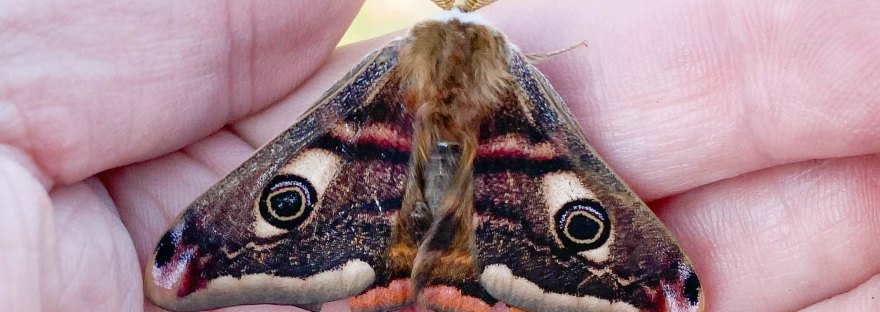
The insect highlight, however, was undoubtedly at Park Shore where an Emperor Moth was attracted to a pheromone lure which I had attached to my tripod. He buzzed me several times before settling on my ruck sack and then my head! I managed to cup it in my hands and it stayed for a quick photo. They are very difficult to see well but more common than you’d think although having said that this is the first ever record for Needs Ore/Park Shore and also the first ever record for the whole 10km square (SZ49).

Emperor Moth

There are at least 10 singing male Reed Buntings mainly around Black Water. Where females were seen there didn’t seem to be any nesting activity yet, no collection of nesting material.

male Reed Bunting

There was also a good arrival of Reed Warblers mid-week with at least nine singing males around Black Water.
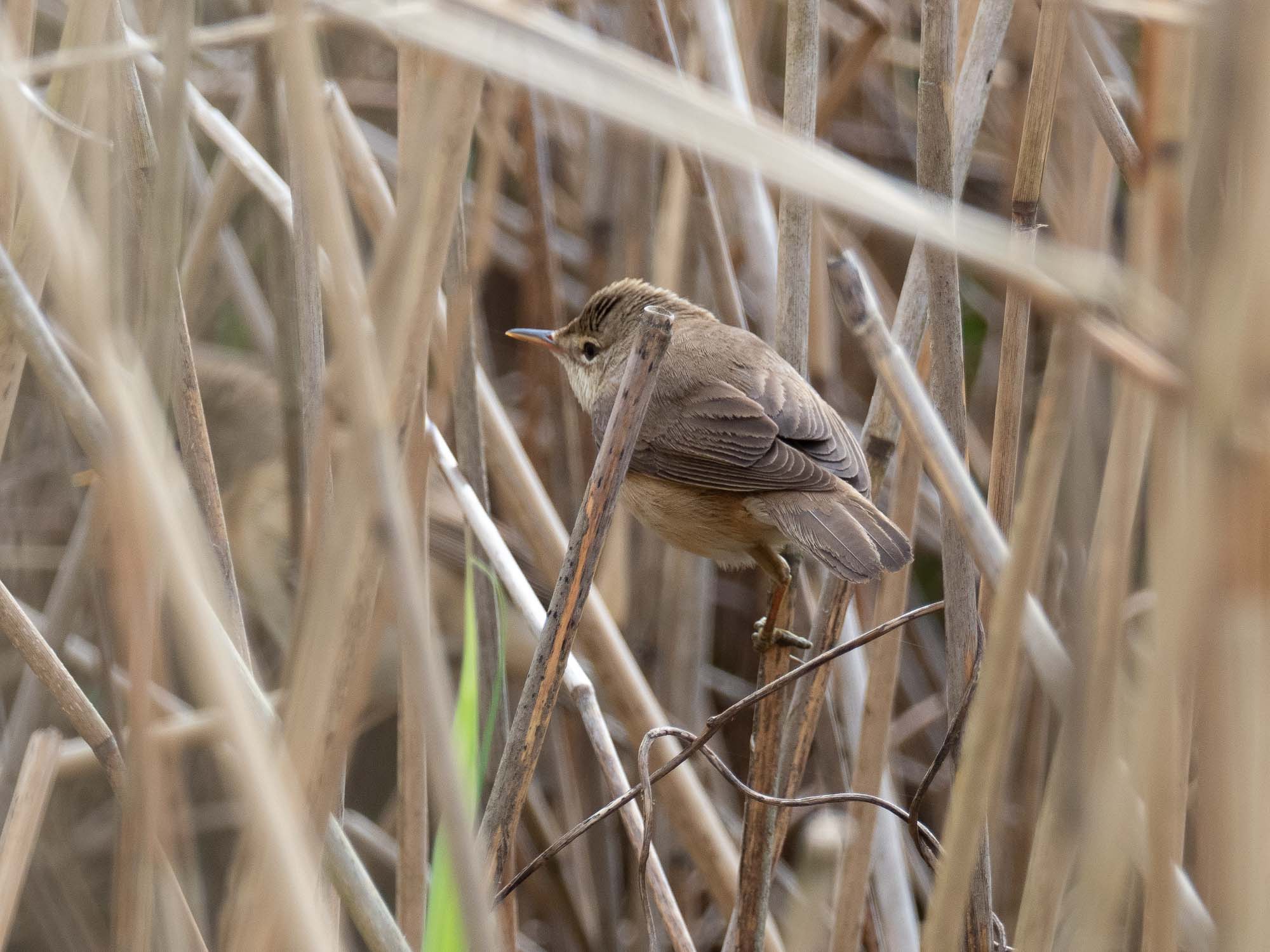
Reed Warbler

Although not singing or calling yet a Whitethroat on the 14th was 10 days later than my first last year, yet it was still the earliest seen by anyone on the reserve, another indication that spring is a little later this year. Two days later there were a few more Whitethroats about and with some of them singing.
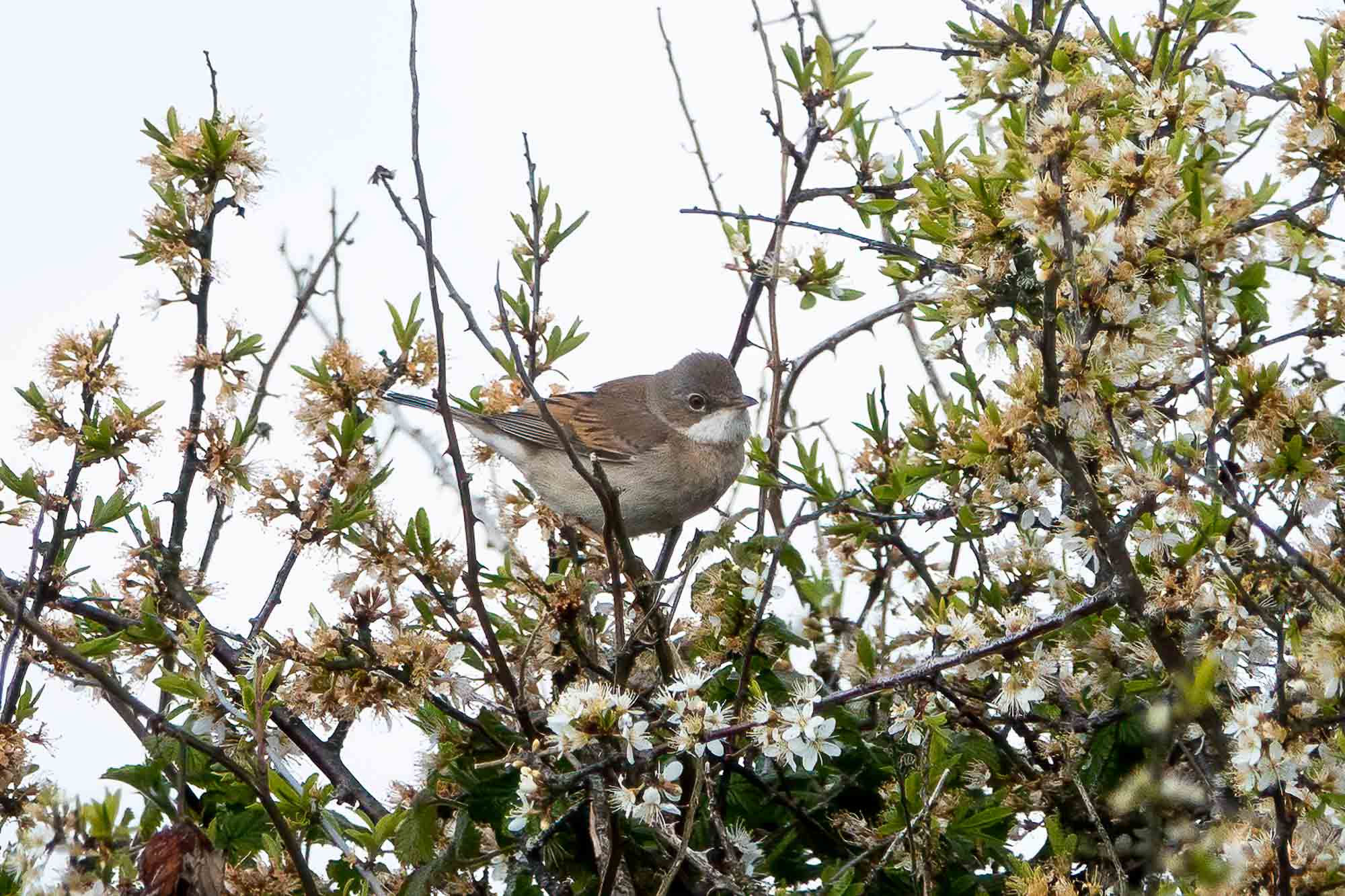
Whitethroat

It was great to hear a Willow Warbler singing mid-month around Black Water. This is a declining bird especially in the south and they haven’t bred at Needs Ore for five years or more.

Greater Stitchwort is now flowering in the hedgerows.
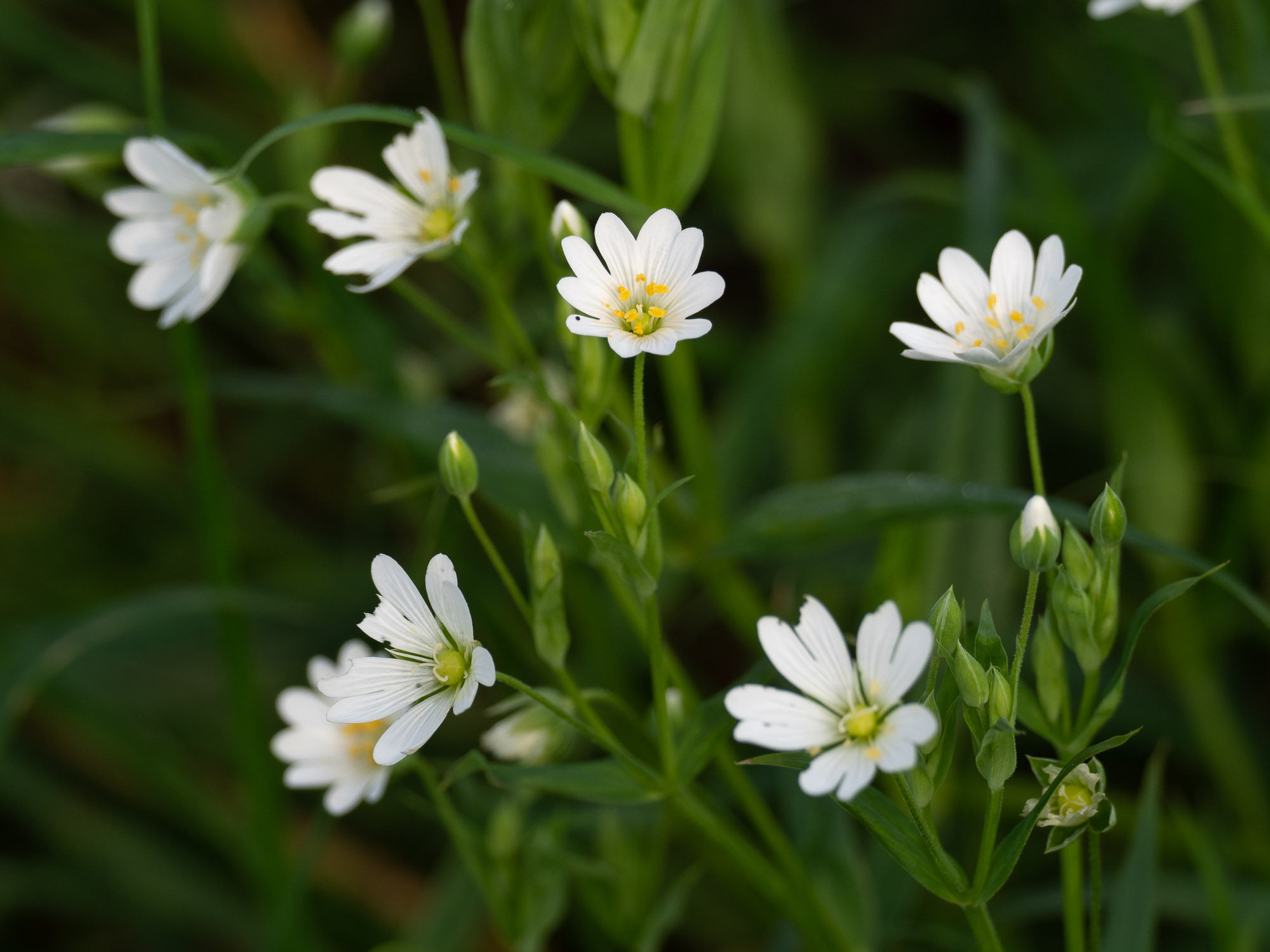
Greater Stitchwort

The Peregrines were seen mating again mid-month. She still seems to be spending lots of time away from any nest which makes me think that she hasn’t laid any eggs yet.

Oystercatchers are now clearly paired up with at least six pairs around Black Water, Venner and De L’Orne. There are lots more on the spit and Gull Island which will be counted in the next few weeks.  

Oystercatcher pair

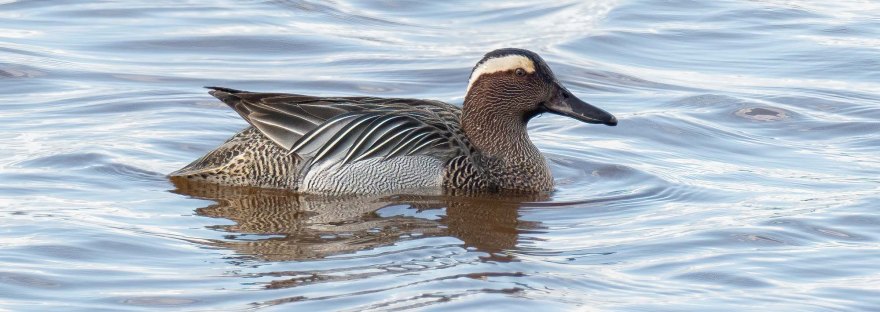
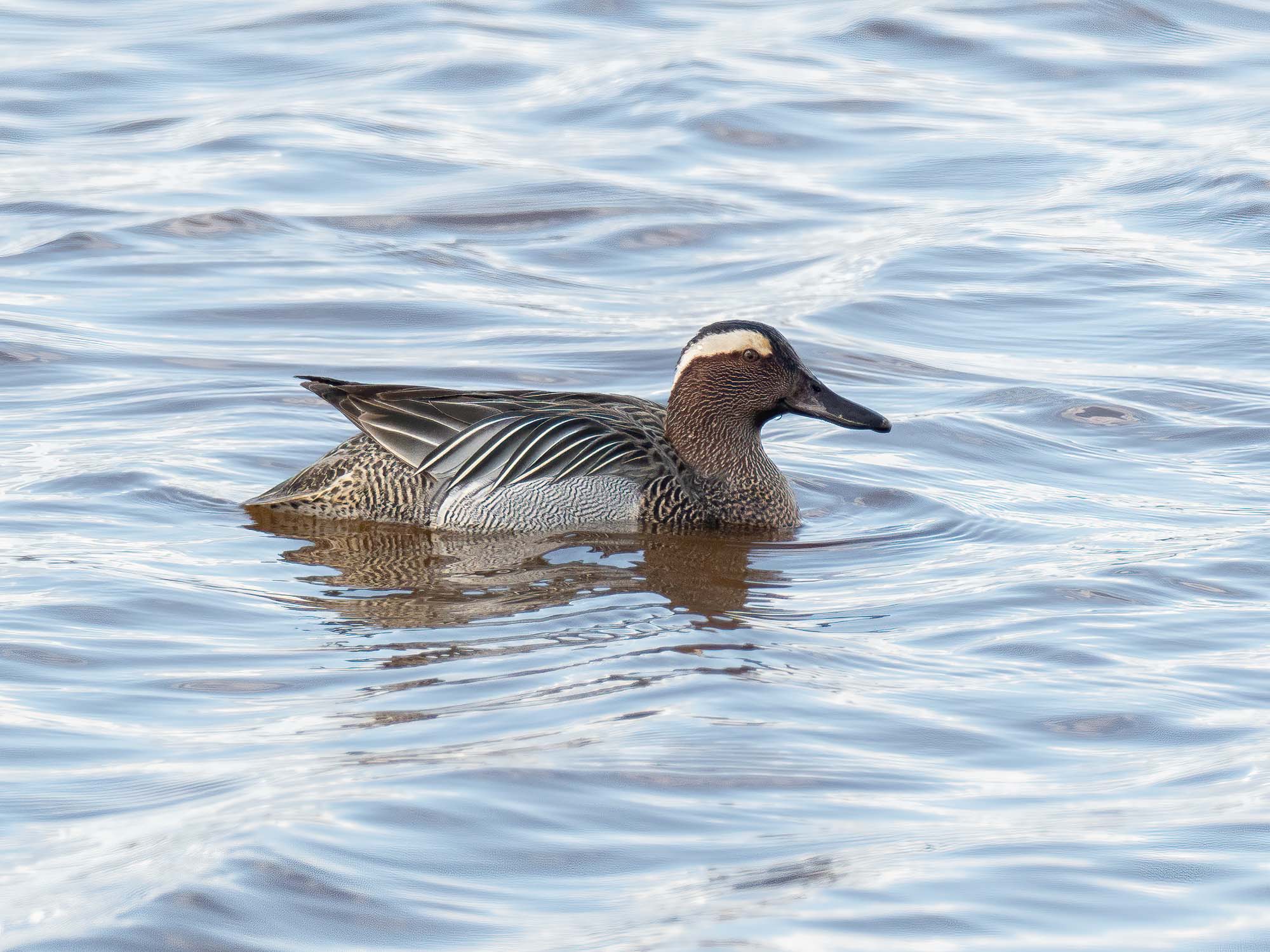
The drake Garganey is still present now appearing to split his time between the Gins and De L’Orne Flood. Females can be elusive but over the four weeks of his stay (he first appeared on the 19th March) if there was a female around then someone ought to have seen her by now.
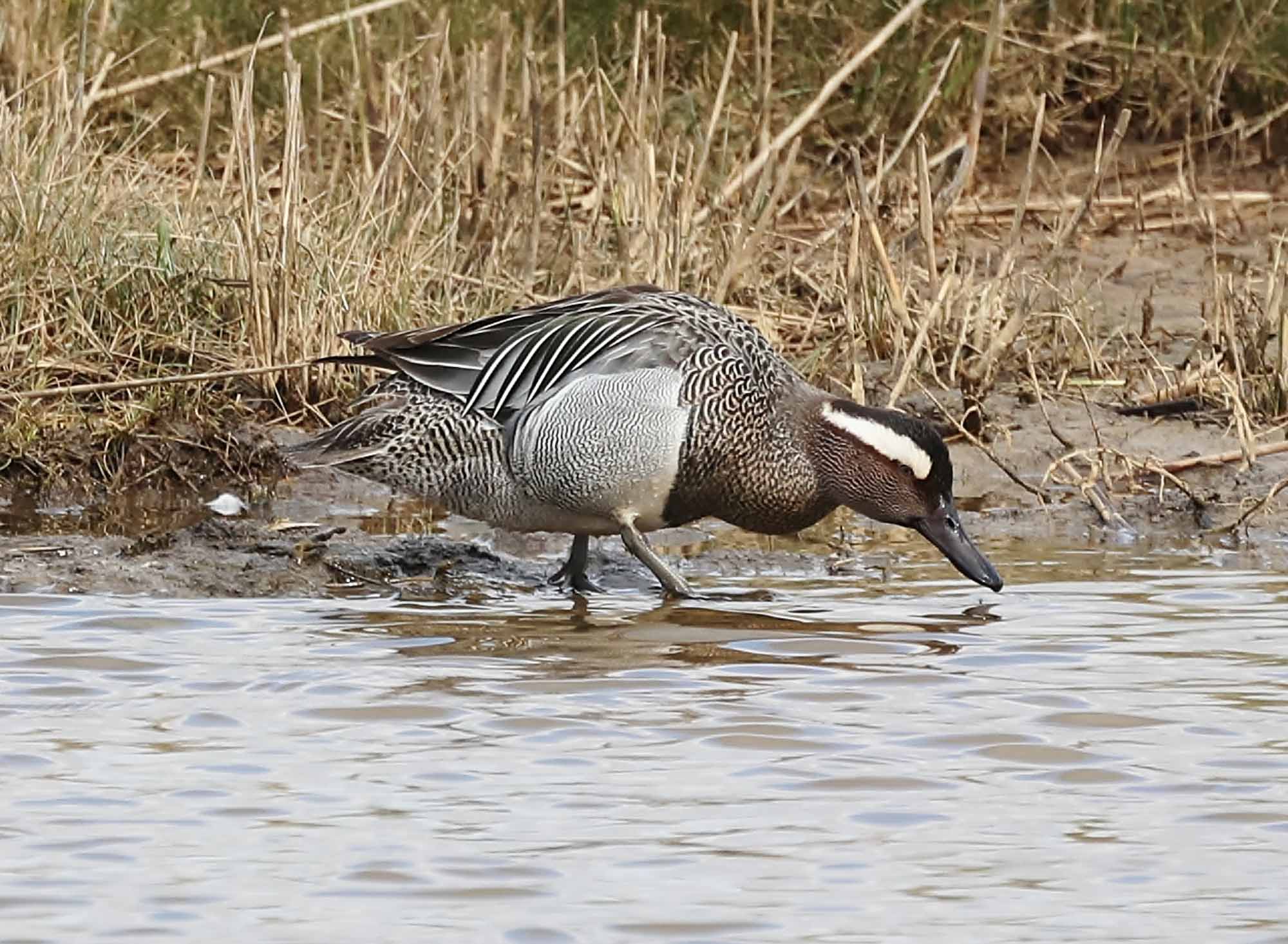
Garganey photo by Terry Jenvey

Lapwing nests on both the Gins and on Wigeon Fields were found predated, both were empty of eggs where there had been four eggs in each six days earlier. Badger and Fox are suspected.   

At the end of the week I heard my first Cuckoo calling and as I walked along Warren Lane it flew across in front of me. This is two days earlier than last year.
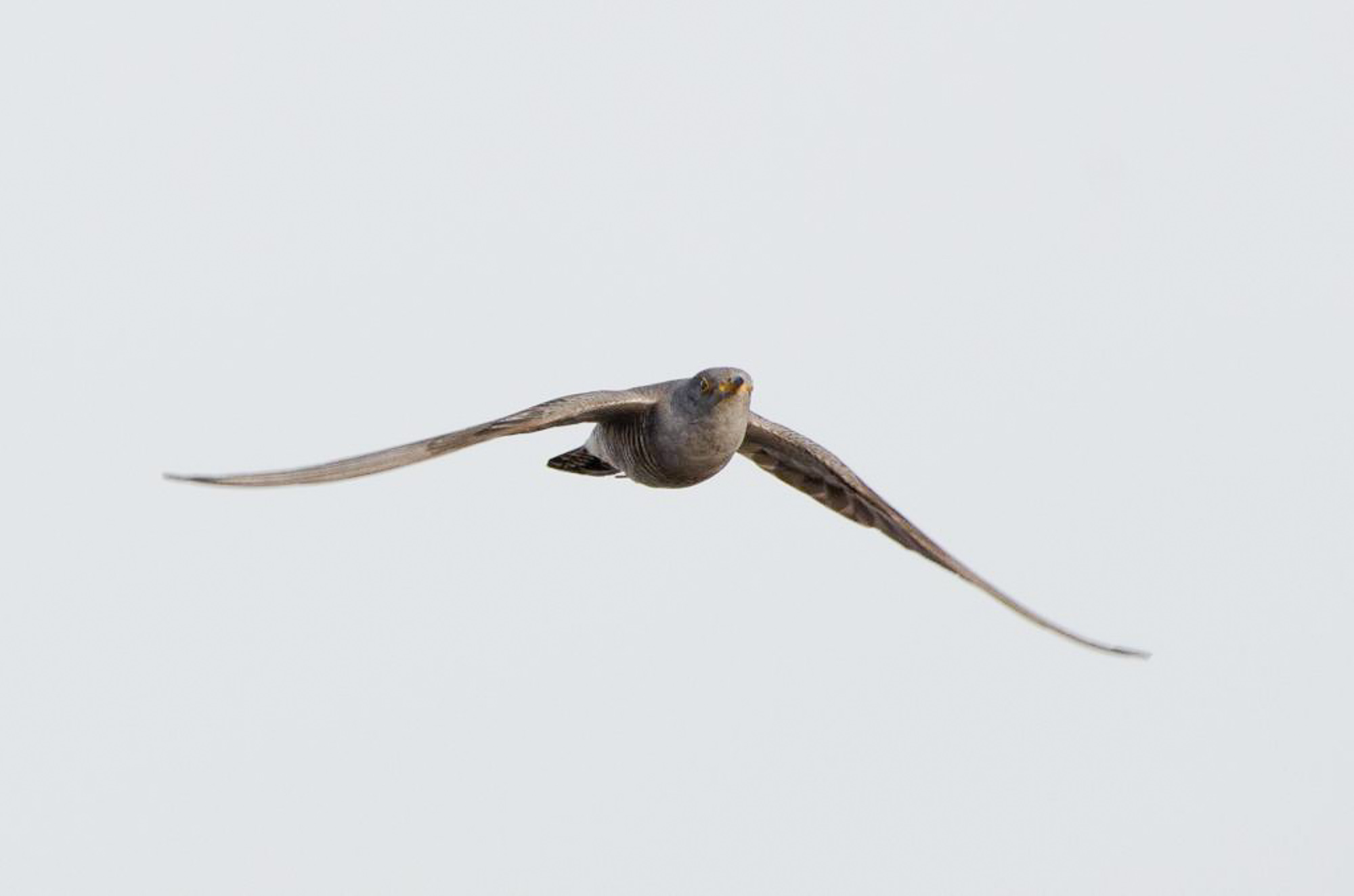
Cuckoo photo by Dimitri Moore

Further up the lane Cuckooflower was flowering in Spring Meadow, so named as it often flowers in the same week as the Cuckoo arrives.
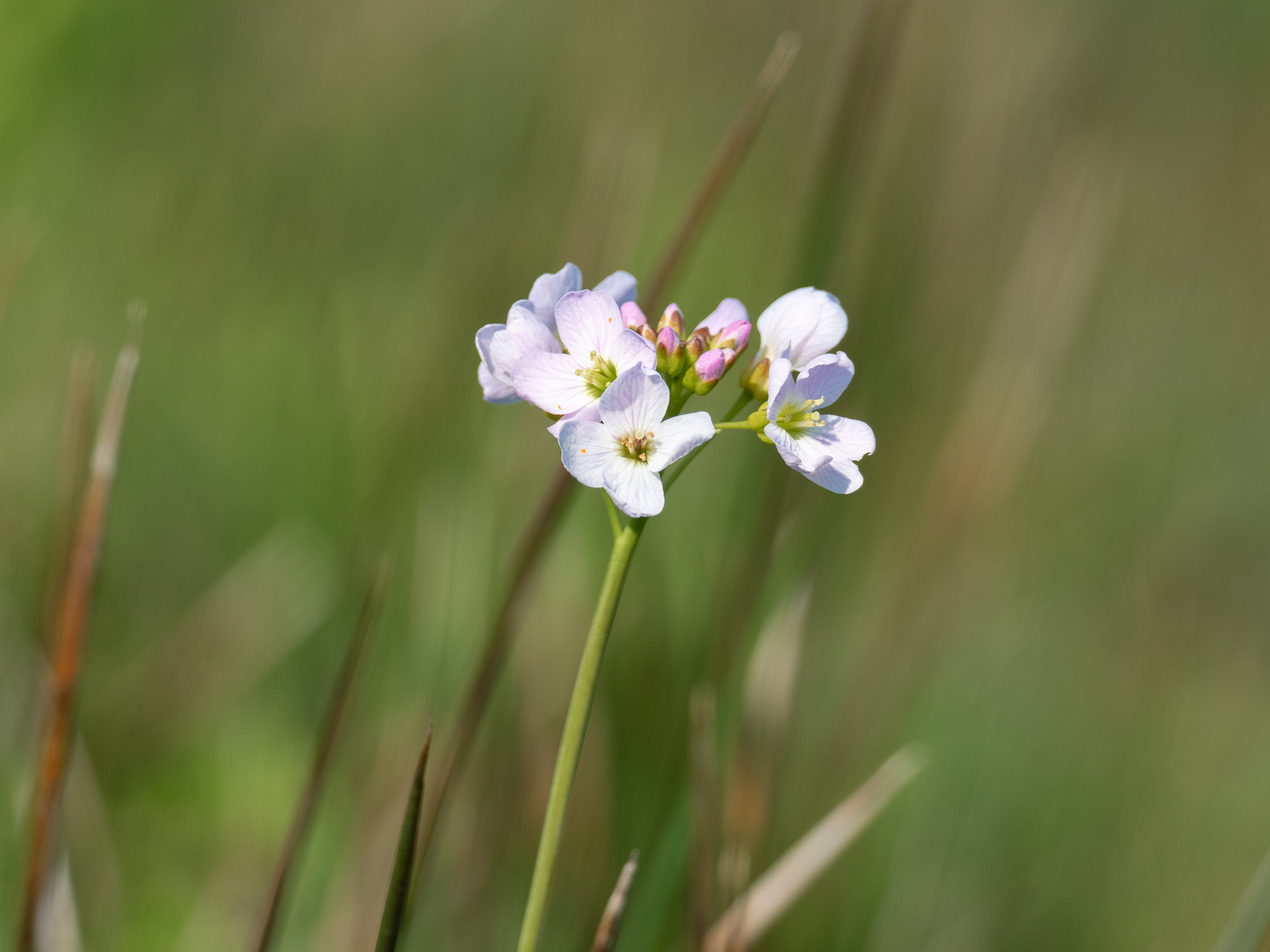
Cuckooflower

Five months after I first saw it the Purple Sandpiper remained on the beach near Mary Monts with other lingering winter visitors, Grey Plover and Turnstone. There are still at least two pairs of Pochard on Venner and Pullen. Despite being a very uncommon breeder in Hampshire they look likely to breed here again this year.  
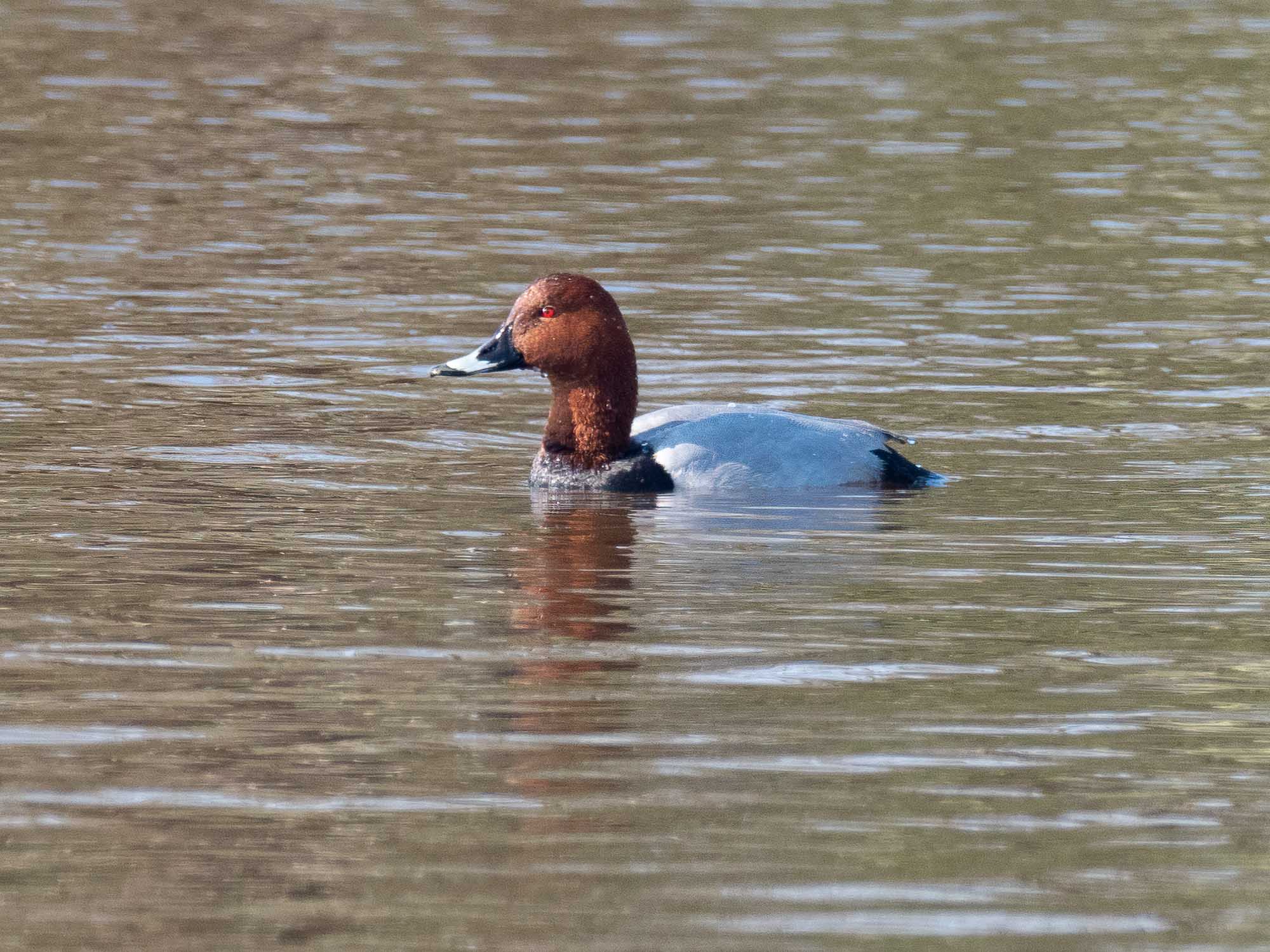
Pochard
April 2022, Spring 2022

April 3rd to 9th 2022

A run of cold northerly winds continued to slow up the arrival of new migrants. By this time last year I had seen Sand Martin, Reed Warbler, Sedge Warbler, Willow Warbler, Whitethroat and House Martin, none of these so far this year.

Small groups of Eider were moving back and forth on the sea, a female Red-breasted Merganser was still around as were small groups of Dunlin but other than Mediterranean Gulls and Black-headed Gulls there was very little spring passage on the sea. On the WeBS count there were impressive numbers of Mediterranean Gulls (298) almost all adults gathering in their normal spot south east of Inchmery Quay.

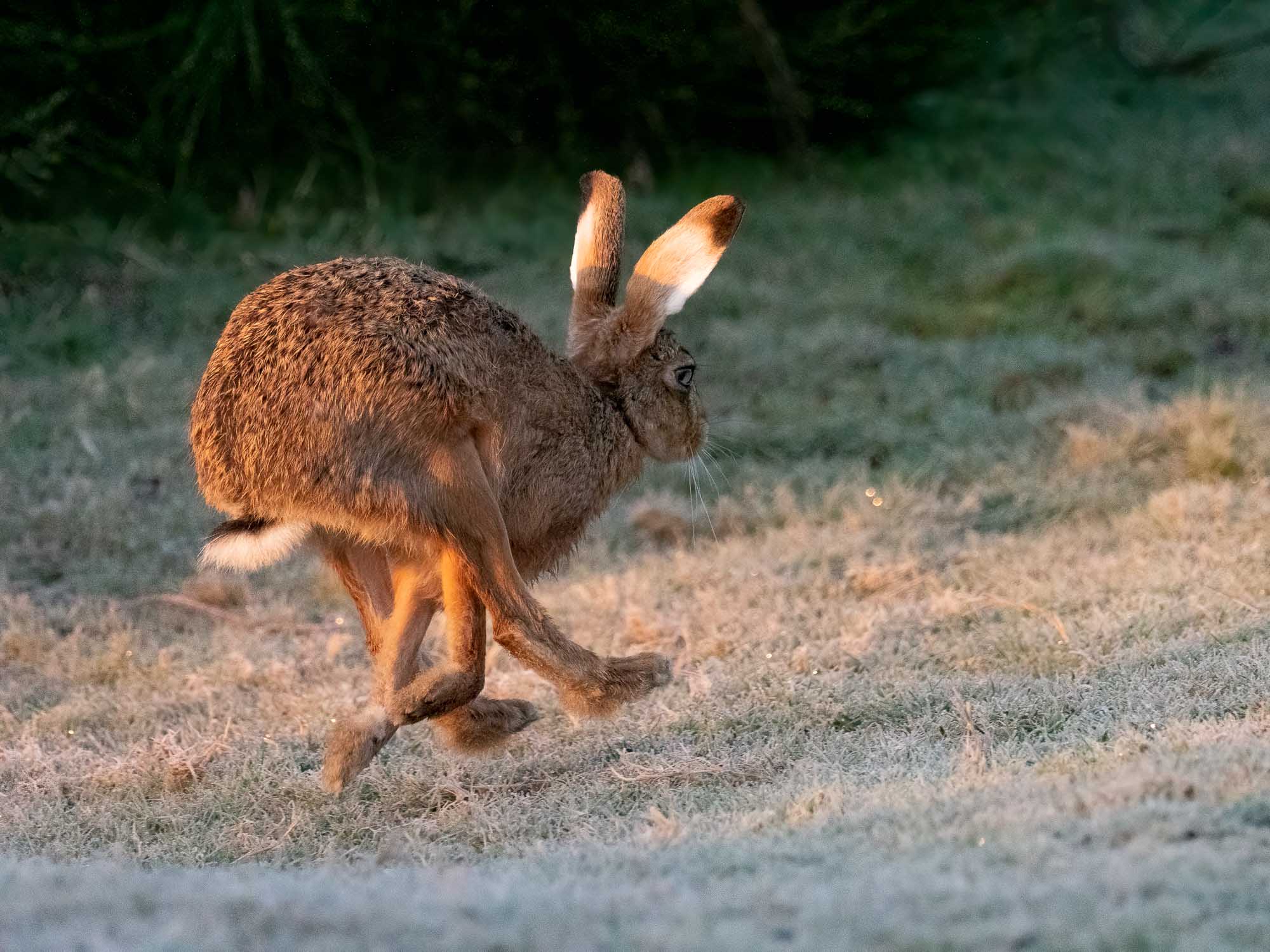
A Brown Hare trotted towards me near Mary Monts and allowed some photos as it headed away. You can see the rufous colour, long legs, black-tipped ears and also the tail held low unlike the Rabbit which holds it up flashing the white more obviously.

Brown Hare

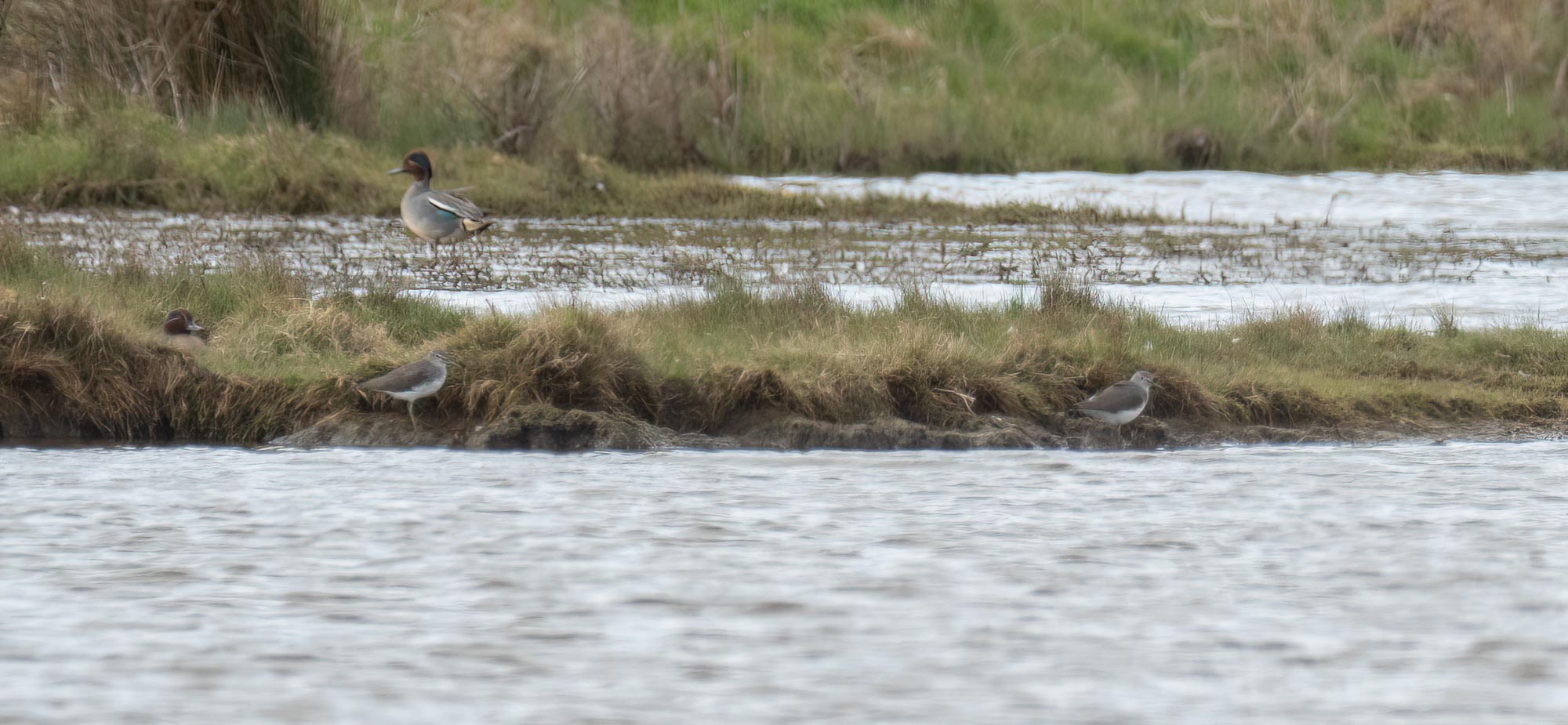
On the Breeding Bird Transect I walked along Gravelly Marsh to the Flight Pond and just like a week ago there was a Green Sandpiper, this time a pair flew up away from me. I managed a distant photo as they landed on the far end of the Flight Pond. They are on their way to breed in Finland and Russia having spent the winter in southern Europe or possibly Africa.

Green Sandpipers

The male Dartford Warbler was still singing in the same patch of gorse in the private areas. I also saw a singing male Dartford Warbler displaying in the gorse 200 yards to the east of there. He had flown in from further east and so if this is the same male he is having to venture further and further afield trying to find a female. At some stage he will give up if he’s not successful. 

Dartford Warbler

A few days later and after willing the singing Dartford Warbler to find a female he did finally find another Dartford Warbler but unfortunately the new bird was also a male and also a ringed male. They sparred with each other. Graham had ringed two males in the autumn and this is no doubt the same two males.

Dartford Warbler males

For two consecutive visits to the private area around Great Marsh there had been no sign of the Little Ringed Plover pair. It’s still early in the season and so I assumed that they had gone to check out other possible sites, last year we didn’t find the nest until the 9th May. At the end of the week, however, I was delighted to relocate them feeding on Great Marsh.

Little Ringed Plover

I watched them feeding for a few minutes and then doubled back so as not to disturb them, soon afterwards I heard them calling and when I got back to the shingle I noticed that they had dropped in very close to where they bred last year. The male started displaying and they soon mated and the female started sitting, a few seconds later they changed places. Over the next hour or so they moved away from this area to feed. As they didn’t return to the marsh I decided not to investigate the nest site especially as it seems that they are early in the process.  

Little Ringed Plover mating

Mediterranean Gulls are moving through the reserve in goods numbers and they often settle on Great Marsh where they were nicely front lit.

Mediterranean Gulls

On the private side of the Park Shore fence the confiding Purple Sandpiper was associating with Turnstones. It seems likely to be heading back to Norway or Iceland soon while the Turnstones will be heading back to the Scandinavian coast. When I walked back to the groynes later in the week there were 59 Turnstone together but no sign of the Purple Sandpiper.

Purple Sandpiper

As it was a little warmer towards the end of the week I tried out a new Emperor Moth pheromone lure. People have had good success with these in other places this spring. Emperors Moths are fairly common in the New Forest but difficult to see well as they always seem to be dashing off somewhere. I attached the pheromone-impregnated rubber bung to my tripod and stood upwind of several decent areas of heather and gorse but unfortunately no luck today.

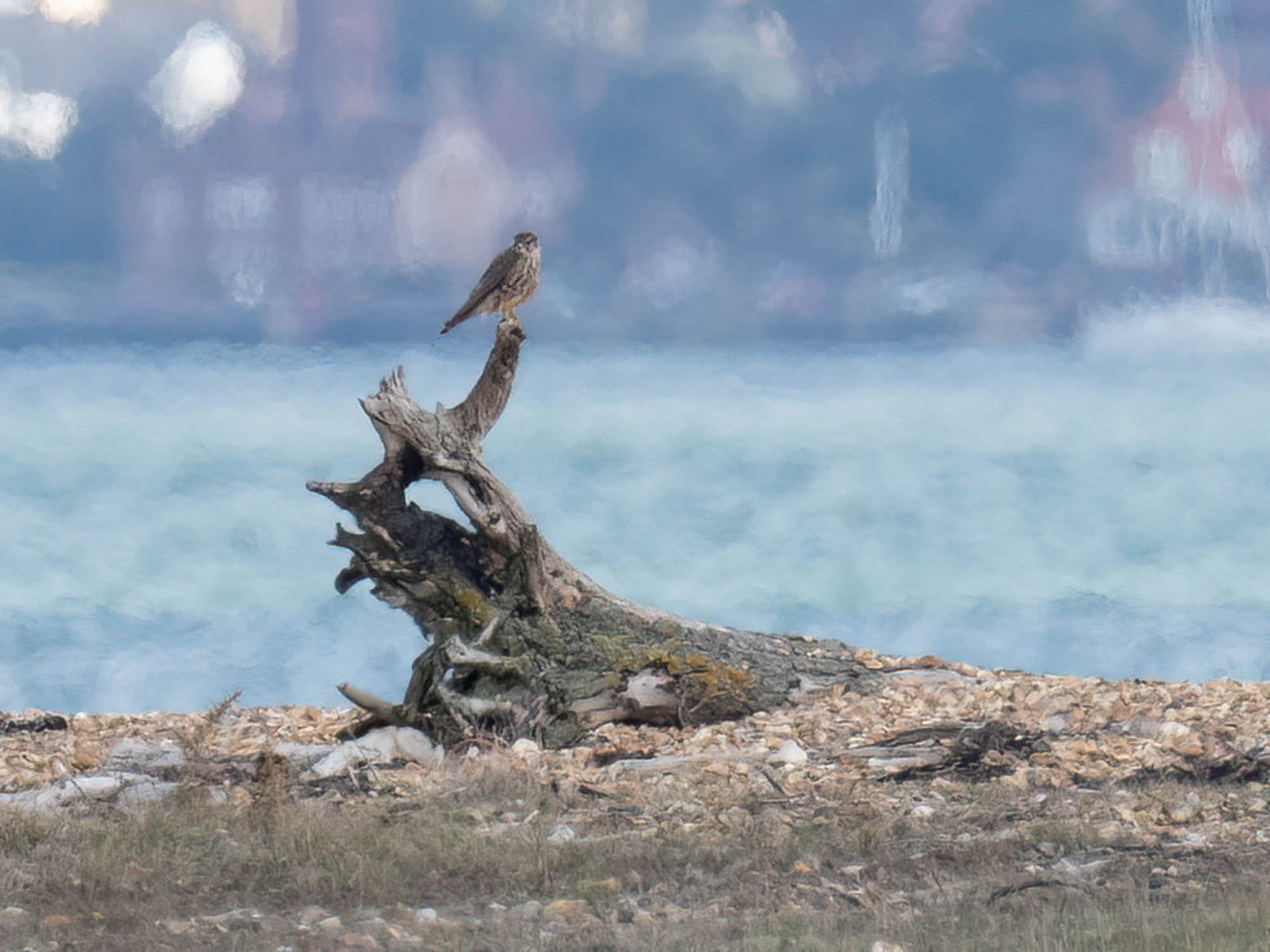
I finally had a Merlin for the year, a large looking female dashed out across in front of me when I was at Wheatear Corner and then landed on the up-turned tree roots on the shingle ridge. Once the clouds covered the sun the heat haze softened slightly and I could get a record shot. She will be heading north soon to breed on the moors in Wales, Northern England or Scotland.

female Merlin

The pale phase Buzzard appeared again looking nicely backlit.

pale phase Buzzard

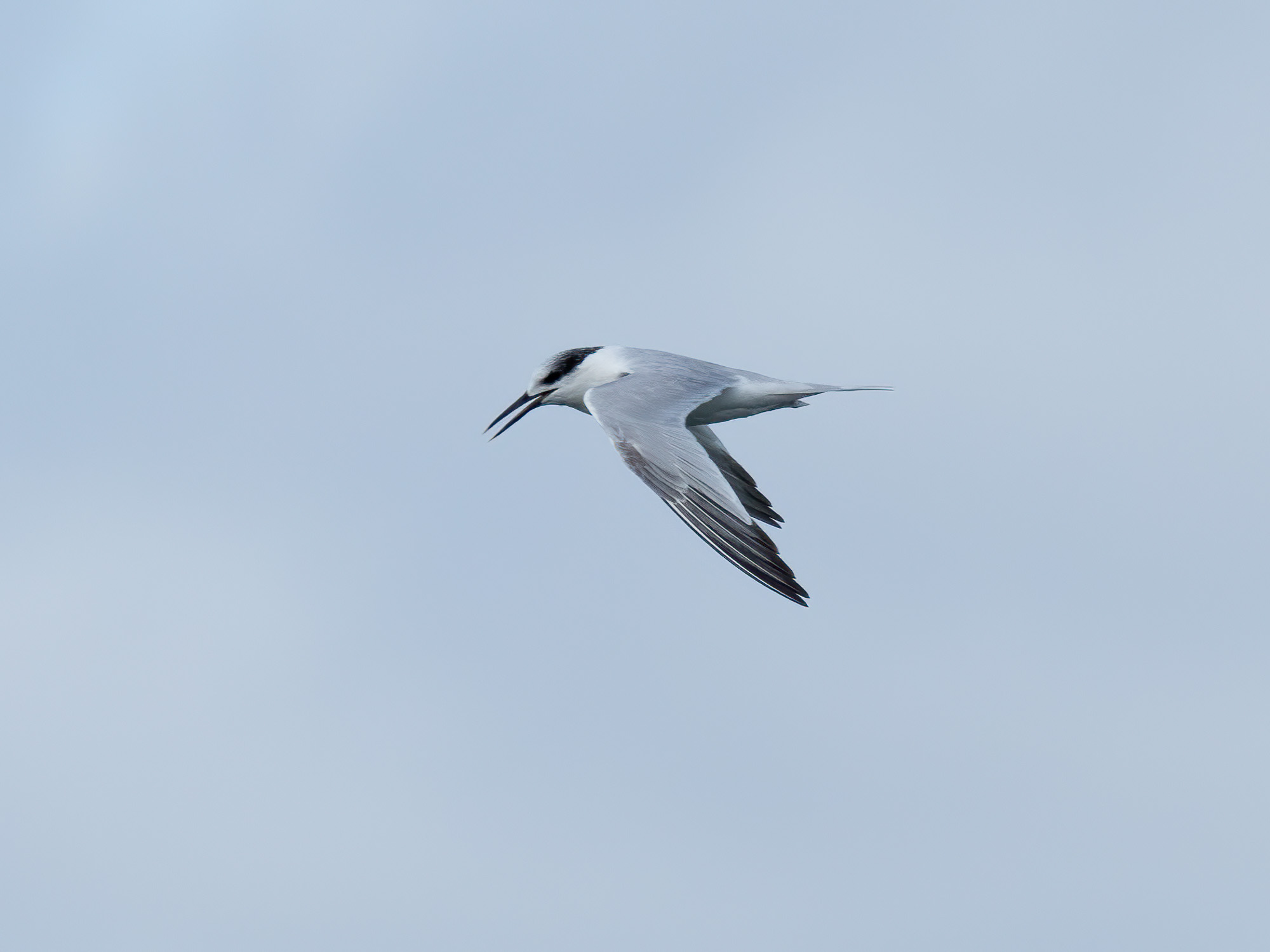
Two Sandwich Terns were patrolling the river and one of them showed dark primary coverts which made me wonder if it was a 1st summer bird. This would be unusual as the vast majority of terns (including Sandwich Terns) remain in their winter quarters (including Gambia and Senegal) during their first summer. Having spoken to Graham, I think that this may be an adult which has, unusually, retained several dark primary coverts, the rest of the wing looked clean and the tail was all white.

adult Sandwich Tern

I watched a Linnet bringing back nesting material to a gorse bush near the Warden’s Hut. I didn’t investigate further at this stage as it’s easy for them to abandon during nest building. Later in the week I spent some time with Graham who helped me assess the birds behaviour in order to find Linnet nests without causing any stress for the birds. We found a definite nest site but watched from a distance. 

male Linnet

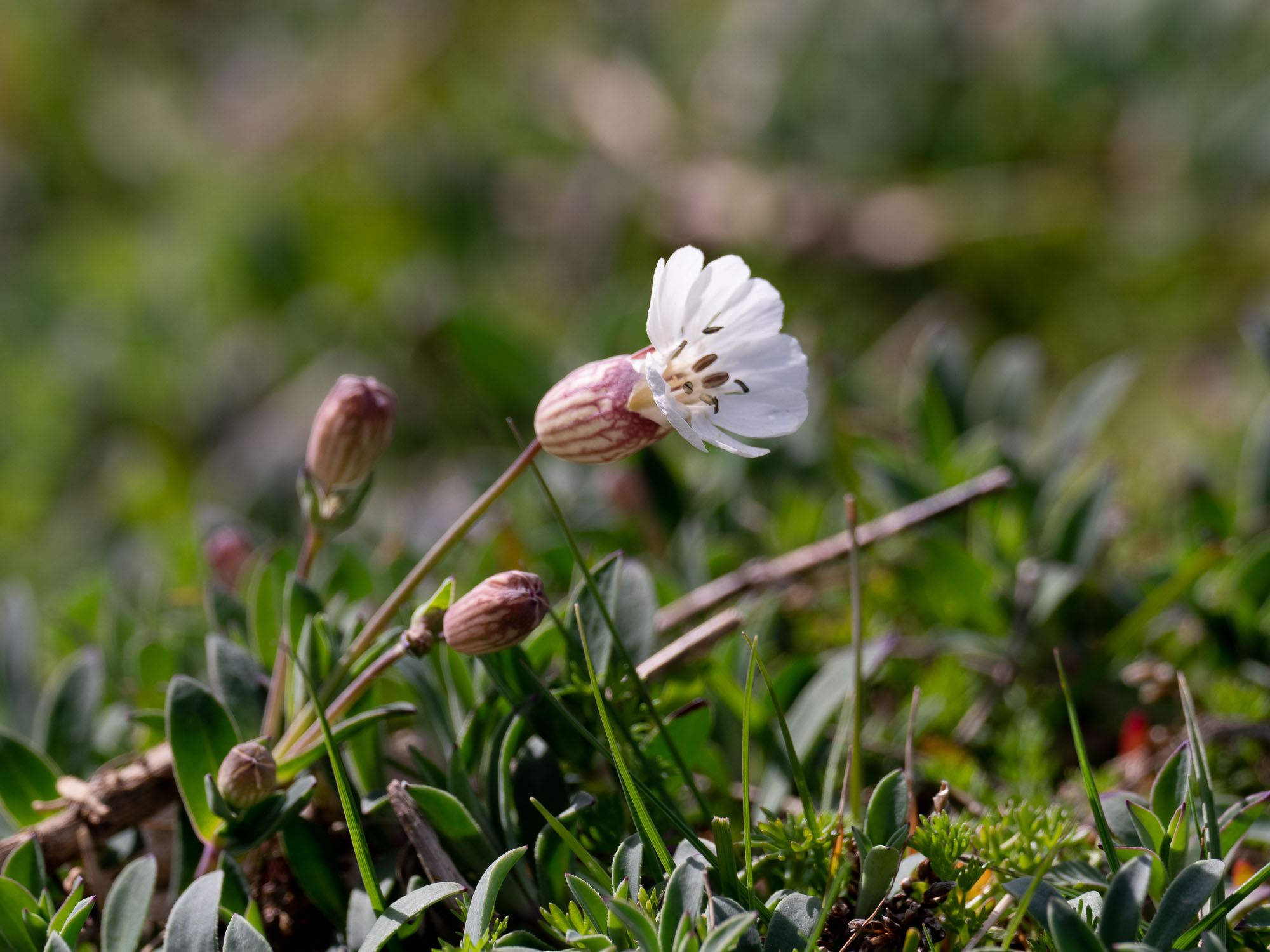
Along the spit near the Warden’s Hut new flowers included Danish Scurvygrass and Sea Campion.

Danish Scurvygrass
Sea Campion

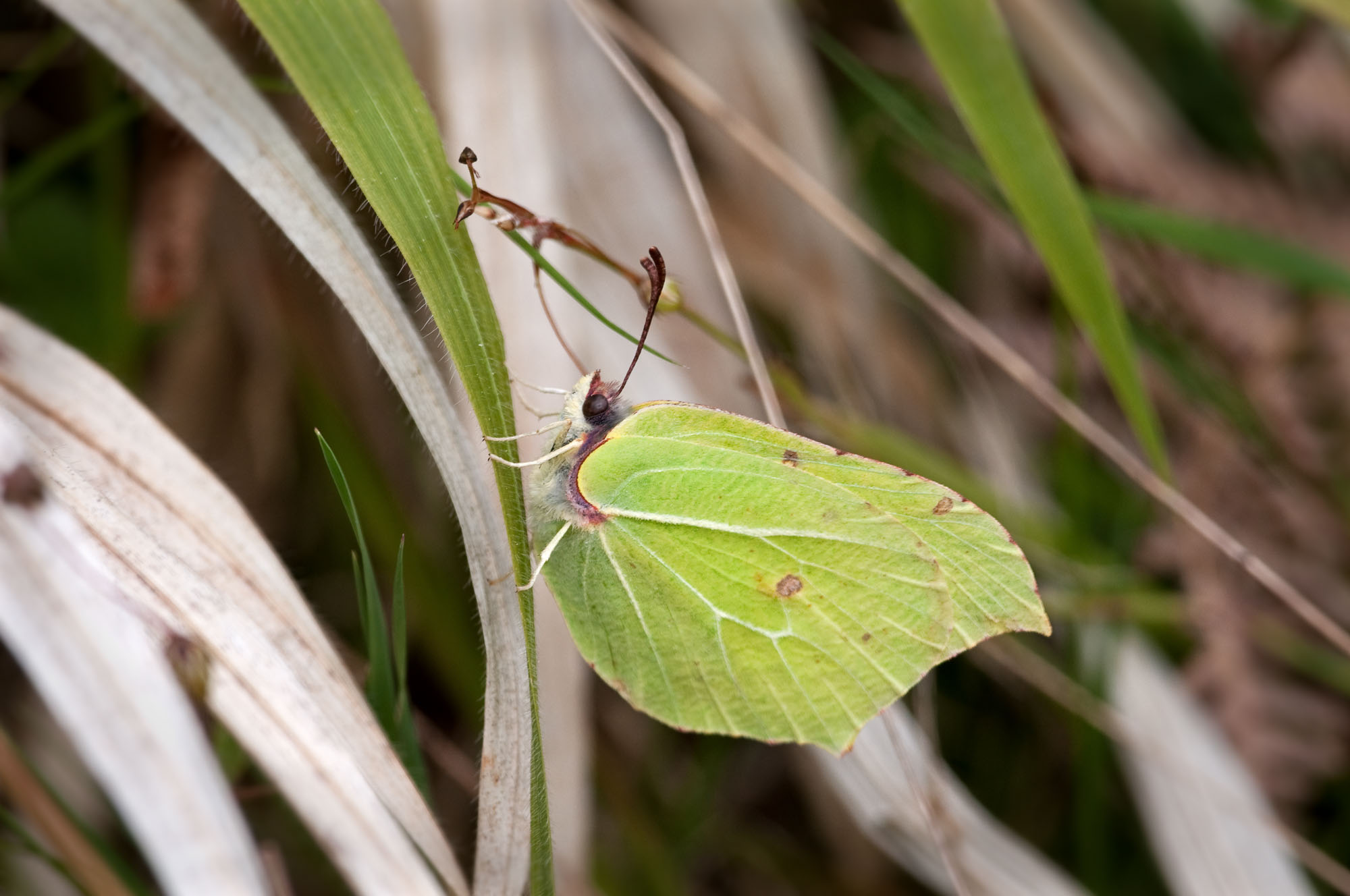
A Whimbrel called from near the Sailing Club and I picked it up heading west along Warren Shore, this is four days earlier than last year. New Butterflies for the year included Brimstone and Speckled Wood.

Brimstone

My first Wheatear of the year was on the 3rd April in Three Fields South. Last year I recorded 12 bird days in the spring (starting on the 28th March) and 50 bird days in the autumn. I think this is still the only Wheatear seen by anyone at Needs Ore!

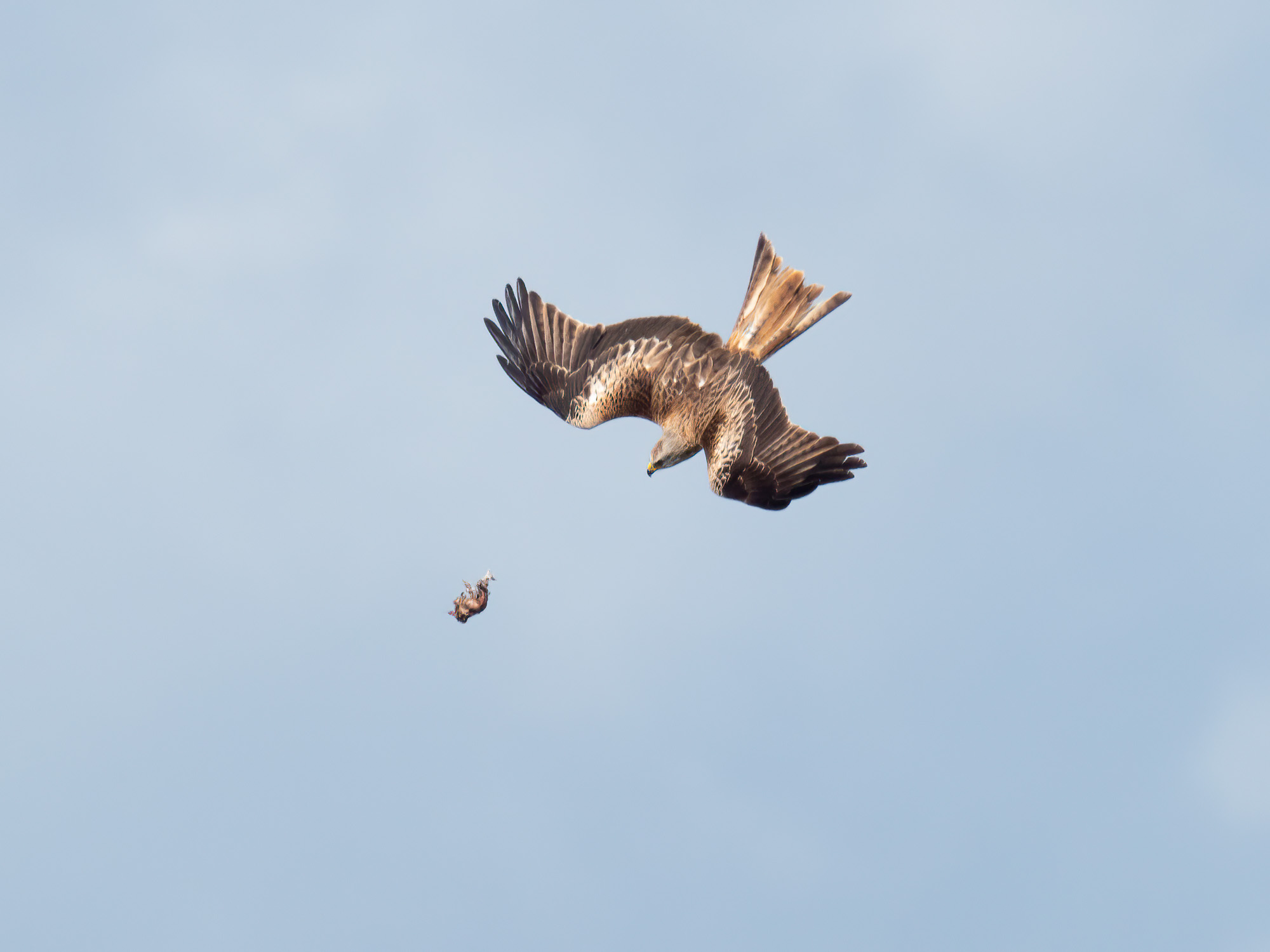
As I got back to the car a Red Kite drifted over the Main Hedge and a White-tailed Eagle flew over really high, the first one I’ve seen for a while. At the end of the week I saw another Red Kite at the Reedy Ditch. It was deliberately dropping a prey item, bird carrion I think, from a good height so that it could practice swooping, it actually looked like it was having fun.  

Red Kite

Nearby, the female Kestrel was perched in the Bee-eater trees. Although it’s a large area I think there is only one breeding pair of Kestrel at Needs Ore. They breed near Black Water House and the female is often nearby as I drive past. She may well be on eggs now as she rarely ventures far but the male is seen regularly all over the reserve finding food to bring back to her.

female Kestrel

The drake Garganey showed even better today straight out from De L’Orne hide.  It would be great if there is a female hidden away somewhere on the reserve. He has been here for three weeks now and I’ve heard him calling several times.

drake Garganey

I also saw a pair of Garganey at Mary Monts on March 30th although they seemed to be newly arrived and quickly moved on. By the end of the week our single male was looking a bit forlorn on De L’Orne Flood viewable from the Boardwalk Bridge. A Siskin called overhead as I walked the boardwalk.

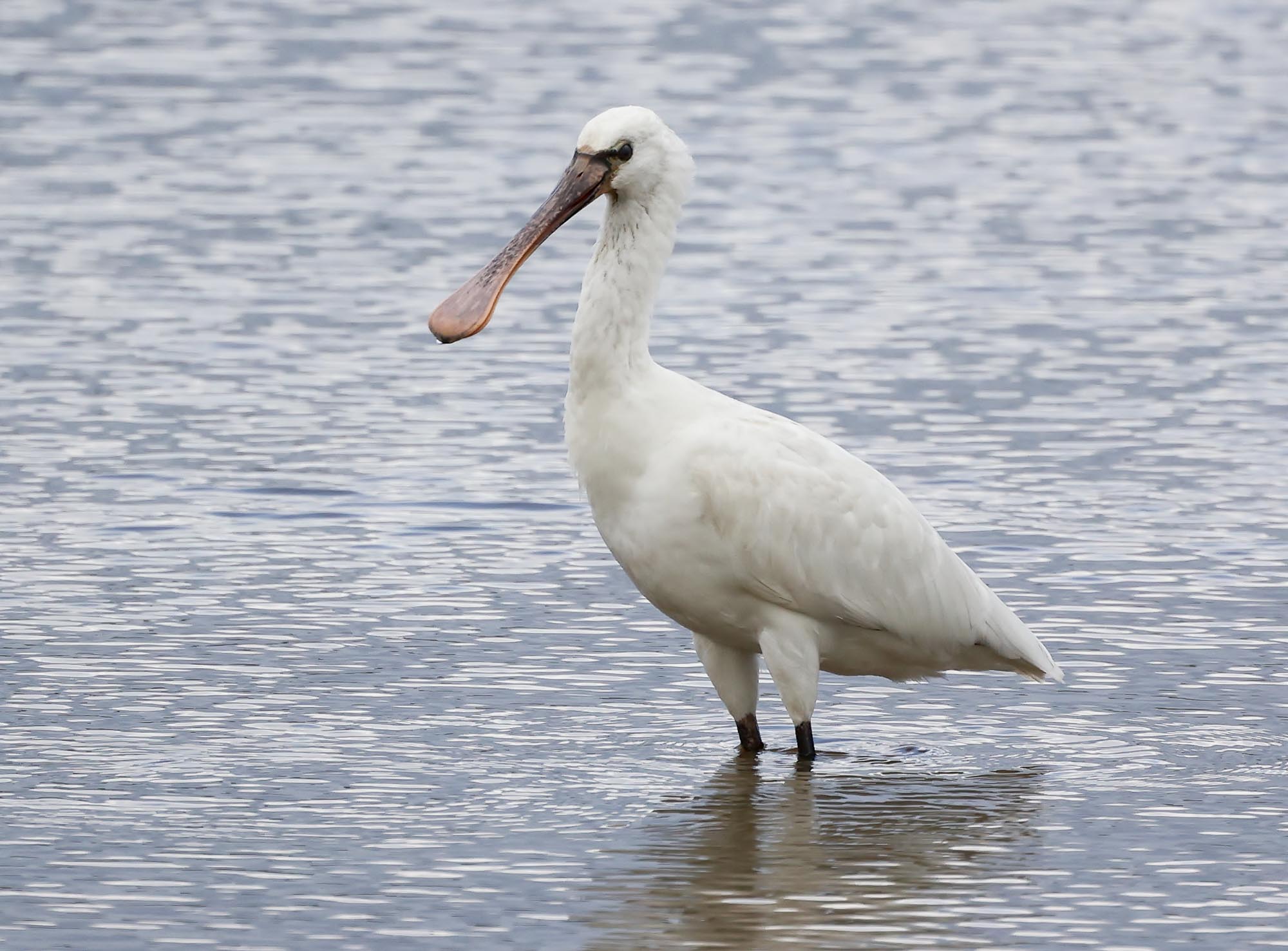
The newer of the two Spotted Redshank was still on De L’Orne Lagoon feeding along the creek opposite the hide and the rather drab looking 2nd calendar year Spoonbill was still on Venner, all of the adult birds seem to have left, some of them probably back to Holland.

2nd calendar year Spoonbill photo by Terry Jenvey

Across the whole reserve my Breeding Transect walk suggested that there were 12 Redshank pairs/territories and 24 Lapwing pairs/territories. This included three Lapwing nests found with four eggs in each of them. Strangely the two sitting Lapwing previously seen on Three Fields South had disappeared, no Lapwing at all in these fields.